Truck Bed Camping: The Complete Guide to Pickup Truck Adventures
Turn your pickup into a capable basecamp. This guide covers truck bed tent options, sleeping platforms, gear storage, safety, and setup tips so you can camp comfortably and confidently wherever the road ends.
Why Truck Bed Camping Works
Truck bed camping sits in a sweet spot between tent camping and RV travel. You keep the simplicity of a tent-based setup, but you gain a raised, dry platform that keeps you off cold or wet ground. Your vehicle also doubles as storage, which means less hauling gear from the parking lot to a campsite.
For campers who want more flexibility than a fixed campground offers, pickup truck camping pairs well with campground vs wild camping decisions and helps you access BLM camping areas where dispersed sites are the norm. If you prefer established facilities, you can still enjoy state park camping while keeping your vehicle-based setup.
The main appeal is versatility. A well-planned truck bed setup can handle weekend trips, cross-country road trips, and even shoulder-season outings when weather turns unpredictable. Many campers choose this style after trying a tent vs hammock comparison and realizing they want a stable, enclosed space with vehicle support.
Truck Bed Tent Options
There are three main ways to shelter a truck bed: a dedicated truck bed tent, a camper shell with an add-on tent, or a roof-top tent mounted above the bed. Each has trade-offs in setup time, weather protection, and how much bed space you keep for gear.
Dedicated Truck Bed Tents
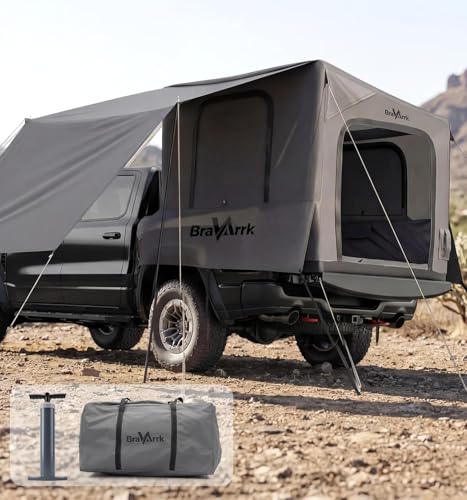
A truck bed tent attaches over the open bed and typically uses the tailgate and bed rails as anchor points. These are popular because they leave the cab free for passengers and keep your sleeping area enclosed. Models designed for specific bed lengths fit best, so measure your bed before buying.
If you want a tent that works with a camper shell already installed, look at options like a tent for back of truck with camper shell or a pop-up tent for back of pickup truck. Campers who want to stand up and move around often prefer a tents for the back of pickup trucks style with a taller profile.
Roof-Top and Overland Options
Roof-top tents mounted over the bed are a premium choice for overland-style travel. They keep you elevated, pack down compactly, and often come in hard-shell designs that handle wind well. A roof-top tent mounted on truck bed is a good fit if you want quick setup and a defined sleeping space. For larger trucks, a roof-top tent for full size truck provides more interior room.
Hard-shell designs are generally more weather-resistant and faster to deploy than soft-shell models. A hard shell roof top tent for truck is a strong pick for campers who prioritize durability and reduced setup time.
Camper Shells and Slide-In Options
A camper shell (also called a topper) turns the bed into a weatherproof sleeping area. Pair it with a simple sleeping platform and you have a low-profile, fast-deploy setup. If you want a more permanent solution, explore slide in truck campers for sale used or a slide in truck camper for 6 foot bed for a more complete camper experience.
| Shelter Type | Best For | Setup Effort | Weather Protection | Relative Tier |
|---|---|---|---|---|
| Dedicated truck bed tent | Occasional weekend campers | Moderate | Good | Entry-level to mid-range |
| Camper shell + sleeping platform | Frequent travelers, stealth camping | Low (after install) | Very good | Mid-range to premium |
| Soft-shell roof-top tent | Overland and road-trip campers | Moderate | Good | Mid-range |
| Hard-shell roof-top tent | All-weather and quick-setup campers | Low | Excellent | Premium to luxury |
| Slide-in truck camper | Long trips, full amenities | High (installation) | Excellent | Premium |
If you are also considering a trailer-based option, compare these with pop up campers for sale in my area or pre owned pop up campers for sale. For a pure tent experience, browse pop up camping tents and tents that go in the back of a pickup.
Building a Comfortable Sleeping Setup
Comfort is the difference between a fun trip and a long night. Truck beds are not perfectly flat, so the right mattress or platform matters more than you might expect.
Mattresses and Pads
A dedicated truck bed mattress or a thick camping pad smooths out the bed ribs and provides insulation from cold metal. If you already own an inflatable, a car camping mattress or an inflatable bed for SUV can often be adapted for truck bed use.
For a simpler setup, a self inflating pad or a sleeping pad for car camping works well on a flat plywood platform. Campers who want extra cushioning sometimes add a memory foam mattress topper for back and neck pain over a firm base.
If you plan to sleep directly on the bed floor, a sleeping pad for the floor is a practical starting point. For couples, a queen size air mattress with built in pump can fit in wider beds, while a double blow up bed with built in pump is a common choice for standard beds.
Platforms and Insulation
A simple DIY platform made from plywood and lumber raises your sleeping surface above the bed floor. This creates storage underneath and improves airflow. Add a footprint or tarp layer for moisture protection, and consider a winter blanket or battery operated blankets for camping in cold weather.
For cold-weather trips, pair your mattress with a sleeping bag for zero degree weather or a 0 degree backpacking sleeping bags option. If you prefer a combined solution, an all in one sleeping bag and mattress simplifies packing.
Gear Storage & Organization
Truck bed camping rewards good organization. A cluttered bed makes sleeping uncomfortable and setup slow. The goal is to create dedicated zones for sleep, cooking, and storage.
Storage Systems
Plastic storage bins, drawer systems, and cargo nets are the three most common approaches. Bins are the most affordable and work well for camp kitchen gear. Drawer systems are heavier and more expensive but make access easy. Cargo nets keep light items secure without taking up floor space.
If you carry folding furniture, a storage for folding chairs and tables solution keeps the bed organized. A heavy duty trash bag is a simple way to manage waste and wet gear without contaminating your sleeping area.
Camp Kitchen in a Truck Bed
Many truck campers build a simple slide-out kitchen or use a tailgate-based cooking setup. A single burner propane camp stove is a compact and reliable choice for vehicle-based cooking. Pair it with a portable foldable stool or a folding outdoor chair and table for a functional cooking station.
For longer trips, consider a portable fridges option to keep food fresh without ice. If you are cooking for a group, review camping food ideas for large groups and winter cooking tips for cold-weather meals.
Basecamp and Awning Additions
An awning or canopy extends your living space beyond the bed. A car side awning rooftop pull out tent shelter is a popular option for truck-based basecamps. For shade and rain protection around the vehicle, a folding canopy or 10x10 pop up canopy tent works well. Review our base camp setup guide for a complete layout plan.
Power, Lighting & Comfort
A truck bed setup can be as simple or as sophisticated as you want. Power and lighting are the two upgrades that most improve the experience.
Power Options
A portable power station is the most flexible option for charging phones, running lights, and powering small devices. For longer trips, a portable power stations with higher capacity or a camping generators setup may be necessary. Solar pairing is covered in our solar chargers camping and battery solar panels guides.
Lighting
Rechargeable lanterns are practical and safe inside a truck bed. A rechargeable battery powered lanterns set provides area light without wiring. For exterior lighting, 12 volt LED strip lights for RV exterior can be adapted for truck bed use.
Heating and Cooling
In cold weather, a portable heater or portable heaters can take the edge off, but ventilation is essential. For tent-based setups, review heated tent camping and hot tent camping safety guidance. In hot weather, a wind powered beach shade or a pop up tent sun shade shelter land and sea can provide shade around the vehicle.
If you want entertainment, a portable speakers option is a common addition for group trips, and a propane fire pit provides a controlled campfire experience where open fires are restricted.
Safety & Weather Considerations
Truck bed camping is generally safe, but vehicle-based setups introduce specific risks: carbon monoxide, weather exposure, and secure storage.
Carbon Monoxide and Ventilation
Never run a fuel-burning heater, stove, or generator inside a closed camper shell or truck bed tent. Carbon monoxide is odorless and can be fatal. If you use a heater, choose a battery-powered or electric option and keep a vent open. Our emergency preparedness camping guide covers broader safety planning.
Weather and Wind
Truck bed tents and roof-top tents catch wind differently than ground tents. Use heavy duty tent stakes where applicable and orient the vehicle to reduce wind exposure. In winter, review winter camping safety, prevent frostbite, and how to stay warm winter before you go.
For rain, a tent for cold and rainy weather or a pop up tent for cold and rainy weather provides better protection. If you are setting up in wet conditions, read set up a tent in the rain and camping in a tent in the rain.
First Aid and Communication
Carry a camping first aid kit and review common camping injuries and wilderness first aid. For remote trips, a personal locator beacon or satellite communicators provides a safety net. Learn emergency SOS signals and what to do if lost before heading out.
If you camp with pets, follow camping with dogs and camping with a dog in a tent guidance. For family trips, review camping with kids and camping food ideas for large groups.
How to Choose Your Truck Camping Gear
The right gear depends on how often you camp, how far you travel, and what weather you expect. Use the tier framework below as a starting point, then refine based on your own priorities.
Match Gear to Your Camping Style
- Occasional weekend camper: A dedicated truck bed tent, a mid-range sleeping pad, and a simple storage bin system cover the basics. Entry-level gear is often sufficient.
- Frequent road-tripper: A camper shell with a sleeping platform and a mid-range power station improves comfort and reduces setup time.
- Overland and remote traveler: A hard-shell roof-top tent, premium power station, and satellite communicator are worth the investment for reliability.
- Cold-weather camper: Prioritize a four-season sleeping bag, insulated pad, and a safe heating solution. Review winter camping gear and winter sleeping bags.
Key Buying Criteria
- Fit: Measure your truck bed length, width, and rail height before buying a tent or platform.
- Weather resistance: Look for waterproof ratings and sealed seams on tents and shells.
- Setup time: If you move campsites often, prioritize quick-deploy designs.
- Storage: A drawer system or bins keep gear organized and protect your sleeping area.
- Weight capacity: Roof-top tents and platforms have load limits; check your truck's payload rating.
For a broader gear overview, see our camping gear section and camping essentials checklist. If you are also considering a backpacking setup, compare with ultralight backpacking gear and hiking backpack with tent and sleeping bag.
Ready to Build Your Truck Bed Setup?
Start with the essentials: a shelter, a comfortable sleeping surface, and a safe power source. Add comfort and storage as your trips get longer.
Frequently Asked Questions
Is truck bed camping comfortable?
Yes, with the right setup. A flat platform, a thick mattress or pad, and good ventilation make truck bed camping comfortable. The main challenge is the ribbed bed floor, which is why a platform or a dedicated mattress is recommended.
Can you sleep in a truck bed without a tent?
You can sleep in an open truck bed in good weather, but a tent or camper shell provides protection from rain, insects, and wind. For most campers, a covered setup is more comfortable and safer.
What is the best truck bed tent?
The best option depends on your truck bed size and how often you camp. Dedicated truck bed tents are the most accessible choice, while camper shells and roof-top tents offer better weather protection and faster setup.
How do you stay warm in a truck bed?
Insulate below and above you. Use a thick sleeping pad or mattress, a cold-rated sleeping bag, and a blanket. Keep ventilation open if you use any heater, and never use a fuel-burning device in a closed space.
Is truck bed camping safe?
It is safe when you manage carbon monoxide, weather, and secure storage. Never run a generator or fuel-burning heater inside a closed camper shell, secure your gear, and check weather forecasts before you go.
Do you need a reservation for truck bed camping?
It depends on where you camp. Established campgrounds often require reservations, while dispersed areas may not. Review our guide on do I need reservation and best time to camp for planning guidance.
For more questions, visit our camping FAQ and can you camp anywhere guides.
Final Tips for Your First Truck Bed Camping Trip
- Do a driveway test run before your first trip.
- Measure your bed and confirm fit before buying a tent or platform.
- Pack light and use bins to keep the sleeping area clear.
- Check the weather and plan for wind, rain, and temperature swings.
- Follow Leave No Trace principles and local regulations.
If you are still exploring camping styles, compare camping vs glamping and review camping styles to find the approach that fits your travel style. For destination ideas, browse camping destinations, camping spots, and camping places.