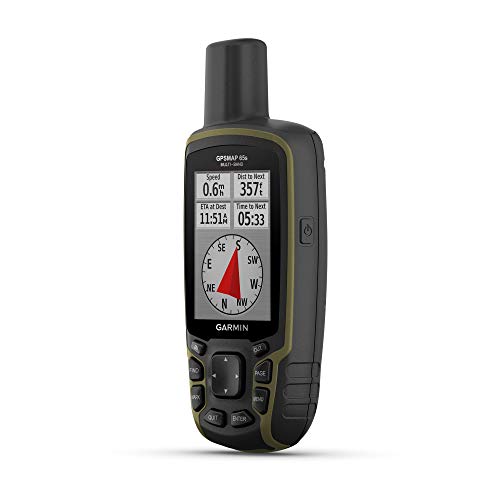
Best Handheld GPS for Camping & Backcountry Navigation
Stay on track, find your way, and explore remote trails with confidence. We tested the most reliable handheld GPS devices — comparing accuracy, battery life, mapping, and satellite features.
Whether you're planning a backcountry camping trip, hiking off-trail, or simply want a reliable backup for your smartphone, a dedicated handheld GPS is an essential piece of camping gear. Unlike phones, these rugged devices are built to withstand drops, rain, and extreme temperatures while providing superior GPS accuracy and days of battery life. In this guide, we break down the top models, from budget-friendly navigation to high-end satellite communicators with global messaging.
If you're new to outdoor navigation, understanding the difference between a basic GPS and a full-featured device with topographic maps is key. Many modern handhelds also include emergency communication features like SOS beacons and two-way messaging — a lifesaver when you're beyond cell service. Below, we compare the best handheld GPS units for every type of adventurer.
Top Rated Handheld GPS Devices (2026)
Garmin GPSMAP 67i
- ✔ Multi-band GNSS (GPS+Galileo+QZSS)
- ✔ inReach satellite comm + SOS
- ✔ 200-hour battery (expedition mode)
- ✔ Preloaded TopoActive maps
Garmin eTrex 32x
- ✔ 2.2" sunlight-readable color screen
- ✔ 8GB internal + microSD slot
- ✔ 3-axis compass & barometric altimeter
- ✔ 25-hour battery (AA)
Garmin Montana 700i
- ✔ 5" glove-friendly touchscreen
- ✔ inReach technology & BirdsEye imagery
- ✔ 18+ hour battery (rechargeable)
- ✔ Preloaded public land boundaries
Garmin Foretrex 901
- ✔ Wrist-mounted GPS + ABC sensors
- ✔ 100+ hour battery (watch mode)
- ✔ Applied Ballistics (for hunters)
- ✔ Jumpmaster mode (military grade)
Handheld GPS Comparison: Specs & Features
| Model | Battery Life | Satellite Comm | Screen Size | Waterproof | Weight |
|---|---|---|---|---|---|
| Garmin GPSMAP 67i | Up to 200h (expedition) | Yes (inReach) | 2.6" | IPX7 | 8.5 oz |
| Garmin eTrex 32x | 25h (AA) | No | 2.2" | IPX7 | 5.5 oz |
| Garmin Montana 700i | 18h (rechargeable) | Yes | 5" | IPX7 | 16.2 oz |
| Garmin Foretrex 901 | 100h+ | No | Wrist display | 50m water rated | 2.9 oz |
| Magellan eXplorist 310 | 18h (AA) | No | 2.2" | IPX7 | 5.1 oz |
How to Choose the Best Handheld GPS for Your Adventure
When shopping for a handheld GPS, consider your primary use case. For day hikers and weekend car camping trips, a basic unit like the Garmin eTrex 32x offers excellent value with preloaded topographic maps and long battery life. However, if you're planning multi-day backpacking expeditions or venturing into remote areas, a model with satellite communication (like inReach technology) becomes a safety essential. Many modern devices also include features like digital compass and barometric altimeter for more precise elevation tracking.
One common question: “Should I just use my smartphone instead?” While phones have offline maps apps, they lack durability, have limited battery life, and often fail in extreme cold. A dedicated handheld GPS is designed for winter camping and harsh weather, with buttons that work with gloves. If you want to learn more about the trade-offs, read our article: GPS vs Smartphone for Camping.
Satellite Communicators vs Standard GPS: What’s the Difference?
Standard handheld GPS units receive signals from satellites to determine your location but cannot send messages. Satellite communicators (like Garmin inReach or ZOLEO) add two-way text messaging, location sharing, and SOS alerts via the Iridium satellite network. If you often go solo camping or explore areas without cell coverage, a satellite communicator is a wise investment. For example, the Garmin GPSMAP 67i combines full GPS mapping with inReach technology, making it one of the most complete best handheld GPS solutions for serious adventurers.
For those on a budget, basic GPS devices still provide reliable navigation and are perfect for established trails, state parks, or RV camping with well-marked routes. Evaluate your risk tolerance and trip remoteness before deciding.
Power & Accessories: Extend Your GPS Battery Life
Battery anxiety is real in the backcountry. Many GPS units run on AA batteries (like the eTrex series), which is excellent because you can carry spares. For rechargeable models, bring a lightweight camping power bank or a solar charger for extended trips. We also recommend a protective case and a lanyard to prevent drops. Remember that cold weather drains batteries faster — keep spare batteries in an inner pocket close to your body when camping in winter.