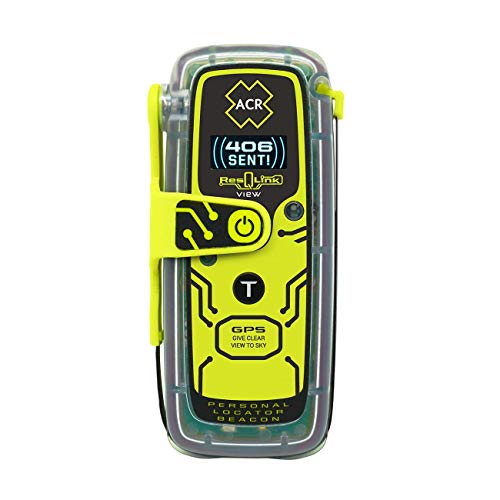
Personal Locator Beacon: The Complete Buyer's Guide to Backcountry Emergency Devices
When the trail ends and cell service disappears, a personal locator beacon is the one piece of gear that can summon professional rescue teams to your exact position. This guide explains how PLBs work, how they differ from satellite messengers, and which features matter most before you buy.
View Recommended DevicesWhat a Personal Locator Beacon Actually Does
A personal locator beacon is a single-purpose emergency transmitter. Press and hold the activation button, and the device broadcasts a distress signal on a dedicated, internationally protected radio frequency. That signal is picked up by a satellite constellation and routed to a rescue coordination center, which then dispatches search and rescue teams to your coordinates.
Unlike a phone or a GPS watch, a PLB does not rely on cell towers. It works in deep canyons, dense forests, and open ocean where there is no coverage of any kind. The core promise is simple: when everything else fails, a PLB gives you a direct line to the people whose job is to find you.
These devices are built for the worst case. They are typically waterproof to at least IPX7, buoyant or floatable with a pouch, and rated to survive drops and temperature swings. Many also include a strobe light and a homing transmitter that helps rescuers pinpoint you once they are close.
How SOS Alerts Reach Rescue Teams
When you activate a PLB, the device transmits on the 406 MHz frequency. Satellites in the Cospas-Sarsat system detect the signal and calculate your position. The alert is then forwarded to the appropriate national rescue coordination center — in the United States, that is typically the Air Force Rescue Coordination Center for land-based incidents, or the Coast Guard for maritime emergencies.
Here is the sequence in plain terms:
- Activation: You deploy the antenna, press the button, and the device begins transmitting.
- Satellite detection: One or more satellites receive the 406 MHz signal and compute a position fix.
- Alert routing: The satellite system passes the distress alert and coordinates to the relevant rescue authority.
- Verification: Rescuers cross-check your registration data — emergency contacts, trip plans, medical notes — to confirm the alert is real and plan the response.
- Local homing: Once a rescue aircraft or ground team is nearby, the 121.5 MHz homing signal guides them to your exact location.
This is why registration matters. A registered beacon tells rescuers who you are and whom to call, which dramatically speeds up response and reduces false alarms. Registration is free in most countries and is a legal requirement in many of them.
PLB vs Satellite Messenger: Which Fits Your Trips
This is the decision most buyers struggle with. Both device families can call for help, but they are built around different philosophies.
| Factor | Personal Locator Beacon | Satellite Messenger |
|---|---|---|
| Primary purpose | Emergency distress only | SOS plus two-way messaging and tracking |
| Subscription | None; service is free after registration | Required; monthly or annual plan |
| Communication | One-way alert to rescue authorities | Two-way text with contacts and rescue services |
| Battery life | Typically 5+ years standby; 24+ hours active transmission | Days to weeks per charge, depending on use |
| Durability | Very high; sealed, rugged, often buoyant | Good, but more complex electronics and screens |
| Everyday utility | Low; you carry it and hope never to use it | High; navigation, weather, check-ins, tracking |
| Best for | Remote solo trips, hunting, offshore, minimalists | Families, group trips, users who want check-ins |
If your priority is a bombproof emergency device with no ongoing cost, a PLB is the cleaner answer. If you want to reassure family with daily check-ins, share live tracking, or receive weather updates, a satellite messenger is more versatile. Many serious backcountry users eventually carry one of each, but for most campers and hikers, choosing based on how much communication you actually need is the right approach.
If you are still mapping out your overall safety kit, our guide to camping communication devices covers radios, messengers, and beacons side by side. You can also compare dedicated satellite communicators and satellite phones if voice contact matters to you.
Features That Separate Entry-Level from Premium Devices
Not all PLBs are created equal. The differences show up in battery chemistry, signal performance, and physical design. Here is what to evaluate.
Battery life and type
Most PLBs use lithium batteries rated for five to seven years of standby. Entry-level models often have user-replaceable batteries, while premium units may require factory service. Check the replacement policy before you buy — a beacon with an expired battery is a paperweight. Some mid-range and top-tier models now offer user-replaceable packs that simplify long-term ownership.
GPS accuracy and acquisition
A built-in GPS receiver gives rescuers a precise position fix, often within a few meters. Devices with faster GPS acquisition and multi-constellation support (GPS plus Galileo or GLONASS) tend to perform better in narrow canyons and dense tree cover. Premium models typically include a clear GPS status indicator so you know a fix has been acquired before you activate.
Transmit duration and homing signal
Look for a minimum of 24 hours of active transmission at the specified temperature range. The best devices exceed this comfortably. A 121.5 MHz homing signal is standard on serious PLBs and is what allows rescue aircraft to close in on your position during the final approach.
Waterproofing and buoyancy
IPX7 waterproofing is the baseline. If you paddle, fish, or sail, choose a device that floats on its own or ships with a flotation pouch. A beacon that sinks is useless in a maritime emergency.
Size, weight, and carry method
Ultralight backpackers favor compact units that disappear into a hip belt pocket. Bulkier models often include a lanyard, pouch, or MOLLE attachment. Consider how you will actually carry it — a beacon buried at the bottom of a pack is a liability.
Strobe and visual signaling
An LED strobe helps rescuers spot you at night or in low visibility. This is a small feature that matters enormously in real rescues.
Display and test functions
Entry-level beacons often rely on simple LED indicators. Mid-range and premium devices add small screens or companion apps for self-test results, GPS status, and battery health. A clear self-test routine builds confidence before every trip.
Choosing a Device Tier for Your Adventures
Rather than chasing specifications, match the device tier to how and where you travel. The descriptors below are relative positions in the market, not price points.
Entry-level
Simple activation, core 406 MHz transmission, basic GPS, and rugged waterproofing. A solid choice for weekend hikers and car campers who want a no-frills emergency link without subscriptions.
Mid-range
Faster GPS acquisition, longer transmit duration, clearer status indicators, and often user-replaceable batteries. Well suited to regular backcountry campers and hunters who venture beyond reliable coverage.
Premium
Top-tier signal performance, extended battery life, buoyancy, integrated strobe, and refined interfaces. Aimed at offshore sailors, alpine climbers, and remote solo travelers who demand maximum reliability.
Hybrid / messenger-class
Devices that combine SOS with two-way messaging and tracking. These sit in a different category and are best for users who want communication, not just a distress signal.
A mid-range PLB is the sweet spot for most campers. It delivers the core safety function without paying for features you may never touch. If you routinely travel alone into remote terrain, the premium tier is easier to justify. For family trips where check-ins matter, consider pairing a PLB with a messenger rather than replacing one with the other.
Whatever tier you choose, treat the beacon as part of a broader safety system. Our guides to wilderness first aid, emergency SOS signals, and what to do if you get lost are worth reading before your next trip. If you camp in winter, the winter emergency kit guide covers the additional layers you will need.
Registration, Testing, and Upkeep
Buying the device is the easy part. Keeping it ready is what separates prepared campers from people who own a gadget.
Register your beacon
In the United States, register your PLB with NOAA's national beacon registry. In other countries, the relevant maritime or civil aviation authority handles registration. Registration is free and typically must be renewed every two years. Keep your emergency contacts and trip details current — rescuers rely on this information.
Run the self-test
Most manufacturers recommend a self-test before each trip and a more thorough test at regular intervals. The self-test checks battery status, GPS reception, and transmitter function without sending a live distress alert. Read the manual carefully so you do not accidentally trigger a false alarm.
Watch the battery expiry
Note the battery replacement date and set a reminder well in advance. Some manufacturers offer replacement programs; others require you to send the unit in. Factor this into the total cost of ownership over the device's life.
Store it correctly
Keep the beacon in a dry, temperature-stable place when not in use. Avoid leaving it in a hot car for extended periods. Inspect the antenna and seals periodically for wear.
For a broader look at how beacons fit into emergency planning, see our guides to emergency preparedness for camping, emergency communication, and camping weather alerts. Backpackers heading deep into the backcountry may also want to review our ultralight backpacking gear checklist to keep the rest of the kit lean.
Frequently Asked Questions
What is a personal locator beacon?
A personal locator beacon is a compact emergency device that transmits a distress signal via the Cospas-Sarsat satellite system to rescue authorities. It provides your position even in remote areas with no cell coverage.
Does a PLB require a subscription?
No. A true PLB requires no subscription or activation fee. You register the device with your national authority, and the emergency service is free. This is a key advantage over two-way satellite messengers, which typically require a paid plan.
How is a PLB different from a satellite messenger?
A PLB is a single-purpose emergency beacon with no two-way communication. A satellite messenger adds texting, tracking, weather, and navigation but depends on a commercial network and subscription. PLBs are simpler, more rugged, and subscription-free.
Is a PLB worth it for camping and hiking?
Yes, if you travel into remote areas where cell service is unreliable. A PLB gives you a direct line to rescue coordination centers, which can dramatically shorten response time in an emergency. For campgrounds with reliable coverage, it is less essential.
Can I use a PLB internationally?
Yes, the 406 MHz Cospas-Sarsat system is international. However, you should register the beacon in your home country and check local regulations before traveling. Some countries require additional notification or have specific rules for foreign-registered beacons.
How long does a PLB battery last?
Most PLB batteries are rated for five to seven years of standby. Active transmission typically lasts at least 24 hours at specified temperatures, and many premium models exceed that. Always check the battery expiry date and plan for replacement.
Ready to Add a Beacon to Your Safety Kit?
Browse our recommended personal locator beacons and emergency devices, selected for reliability in remote conditions.
See Recommended Gear