Complete Camping Checklists for Every Adventure
Never forget essential gear again. Our expert-built packing lists cover every trip type, season, and experience level so you can camp with confidence.
EXPLORE CHECKLISTSWhy a camping checklist matters: Studies show that 67% of campers forget at least one essential item per trip. A well-organized checklist eliminates guesswork, reduces stress before departure, and ensures you invest in the right camping gear before you need it in the field. Whether you're a first-timer or a seasoned backcountry explorer, the checklists below are designed to save you time, effort, and potentially dangerous oversights.
Universal Essentials: What Every Camper Needs
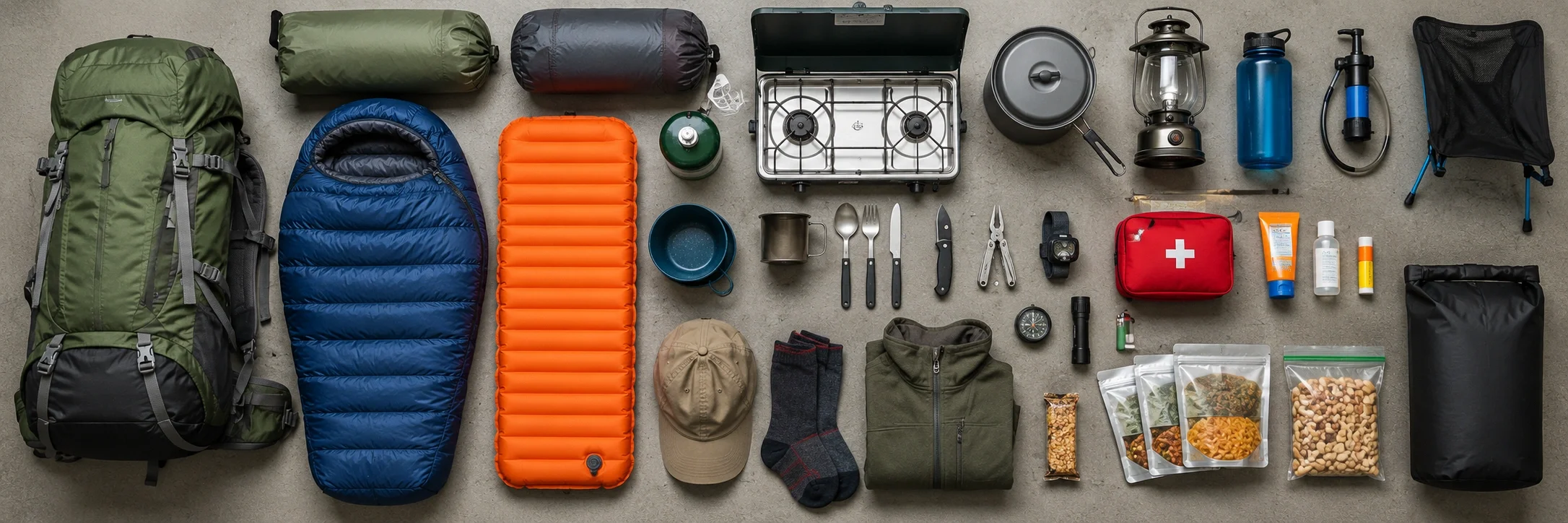
Regardless of whether you're heading to a serviced campground or deep into the backcountry, certain items are non-negotiable. These are the foundations of any successful camping trip — the camping essentials that should never be left behind. Missing any of these can turn a relaxing weekend into an uncomfortable or even dangerous situation.
Water Supply
Minimum 1 gallon per person per day, plus a backup filter or purification tablets for extended trips.
Shelter
A reliable tent, tarp, or hammock with rain protection. Your shelter is your safety net against weather.
Sleep System
Sleeping bag rated for the season plus an insulated pad. Poor sleep ruins the entire experience.
Lighting
At minimum a headlamp with fresh batteries. Add a camping lantern for campsite illumination.
Proper Footwear
Sturdy hiking boots or shoes suited to terrain. Never camp in sandals as your only footwear option.
Fire Starter
Waterproof matches, a lighter, and fire-starting material. Always carry at least two methods.
First Aid Kit
A stocked first aid kit tailored to your group size and trip duration. Know how to use every item.
Navigation Tools
Physical map and compass as backup. A fully charged phone with offline maps is a good secondary option.
Food & Snacks
Planned meals plus extra emergency rations. Pack at least one additional day's worth of food beyond your trip length.
Rain & Weather Protection
Rain jacket at minimum. Check forecasts and pack layers accordingly for the expected weather conditions.
Multi-Tool or Knife
Essential for repairs, food prep, and emergencies. A quality multi-tool handles dozens of tasks.
Sun Protection
Sunscreen (SPF 30+), sunglasses, and a hat. UV exposure is intense at altitude and near water.
Shelter & Sleep System Checklist
Your shelter and sleep system directly impact your safety, comfort, and recovery. A cold, wet night can lead to hypothermia in mild conditions if you're unprepared. Invest time in selecting the right combination for your specific trip type and expected temperatures.
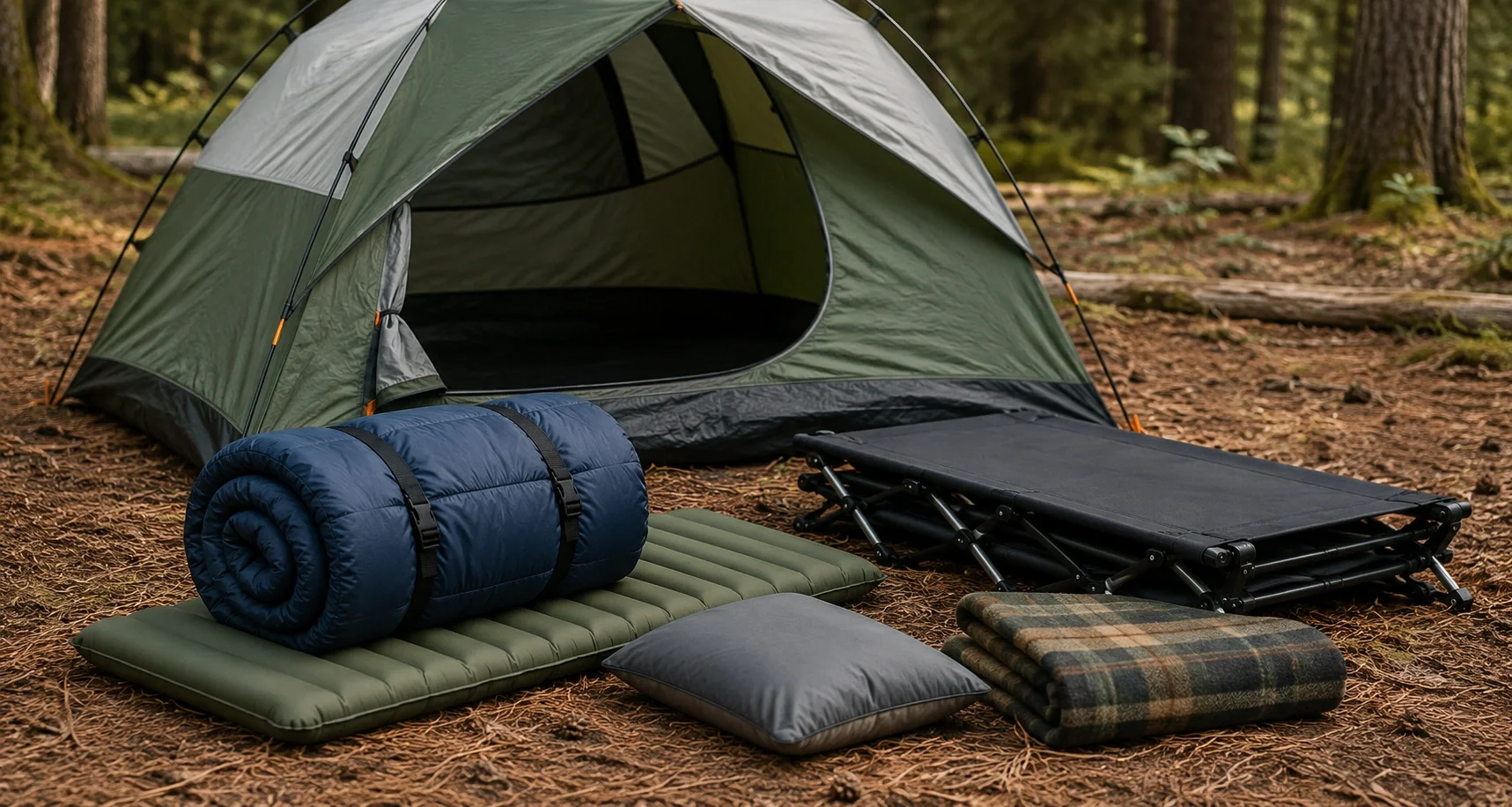
- Tent with stakes, guylines, and a footprint or ground tarp
- Sleeping bag with appropriate temperature rating (see our temperature rating guide)
- Sleeping pad or air mattress for ground insulation
- Camping pillow (compressible or inflatable)
- Tarp or canopy for additional rain/shade cover
- Extra blanket for cool-weather comfort
- Cot or camping bed (optional for car/RV camping)
- Hammock with straps as an alternative sleep option
- Tent repair kit (duct tape, patch material, spare stakes)
- Camping mat or rug for tent interior floor comfort
Cooking & Kitchen Gear Checklist
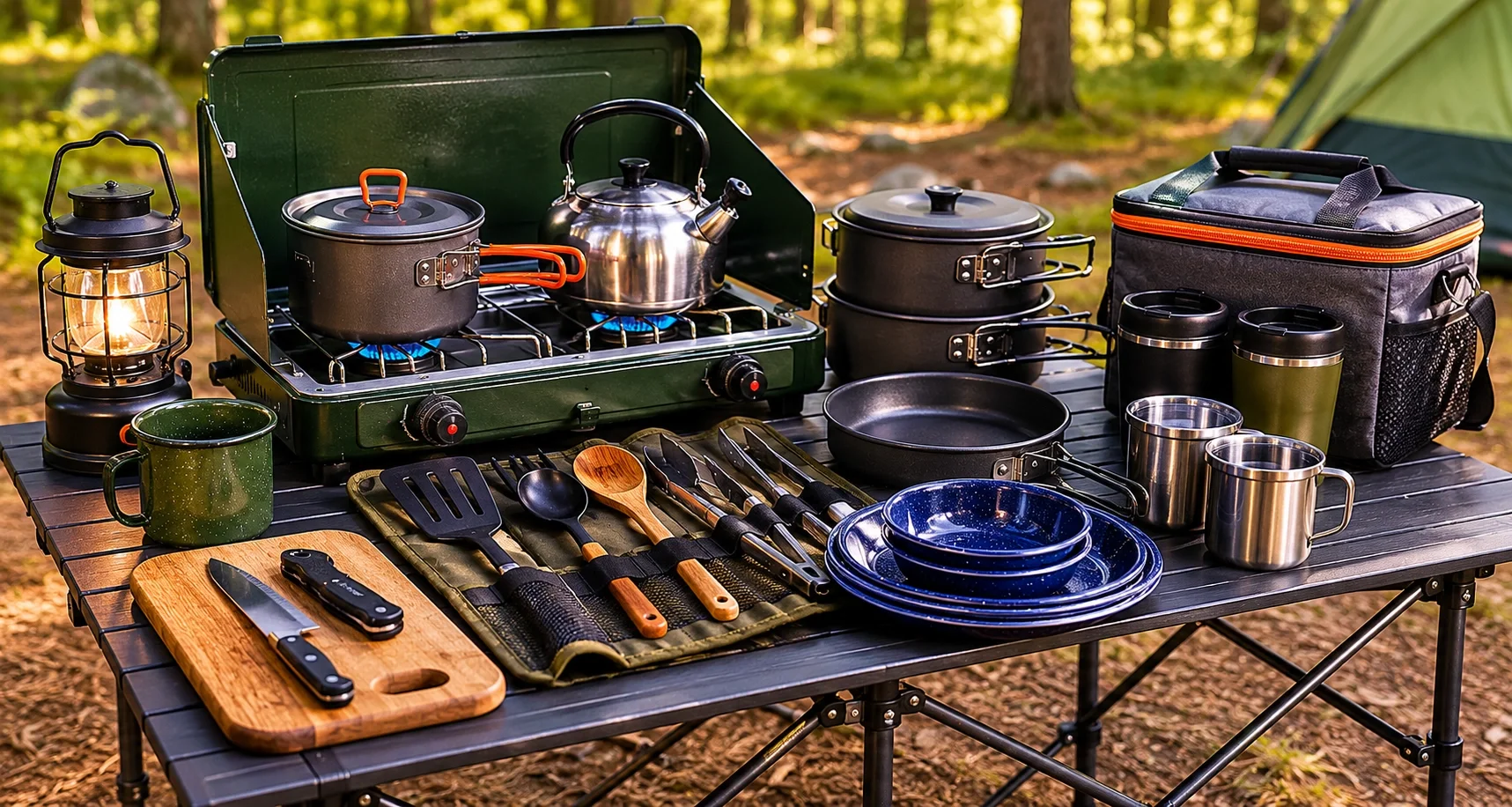
A well-equipped camp kitchen transforms dehydrated meals into genuinely enjoyable outdoor dining. The gear you need depends heavily on your cooking style — minimalist backpackers carry a single pot and spoon, while car campers can bring full kitchen setups. A complete cooking system ranges from the entry-level tier to the premium tier depending on your approach.
- Camp stove with sufficient fuel (propane, isobutane, or wood)
- Cookware set — pot, pan, or skillet sized for your group
- Utensils — spatula, tongs, serving spoon, cutting board
- Plates, bowls, and cups (one set per person, reusable preferred)
- Camping kettle for boiling water quickly
- Eating utensils (spork, knife, fork per person)
- Cooler with ice or ice packs for perishable food
- Food storage containers (bear-proof in bear country, see bear food storage)
- Biodegradable soap, sponge, and drying towel
- Trash bags and a hanging trash system
- Dutch oven or slow cooker (optional for car camping)
- Spices, salt, pepper, and condiments in small containers
Clothing & Footwear Checklist
The layering system is the single most important concept in outdoor clothing. Rather than packing one heavy jacket, pack multiple lightweight layers you can add or remove as conditions change. For a detailed breakdown, refer to our complete camping clothing list. A proper camping wardrobe ranges from the entry-level tier to the premium tier, with quality base layers and a solid rain shell being the most critical investments.
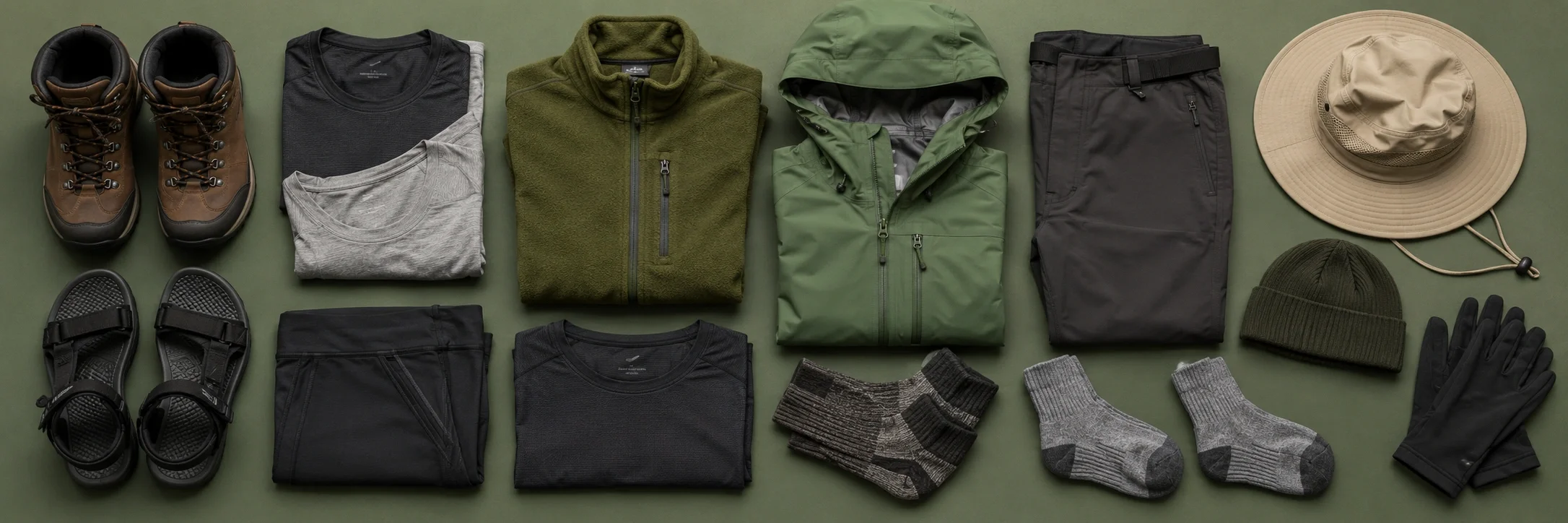
- Moisture-wicking base layer top and bottom (avoid cotton)
- Insulating mid-layer (fleece jacket or down sweater)
- Waterproof and breathable rain jacket
- Rain pants (essential for extended wet weather)
- Hiking pants or shorts (1-2 pairs, quick-dry material)
- Long-sleeve sun shirt (UPF rated for summer trips)
- Sturdy hiking boots or trail shoes, broken in before the trip
- Camp shoes or sandals for relaxation at camp
- Merino wool socks (3+ pairs, moisture-wicking and odor-resistant)
- Warm beanie or hat and lightweight sun hat
- Light gloves (fleece or softshell, even in summer for evenings)
- Underwear (moisture-wicking, enough for trip duration +1)
Safety & Emergency Gear Checklist
Safety gear is not optional — it's the difference between a manageable surprise and a crisis. Your camping safety kit should be tailored to your specific environment: bear country requires different precautions than desert camping. A complete safety setup typically falls in the entry-level to mid-range tier but is worth infinitely more in an emergency.
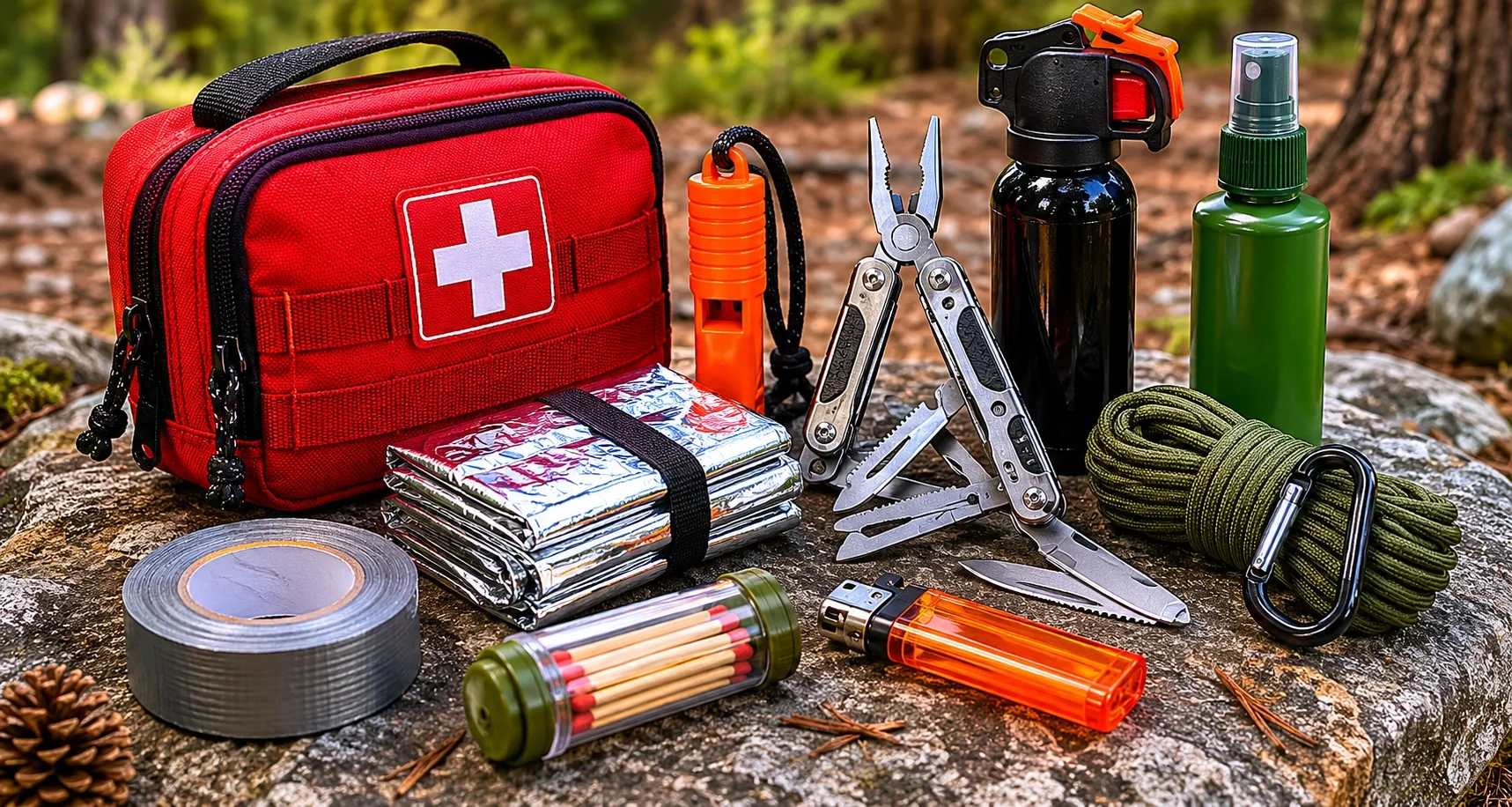
- Comprehensive first aid kit (bandages, antiseptic, pain relievers, blister treatment)
- Emergency whistle (3 blasts = distress signal, see SOS signal guide)
- Emergency space blanket (retains 90% of body heat)
- Multi-tool with knife, pliers, and screwdriver
- Fire-starting kit (waterproof matches, lighter, ferro rod, tinder)
- Emergency communication device (satellite messenger for remote areas, premium tier)
- Duct tape wrapped around a water bottle or card (for repairs)
- Paracord (50+ feet, hundreds of emergency uses)
- Insect repellent and tick removal tool
- Bear spray if in bear country (see bear safety guide)
- Photocopies of ID, insurance cards, and emergency contacts
Food, Water & Hydration Checklist
Proper food and water planning prevents both hunger and the burden of carrying excessive weight. The average camper needs 2,500–4,500 calories per day depending on activity level and conditions. Water needs increase significantly at altitude, in heat, and during strenuous activity. Plan your camping meals strategically to minimize weight while maximizing nutrition and satisfaction.
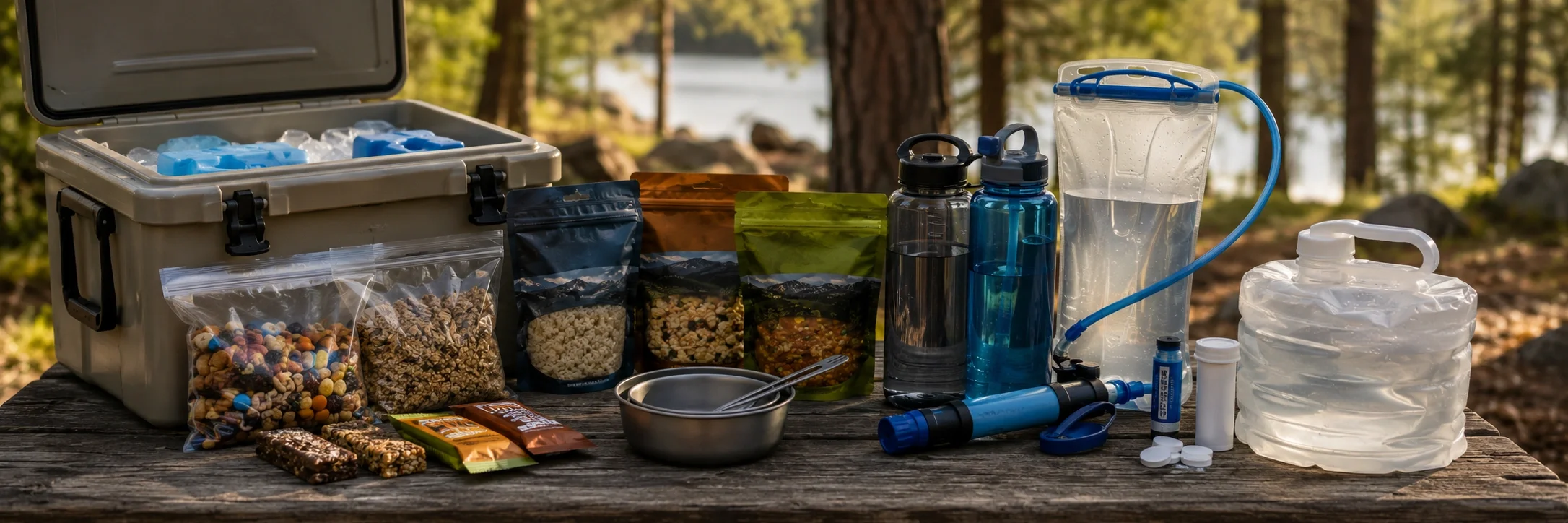
- Meal plan with ingredients for every meal (breakfast, lunch, dinner, snacks)
- High-energy snacks (trail mix, energy bars, dried fruit, jerky)
- Extra emergency food (at least one additional day's rations)
- Coffee, tea, or hot chocolate supplies
- Spices, salt, oil, and favorite condiments in small containers
- Cooler with adequate ice or ice packs for perishables
- Water bottles or hydration bladder (minimum 2L capacity per person)
- Water filter or purifier (gravity filter or squeeze filter, entry-level to mid-range)
- Water purification tablets as backup (entry-level)
- Collapsible water container (2–5 gallon for camp use)
- Electrolyte powder or tablets to prevent dehydration
- Food storage bags (ziplock) and bear canister if required
Hygiene & Personal Care Checklist
Staying clean in the outdoors isn't just about comfort — it prevents skin infections, illness, and unpleasant experiences for your group. However, camping hygiene requires a different approach than home. All products should be biodegradable, and waste disposal must follow local regulations. Some campgrounds offer camping shower facilities, while remote trips require portable solutions.
- Biodegradable soap (for body, dishes, and clothes)
- Toothbrush, toothpaste, and floss
- Toilet paper and a small trowel for digging catholes
- Wag bags or toilet kit for pack-it-out requirements
- Hand sanitizer (at least 60% alcohol content)
- Body wipes or baby wipes (unscented preferred)
- Quick-dry microfiber towel
- Portable toilet (for RV or group car camping, mid-range to premium)
- Sunscreen SPF 30+ (reapply every 2 hours)
- Lip balm with SPF protection
- Insect repellent (DEET or picaridin based)
- Contact lenses/glasses and spare pair if needed
- Prescription medications (extra supply beyond trip duration)
- Feminine hygiene products
- Hair brush/comb and hair ties
- Small mirror (useful for signaling and personal care)
Navigation & Technology Checklist
Modern camping technology enhances safety and convenience, but it should never replace fundamental navigation skills. The golden rule: always carry analog backups for every electronic device. Batteries die, signals drop, and devices break. A physical map and compass weigh almost nothing and never run out of power.
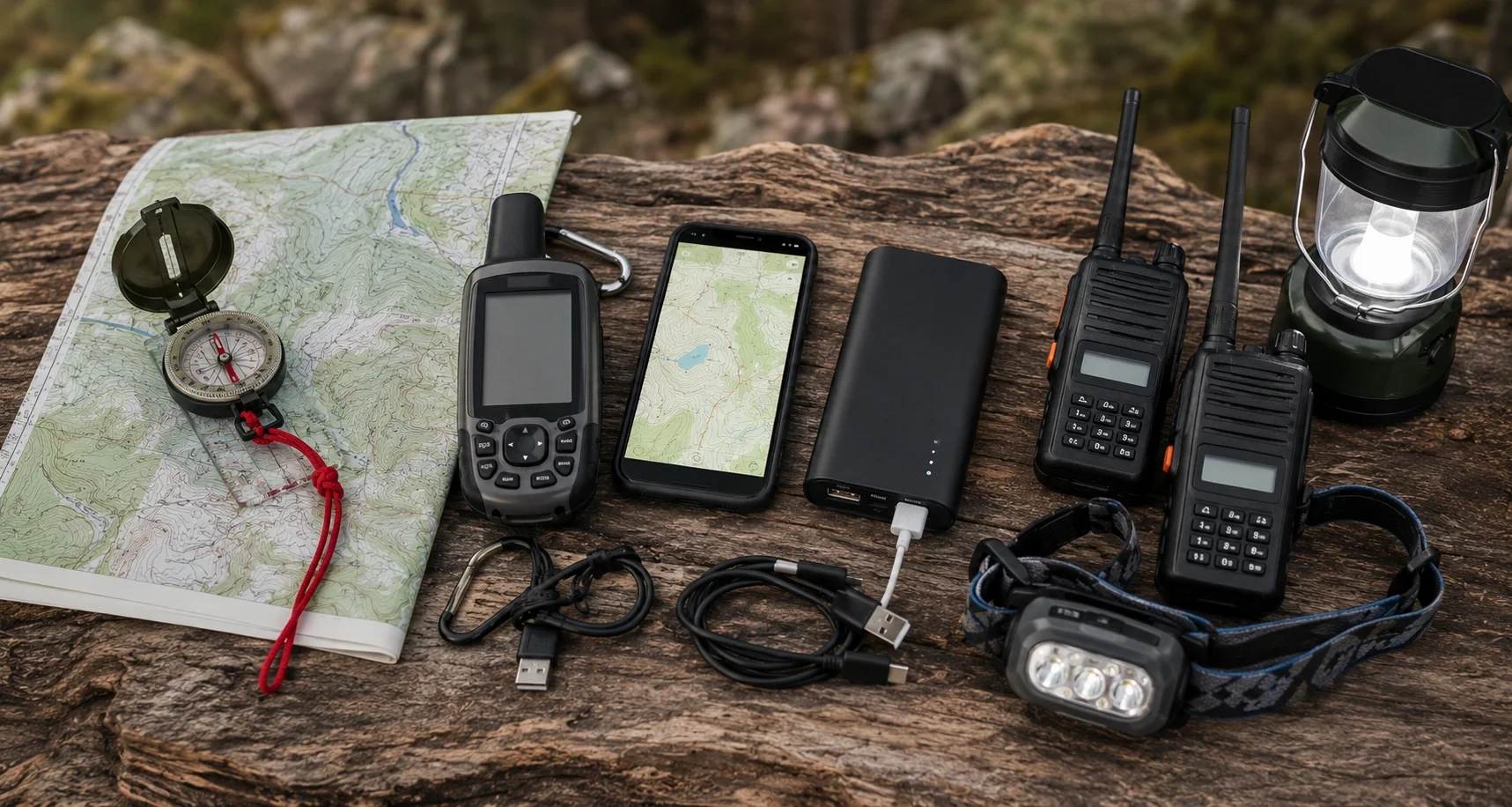
- Topographic map of the area (waterproofed or in a map case)
- Baseplate compass (know how to take a bearing)
- Handheld GPS device with pre-loaded maps (premium tier)
- Offline map apps downloaded to your phone before departure
- Power bank (minimum 10,000mAh, entry-level to mid-range)
- Charging cables for all devices
- Two-way radios for group communication (entry-level to mid-range per pair)
- Headlamp with extra batteries or USB rechargeable model
- Camp lantern (battery, solar, or fuel-powered)
- Camera or phone with sufficient storage and a waterproof case
Specialized Checklists for Every Scenario
The checklists above cover the universal basics, but every camping trip is different. A backpacking checklist looks entirely different from an RV camping checklist. Below, we've organized our dedicated checklists by experience level, season, camping type, and special needs. Click any card to access the full detailed packing list for that specific scenario.
By Experience Level
First Time Camping Checklist
Everything a complete beginner needs, explained in simple terms with no assumed knowledge.
Beginner Camping Checklist
Streamlined gear list for campers building their first real kit without overspending.
Advanced Camping Checklist
Specialized gear for experienced campers tackling challenging environments and extended trips.
Solo Camping Checklist
Self-reliance gear with extra safety margins for solo camping, including redundant systems.
Family Camping Checklist
Family-specific additions including kids' gear, entertainment, and extra comfort items.
Group Camping Checklist
Shared gear coordination, group kitchen setup, and communication planning for larger groups.
By Season
Spring Camping Checklist
Mud protection, variable temperatures, and rain gear priorities for spring trips.
Summer Camping Checklist
Heat management, bug protection, hydration, and lightweight gear for warm-weather camping.
Fall Camping Checklist
Layering systems, declining temperatures, and shorter daylight preparation for autumn trips.
Winter Camping Checklist
Extreme cold gear including winter sleeping bags, heaters, and snow safety equipment.
Rainy Season Checklist
Waterproof shelter strategies, wet-weather clothing, and morale-boosting gear for rainy trips.
By Camping Type
Car Camping Checklist
Full-featured gear list for car camping where weight and space are less limiting.
RV Camping Checklist
RV-specific systems check, hookups, leveling, and interior setup for RV camping.
Backpacking Checklist
Ultralight and lightweight gear selections for backpacking where every ounce matters.
Primitive Camping Checklist
Self-sufficiency gear for primitive camping with no facilities or services.
Glamping Checklist
Luxury additions and comfort upgrades for glamping experiences with minimal roughing it.
Special Needs & Activities
Camping with Kids Checklist
Age-specific gear, safety items, entertainment, and comfort extras for children.
Camping with Dogs Checklist
Pet-friendly camping gear including leash, bowls, first aid, and containment.
Beach Camping Checklist
Sand protection, saltwater gear care, sun shelter, and beach camping specific items.
Mountain Camping Checklist
Altitude preparation, cold-weather gear, and safety equipment for mountain environments.
Focused Packing Lists
Ultimate Camping Packing List
The master list combining every category into one comprehensive reference document.
Food Packing List
Meal planning templates, portion guides, and food-specific packing organization.
Clothing Packing List
Complete clothing breakdown by season with specific fabric and layer recommendations.
Kitchen Supplies List
Every cooking tool, utensil, and supply needed for camp kitchen setup by group size.
Printable Checklist (PDF)
Download and print a formatted checklist you can physically check off while packing.
How to Customize Your Camping Checklist
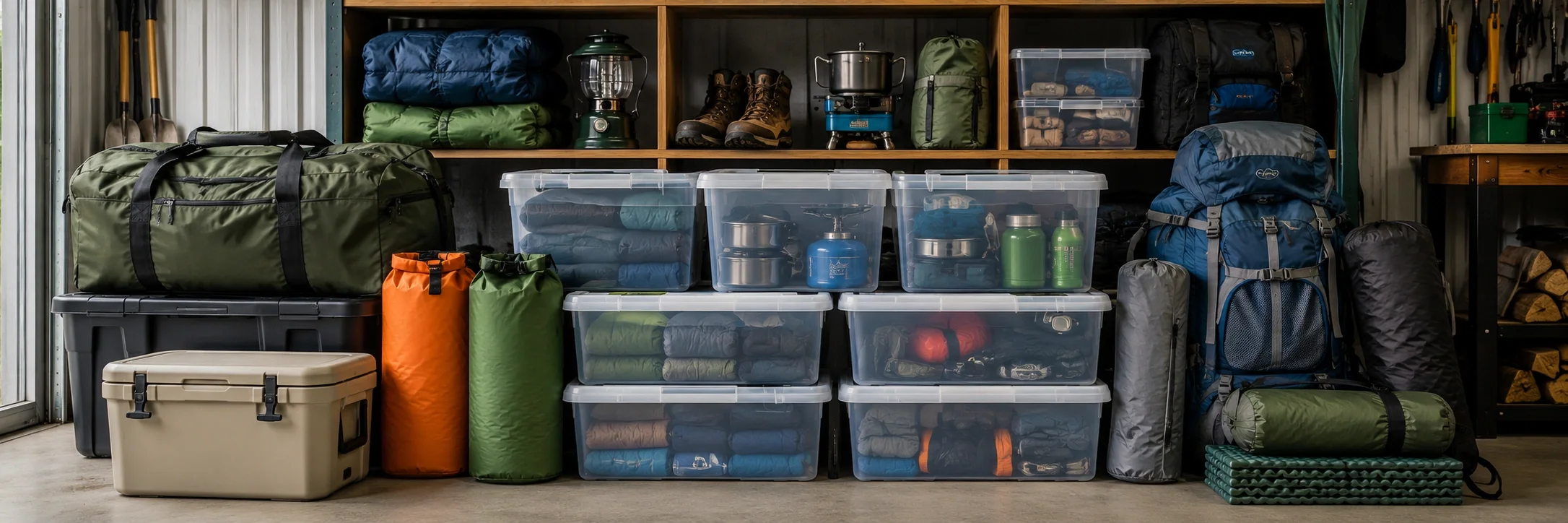
No single checklist fits every situation perfectly. The most effective campers treat checklists as living documents that evolve with their experience, destination, and group. Here are proven strategies for building a personalized system that eliminates forgotten items and prevents overpacking.
Start With a Master List, Then Subtract
Begin with our ultimate camping packing list as your foundation, then ruthlessly remove items that don't apply to your specific trip. It's easier to delete unnecessary items than to remember missing ones. Keep the master list saved digitally so you always have a complete starting point.
Check the Weather 48 Hours Before Departure
Finalize your clothing and shelter choices based on the actual forecast, not seasonal averages. Use reliable weather apps for camping that provide hour-by-hour predictions and alert you to sudden changes. Adjust your rain gear, insulation, and sun protection accordingly.
Do a Full Test Pack at Home
Lay everything out and physically pack it into your backpack or vehicle at least two days before departure. This reveals space issues, forgotten items, and overpacking before you're committed. Walk around with your packed bag to test weight and comfort.
Build a Permanent "Always Pack" Kit
Keep a dedicated bin or bag with items that never change between trips: first aid supplies, fire starter, multi-tool, headlamp, and navigation tools. This eliminates the most common forgetting mistakes and cuts prep time significantly. Start with an entry-level kit and upgrade items over time.
Review and Update After Every Trip
Within 24 hours of returning home, note what you used, what you didn't use, and what you wished you had. Add notes directly to your digital checklist. After 3-4 trips, your list will be highly refined and personalized. This habit also helps you make smarter gear purchasing decisions over time.
Organize by Pack Order and Accessibility
Arrange your checklist in the order you'll need items: setup gear first (tent, tarp, stakes), then kitchen, then personal items. Mark items you'll need at night or in emergencies (headlamp, first aid) so they're packed in accessible locations, not buried at the bottom of your bag.
Final Reminder: A checklist is only as good as your discipline in using it. Print it out, check items off physically as you pack, and do a final walkthrough before locking your door or driving away. The five minutes it takes to verify your list can save you hours of inconvenience — or worse — in the field. For campers heading into challenging environments, also review our emergency preparedness guide to ensure your safety systems are as thorough as your packing list.