Heavy Duty Tent Stakes: Anchor Your Camp with Confidence
When the wind picks up and the ground fights back, your tent is only as secure as the stakes holding it down. Learn how to choose the right heavy duty tent stakes for every terrain—from soft sand to rocky ridges—so your shelter stays put, no matter what nature throws at you.
Explore Top StakesYou've invested in a reliable tent, a comfortable sleeping pad, and a warm sleeping bag. But there's one often-overlooked piece of gear that can make or break your entire campsite: the tent stakes. A flimsy stake that bends on the first rock or pulls out of loose soil can turn a peaceful night into a wrestling match with a collapsed shelter. That's why experienced campers turn to heavy duty tent stakes—hardened, purpose-built anchors designed to hold firm in challenging conditions.
This guide will walk you through everything you need to know about heavy duty tent stakes. We'll cover the materials, shapes, and lengths that matter, explain which stakes work best for sand, rock, snow, and wind, and share pro techniques for driving and removing them safely. By the end, you'll have the knowledge to choose the right stakes for your next adventure and set up camp with total confidence. For a broader look at essential camping hardware, see our camping essentials guide.
Why Heavy Duty Tent Stakes Matter
Standard tent stakes—the thin, wire-style pegs that come with many entry-level tents—are fine for calm weather and soft, loamy soil. But they have serious limitations. They bend easily when they hit roots or stones, they offer minimal surface area to grip loose ground, and they can pull out in moderate wind. Heavy duty tent stakes are engineered to solve these problems. They're typically thicker, made from stronger materials, and shaped to maximize holding power across a range of conditions.
The benefits are tangible:
- Reliability in wind: A sturdier stake with a wide head and a long shaft resists pull-out forces far better than a thin wire peg. When combined with proper guylines and tensioning, heavy duty stakes can keep your tent standing in gusts that would flatten a weakly anchored shelter. Learn more about securing your tent in our base camp setup guide.
- Performance on hard ground: Hardened steel stakes can be driven into compacted soil and rocky ground that would destroy softer stakes. They hold their shape and can be reused for many seasons.
- Versatility: Different heavy duty stakes are designed for different terrains. With the right selection, you can anchor your tent on sandy beaches, rocky plateaus, snowy fields, and everything in between. For winter-specific advice, see our winter camping gear guide.
Key Factors When Choosing Heavy Duty Tent Stakes
Not all heavy duty stakes are created equal. The best choice depends on where and how you camp. Here are the critical factors to evaluate:
Material: Steel vs. Aluminum
High-carbon steel and galvanized steel are the gold standards for maximum strength and durability. They're heavier than aluminum but offer superior resistance to bending and can be driven into tough ground with a mallet. Galvanized coatings add rust protection, extending the stake's lifespan. Steel stakes are an excellent choice for car camping, base camps, and any situation where weight isn't a primary concern.
Aluminum alloy stakes are lighter and corrosion-resistant, making them a favorite for backpackers and weight-conscious campers. High-quality aluminum stakes (often 7075-T6 alloy) can be surprisingly strong, but they generally can't match the sheer toughness of steel. They're a solid mid-range option for general camping and three-season use. For lightweight setups, pair them with a lightweight 2-person backpacking tent.
Shape and Design
The shape of a stake determines how well it grips the ground and how easy it is to drive. Common designs include:
- V-shaped or Y-shaped stakes: The angled profile provides excellent holding power in soil and resists twisting. These are versatile, all-around performers. Many mid-range and high-end stakes use this design.
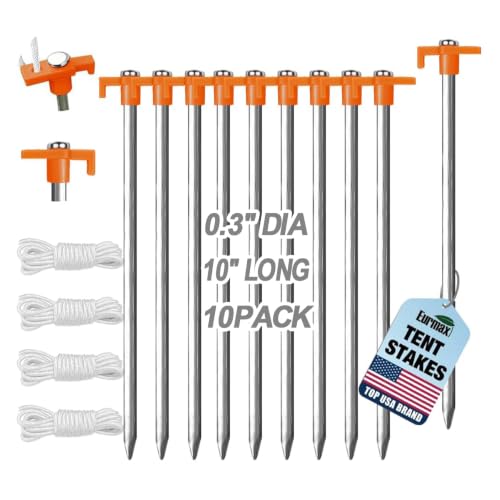
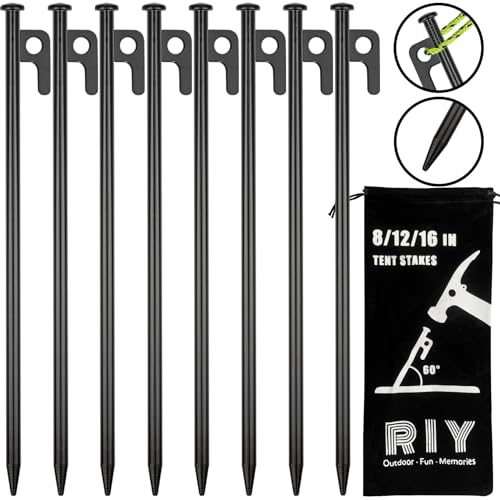
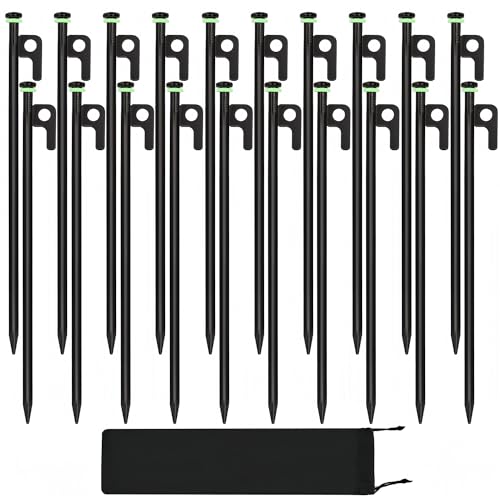
- Nail-style stakes: A simple, straight shaft with a flat or slightly angled head. They're easy to drive but can pull out in loose soil. Heavy duty versions often feature a thicker shaft and a larger head for better grip.
- Sand stakes (auger or wide-blade): Designed specifically for loose sand, these stakes have a wide surface area or a screw-like shape that grips the sand. They're essential for beach camping.
- Snow stakes: Long, wide, and often perforated to allow snow to refreeze around them, snow stakes are designed for winter camping. They provide a large surface area to hold in soft snow. See our winter tents guide for more cold-weather setup tips.
- Screw-in stakes: These look like large screws and are twisted into the ground. They excel in hard-packed soil and can be used on some rocky surfaces. They're a premium option for challenging terrain.
Length and Weight
For general camping, 9 to 12 inches is a good standard length. If you frequently camp in loose soil, sand, or high-wind areas, choose stakes that are 12 to 18 inches long. Longer stakes provide more holding power but are heavier and bulkier. Winter and snow stakes are often even longer. Match the stake length to your expected conditions—it's better to have slightly longer stakes than you need than to be caught short in a windstorm.
Matching Stakes to Terrain: A Comparison
The table below summarizes which heavy duty tent stakes perform best in different conditions. Use it as a quick reference when planning your next trip.
| Terrain / Condition | Recommended Stake Type | Key Features | Example Use Case |
|---|---|---|---|
| General soil / grass | V-shaped or Y-shaped steel stakes | Excellent grip, resistant to bending, easy to drive | Standard campsites, car camping |
| Hard-packed soil / rocky ground | Heavy duty nail-style or screw-in steel stakes | Thick shaft, hardened tip, high strength | Mountain camping, compacted earth |
| Sand / loose soil | Wide-blade sand stakes or auger stakes | Large surface area, deep penetration | Beach camping, desert camping |
| Snow / winter conditions | Snow stakes (long, wide, perforated) | Large surface area, holds in soft snow | Winter camping, snowshoeing trips |
| High wind | Long, heavy steel stakes (12–18 inches) | Deep anchoring, strong heads for guylines | Exposed ridges, coastal camping |
How to Drive and Remove Heavy Duty Tent Stakes Safely
Proper technique protects both your stakes and your gear—and reduces the risk of injury.
- Choose the right spot: Look for firm ground, avoiding large roots or rocks. If the ground is too hard, consider an alternative pitch or use a screw-in stake.
- Angle the stake: For most conditions, drive stakes at a 45-degree angle pointing away from the tent. This increases holding power and allows the guylines to tension correctly. For sand stakes, drive them straight down.
- Use a mallet, not a rock: A dedicated camping mallet or hammer delivers controlled force and won't damage the stake head. Avoid using heavy rocks, which can deform the stake and cause it to fail.
- Stop if it won't budge: If a stake hits an obstruction and refuses to go deeper, don't force it. Pull it out and try a different spot. Bending a stake weakens it permanently.
- Remove with care: To remove a stake, pull it straight up with a twisting motion. A stake puller or the claw of a hammer can help. Never pry it sideways, which can bend the shaft.
For more detailed guidance on setting up a tent in challenging conditions, see our guides on setting up a tent in the rain and setting up a tent in the snow.
Maintenance and Storage
Heavy duty stakes are built to last, but a little care goes a long way. After each trip, wipe dirt and moisture off the stakes before storing them. If you've used them in wet conditions, allow them to dry completely to prevent rust—especially important for steel stakes. Keep them in a sturdy stuff sack or stake bag to protect the tips and keep them organized. Inspect the heads and shafts periodically for cracks or bends, and replace any stake that looks compromised.
Frequently Asked Questions
What are heavy duty tent stakes made of?
Heavy duty tent stakes are typically made from high-carbon steel, galvanized steel, or aluminum alloys. Steel stakes offer maximum strength and durability for hard ground, while aluminum stakes provide a lightweight, corrosion-resistant option for general camping.
How long should heavy duty tent stakes be?
For most camping conditions, 9 to 12 inches is standard. For loose soil, sand, or high-wind situations, choose stakes that are 12 to 18 inches long. Winter or snow stakes are often even longer to anchor in soft snow.
Can heavy duty tent stakes be used on concrete or rock?
Standard stakes cannot penetrate concrete or solid rock. For these surfaces, use specialized screw-in stakes for concrete or tie your guylines to heavy objects like rocks or trees. Always check campsite regulations before securing to structures.
How do I secure a tent in sandy soil?
Use wide, sand-specific stakes (often called sand augers or sand pegs) that offer a large surface area. Alternatively, bury deadman anchors—bags or logs buried horizontally—and attach your guylines to them for a secure hold in loose sand. For more beach-specific advice, see our beach camping guide.
Do I need different stakes for winter camping?
Yes. Snow stakes are longer and wider, designed to hold in soft snow. They often have holes that allow snow to refreeze around them, increasing holding power. Check our winter camping guide for more cold-weather essentials.
How many stakes should I carry?
Carry at least as many stakes as your tent has attachment points, plus a few spares. For windy conditions, you may need extra stakes for additional guylines. It's always better to have more than you need.