Ultimate Camping Cookware Guide: Cook Like a Chef in the Wild
From lightweight backpacking pots to full nonstick cooksets — choose the right camping cookware for your outdoor kitchen, fuel efficiency, and unforgettable meals under the stars.
Why your camp cookware matters more than you think. The right set lets you prepare hot, hearty meals, saves fuel, and packs efficiently. Whether you're planning a weekend car camping trip or a remote backpacking checklist adventure, your pots, pans, and accessories define your outdoor dining experience. Below we break down materials, must-have features, and top-rated picks to match any camping style — from solo camping to large family outings.
Camping Cookware Materials: Which One Suits Your Adventure?
Aluminum
- ✔ Lightweight & budget-friendly
- ✔ Excellent heat conductivity
- ⚠ Prone to denting, nonstick coating may wear
Stainless Steel
- ✔ Extremely durable, long-lasting
- ✔ Compatible with all camp stoves
- ⚠ Heavier, can have hot spots
Titanium
- ✔ Ultralight & strong (backpackers' choice)
- ✔ No metallic taste, corrosion-proof
- ⚠ High-tier investment, heat distribution uneven
Hard-Anodized
- ✔ Nonstick performance + durability
- ✔ Scratch-resistant & easy to clean
- ⚠ Moderate weight, not for ultra-light purists
Pro Tip: Pair your cookware with the right camping stoves for optimal heat control. For winter trips, consider insulated mugs and nesting sets that save space in your camping backpack.
Complete Camp Cookware Sets vs Individual Pieces
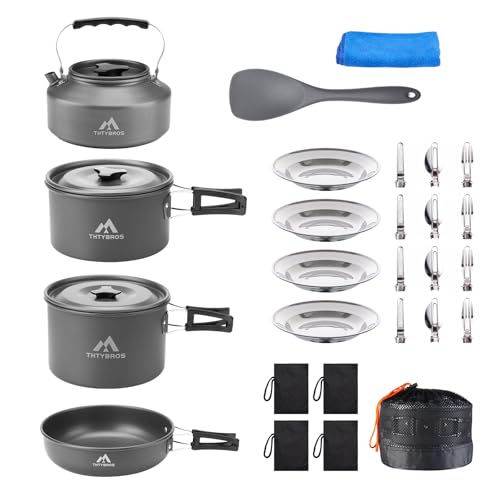
If you camp with family or friends, a complete cookset is convenient and cost-effective. Most 4- to 8-person sets include a pot, frying pan, kettle, bowls, and utensils that nest together. For minimalists, a 2-pot set plus a small camping kettle covers 90% of cooking needs. Solo backpackers usually opt for a single 0.8L titanium pot with a lid that doubles as a fry pan. Many experienced campers also add a dedicated camping utensils set (spatula, ladle, spoon) and a foldable cutting board to complete the outdoor kitchen.
Before you buy, check compatibility with your stove: canister stoves need pots with stable bases, while liquid fuel stoves work with any material. For RV camping, you can bring heavier, nonstick cookware just like at home. Meanwhile, primitive camping demands ultra-durable, packable solutions like stainless steel billy cans.
Key Features to Look For
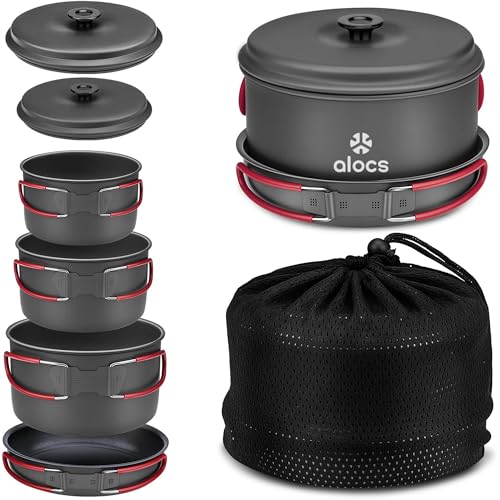
- Nesting design: Saves critical space in your camping bag.
- Foldable or detachable handles: Reduces packed volume.
- Nonstick coating (PTFE-free or ceramic): Easy cleanup and less oil needed.
- Volume markings inside pots: Perfect for boiling water or measuring rice.
- Mesh or stuff sack included: Protects nonstick surfaces inside your pack.
Understanding Camping Cookware Value Tiers
Entry-level options typically cover basic aluminum mess kits — fine for occasional car campers. Mid-range cookware includes hard-anodized nonstick sets or stainless steel combos that last for years. Premium and luxury titanium cookware is ideal for thru-hikers and weight-conscious adventurers who prioritize low weight and long-term durability. For most families, a mid-range nonstick cookset from a reputable brand provides the best overall balance of performance and longevity. Remember to also plan for camping meals ingredients and a reliable camping stoves unit.
No matter what you choose, always practice Leave No Trace principles: wash cookware at least 200 feet from water sources, use biodegradable soap, and pack out all food scraps. For cold-weather trips, refer to the winter camping gear guide to ensure your cookware works well below freezing (avoid liquids in titanium pots which can warp?).