Camping Safety: The Complete Guide to Staying Safe Outdoors
From wildlife encounters to severe weather, learn the essential safety skills every camper needs before heading into the wild.
EXPLORE SAFETY TIPSWhy Camping Safety Matters: The wilderness is unpredictable. A sudden thunderstorm, an unexpected bear encounter, or a wrong turn on a trail can quickly turn a relaxing trip into a life-threatening situation. This guide covers every major safety category — wildlife, weather, campfire, first aid, and emergency preparedness — so you can enjoy the outdoors with confidence and return home safely. Whether you're a first-time camper or a seasoned backcountry explorer, these are the skills that matter most.
Wildlife Safety: How to Coexist with Animals in the Wild
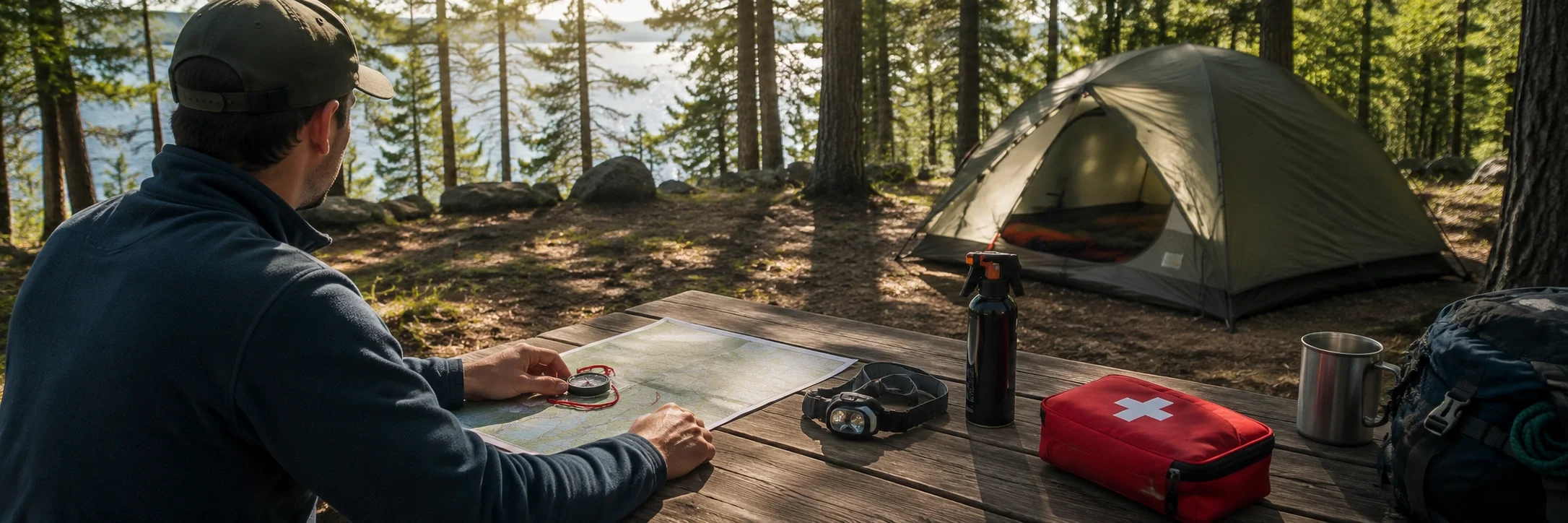
Wildlife encounters are one of the most exciting parts of camping — but they can also be the most dangerous if you're unprepared. Most animal attacks happen because campers make preventable mistakes: storing food improperly, approaching too closely, or failing to recognize warning signs. Understanding animal behavior and following proven safety protocols dramatically reduces your risk.
Bear Safety
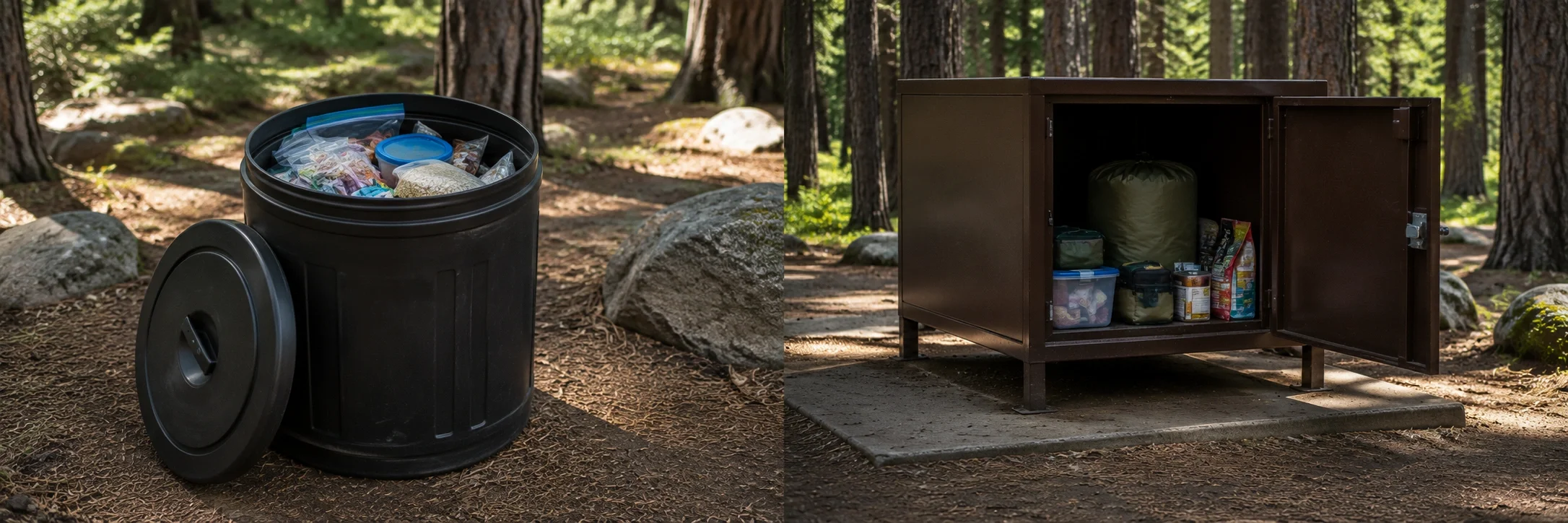
Bears are the most significant wildlife threat in North American campgrounds. Both black bears and grizzly bears are attracted to food odors, and a bear that associates humans with food becomes a repeat problem. The single most important step you can take is proper food storage. In bear country, never keep food, toiletries, or scented items inside your tent. Use bear canisters, bear hangs, or metal food lockers provided at campgrounds.
If you encounter a bear, your response depends on the species. For black bears, make yourself look large, make noise, and slowly back away — they rarely attack. For grizzly bears, play dead if attacked (lie flat on your stomach, hands behind your neck). Always carry bear spray in bear country — studies show it's more effective than firearms. If you're deciding between protection methods, our bear spray vs gun comparison breaks down the evidence.
⚠️ Critical Rule: Never run from a bear. Running triggers a predatory chase instinct. Back away slowly while speaking in a calm, firm voice. Keep your bear spray accessible (on your belt or chest strap), not buried in your backpack.
Snake Safety
Venomous snakes including rattlesnakes, copperheads, cottonmouths, and coral snakes are found across much of the United States. Most snake bites occur when people accidentally step on or reach near a snake. Our snake and wildlife safety guide covers identification and response in detail, but the basics are straightforward: watch where you step, wear closed-toe boots, never reach into rock crevices or brush piles, and give any snake you see a wide berth (at least 6 feet).
Mountain Lion Safety
Mountain lion encounters are rare but potentially fatal. These ambush predators are most active at dawn and dusk. If you see one, never turn your back or run. Make yourself appear large, maintain eye contact, and make noise. If attacked, fight back aggressively — unlike with grizzly bears, playing dead is never the right response to a mountain lion. Learn more in our dedicated mountain lion safety guide.
Insect and Bug Protection
While less dramatic than large predators, insects cause more health problems for campers than any other wildlife. Mosquitoes can transmit West Nile virus and other diseases, ticks carry Lyme disease and Rocky Mountain spotted fever, and wasp or bee stings can be life-threatening for allergic individuals. Effective mosquito and bug protection includes DEET-based repellent (20-30% concentration), permethrin-treated clothing, and mosquito netting for your hammock or sleeping area.
🛡️ Bear Country Essentials
Bear canister (mid-range), bear spray (budget-friendly), odor-proof bags (budget-friendly). Store all scented items 200+ feet from your sleeping area.
🐍 Snake Bite Response
Stay calm, immobilize the limb, keep the bite below heart level, and seek emergency medical help immediately. Do not cut or suck the wound.
🦟 Insect Protection Kit
DEET repellent (budget-friendly), permethrin spray (budget-friendly), tick removal tool (budget-friendly), antihistamine tablets (budget-friendly) for allergic reactions.
Weather Safety: Surviving Storms, Heat, and Cold
Weather is the most unpredictable hazard in the outdoors. Conditions can shift from clear skies to life-threatening storms in minutes, especially in mountainous terrain. Checking the forecast before you leave is important, but knowing how to respond when conditions change is what truly keeps you safe.
Lightning Safety
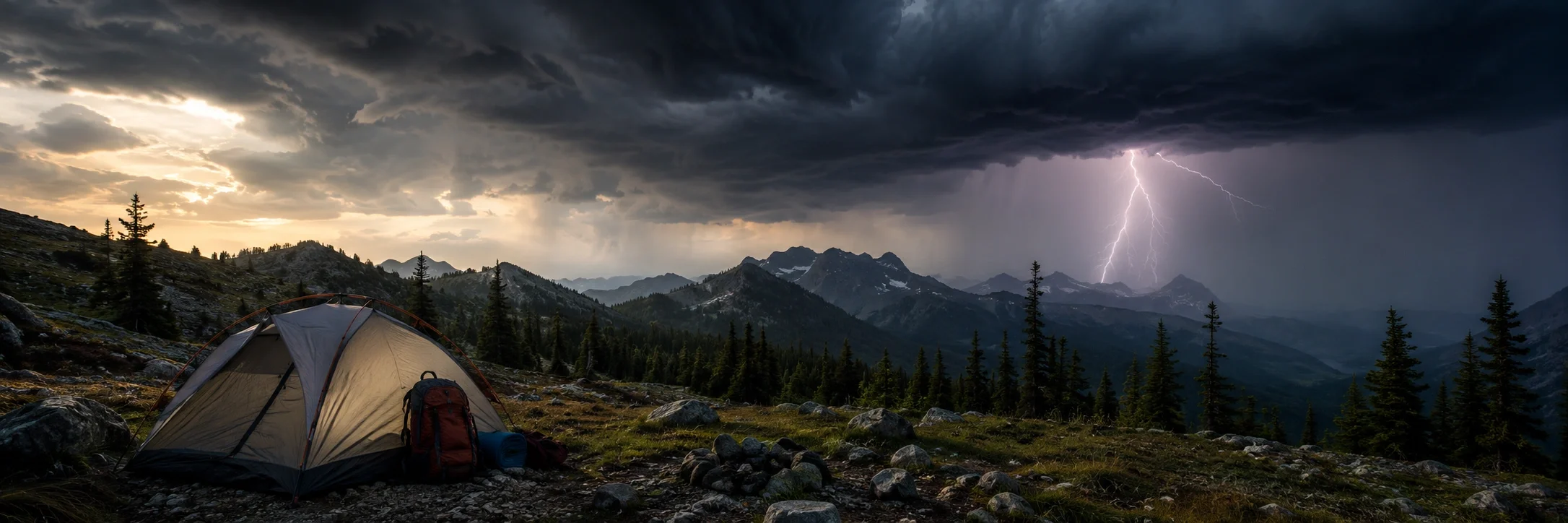
Lightning kills an average of 27 people per year in the United States, and campers are especially vulnerable because they're often in exposed areas. If you hear thunder, you're within striking distance — seek shelter immediately. Your tent offers zero protection from lightning. Instead, move to a hard-topped vehicle or a substantial building. If no shelter is available, avoid tall isolated trees, open fields, hilltops, and water. Our lightning safety guide covers the full 30-30 rule and proper crouch position.
🚨 DEADLY MISTAKE: Never shelter under a lone tree during a thunderstorm. Lightning often strikes the tallest object in an area. If caught in the open with no shelter, find a low-lying area, crouch down on the balls of your feet, keep your feet together, and tuck your head down. Do NOT lie flat on the ground.
Flash Flood Safety
Flash floods can occur miles downstream from a storm you can't even see. A dry creek bed can become a raging river in minutes. Never camp in a dry wash, drainage area, or low-lying spot near water. If you hear a roaring sound upstream or notice water suddenly turning muddy, move to higher ground immediately — you may only have seconds. Read our complete flash flood safety guide for terrain assessment tips.
Heat-Related Illness
Heat exhaustion and heatstroke are serious risks during summer camping, particularly in desert or low-elevation environments. Symptoms of heat exhaustion include heavy sweating, weakness, cold and clammy skin, fast pulse, and nausea. If untreated, it progresses to heatstroke — a medical emergency with body temperature above 103°F, confusion, and loss of consciousness. Prevention is straightforward: drink at least 1 liter of water per hour during active outdoor time, take breaks in shade, and wear lightweight, light-colored clothing. Our heatstroke prevention guide has detailed protocols.
Cold Weather and Hypothermia
Hypothermia can occur even in temperatures above 50°F if you're wet and wind-exposed. It's one of the leading causes of outdoor fatalities. The key to hypothermia prevention is staying dry, staying insulated, and recognizing early symptoms: shivering, slurred speech, confusion, and drowsiness. For cold weather camping safety, invest in a proper sleeping bag rated 10-15°F below expected lows, use a quality sleeping pad with high R-value, and always change out of wet clothes immediately. This is especially critical during winter camping expeditions.
💡 Pro Tip: Set up weather alerts on your phone before heading out. Many camping apps and NOAA weather radios can push severe weather warnings to your device even in areas with limited cell service, giving you critical extra minutes to react.
| Hazard | Warning Signs | Immediate Action | Gear Needed |
|---|---|---|---|
| Lightning | Thunder, darkening sky, hair standing up | Move to vehicle/building; crouch if exposed | NOAA weather radio (budget-friendly) |
| Flash Flood | Rising water, muddy flow, roaring sound | Move to high ground immediately | Topographic map (budget-friendly) |
| Heatstroke | No sweating, confusion, 103°F+ temp | Cool rapidly, call 911, hydrate | Electrolyte packets (budget-friendly) |
| Hypothermia | Shivering, slurred speech, confusion | Get dry, insulate, warm core first | Emergency bivy (budget-friendly) |
Campfire Safety: Preventing Wildfires and Burns
Campfires are a centerpiece of the camping experience — but they're also the leading human cause of wildfires. Nearly 85% of wildfires in the United States are caused by humans, and escaped campfires are a major contributor. Following proper campfire safety rules isn't optional; it's a responsibility every camper shares.
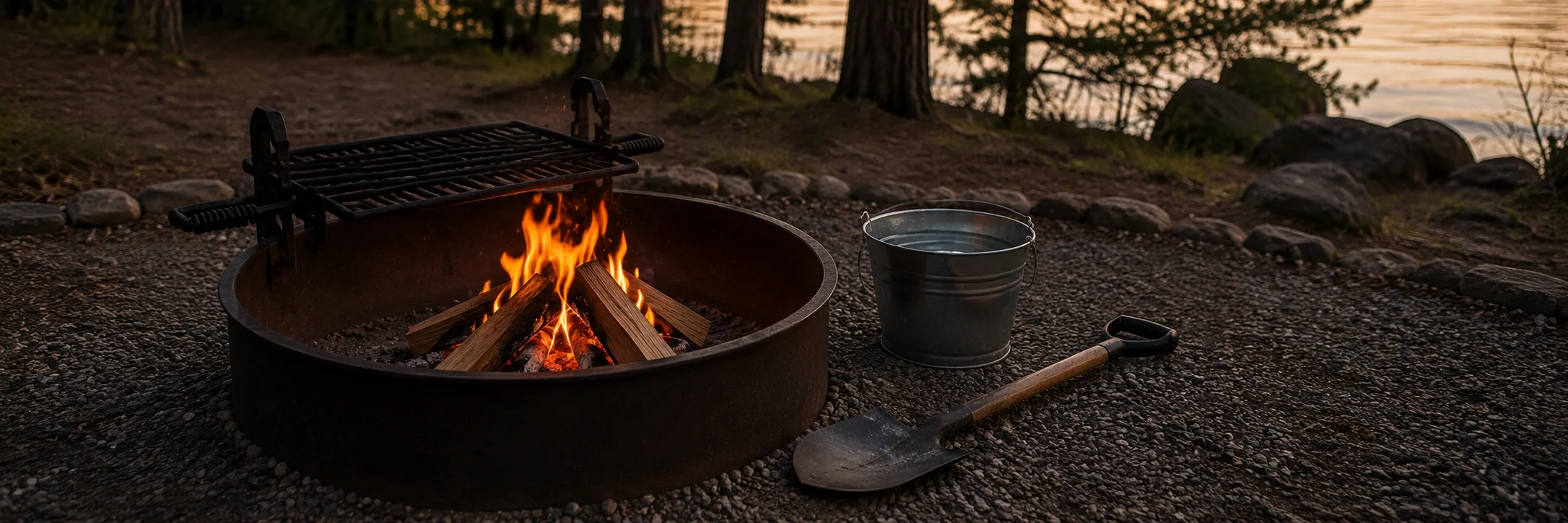
Building a Safe Campfire
- Check for fire bans and restrictions before you go — many areas prohibit fires during dry seasons
- Use existing fire rings whenever possible; if creating one, clear a 10-foot diameter down to mineral soil
- Keep your fire small and manageable — you're cooking or staying warm, not signaling for help
- Never use flammable liquids (gasoline, lighter fluid) to start a fire
- Keep water, dirt, and a shovel within reach at all times
- Never leave a fire unattended — even for a minute
Extinguishing Your Fire Completely
The most critical campfire skill is knowing how to extinguish a campfire completely. Drowning it with water isn't enough — you must stir the ashes, add more water, stir again, and repeat until the ashes are cold to the touch. If you can hold your hand over the ashes and feel no warmth, the fire is out. Many devastating wildfires have started from "extinguished" campfires that still had hot coals beneath the surface.
🚨 Zero Tolerance: "If it's too hot to touch, it's too hot to leave." This is the gold standard of campfire safety. Violating campfire regulations can result in significant fines and criminal charges if your fire causes a wildfire. Wildfire prevention starts with every individual camper's commitment to responsible fire management.
First Aid & Emergency Preparedness
No matter how careful you are, injuries and emergencies can happen. A well-stocked camping first aid kit and the knowledge to use it are non-negotiable for any camping trip. The farther you are from medical help, the more critical your own first aid skills become.
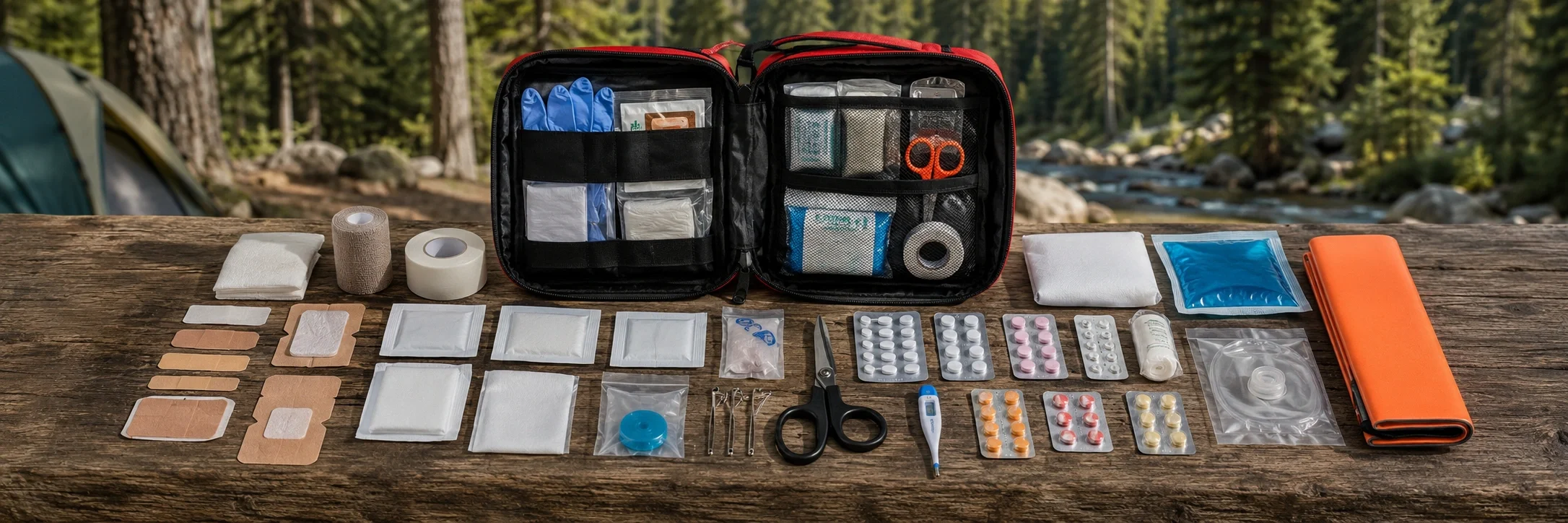
Building Your First Aid Kit
A pre-made kit is a good starting point, but most need supplementation. Your first aid kit should include adhesive bandages, gauze pads, medical tape, antiseptic wipes, antibiotic ointment, blister treatment, tweezers, scissors, a SAM splint, elastic bandage, pain relievers, antihistamines, and any personal medications. For wilderness first aid scenarios beyond basic care, add a suction device for snake bites, a tourniquet, and emergency irrigation syringe.
Common Camping Injuries and How to Treat Them
The most frequent injuries campers face include cuts and scrapes, burns (from campfires and camping stoves), blisters, sprains, and insect stings. Most common camping injuries are manageable on-site with proper supplies. Our first aid for camping guide provides step-by-step treatment protocols for each. The key principle: clean wounds thoroughly — infection is a far greater threat in the backcountry than the initial injury.
Emergency Communication Devices
Cell service is unreliable in most wilderness areas. For emergency communication, consider a satellite messenger device like a Garmin inReach (premium) or SPOT Gen4 (mid-range plus subscription). These devices can send SOS signals with your GPS coordinates to rescue authorities via satellite, working anywhere with a clear view of the sky. Personal Locator Beacons (PLBs) (mid-range) are another option — they don't require a subscription but only send one-way emergency signals. For group communication, two-way radios (budget-friendly per pair) keep your party connected on trails.
💡 Budget Tip: If you can't invest in a satellite device yet, at minimum download offline maps and share your exact itinerary with a trusted contact before departure. Tell them exactly where you'll be, which trailhead you're starting from, and when you expect to return. If you don't check in by your designated time, they should contact authorities.
| Emergency Gear | Investment Tier | Best For |
|---|---|---|
| Satellite Messenger (Garmin inReach) | premium | Backcountry, solo trips |
| SPOT Gen4 Tracker | mid-range | Budget satellite SOS |
| Personal Locator Beacon (PLB) | mid-range | No-subscription emergency |
| NOAA Weather Radio | budget-friendly | Storm warning in all conditions |
| Two-Way Radios (Pair) | budget-friendly | Group communication on trails |
| Comprehensive First Aid Kit | budget-friendly to mid-range | Every camping trip |
| Emergency Bivy Sack | budget-friendly | Unplanned overnight exposure |
What to Do If You Get Lost in the Wilderness
Getting lost is more common than most campers admit. Panic is your greatest enemy in this situation — it leads to poor decisions like running, abandoning gear, or walking at night. Our what to do if lost guide follows the internationally recognized STOP protocol:
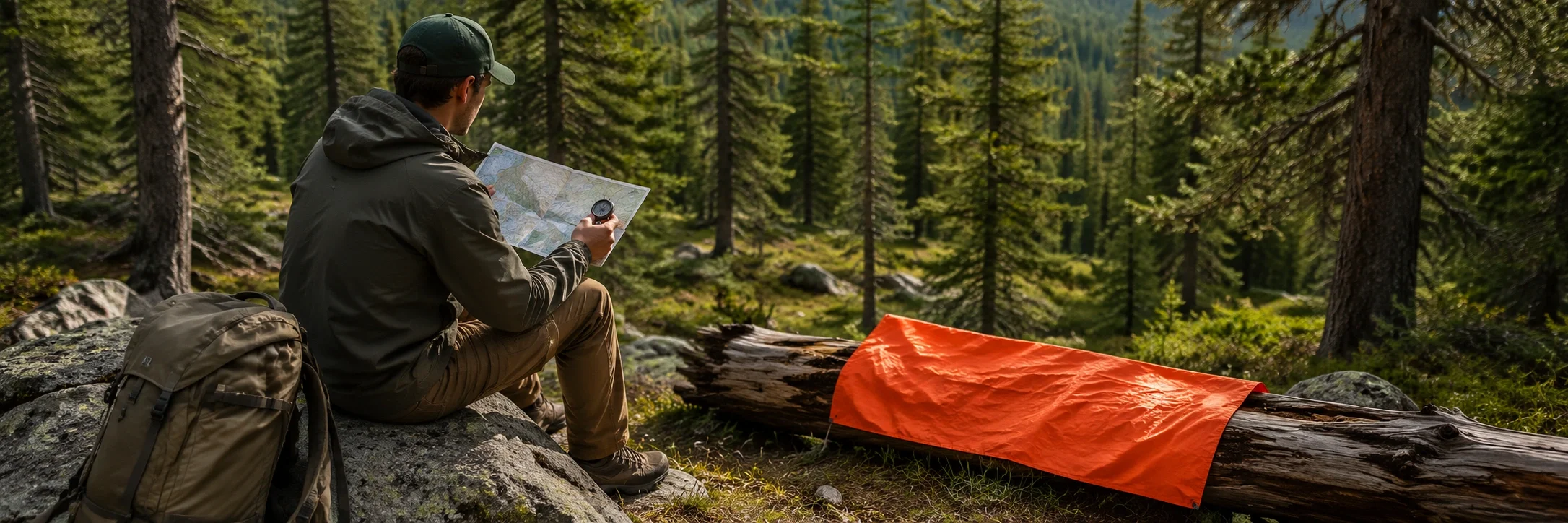
- Stop — Sit down the moment you realize you're lost. Do not take another step while panicked.
- Think — How did you get here? What landmarks do you remember? How long ago was your last known position?
- Observe — Look at your surroundings, check your gear, assess water and food supplies, evaluate the weather and remaining daylight.
- Plan — Decide whether to stay put (usually the best choice) or attempt self-rescue based on your skills, supplies, and conditions.
In most cases, staying put is the safest decision. Search and rescue teams will look for you along your planned route first. Make yourself visible: put on bright clothing, set up your tarp in an open area, and create emergency SOS signals using rocks, logs, or brightly colored items. Three of anything (three fires, three whistle blasts, three signal mirror flashes) is the universal distress signal. This knowledge is especially vital for solo camping where there's no one to notice your absence.
⚠️ Before Every Hike: Always carry the ten essentials: navigation (map, compass, or GPS), sun protection, insulation, illumination, first aid supplies, fire starter, repair tools, nutrition, hydration, and emergency shelter. These items transform a potential disaster into a manageable situation.
Food Storage Rules & Camp Hygiene
Proper food storage protects both you and wildlife. Animals that obtain human food become habituated, aggressive, and often have to be euthanized. Beyond bear country, raccoons, coyotes, jays, and rodents will ransack improperly stored food, creating messes and potentially contaminating your supplies.
- Bear canisters are required in many national parks and forests — check local regulations before your trip (mid-range)
- Bear hangs (PCT method) are a free alternative: suspend food at least 10 feet off the ground and 4 feet from the trunk
- Cooler security — even a quality cooler isn't bear-proof; lock it in a vehicle at night in bear country
- Cooking area should be at least 200 feet from your sleeping area and downwind when possible
- Scented items include toothpaste, deodorant, sunscreen, and lip balm — store them with your food, not in your tent
Camp hygiene also prevents illness. Use portable toilets or dig catholes 6-8 inches deep and 200 feet from water sources. Pack out all trash and hygiene products — even "biodegradable" soap should never be used directly in streams or lakes. Wash dishes at least 200 feet from water sources using a designated camp kitchen setup.
Safety Considerations by Camping Style
Different camping styles present different safety challenges. A family camping trip at a developed campground has very different risk profiles than a wild camping expedition in remote terrain. Here's how to adapt your safety approach:
🏕️ Developed Campground
Lower risk overall. Focus on food storage, child supervision near fire and water, and basic first aid. Cell service is often available. A beginner camping checklist covers most needs.
🚗 Car Camping
Your vehicle provides emergency shelter and supply storage. Bring a comprehensive car camping checklist with extra water, food, and warm layers. Keep a spare key hidden outside the vehicle.
🏔️ Backcountry Camping
Highest risk level. Requires satellite communication, advanced first aid skills, navigation tools, and a thorough backpacking checklist. Never go alone without telling someone your exact itinerary.
❄️ Winter Camping
Cold exposure is the primary threat. Requires specialized winter gear, knowledge of avalanche safety, and strict winter camping safety protocols. Check our winter checklist before departure.
Emergency Preparedness Checklist
Before every trip, run through this safety checklist. It takes five minutes and could save your life. For a complete packing list that includes safety items alongside regular camping gear, see our emergency preparedness guide.
Pre-Trip Safety Checklist
The Mindset of a Safe Camper
Safety isn't about being fearful — it's about being prepared. The most experienced outdoor enthusiasts aren't the ones who take reckless risks; they're the ones who plan for worst-case scenarios so they can relax and enjoy their surroundings. Every piece of essential gear you pack, every weather report you check, and every safety protocol you follow is an investment in peace of mind.
Whether you're spending a weekend at a state park or embarking on a multi-day backcountry expedition, the fundamentals remain the same: know your environment, carry the right equipment, communicate your plans, and respect the power of nature. The wilderness rewards those who approach it with both enthusiasm and humility.
Remember: No piece of gear replaces good judgment. The best safety tool you own is the one between your ears. Stay alert, stay informed, and enjoy the incredible experience that only camping in the great outdoors can provide.