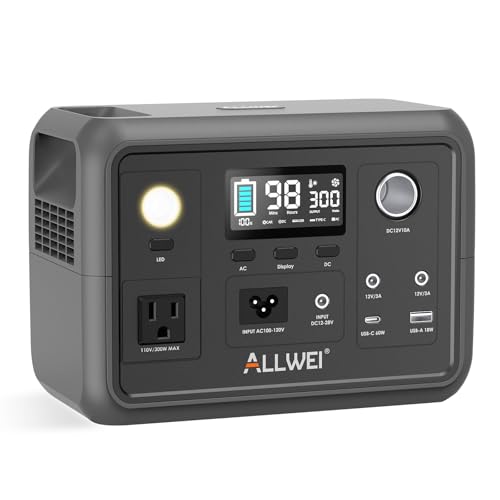
Portable Power Station Guide: Reliable Outdoor Energy
Everything you need to know about choosing a portable power station for camping, emergencies, and off-grid adventures — from battery types to real-world power needs.
START YOUR RESEARCHWhat Is a Portable Power Station — and Why Do You Need One?
A portable power station is a rechargeable battery pack with built-in AC outlets, USB ports, and DC outputs. Unlike a traditional generator, it produces no fumes, makes no noise, and can be used safely indoors or inside a tent. For campers, it means you can charge phones, run a rechargeable battery-powered lantern, power a CPAP machine, or even run a small cooler without relying on your vehicle's battery.
If you're building a base camp setup or planning a camping trip with kids, a power station can be a game-changer. It keeps devices charged for navigation, communication, and entertainment — and provides peace of mind during emergency preparedness camping. This guide walks you through the key decisions so you can choose the right model with confidence.
Key Use Cases for Campers
🔋 Device Charging
Charge smartphones, tablets, cameras, and camping communication devices multiple times over a weekend. A mid-range station typically handles several devices simultaneously without draining quickly.
💡 Lighting & Ambience
Run LED string lights, a rechargeable lantern, or a small fan through the night. Unlike disposable batteries, a power station gives you consistent output until it's depleted.
🍳 Small Appliance Power
Power a single-burner propane camp stove (electric ignition models), a small blender, or a mini fridge. Check the station's continuous wattage before plugging in any heating appliance.
🛠️ Emergency Backup
Use it at home during outages to keep a portable heater running, charge a personal locator beacon, or power a medical device. It's a versatile safety net for both outdoor and indoor scenarios.
Battery Technology: LiFePO4 vs. NMC
The battery inside your power station determines its lifespan, weight, and safety profile. Two chemistries dominate the market:
| Feature | LiFePO4 (Lithium Iron Phosphate) | NMC (Nickel Manganese Cobalt) |
|---|---|---|
| Cycle Life | Typically 2,000–5,000+ cycles | Typically 500–1,000 cycles |
| Weight | Heavier per watt-hour | Lighter per watt-hour |
| Thermal Stability | Excellent — less prone to overheating | Good, but requires more robust management |
| Ideal For | Long-term ownership, frequent use, safety-conscious buyers | Portability-focused users, occasional use |
For most campers who plan to use a station for years, LiFePO4 is the more durable and safer choice. NMC stations tend to be lighter, which matters if you're carrying gear to a backcountry hunting spot or a cliff camping location. If you're also considering smaller power sources, our guide to camping power banks covers pocket-sized options.
How to Choose the Right Capacity (Without Overpaying)
Capacity is measured in watt-hours (Wh). Bigger isn't always better — a station that's too large becomes a burden to transport. Here's a practical framework based on real camping scenarios:
200–500 Wh
Perfect for solo campers or short weekend trips. Enough to charge a phone 10–15 times, run a lantern for several nights, or power a small fan. Ideal for camping alone or minimalist ultralight backpacking gear setups.
500–1,000 Wh
The sweet spot for couples and small families. Can power a portable fridge for a day, charge multiple devices, and run lights for a week. Great for car camping and camping with kids.
1,000–2,000+ Wh
For extended off-grid trips or workamping setups. Can run a portable heater (short-term), power a CPAP machine all night, and support small power tools. Heavier, but indispensable for serious base camp setups.
Output Power and Port Selection
Watt-hours tell you how long the battery lasts; watts (W) tell you what you can run at once. Check the continuous output rating — not just the peak/surge rating. A station with a 500W continuous output can run a 400W appliance safely, but a 1,000W peak rating doesn't mean you can run a 1,000W heater continuously.
🔌 AC Outlets
Standard household-style outlets. Look for pure sine wave output if you're powering sensitive electronics like laptops or medical devices. Modified sine wave can cause buzzing or overheating in some gear.
🔋 USB Ports
USB-A and USB-C ports (especially USB-C PD) are essential for modern devices. A station with at least one 60W USB-C PD port can charge a laptop directly.
⚡ DC & Car Ports
12V DC outputs (cigarette-lighter style) are useful for portable fridges, air pumps, and 12-volt LED strip lights for RV exterior setups.
☀️ Solar Input
If you want to recharge off-grid, check the maximum solar input voltage and amperage. Many stations accept 100–200W of solar input, which can recharge a mid-size unit in a day of good sun.
Ways to Recharge Your Power Station
A power station is only as useful as your ability to recharge it. Most models support multiple input methods:
- Wall outlet (AC): The fastest method — most mid-range stations recharge in 2–5 hours.
- Solar panels: Ideal for camping technology setups and extended off-grid trips. Pair with our solar chargers for camping recommendations.
- Car 12V outlet: Convenient during road trips, but slow — often 8–12 hours for a full charge. Useful for truck bed camping or RV parking scenarios.
- USB-C PD: Some smaller stations support USB-C input, which is handy if you already carry a high-wattage charger for your laptop.
Safety Features to Look For
A portable power station is a large lithium battery — safety should never be an afterthought. Prioritize models with these built-in protections:
🛡️ BMS (Battery Management System)
Protects against overcharge, over-discharge, short circuits, and overheating. A quality BMS is non-negotiable for any lithium-based station.
🌡️ Temperature Protection
Prevents charging or discharging outside safe temperature ranges. Especially important if you camp in extreme heat or cold.
🔌 Pure Sine Wave Inverter
Clean, stable AC power that won't damage sensitive electronics. Necessary for medical devices, laptops, and audio equipment.
🔋 Cell Balancing
Keeps individual battery cells at equal charge levels, maximizing lifespan and preventing weak points in the battery pack.
For broader emergency readiness, pair your power station with a winter first aid kit and review our emergency communication guide. A power station is a key component of any winter emergency kit.
Portability and Form Factor
A 1,000Wh station typically weighs between 20 and 30 pounds. That's manageable for car camping, but too heavy for backpacking. Consider these trade-offs:
| Form Factor | Typical Capacity Range | Best For |
|---|---|---|
| Compact / hand-carry | 200–500 Wh | Solo trips, day hikes, emergency kits |
| Mid-size with handle | 500–1,000 Wh | Car camping, family trips, weekend base camps |
| Large with wheels | 1,000–2,000+ Wh | Extended off-grid living, RV backup, workamping |
If you're setting up a base camp with a large tent, a wheeled station is much easier to move around. For backcountry hunting or solo camping, a compact unit that fits in your camping backpack with tent and sleeping bag is more practical.
Common Mistakes to Avoid
❌ Ignoring Continuous Wattage
Many buyers focus on peak wattage and then discover their appliance won't run continuously. Always check the continuous output rating against your device's power draw.
❌ Underestimating Recharge Time
A large battery takes longer to recharge. If you only have a car 12V outlet, a 1,000Wh station might take 10+ hours. Factor in your charging method.
❌ Forgetting About Cold Weather
Lithium batteries lose capacity in freezing temperatures. If you're into winter camping, plan to keep the station warm or choose a model with built-in heating.
❌ Overlooking Portability
A 30-pound station is fine in a car, but miserable to carry to a remote campsite. Match the weight to how far you'll actually transport it.
Frequently Asked Questions
Can a portable power station run a space heater?
Most space heaters draw 750–1,500 watts. Only premium-tier power stations with high continuous output can run them — and even then, runtime will be short. For tent heating, a portable heater designed for camping is more efficient. See our portable heaters guide for alternatives.
How long does a power station last?
LiFePO4 batteries typically retain 80% capacity after 2,000–5,000 full cycles. If you use 50% of the battery per camping trip and go 20 times a year, that's roughly 20+ years of service — far longer than most campers need.
Can I use a power station indoors?
Yes — unlike gas generators, portable power stations produce zero emissions and can be used safely indoors. That makes them ideal for emergency backup during emergency preparedness situations.
Do I need a solar panel with my power station?
Not necessarily. Most campers recharge from a wall outlet before leaving home. But if you're planning extended off-grid trips — especially boondocking or BLM camping — a solar panel extends your usable time indefinitely. Check our solar chargers for camping guide.
What's the difference between a power station and a generator?
Generators burn fuel and produce fumes/noise. Power stations store energy in batteries and produce neither. For camping, a power station is almost always the better choice unless you need sustained high-output power for hours (e.g., running a large AC unit). For that, see our camping generators guide.
Ready to choose? You now have the framework to evaluate capacity, battery chemistry, output, and portability. The products below are selected to cover a range of camping needs — from compact entry-level units to high-capacity stations for extended trips. Each listing includes real-time availability and pricing from our partner.
Related Guides to Explore
Portable Power Stations
Our broader category page covering all types of portable power solutions for camping and outdoor use.
Camping Power Banks
Smaller, lighter battery packs for charging phones and small devices on the go.
Solar Chargers for Camping
Harness the sun to keep your power station topped up during extended off-grid adventures.
Camping Generators
Compare fuel-powered generators for situations where battery capacity isn't enough.