
Best Camping Beds: Complete Buying Guide & Top Picks
A good night's sleep makes or breaks your camping trip. This guide covers every type of camping bed, what to look for, and how to choose the right one for your outdoor adventures.
What Is a Camping Bed?
A camping bed is a portable sleep surface designed to provide comfort and support when sleeping outdoors. Unlike standard sleeping mats that sit directly on the ground, camping beds elevate you off the terrain, offering better insulation from cold surfaces, improved back support, and a sleep experience much closer to what you get at home.
Camping beds come in several varieties — from foldable cots and inflatable air mattresses to roll-up foam beds. Each type serves a different purpose, and choosing the wrong one can mean a restless night or an unnecessarily heavy pack. Whether you're setting up at a car camping site, outfitting an RV, or building a comfortable glamping setup, understanding the differences between these options is essential.
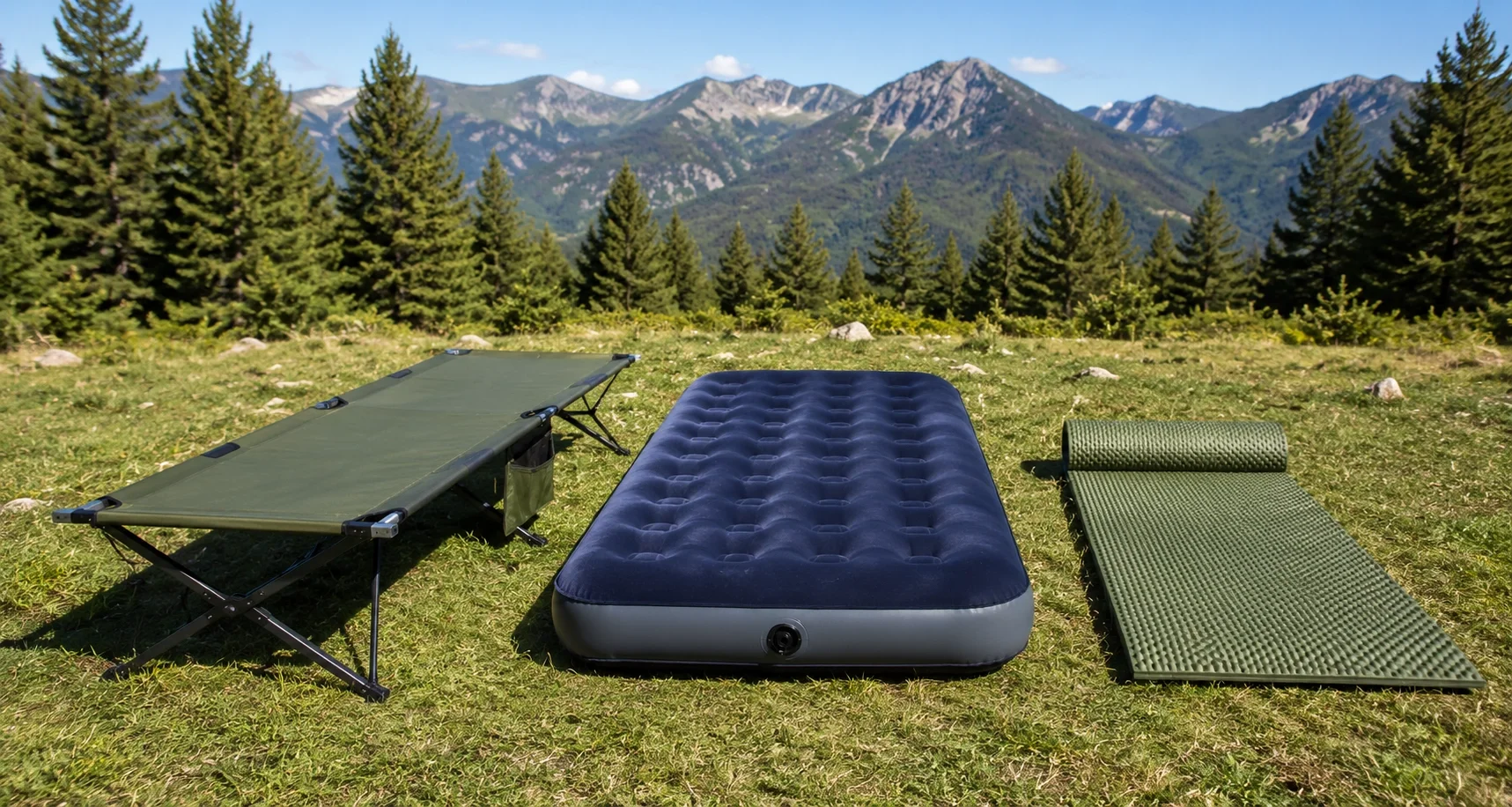
Why a camping bed matters: Research shows that poor sleep quality is the number one reason campers cut trips short. A proper camping bed reduces pressure points, keeps you off cold ground, and helps you wake up refreshed and ready for the day's adventures. Pair your bed with a quality camping pillow and a warm camping blanket for the best results.
Types of Camping Beds Explained
Not all camping beds are built the same. The right choice depends on how you camp, how much you're willing to carry, and what level of comfort you expect. Below are the three main categories, each with distinct advantages.
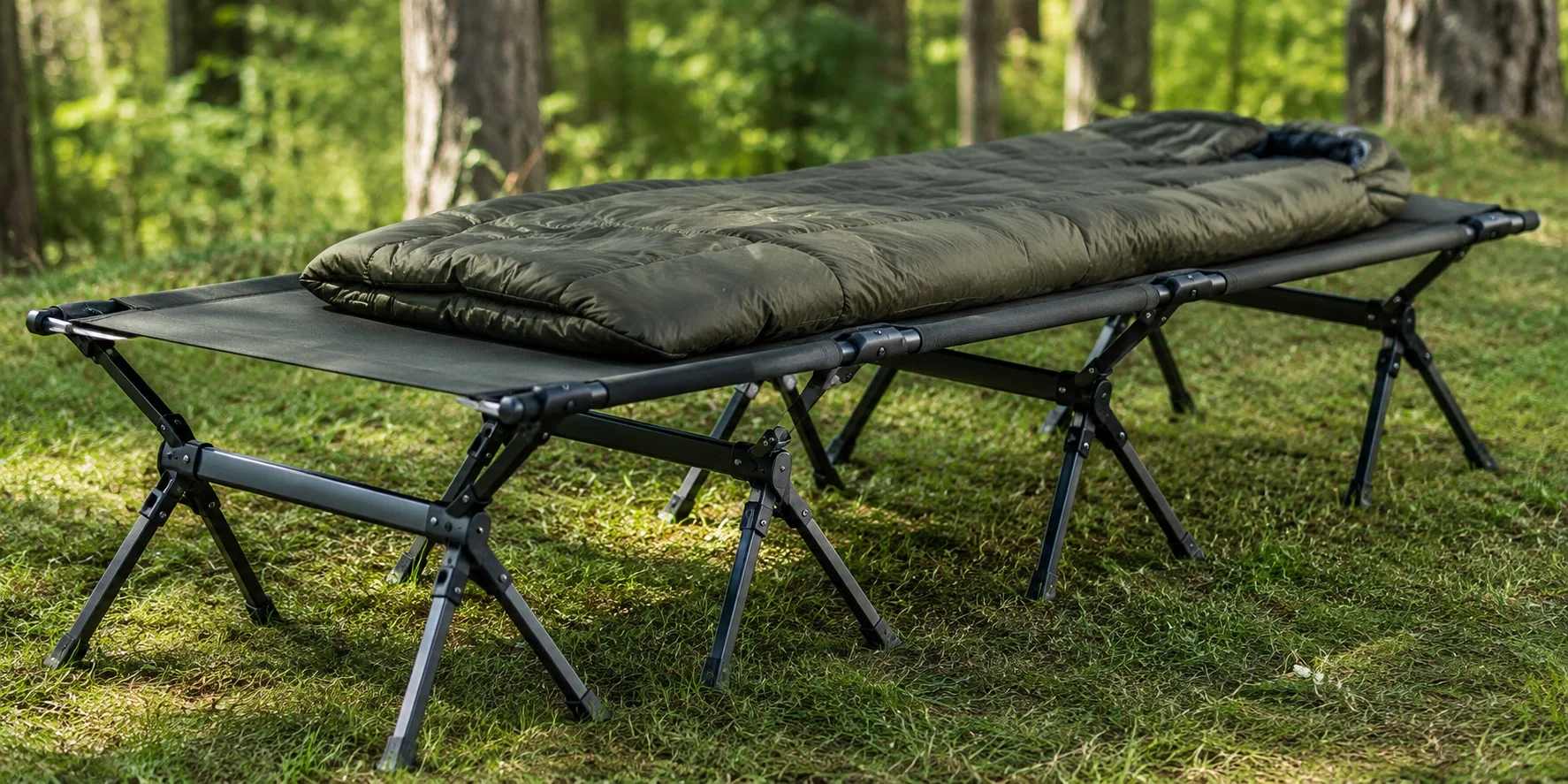
Camping Cots
Cots use a fabric deck stretched across a folding metal or aluminum frame. They keep you fully elevated off the ground, offer excellent weight distribution, and are incredibly durable. Most support 250–400 lbs. Best for car camping and base camps where weight isn't a concern. Commonly confused with dedicated camping cots, though the terms are often used interchangeably.
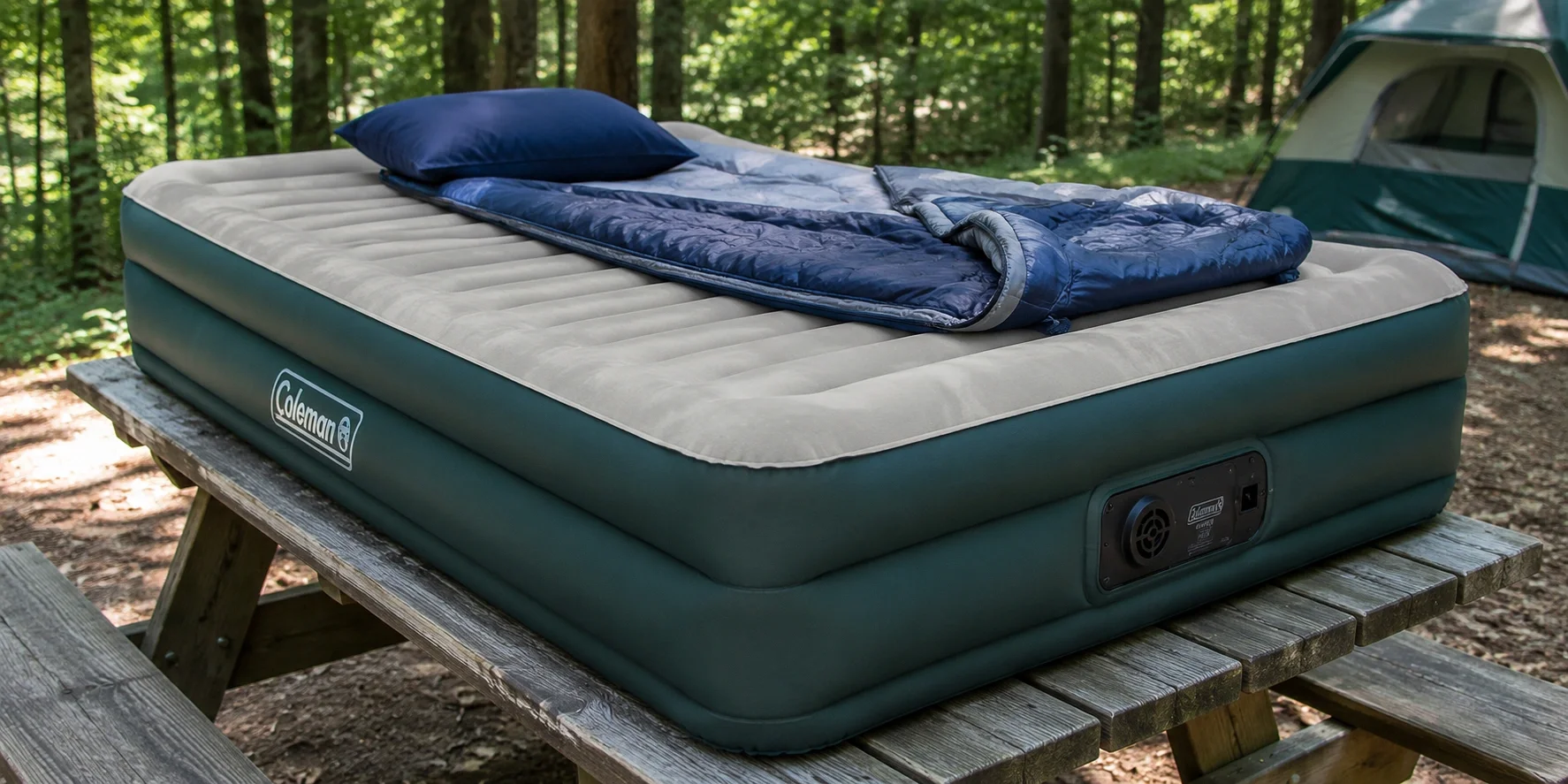
Air Mattresses
Air mattresses provide a plush, cushioned sleep surface that closely mimics a home mattress. Modern models feature built-in electric or battery-powered pumps for quick inflation. They're ideal for family camping trips and guests. The downside: they can lose air overnight in cold temperatures and are vulnerable to punctures.
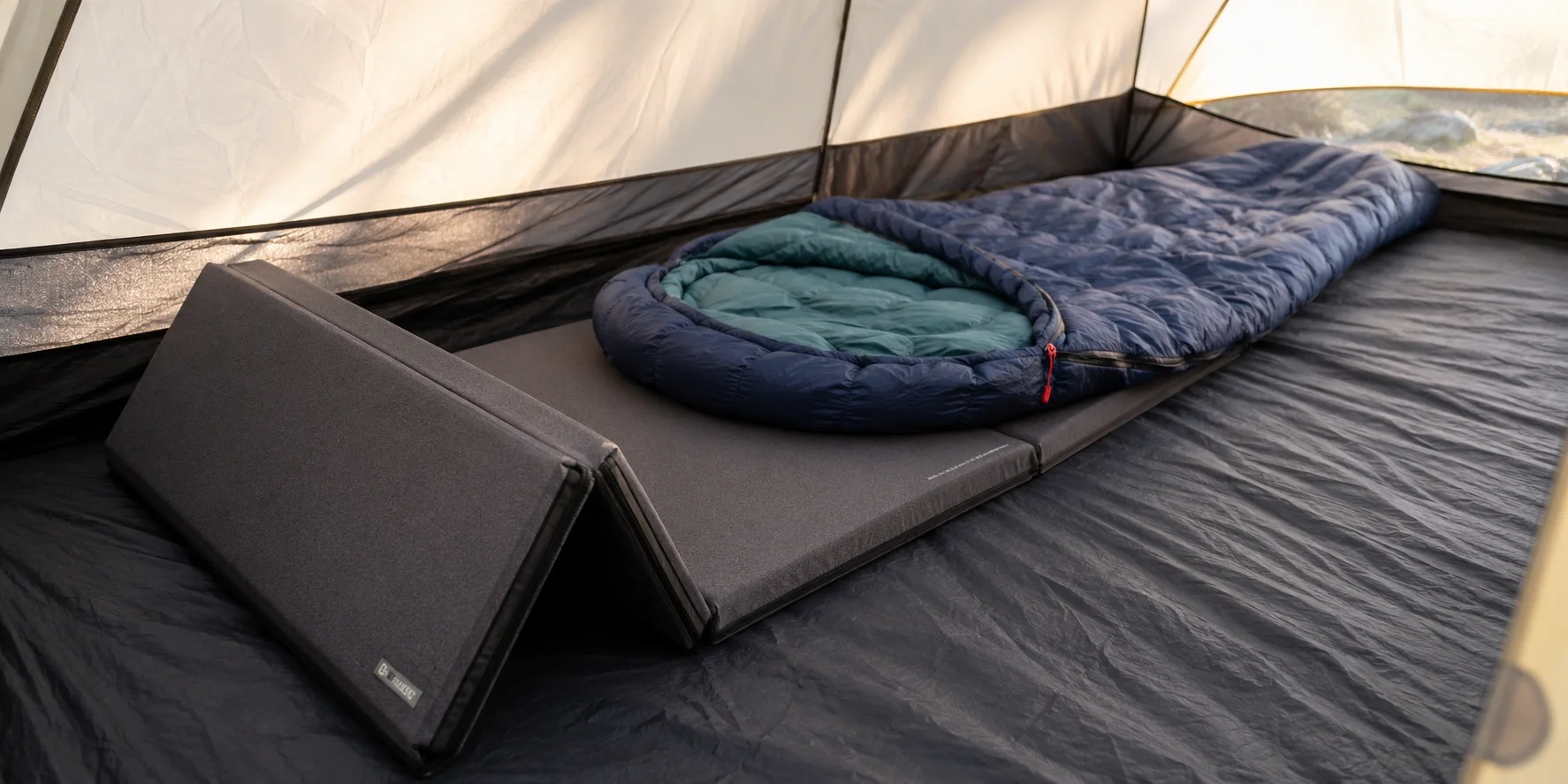
Foam & Folding Beds
Foam camping beds use high-density foam that folds or rolls up for transport. They offer consistent support without the risk of deflation, making them reliable in all temperatures. Lightweight options work well for RV camping and cabin trips. They're also a great budget-friendly option for first-time campers.

Key Factors to Consider When Buying a Camping Bed
Before selecting a camping bed, evaluate these critical factors. Each one directly impacts your comfort, convenience, and overall satisfaction with the purchase.
Weight & Packability
If you're driving to your campsite, weight matters less and you can opt for a sturdy cot or thick air mattress. For backpacking trips, look for ultralight foam beds under 3 lbs. Always check the packed dimensions to ensure it fits in your backpack or vehicle.
Weight Capacity
Standard camping beds support 250–300 lbs, while heavy-duty models handle 400–600 lbs. If you're a larger camper or plan to share the bed with a child, invest in a reinforced frame. Exceeding the rated capacity voids warranties and risks structural failure.
Setup Time & Ease
Cots typically unfold in under 2 minutes with no tools. Air mattresses with built-in pumps inflate in 3–5 minutes. Foam beds require zero setup — just unroll and sleep. Consider how tired you'll be after a long hike when evaluating this factor.
Insulation & Cold Resistance
Cots and air mattresses offer little to no insulation on their own. For winter camping, you'll need a foam pad layered on top. Foam beds naturally insulate better. If you camp in temperatures below 40°F, this factor is critical — check our winter camping gear guide for insulated sleep solutions.
Durability & Material Quality
Look for aircraft-grade aluminum frames on cots, puncture-resistant PVC on air mattresses (ideally with a flocked top), and high-density foam that doesn't compress permanently. Reinforced stitching at stress points separates a bed that lasts years from one that fails on trip two.
Tent Compatibility
Measure your tent's interior floor dimensions before buying. A standard cot (75" × 25") fits in most 3-person tents. Two cots side by side require at least a 5-person tent. Air mattresses are more flexible since they conform to available floor space.
Camping Bed vs Camping Cot vs Sleeping Pad
Many campers confuse these three sleep options. This side-by-side comparison clarifies the strengths and weaknesses of each so you can make an informed decision based on your specific needs.
| Feature | Camping Bed (Cot) | Air Mattress | Sleeping Pad |
|---|---|---|---|
| Comfort Level | Medium-High | High | Medium |
| Setup Time | 1–3 minutes | 3–10 minutes | Instant (self-inflating) |
| Typical Weight | 8–20 lbs | 3–12 lbs | 1–4 lbs |
| Packed Size | Large (42" × 6") | Small-Medium | Very Small (rolled) |
| Ground Clearance | 12–20 inches | 4–10 inches | 0–3 inches |
| Durability | High | Medium | Medium-High |
| Cold Weather Use | Poor (needs pad) | Poor (needs pad) | Good (R-value rated) |
| Investment Tier | Mid-range to premium | Entry-level to mid-range | Mid-range |
| Best For | Car camping, base camp | Family trips, guests | Backpacking, hiking |
Pro tip: You don't have to choose just one. Many experienced campers use a sleeping pad on top of a cot for maximum comfort and insulation. This combination gives you the elevation of a cot with the warmth and cushioning of a pad — ideal for multi-day camping destinations where rest quality directly affects your next day's performance.
Best Camping Beds by Use Case
Different camping styles demand different sleep solutions. Here's a quick guide to matching your camping bed with how you actually camp.

Car Camping
Weight is no concern — go with a full-size camping cot or a thick air mattress. A sturdy cot with side pockets for storage pairs perfectly with your camping chair and camping table for a complete base camp setup.

Family Camping
Air mattresses in queen or king size let kids cuddle up comfortably. Look for models with built-in pumps and raised edges to prevent rolling off. Add a camping blanket for each family member.

RV Camping
Replace thin RV mattresses with a 3–4 inch foam camping bed for dramatically better sleep. Measure your bunk dimensions first. Foam beds store easily when folded and won't damage like air mattresses over time.

Winter Camping
Never use a cot or air mattress alone in freezing temperatures — cold air circulating underneath will chill you. Layer a high R-value sleeping pad on top, and pair with a winter sleeping bag rated 15°F below your expected low.

Solo Camping
A single-width cot or narrow air mattress keeps your pack light while still providing ground clearance. Solo campers doing solo trips often prefer cots for their quick setup and the ability to store gear underneath.

Glamping
Go all out with a raised air mattress topped with a memory foam layer, quality sheets, and plush pillows. In a glamping setup, comfort is the priority — weight and pack size don't matter.
Setup & Maintenance Tips for Longevity
A quality camping bed is an investment. Follow these practices to extend its lifespan and ensure consistent performance trip after trip.
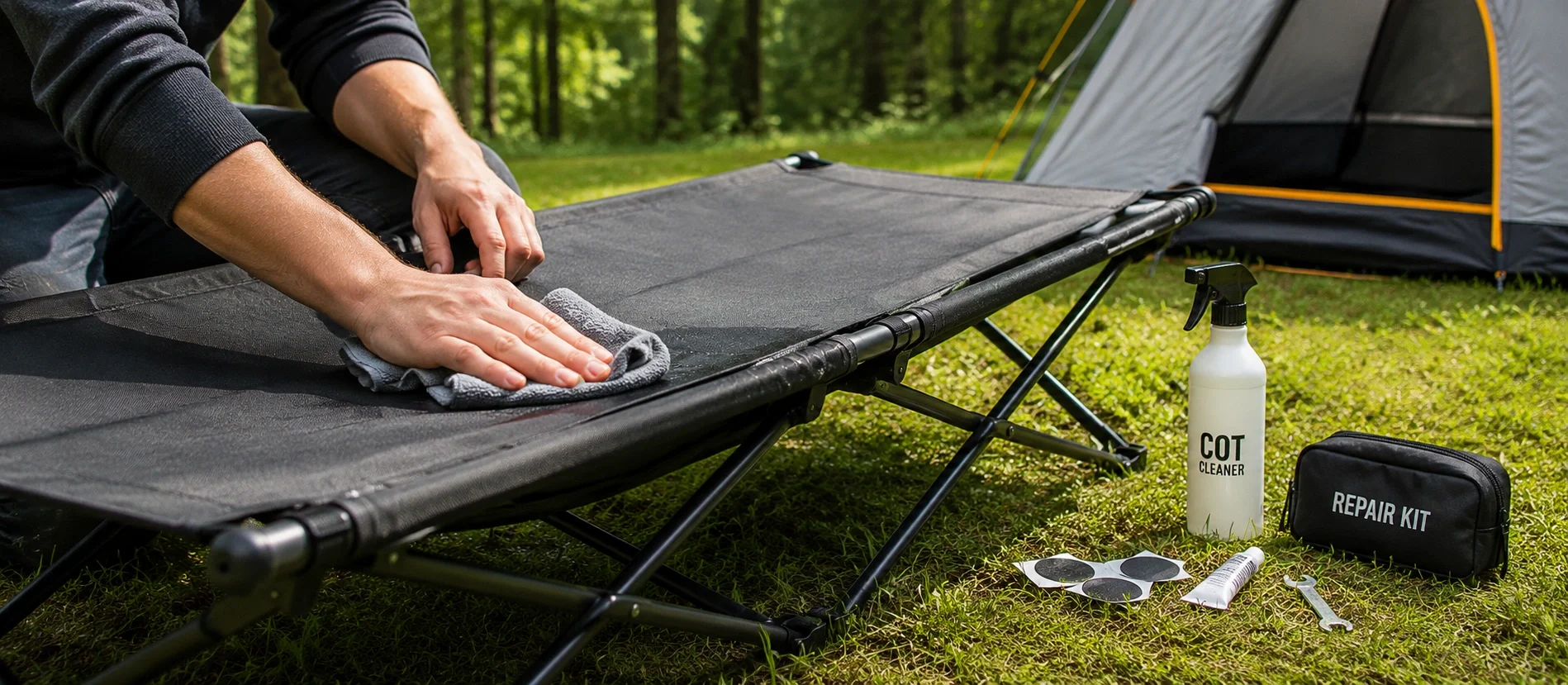
Clean After Every Trip
Wipe down cots with a damp cloth and mild soap. Air dry completely before folding to prevent mold and rust on metal frames. For air mattresses, use a soft brush — never harsh chemicals that degrade PVC.
Store Properly
Store cots in a dry garage or closet — never in a damp basement. Keep air mattresses partially inflated during storage to prevent creasing. Foam beds should lay flat, not rolled tightly for months.
Use a Ground Cloth
Place a tarp or footprint under your bed inside the tent. This protects the bed's bottom from dirt, sharp objects, and moisture that can weaken materials over time.
Check Before Each Trip
Inspect cot joints and bolts for looseness. Test air mattresses for slow leaks by inflating 24 hours before departure. Catching issues at home is far better than discovering them at the campsite.
Avoid Overinflation
Overinflating air mattresses stresses the seams and increases the chance of blowouts. Inflate to firm but with slight give — the bed should compress slightly under your weight.
Carry a Repair Kit
Always pack a patch kit for air mattresses and a spare bolt set for cots. Add these to your camping essentials list. A 5-minute repair can save an entire trip.
Frequently Asked Questions
Ready to upgrade your sleep system? A camping bed is just one part of the equation. Make sure you also have a properly rated sleeping bag (check our temperature rating guide), a supportive pillow, and appropriate clothing layers for the conditions you'll encounter. Add everything to your car camping checklist so nothing gets forgotten.


