Camping Technology: Essential Gadgets & Gear for Modern Outdoor Adventures
From portable power stations to satellite communicators — discover the technology that makes camping safer, smarter, and more enjoyable.
EXPLORE CATEGORIESWhy Camping Technology Matters: Modern outdoor technology bridges the gap between wilderness immersion and practical safety. The right devices keep you powered, navigated, and connected when it matters most — without sacrificing the outdoor experience you came for.
Camping technology has evolved dramatically over the past decade. What once meant a basic flashlight and a paper map has grown into an entire ecosystem of smart devices designed to enhance every aspect of your outdoor trip. Whether you are a backpacking beginner heading into the backcountry or a family setting up at a full-hookup RV site, there is technology tailored to your specific needs.
The challenge is not finding camping tech — it is finding the right tech. Overspending on features you will never use, or underinvesting in a critical safety device, are common mistakes that this guide is designed to help you avoid. Below, we break down every major category of camping technology, explain what to look for in each, and provide realistic value tier expectations so you can build a smart outdoor tech setup without wasting money.
Browse by Category
Power Banks
Keep devices chargedSolar Chargers
Harvest sun powerPower Stations
Off-grid electricityGenerators
Heavy-duty powerHandheld GPS
Never get lostNavigation Apps
Digital trail mapsSatellite Comms
Text from anywhereTwo-Way Radios
Group communicationSatellite Phones
Voice from remote areasEmergency Beacons
SOS rescue signalCamping Apps
Plan and exploreSmart Gadgets
Innovative gearCamping Drones
Aerial photographyPortable Fridges
Powered coolingWater Filters
Safe drinking waterPower & Battery Solutions: Staying Charged Off-Grid
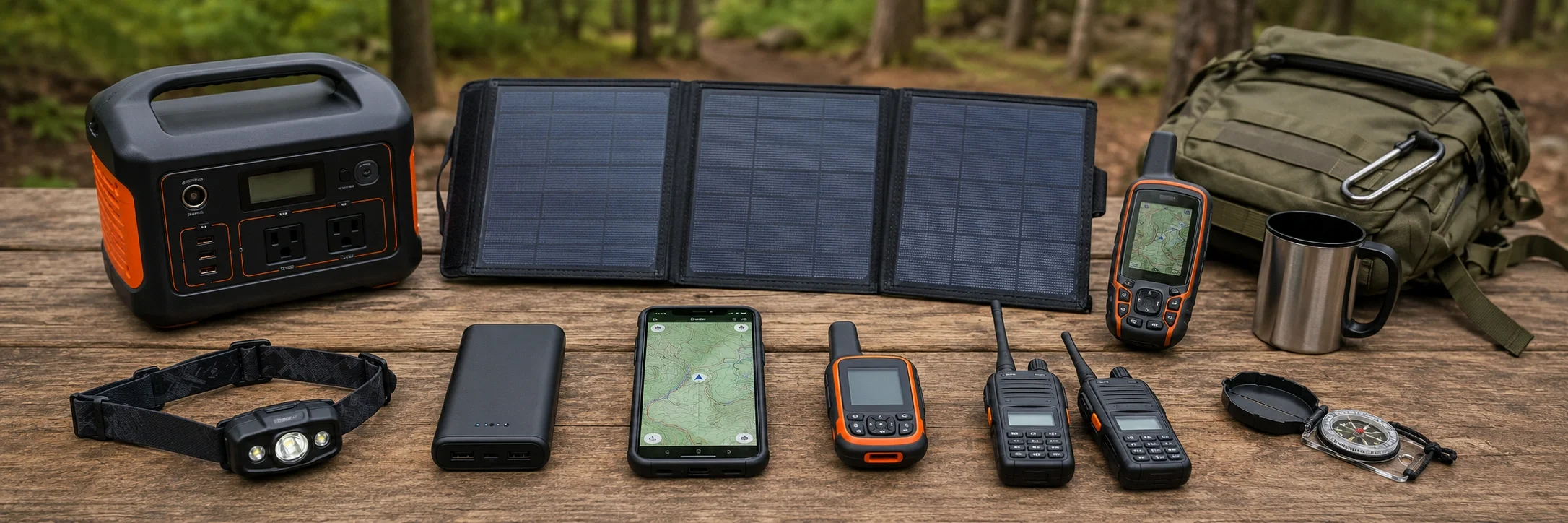
Power is the foundation of camping technology. Without reliable electricity, your GPS, lights, phone, and portable fridge become expensive paperweights. Understanding the differences between power banks, solar chargers, portable power stations, and generators is essential before you invest.
Camping Power Banks
A camping power bank is the simplest and most affordable way to keep small devices charged. These compact battery packs typically range from 10,000 mAh to 30,000 mAh and can recharge a smartphone 2 to 7 times. For short weekend trips or day hikes, a high-quality power bank is often all you need.
What to look for:
- Capacity of at least 20,000 mAh for multi-day trips
- USB-C Power Delivery (PD) for faster charging of modern devices
- IP65 or higher water and dust resistance rating
- Under 500g weight for backpacking compatibility
- Pass-through charging capability so you can recharge while using it
Value tier: Entry-Level to Mid-Range
Solar Chargers & Panels
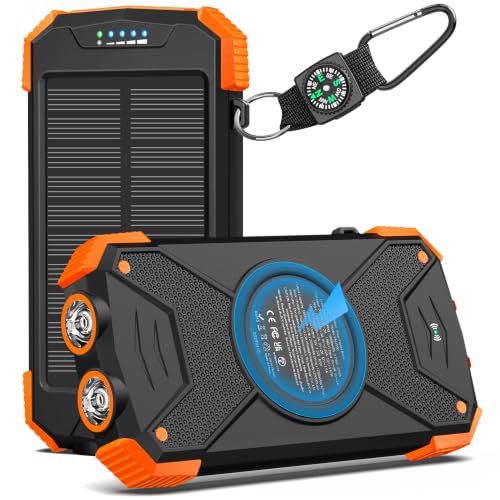
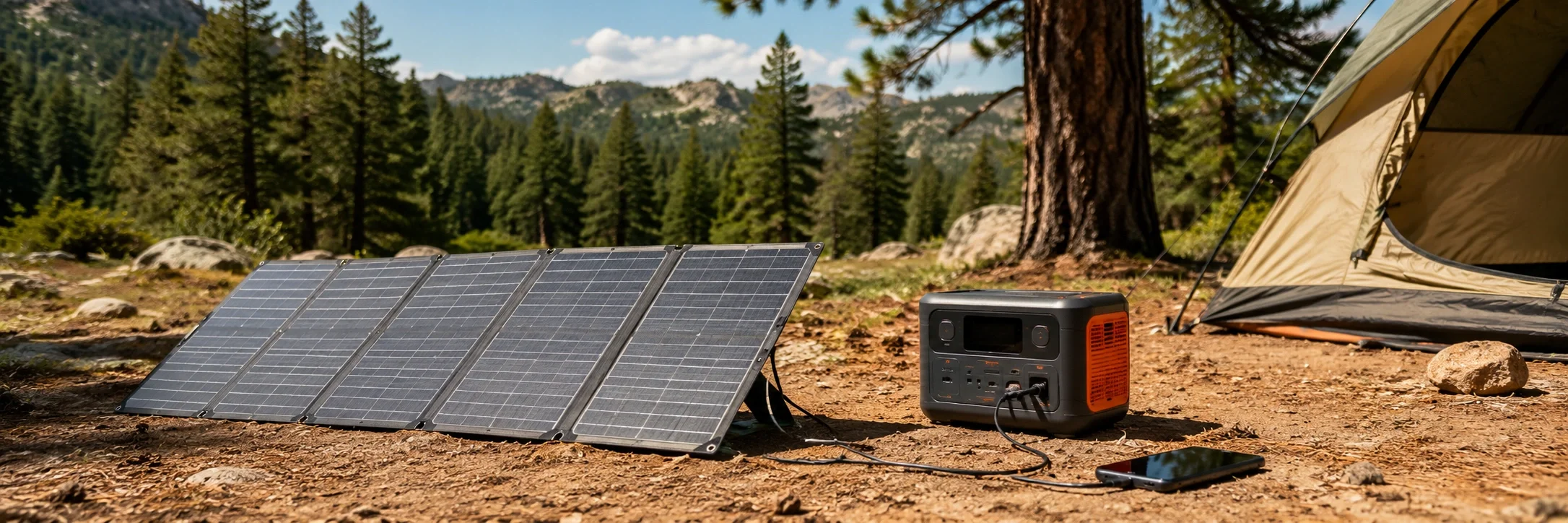
Solar chargers convert sunlight into electricity, making them ideal for extended trips where wall outlets are not an option. They come in two main forms: foldable panel kits (5W–100W) that you lay in the sun, and integrated solar power banks with built-in panels. For serious off-grid power, you can pair a solar panel with a portable power station through a battery and solar panel kit.
What to look for:
- Monocrystalline panels for better efficiency than polycrystalline
- Minimum 20W output for practical charging speed
- Built-in charge controller to prevent overcharging
- Waterproof or water-resistant construction
- USB-A and USB-C output ports for device compatibility
Value tier: Entry-Level to Premium depending on wattage and build quality
Portable Power Stations
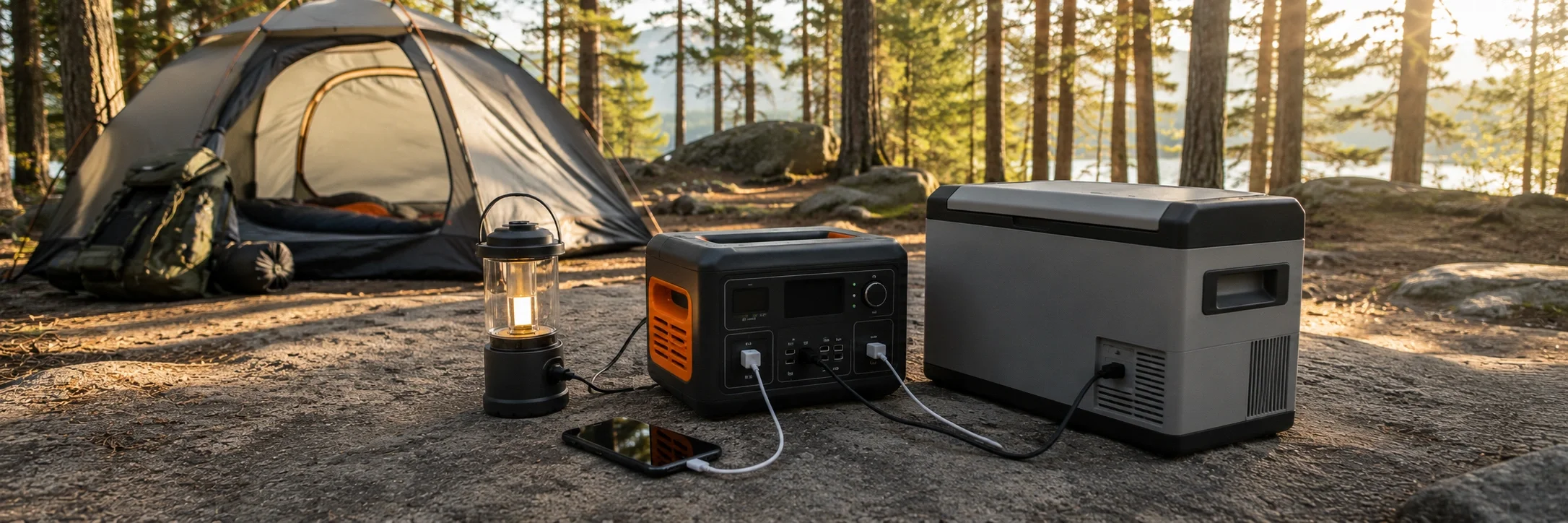
A portable power station is essentially a large-capacity lithium battery with AC outlets, USB ports, and DC outputs built in. These units range from 150Wh to over 3,000Wh and can power everything from laptops and camping lights to small appliances and even a portable fridge. They are the go-to choice for car camping, RV camping, and basecamp setups.
What to look for:
- LiFePO4 (LFP) battery chemistry for longer lifespan — up to 3,000+ cycles vs. 500 cycles for standard lithium-ion
- Pure sine wave inverter for safe operation of sensitive electronics
- At least 500Wh capacity for weekend trips; 1,000Wh+ for families or longer stays
- Solar input capability for renewable charging
- Weight under 30 lbs if you need to carry it any distance
Value tier: Mid-Range to Luxury
Camping Generators
Camping generators produce significantly more power than battery-based stations and can run indefinitely as long as you have fuel. Inverter generators are the standard for camping because they produce clean, stable power safe for electronics and operate at much lower noise levels than traditional generators. They are best suited for RV camping and extended basecamp stays where high wattage is needed.
What to look for:
- Inverter technology for clean power output
- Noise level below 60 dB at 25% load for campground friendliness
- Eco-mode to reduce fuel consumption at low loads
- Parallel capability if you need to double your output
- Electric start for convenience
Value tier: Mid-Range to Premium
Power Setup Recommendation by Trip Type: For a solo backpacking trip, an entry-level 20,000 mAh power bank is sufficient. For car camping weekends, a mid-range 500Wh portable power station covers most needs. For week-long RV trips, combine a premium 1,000Wh+ power station with a mid-range 100W solar panel for continuous off-grid power.
| Power Source | Capacity | Best For | Weight | Value Tier |
|---|---|---|---|---|
| Power Bank | 10,000–30,000 mAh | Day hikes, weekend trips | 200–500g | Entry-Level to Mid-Range |
| Solar Panel | 5W–100W output | Extended off-grid trips | 300g–3kg | Entry-Level to Premium |
| Power Station | 150–3,000+ Wh | Car camping, RV, basecamp | 3–70 lbs | Mid-Range to Luxury |
| Generator | 1,000–4,000W | RV, group camps, high-draw | 30–100 lbs | Mid-Range to Premium |
Navigation Technology: Finding Your Way in the Wild
Getting lost is one of the most dangerous situations in the outdoors. Modern navigation technology provides multiple layers of safety, from handheld GPS units that work without cell service to smartphone apps with downloadable topographic maps. The key is understanding when to rely on each tool — and always carrying a physical map and compass as a backup.
Handheld GPS Devices
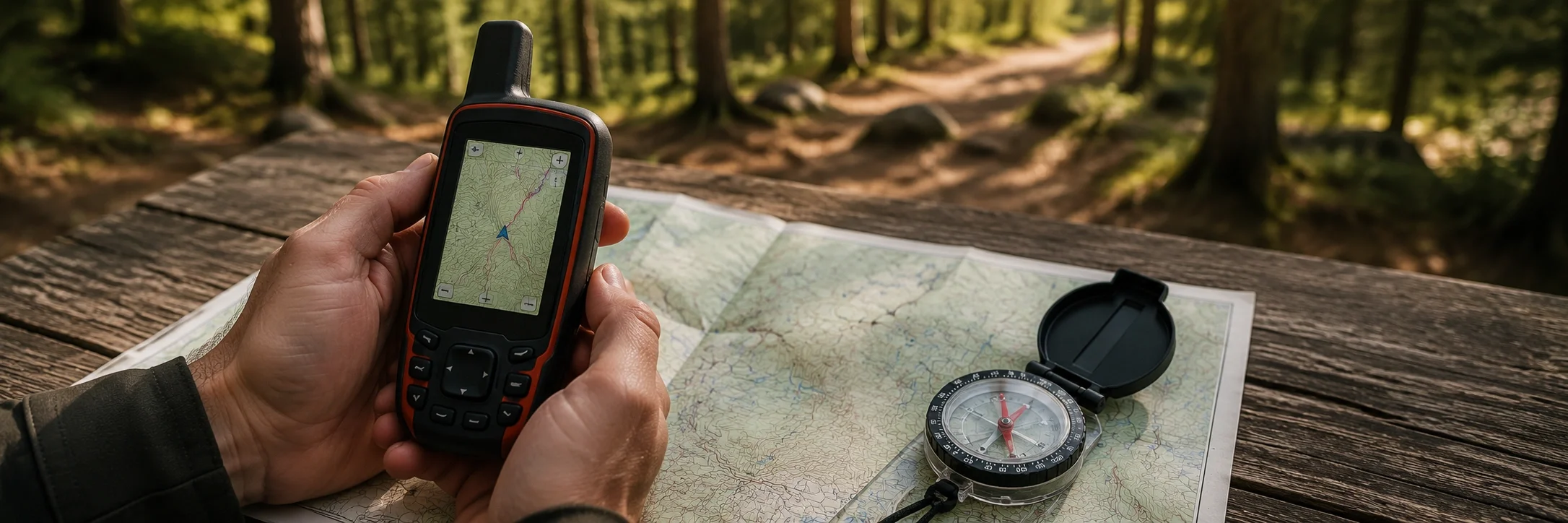
A handheld GPS is purpose-built for outdoor navigation. Unlike smartphones, these devices are ruggedized, waterproof, and run on replaceable batteries that last 10–25+ hours. They receive signals from multiple satellite constellations (GPS, GLONASS, Galileo) for accurate positioning even under dense tree canopy or in deep valleys where phones struggle.
If you are heading into backcountry camping or wild camping areas with no cell coverage, a dedicated GPS is not a luxury — it is a safety essential.
What to look for:
- Multi-GNSS support (GPS + GLONASS + Galileo) for faster, more accurate positioning
- Preloaded topographic maps with the ability to add custom maps
- IPX7 waterproof rating minimum
- AA battery compatibility for easy replacement in the field
- Screen size of 2.6 inches or larger for readable map viewing
- Altimeter, barometer, and 3-axis compass for advanced navigation
Value tier: Entry-Level to Premium
GPS vs Smartphone for Navigation
The debate between using a GPS vs smartphone for camping navigation comes down to reliability and battery life. Smartphones offer larger screens, familiar interfaces, and excellent apps — but they depend on cell signals for most mapping functions, their batteries drain quickly, and they are fragile. Handheld GPS units trade screen quality for ruggedness, battery life, and satellite-only positioning.
The smartest approach for most campers is to use both: a smartphone with offline maps apps as your primary navigation tool for planning and casual use, and a handheld GPS as your reliable backup for when conditions get tough.
Camping Navigation Apps
Camping navigation apps have become remarkably capable. Apps like Gaia GPS, OnX, and AllTrails allow you to download detailed topographic maps for offline use, record tracks, mark waypoints, and even view satellite imagery. When paired with a digital compass in your phone, these apps can provide near-GPS-level navigation without a dedicated device.
Key app features to evaluate:
- Offline map download capability — this is non-negotiable
- Topographic map layers with contour lines
- GPX file import/export for sharing routes
- Real-time weather overlay integration
- Waypoint marking and route planning tools
Value tier: Free to Mid-Range Subscription for premium features
⚠️ Critical Navigation Rule: Never rely solely on electronic navigation. Always carry a physical topographic map and a baseplate compass as a backup. Electronics can fail due to dead batteries, water damage, dropped signals, or software errors. This is especially important for emergency preparedness in remote areas.
Communication Devices: Staying Connected Beyond Cell Range
When you venture beyond cell tower coverage — which includes most national forests, many state parks, and virtually all dispersed camping areas — your smartphone becomes useless for communication. This is where dedicated communication devices become critical. They are not convenience items; for camping safety, they can be the difference between a minor inconvenience and a life-threatening emergency.
Satellite Communicators
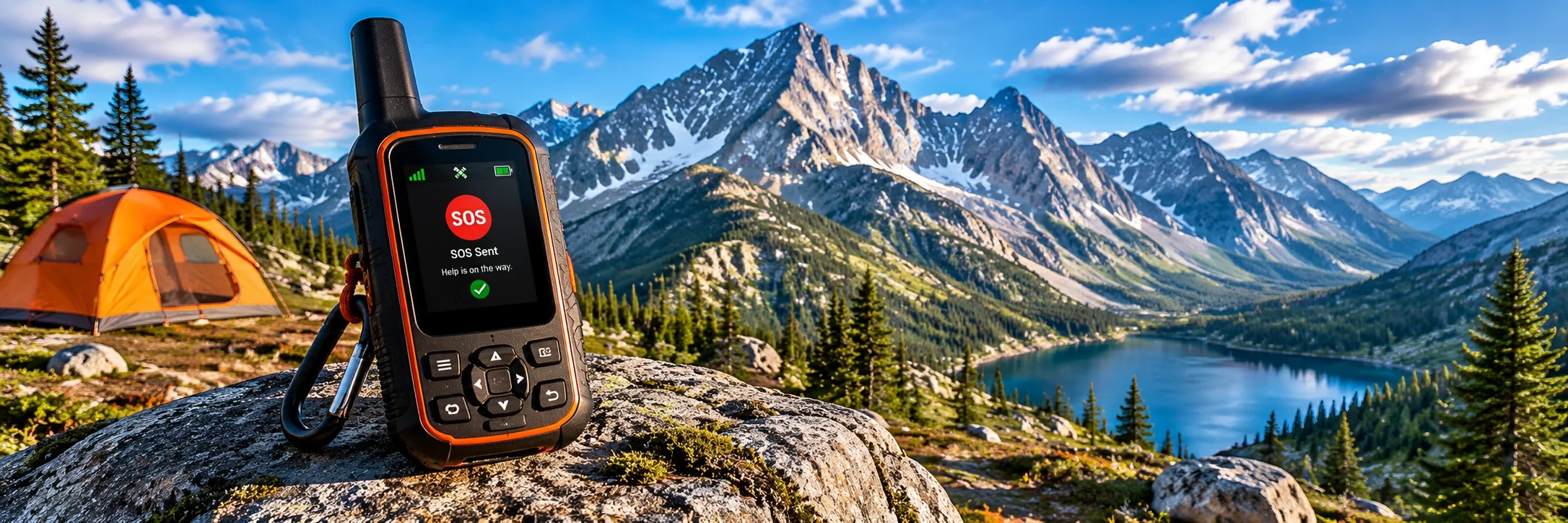
Satellite communicators like the Garmin inReach series are the most popular communication tool for backcountry travelers. These compact devices connect to the Iridium satellite network (global coverage) and allow you to send and receive text messages, share your GPS location with contacts, trigger SOS alerts with your coordinates, and access basic weather forecasts — all without cell service.
They require a satellite subscription plan (typically mid-range monthly depending on usage), but the peace of mind they provide is unmatched. Many solo campers and backcountry campers consider a satellite communicator as essential as a first aid kit.
What to look for:
- Iridium network for true global coverage (avoid devices limited to specific regions)
- Two-way messaging (not just one-way SOS)
- Interactive SOS that confirms your alert was received and connects to rescue coordination
- Location tracking and sharing at customizable intervals
- Weather forecast capability for trip planning decisions
- Battery life of at least 24 hours in tracking mode
Value tier: Premium device + mid-range monthly subscription
Satellite Phones
Satellite phones offer full voice calling capability through satellite networks, making them the most comprehensive communication tool for emergencies. Unlike satellite communicators that only handle text, a satellite phone lets you have a real-time voice conversation with rescue services, family, or anyone with a phone number. They are bulkier and higher-tier, but irreplaceable for group leaders, guides, and those traveling in truly remote regions.
Value tier: Premium to Luxury to purchase, or a premium weekly rental tier
Two-Way Radios
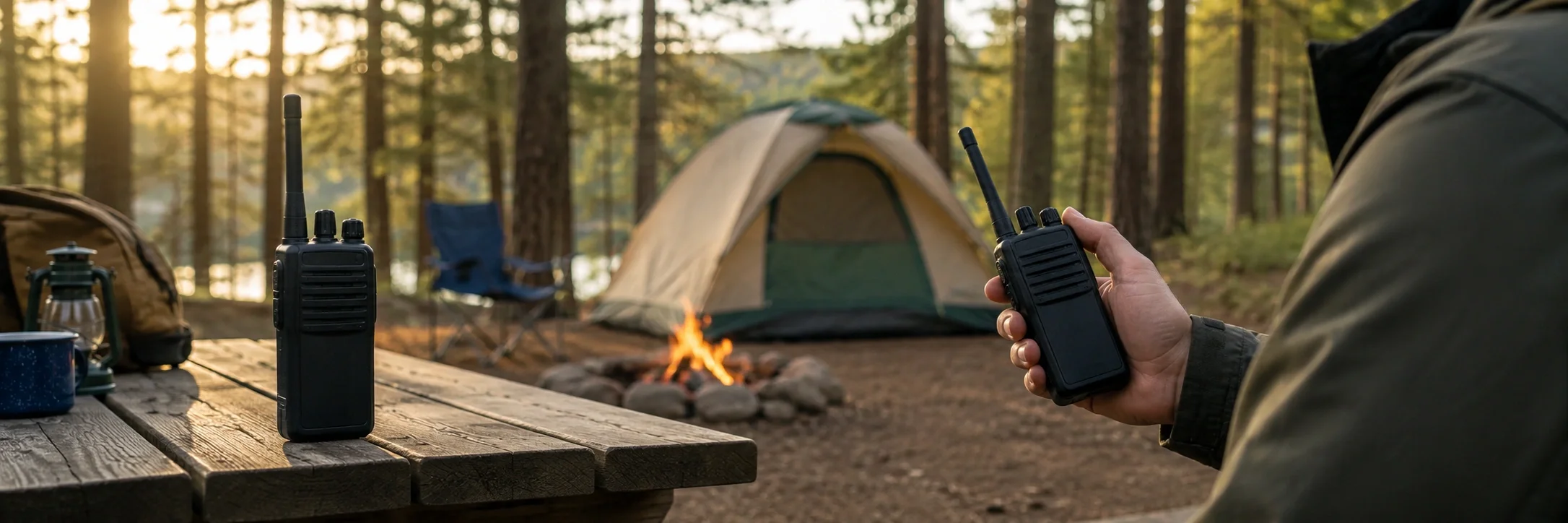
Two-way radios (also called walkie-talkies) are ideal for keeping groups connected over short to medium distances. They require no subscription, no network, and no monthly fees — just charge them and go. They are perfect for family camping where kids might wander, group camping trips where teams split up, and car camping convoys where vehicles travel separately.
What to look for:
- FRS (Family Radio Service) radios for license-free use, or GMRS for longer range (requires license)
- At least 2W power output for FRS, 5W+ for GMRS
- IPX4 or higher water resistance
- NiMH rechargeable battery packs with AA battery fallback option
- NOAA weather radio channels with alert function
- Range claims are misleading — expect 0.5–2 miles in real-world terrain for FRS
Value tier: Entry-Level to Mid-Range per pair
Emergency Beacons (PLB)
Personal Locator Beacons (PLBs) are single-purpose emergency devices that broadcast your exact GPS coordinates to search and rescue authorities via the COSPAS-SARSAT satellite system. Unlike satellite communicators, PLBs have no subscription fee and are monitored by government agencies worldwide. When activated, they send a one-way distress signal — you cannot send text messages or receive confirmation. They are the most reliable one-way SOS signal available.
Value tier: Mid-Range to Premium (no subscription required)
| Device | Capability | Range | Subscription | Best For | Value Tier |
|---|---|---|---|---|---|
| Satellite Communicator | Text, SOS, tracking, weather | Global | Required (mid-range monthly) | Backcountry, solo trips | Premium |
| Satellite Phone | Voice calls, texts, data | Global | Required (premium monthly) | Remote expeditions, guides | Premium to Luxury |
| Two-Way Radio | Voice communication | 0.5–35 miles* | None | Group/family camping | Entry-Level to Mid-Range |
| Emergency Beacon | One-way SOS only | Global | None | Emergency backup | Mid-Range to Premium |
* Two-way radio range varies dramatically by terrain. FRS radios typically achieve 0.5–2 miles in woods and hills, despite manufacturer claims of 20+ miles.
Signal Boosters for Camping
Signal boosters amplify weak cell signals, which can be helpful at campgrounds located on the edge of coverage areas. These devices use an external antenna to capture a weak signal, amplify it, and rebroadcast it locally. They will not create a signal where none exists, but they can turn a unusable 1-bar signal into a reliable connection for calls and data. They are particularly useful for RV campers who work remotely or need to stay connected.
Value tier: Entry-Level to Premium
Camping Apps & Software: Your Phone as a Multi-Tool
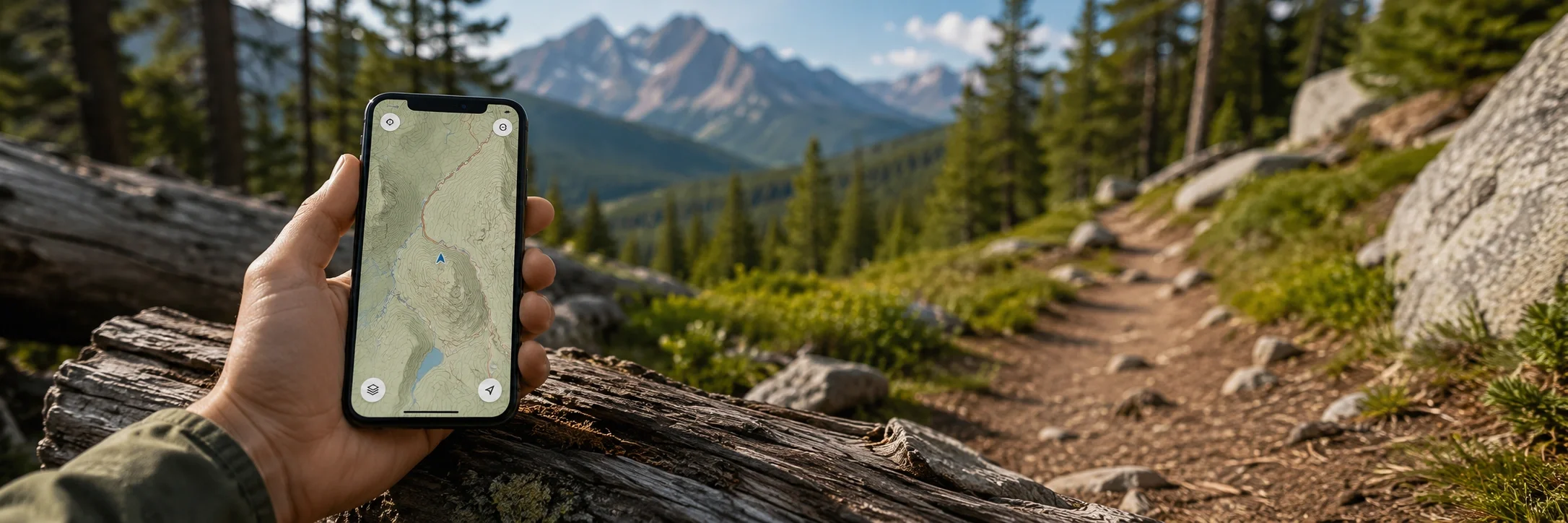
Your smartphone is arguably the most versatile piece of camping technology you already own. With the right apps installed and content downloaded before you lose cell service, it becomes a navigation tool, weather station, field guide, trip planner, and entertainment center. The key is choosing apps that work offline — because most camping happens outside cell coverage.
🗺️ Navigation & Maps
The best navigation apps and offline maps apps let you download topographic maps, satellite imagery, and trail data for use without cell service. Look for apps with GPX support, waypoint marking, and track recording.
🌤️ Weather Apps
Weather apps for camping should provide hyperlocal forecasts, radar imagery that can be cached offline, and severe weather alerts. Accuracy at the micro-level matters when you are deciding whether to set up camp or seek shelter.
🏕️ Reservation & Planning
Camping reservation apps like Recreation.gov and Campendium help you find and book campsites, read reviews, check availability, and even see cell coverage maps for each campground.
⭐ Stargazing Apps
Star gazing apps use your phone's gyroscope and GPS to identify constellations, planets, and satellites in real-time by pointing your phone at the sky — a fantastic addition to any camping night.
The best camping apps combine multiple functions into a single interface, reducing the number of apps you need to manage. However, do not fall into the trap of downloading dozens of apps — pick one excellent app per category, learn it thoroughly before your trip, and always test offline functionality at home first.
Overall app value tier: Free to Mid-Range Subscription per premium app
Smart Gadgets & Innovation: The Future of Camping Gear
Beyond the core categories of power, navigation, and communication, a growing ecosystem of smart camping gear and camping gadgets is changing how we experience the outdoors. These products range from genuinely useful innovations to niche convenience items. Knowing which ones are worth your money — and which are gimmicks — is critical for smart spending.
Portable Fridges & Powered Coolers
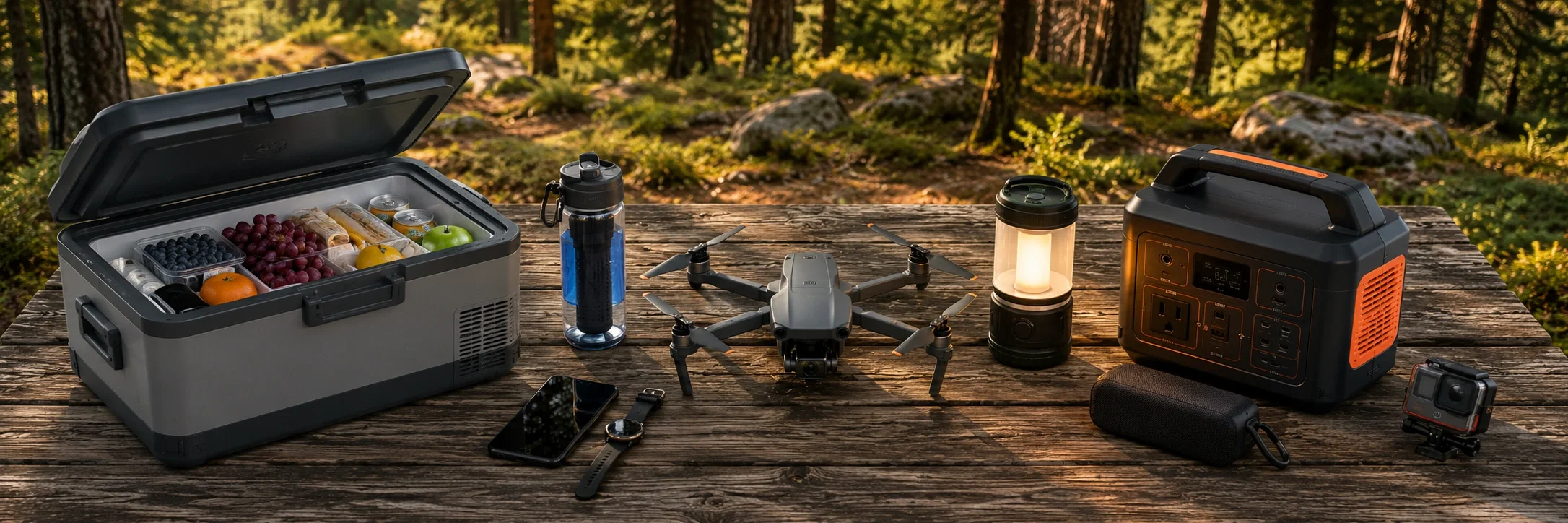
Portable fridges have largely replaced traditional coolers for tech-savvy campers. Unlike ice coolers that melt and create a watery mess, compressor-powered portable fridges maintain precise temperature control (down to -4°F for freezing) using your portable power station or vehicle's 12V outlet. They eliminate the need to buy ice, keep food truly fresh for days, and many can be controlled via smartphone apps.
For car camping trips of 3+ days, a portable fridge is one of the highest-impact upgrades you can make to your camping experience. They pair perfectly with camping meals planning since you can safely store fresh meat, dairy, and produce.
What to look for:
- Compressor cooling (not thermoelectric) for consistent temperature in hot weather
- Dual-zone capability for simultaneous refrigeration and freezing
- Low power draw — look for under 45W average consumption
- Battery protection mode to prevent draining your vehicle battery
- App connectivity for remote temperature monitoring
Value tier: Mid-Range to Luxury
Advanced Water Filtration Technology
Modern water filter technology has made accessing safe drinking water in the backcountry easier and more reliable than ever. While traditional pump filters and gravity systems remain popular, new options include UV purifiers that destroy pathogens with light, squeeze filters that weigh under 2 ounces, and integrated bottle filters that let you drink directly from a stream. For backcountry camping where water sources are uncertain, carrying a reliable filtration system is non-negotiable.
Value tier: Entry-Level to Mid-Range
Camping Drones
Camping drones have become increasingly compact and accessible, opening up aerial photography and scouting possibilities for outdoor enthusiasts. A drone can help you scout terrain ahead on a hike, capture stunning landscape footage of your campsite, or even assist in locating a lost group member in open terrain. However, drone use in camping areas comes with important legal and ethical considerations — many national parks and wilderness areas prohibit or restrict drone flights.
Value tier: Premium to Luxury for camping-appropriate models under 250g
⚠️ Drone Regulations: Always check local regulations before flying a drone while camping. The National Park Service generally prohibits drones in all national parks without a permit. Many state parks, BLM land, and national forest areas have specific rules. Flying near other campers is also an etiquette issue — respect others' peace and quiet.
How to Choose the Right Camping Technology for Your Needs
With so many categories and products available, the biggest risk is spending money on technology that does not match your actual camping style. A solo backpacker has fundamentally different tech needs than a family at an RV park. Use the decision framework below to prioritize your investments.
| Camping Style | Power Priority | Navigation Priority | Communication Priority | Investment Tier |
|---|---|---|---|---|
| Backpacking | Power bank only | Handheld GPS + app | Satellite communicator | Entry-Level to Mid-Range |
| Car Camping | Power station + solar | Phone app + compass | Two-way radios | Mid-Range |
| RV Camping | Generator + power station | Phone app + GPS | Signal booster + cell | Mid-Range to Premium |
| Backcountry | Power bank + solar | Handheld GPS (primary) | Satellite communicator + PLB | Mid-Range to Premium |
| Family Camping | Power station + fridge | Phone app | Two-way radios for kids | Mid-Range to Premium |
Universal Buying Principles
Regardless of your camping style, these principles apply to every camping technology purchase:
- Battery compatibility matters: Choose devices that use standard batteries (AA/AAA) when possible, so you can carry spares instead of waiting for a recharge
- Water resistance is mandatory: If a device does not have at least IPX4 rating, it does not belong in your camping kit
- Test before you go: Never take new technology on a trip without testing it at home first — charge cycles, app setup, and pairing all need to work before you are miles from help
- Weight is a feature: For backpackers, every ounce counts. For car campers, weight barely matters. Match your purchase to your transport method
- Redundancy saves lives: Carry at least two independent navigation methods and two communication methods for any remote trip. A GPS + compass + physical map covers navigation; a satellite communicator + PLB covers communication
- Buy once, cry once: For safety-critical devices like satellite communicators and GPS units, buy quality from reputable brands. An entry-level GPS that fails when you need it most is not a savings — it is a liability
Pro Tip: Build your camping tech kit incrementally. Start with the essentials for your most common trip type, then add specialized devices as your camping experience grows. Refer to your advanced camping checklist to track what you have and identify gaps before each trip.
Common Camping Technology Mistakes to Avoid
After years of reviewing camping gear and talking to experienced outdoorspeople, certain mistakes come up repeatedly. Avoiding these will save you money, frustration, and potentially dangerous situations.
❌ Relying Only on Your Phone
Smartphones are fragile, have short battery life, and lose signal in most camping areas. Using your phone as your sole navigation and communication device is a recipe for trouble. Always carry dedicated backup tools.
❌ Ignoring Solar Panel Realities
Solar panels need direct, unobstructed sunlight to produce rated power. In cloudy conditions, under tree canopy, or at high latitudes, output drops dramatically. Never plan your power budget around ideal solar conditions.
❌ Buying Based on Range Claims
Two-way radio manufacturers advertise "up to 35 miles" range, but this is line-of-sight on flat terrain with no obstacles. Real-world range in woods and hills is typically 0.5–2 miles for FRS radios.
❌ Forgetting to Update Before Trips
GPS maps, app databases, and device firmware need regular updates. Outdated maps may show closed trails, changed road names, or missing waypoints. Update everything at home before every trip.
❌ Skipping the Subscription Planning
Satellite communicators and phones require active subscriptions to work. Buying the device but forgetting to activate the service plan before your trip means you carry dead weight.
❌ Overloading on Gadgets
More technology means more to charge, more to carry, more to break, and more to distract you from the outdoor experience. Choose quality over quantity — a few reliable devices beat a backpack full of mediocre ones.
Ready to Upgrade Your Camping Tech?
Explore our recommended camping technology products below, each selected for reliability, value, and real-world performance in outdoor conditions.
VIEW RECOMMENDED GEAR