Big Tents: The Complete Guide to Large Camping Shelters
Everything you need to know about choosing, using, and maximizing big tents for family camping, group adventures, and basecamp comfort. From 8-person cabins to 20-person expedition shelters.
START YOUR RESEARCHWhy big tents matter: When you're camping with family or a group, your tent becomes more than just a sleeping space — it's your basecamp, your living room, and your shelter from the elements. Choosing the right big tent can make the difference between a memorable adventure and a cramped, uncomfortable experience. This guide walks you through every consideration, from capacity ratings to weather resistance, so you can make a confident decision.
What Qualifies as a Big Tent?
In the camping world, "big tents" generally refers to shelters designed to sleep 6 or more people, though the term often encompasses tents with 8, 10, 12, or even 20-person capacities. Unlike backpacking tents where every ounce counts, big tents prioritize space, comfort, and livability over portability.
These shelters typically feature:
- Standing headroom — Most big tents offer center heights of 6 to 7 feet, allowing adults to stand upright and move freely
- Room dividers — Many models include removable privacy walls that create separate sleeping areas
- Multiple doors — Convenient access points that reduce traffic jams and improve ventilation
- Screen rooms and porches — Screened-in areas for bug-free lounging, dining, or gear storage
- Electrical ports — Built-in cable access for powering devices or running lights
If you're transitioning from a smaller tent and wondering about size, our guide on how to choose tent size provides a solid foundation. But for groups, the calculus changes — you need to factor in gear storage, sleeping arrangements, and shared living space.
Types of Big Tents Compared
Not all large tents are created equal. The three main categories — cabin tents, dome tents, and instant tents — each serve different camping styles. Here's how they stack up:
| Feature | Cabin Tent | Dome Tent | Instant Tent |
|---|---|---|---|
| Interior Space | Excellent — vertical walls maximize usable area | Moderate — curved walls reduce livable space | Very good — varies by design |
| Headroom | Excellent — near-vertical walls | Good at center, lower at edges | Good to excellent |
| Weather Resistance | Moderate — susceptible to wind | Excellent — aerodynamic shape | Moderate to good |
| Setup Difficulty | Moderate to challenging | Moderate | Very easy — pre-assembled frames |
| Best For | Families, long stays, car camping | Windy areas, exposed sites | Quick trips, festivals, beginners |
| Weight | Heavy — often 30-60 lbs | Moderate to heavy | Moderate to heavy |
Cabin Tents: The Family Favorite
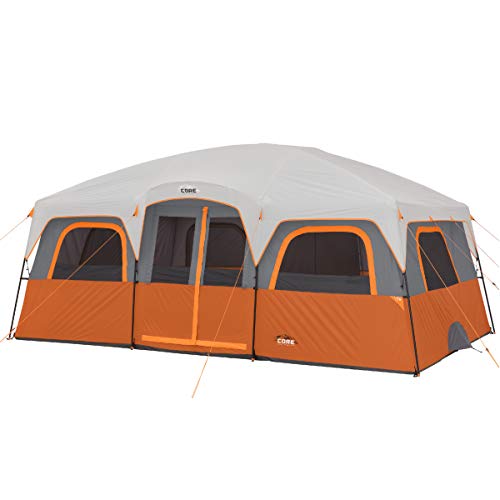
Cabin tents are the gold standard for family camping. Their straight walls create a room-like interior where every square foot is usable. You can line up air mattresses, set up a camp table, and still have walking space. Many cabin tents include room dividers, transforming a single large space into two or three private sleeping areas. If your priority is comfort and livability, a cabin tent is likely your best choice.
For those who want the ultimate in spaciousness, large tents and huge tents represent the pinnacle of cabin-style design, often exceeding 200 square feet of floor area.
Dome Tents: Weather Warriors
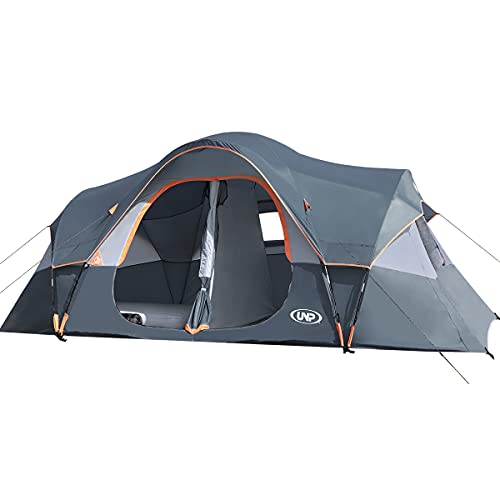
Dome tents use a crisscrossing pole structure to create a self-supporting hemisphere. This shape sheds wind and rain exceptionally well, making dome tents the preferred choice for exposed campsites. The trade-off is interior space — the sloping walls mean you can't use the full floor area for furniture or standing.
Large dome tents in the 8-person range are popular for scout groups and camping trips where weather resilience matters more than luxury.
Instant Tents: Speed and Convenience
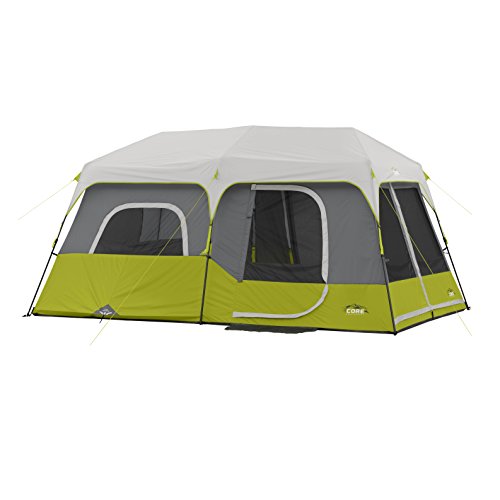
Instant tents (also called pop-up tents) come with pre-attached poles that snap into place in minutes. They're ideal for first-time campers or anyone who values speed over weight savings. Modern instant cabin tents in the 10-person range can be fully set up in under 5 minutes.
Understanding Tent Capacity Ratings
Tent manufacturers rate capacity based on the maximum number of people who can sleep shoulder-to-shoulder on the floor — with no gear and no room to move. In reality, you should treat capacity ratings as maximums, not comfortable occupancy.
A simple rule: divide the rated capacity by 1.5 to get a realistic comfort level. Here's how that plays out:
- 8-person tent → Comfortable for 4-5 people with gear
- 10-person tent → Comfortable for 6-7 people with gear
- 12-person tent → Comfortable for 7-8 people with gear
- 20-person tent → Comfortable for 12-14 people with gear
If you're camping with a family of five, an 8-person or 10-person tent gives you breathing room. For groups of 8 or more, look at 12-person or larger models. Our guide to big family tents with rooms and living room explores how to maximize space for larger groups.
Don't forget gear storage. Coolers, duffel bags, camp chairs, and cooking equipment all need a home. A tent that's "just right" for sleeping may feel cramped once you add your gear. When in doubt, size up.
Key Features That Set Great Big Tents Apart
Weather Protection and Season Rating
Most big tents are 3-season tents, designed for spring through fall. They handle rain and moderate wind but aren't built for heavy snow loads. If you camp in winter, look for a 4-season tent with stove jack or a dedicated winter tent.
Key weather features to look for:
- Rainfly coverage — Full-coverage rainflies that extend to the ground offer the best protection
- Taped seams — Pre-sealed seams prevent water infiltration
- Bathtub floor — Floors with raised edges keep ground moisture out
- Waterproof rating — Look for at least 1200mm hydrostatic head on the fly and 1500mm on the floor
- Ventilation — Mesh panels and roof vents reduce condensation
For wet-weather camping, our article on camping in a tent in the rain covers setup and management strategies. A waterproof tent is essential if you camp in regions with unpredictable weather.
Setup and Portability
Big tents are heavy — often 30 to 60 pounds. You won't be carrying them far, so portability matters mainly for transport from car to campsite. Look for:
- Wheeled carry bags — Some premium models include rolling storage bags
- Color-coded poles — Speed up assembly significantly
- Pre-attached frames — Instant tents eliminate pole assembly entirely
- Two-person setup — Most large tents are easier with a partner
If setup speed is your priority, our list of easiest tents to set up and take down highlights models that go from bag to basecamp in minutes.
Ventilation and Condensation Control
Large tents house more people, which means more moisture from breathing and body heat. Without proper ventilation, condensation builds up inside, making sleeping bags damp and uncomfortable. Look for tents with:
- Multiple mesh windows and doors
- Roof vents or ridge vents
- Mesh ceiling panels (in some models)
- Removable rainflies for clear nights
Durability and Materials
Big tents take more stress than small ones — more surface area catches more wind, and larger floors bear more foot traffic. Quality materials matter:
- Polyester or nylon — Both are durable; polyester resists UV better, nylon is lighter
- Denier rating — Higher denier (e.g., 75D, 150D) means thicker, more abrasion-resistant fabric
- Aluminum poles — Lighter and more durable than fiberglass, though pricier
- Steel poles — Strong but heavy; common in budget cabin tents
Our article on whether nylon or polyester is better for tents dives deeper into material science.
Choosing a Big Tent for Your Specific Camping Style
Family Camping
Families need space for sleeping, changing, playing, and storing gear. A 10-person cabin tent with a room divider and screen porch is the sweet spot for most families. Parents get privacy, kids get their own space, and everyone has room to move.
For families who want a more permanent setup, glamping tents offer hotel-like comfort with canvas walls and real beds. These are particularly popular at glamping sites and glamping resorts.
Group and Scout Camping
Scout troops, church groups, and outdoor clubs often need to house 8-12 people in a single shelter. Large dome tents and 12-person cabin tents with convertible screen rooms are popular for their balance of durability and space.
For very large groups, 20-person tents with private rooms and front porch function as portable bunkhouses.
Basecamp and Extended Stays
If you're setting up a basecamp for a week or more, prioritize livability over weight. A 10-person instant cabin tent with awning gives you a covered entry, room to stand, and quick setup. Add a screen gazebo or large tarp for a complete outdoor living area.
Festival and Event Camping
Festival camping demands quick setup, easy takedown, and enough space for friends. Festival tents in the 6-8 person range are ideal. For car camping at festivals, a 4-man pop-up tent with living area offers a good balance of speed and comfort.
Big Tents: Advantages and Trade-Offs
✓ Advantages
- Standing headroom for most adults
- Separate sleeping areas with room dividers
- Space for gear, furniture, and activities
- Screen porches provide bug-free lounging
- Better ventilation through multiple openings
- Comfortable for extended stays
- Great for families with young children
✗ Trade-Offs
- Heavy — typically 30-60+ pounds
- Bulky when packed
- Longer setup time than small tents
- More susceptible to wind (cabin styles)
- Require larger campsites
- Higher cost than comparable small tents
- Overkill for solo or couple camping
The key is matching the tent to your needs. A solo backpacker would never carry a 12-person cabin tent — but a family of six on a week-long car camping trip would find it indispensable.
Setting Up and Maintaining Your Big Tent
Site Selection
Big tents need big, flat, clear spaces. Look for:
- Level ground — A slight slope will have you sliding all night
- No overhead hazards — Dead branches, widow-makers, and bee hives
- Good drainage — Avoid depressions where water collects
- Wind protection — Trees or hills that block prevailing winds
- Space for guy lines — You need clearance around the tent for stakes and lines
For platform camping, check out our guide on setting up a tent on a platform. If you're camping on sand, see setting up a tent on the beach.
Setup Tips for Large Tents
- Practice at home first — Set up your tent in the backyard before your trip
- Use two people — Large tents are much easier with a partner
- Stake out corners first — This prevents the tent from shifting during assembly
- Don't over-tighten — Allow some flex for wind
- Use a footprint — Protects the floor and extends tent life
- Guy out in wind — All guy lines should be deployed in exposed sites
Maintenance and Storage
- Clean before storing — Dirt and debris attract moisture and mold
- Dry thoroughly — Never store a damp tent; mildew will ruin it
- Repair promptly — Patch small holes before they become big problems
- Re-waterproof periodically — Apply seam sealer and DWR spray as needed
- Store loosely — Don't compress for long periods; stuff rather than fold
For winter storage and cold-weather use, our guide on keeping a tent warm in cold weather has additional tips.
Mistakes to Avoid When Buying a Big Tent
- Trusting capacity ratings literally — A "10-person" tent rarely sleeps 10 comfortably. Divide by 1.5.
- Ignoring packed size — Will it fit in your car alongside all your other gear? Check dimensions.
- Overlooking ventilation — Condensation is the enemy of comfortable camping. More mesh = better airflow.
- Buying for extreme weather without checking ratings — A 3-season tent will fail in heavy snow. Match the tent to your conditions.
- Skipping the footprint — A footprint is a small investment that significantly extends tent life.
- Not practicing setup — Fumbling with poles in the dark is no fun. Practice at home.
- Choosing fiberglass over aluminum poles — Fiberglass is heavier and more prone to splintering. Aluminum is worth the upgrade for frequent campers.
If you're wondering whether premium tents justify their higher cost, our article on whether expensive tents are worth it breaks down the long-term value.
When Big Tents Go Glamping
At the luxury end of the spectrum, big tents become full-fledged accommodations. Luxury tents, safari tents, and bell tents offer canvas construction, wood-burning stove compatibility, and enough space for real beds and furniture.
These tents are popular at glamping resorts, glamping pods, and glamping domes — semi-permanent structures that blend camping with hotel comfort. While not portable in the traditional sense, they represent the ultimate expression of "big tent living."
For those who want to try glamping without committing to a tent purchase, glamping sites and glamping cabins offer turnkey experiences. Some even feature glamping yurts or luxury yurts for a unique twist.
Ready to Find Your Perfect Big Tent?
Browse our recommended selection of large camping tents below, carefully curated for space, durability, and value across every tier.
VIEW RECOMMENDED BIG TENTSFrequently Asked Questions About Big Tents
The best big tent for family camping depends on your group size, climate, and camping style. Cabin tents with room dividers offer the most livable space and are ideal for families who want separate sleeping areas. For families of 5-8 people, an 8-person or 10-person cabin tent with a screen porch is often the sweet spot. If you camp in windy areas, a large dome tent provides better weather resistance at the cost of some interior space.
A 10-person tent typically provides comfortable sleeping space for 6-8 adults with gear, or up to 10 people sleeping shoulder-to-shoulder without gear. For maximum comfort, divide the rated capacity by 1.5 to determine your realistic occupancy. If you have air mattresses, camp furniture, or lots of gear, lean toward the lower end of that range.
Modern big tents are much easier to set up than older models. Instant tents with pre-attached frames can be fully assembled in 2-5 minutes. Traditional cabin and dome tents typically take 10-20 minutes with two people. Color-coded poles, pole sleeves, and clip attachments have simplified the process significantly. Practicing at home before your trip makes a big difference.
Cabin tents have vertical walls that maximize interior space and headroom, making them feel like a room. They're ideal for families and extended stays but are more susceptible to wind. Dome tents have curved walls that shed wind and rain more effectively but offer less usable interior space due to sloping sides. Dome tents are better for exposed, windy campsites, while cabin tents excel in sheltered, comfortable camping scenarios.
Yes, a footprint is highly recommended for any big tent. It protects the tent floor from abrasion, punctures, and ground moisture, significantly extending the tent's lifespan. A footprint also makes cleanup easier and adds a layer of insulation. Many manufacturers sell custom footprints for their tents, but a generic tarp cut to size works as a budget-friendly alternative.
Most big tents are 3-season tents and are not designed for winter camping. They lack the structural strength to handle snow loads and may not have the insulation or ventilation needed for cold weather. For winter camping, look for a 4-season tent or a dedicated winter tent. Some large tents can be used in winter with a stove jack and a portable heater, but check the manufacturer's specifications first.