Large Tent Guide: How to Choose the Right Big Tent for Your Camping Style
A large tent transforms camping from a cramped overnight stop into a comfortable base camp. Learn how to evaluate capacity, materials, features, and setup so you can choose the right big tent with confidence.
START WITH SIZINGWhy a large tent matters: When you camp with family, friends, or extended gear, a big tent gives everyone room to sleep, move, and store belongings without feeling crowded. The right large tent also improves ventilation, weather protection, and overall trip enjoyment.
What Counts as a Large Tent?
In the camping world, a large tent generally refers to shelters designed for six or more people, or tents with generous floor area and standing height. Unlike compact backpacking shelters, large tents prioritize livable space, multiple rooms, and sometimes features like screened porches or built-in lighting. If you are comparing options, a good starting point is our guide on how to choose tent size, which explains capacity ratings and sleeping configurations.
Large tents span a wide range of designs. Some are simple dome-style shelters for weekend family trips, while others are elaborate cabin tents with room dividers, awnings, and electrical ports. There are also specialized big tents such as big tents for extended groups, huge tents for base camps, and luxury tents for glamping setups. Understanding where your trip falls on the comfort-versus-portability spectrum helps narrow the field quickly.
Typical Large Tent Sizes
Most large tents fall between 6-person and 12-person capacities, with some models reaching 14 or 20 people. Floor dimensions often range from roughly 10 x 9 feet up to 20 x 15 feet or more, depending on the number of rooms and whether a porch or screen room is included.
Common Use Cases
Family camping trips, group base camps, glamping weekends, festival accommodations, and extended car camping are the most common scenarios. Large tents are also popular for scout groups, church outings, and multi-family vacations where shared space matters.
Capacity Ratings: What the Numbers Really Mean
Tent capacity ratings assume that campers sleep side by side on thin sleeping pads with no gear inside. In reality, most people want space between sleepers and room for bags, coolers, and clothing. A simple rule is to subtract one or two people from the stated capacity for comfortable sleeping, and subtract more if you plan to use cots or air mattresses.
For example, a 6-person tent is often ideal for two adults and two children with gear, while a 10-person tent comfortably handles four to six adults with cots. If you need standing height, look for models marketed as cabin tents or tents with peak heights around six feet or more. You can explore standing-height options through our resources on camping tents you can stand up in and 6-person tents you can stand up in.
Quick Capacity Reference
| Stated Capacity | Comfortable Sleeping | Best For |
|---|---|---|
| 6-person | 2–4 people with gear | Small families, couples with cots |
| 8-person | 3–5 people with gear | Families, small groups |
| 10-person | 4–6 people with gear | Large families, multi-family trips |
| 12-person | 5–8 people with gear | Group camping, base camps |
| 14–20 person | 8–12 people with gear | Large groups, events, extended stays |
Types of Large Tents: Which Design Fits Your Trip?
Large tents come in several structural styles, each with trade-offs in setup time, weather resistance, and livable space. Understanding these differences prevents buyer's remorse.
Dome Tents
Dome tents use crossing poles to create a rounded shape that sheds wind and rain well. Large dome tents are often lighter and easier to pitch than cabin tents, but they typically have sloped walls that reduce usable floor space near the edges. A modified dome with a screen porch, such as a 10-person modified dome tent with screen porch, blends weather resistance with extra living area.
Cabin Tents
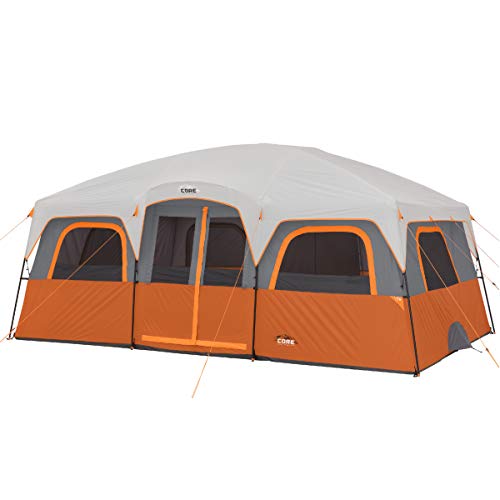
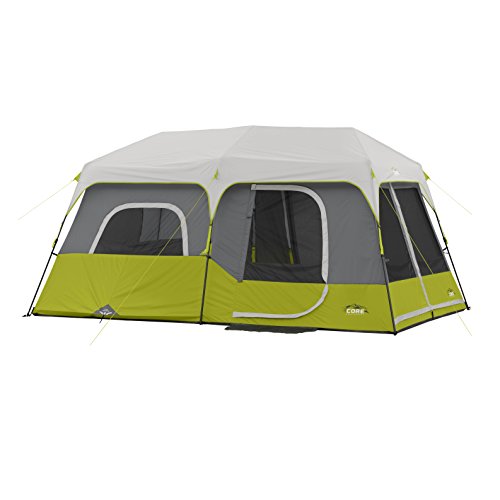
Cabin tents have near-vertical walls and high ceilings, maximizing interior volume. They are excellent for families who want to stand, use cots, and move around comfortably. Many cabin tents include room dividers, and some add built-in LED lighting or awnings. Examples include 8-person instant cabin tents with built-in LED lights and 10-person instant cabin tents with a screen room.
Instant and Pop-Up Tents
Instant tents use pre-attached poles and hub mechanisms to reduce setup time dramatically. They are ideal for campers who prioritize convenience over minimal packed size. If setup speed is your top concern, browse our guides on the easiest tent to set up and take down and the easiest 8-person tent to set up.
Screen Houses and Connectable Tents
Some large tents function as screen houses or can connect to additional tents to form a multi-room compound. These are popular for group camping and extended family trips. Options like the 7-person 2-in-1 screen house connectent and the 12-person 3-room instant cabin tent with screen room illustrate how flexible these designs can be.
Pros and Cons of Large Tents
Large tents are not automatically better for every trip. Weighing the advantages against the drawbacks helps you decide whether a big tent or a smaller shelter is the right call.
Advantages
- Generous space for families and groups
- Standing height in many models
- Room for cots, air mattresses, and gear
- Multiple rooms and privacy dividers
- Better ventilation in hot weather
- Space to wait out rain comfortably
Drawbacks
- Heavier and bulkier to transport
- Longer setup and takedown times
- Requires a larger, flatter campsite
- More challenging in high winds
- Higher material and manufacturing demands
- Not suitable for backpacking
Materials and Weather Protection
The fabric and coating of a large tent determine how well it handles rain, humidity, and UV exposure. Most large tents use polyester or nylon, with polyester being more resistant to UV degradation and less prone to stretching when wet. If you are deciding between the two, our article on whether nylon or polyester is better for tents breaks down the trade-offs.
Look for a waterproof rating expressed in millimeters (mm) for the rainfly and floor. Large tents intended for three-season use typically offer adequate rain protection, while four-season models add stronger poles and reinforced guy-out points. If you camp in wet climates, prioritize a tent with a full-coverage rainfly and taped seams. Our guide to waterproof tents explains how coatings, seams, and bathtub floors work together.
Ventilation and Condensation
Large tents house more people, which means more moisture from breathing and damp gear. Good ventilation is essential. Mesh panels, roof vents, and multiple doors help air circulate. If you camp in humid conditions, consider an anti-condensation mat for roof top tents or look for models with large mesh sections and a removable rainfly for clear nights.
Entry-Level, Mid-Range, and Premium Large Tents
Large tents are available across several quality tiers. Rather than focusing on price, consider how each tier performs in terms of materials, pole strength, waterproofing, and features. The table below summarizes typical differences.
| Tier | Typical Materials | Features | Best For |
|---|---|---|---|
| Entry-Level | Basic polyester, fiberglass poles | Simple dome or cabin shape, minimal vents | Occasional weekend campers |
| Mid-Range | Coated polyester, aluminum or hybrid poles | Room dividers, improved ventilation, taped seams | Regular family campers |
| Premium | High-denier fabrics, full aluminum pole sets | Blackout rooms, built-in lighting, weatherproof designs | Frequent campers and glampers |
| Luxury | Heavy-duty fabrics, reinforced frames | Multi-room layouts, awnings, electrical ports | Glamping and extended base camps |
Mid-range models often provide the best balance for most families, offering meaningful upgrades in pole strength and weather resistance without the weight and complexity of premium designs. If you are unsure whether a higher tier is worthwhile, our article on whether expensive tents are worth it can help you decide based on how often you camp and the conditions you face.
Setup Tips for Large Tents
Large tents take longer to pitch than small ones, but a consistent routine keeps the process manageable. Follow these steps for a smoother experience:
Large Tent Setup Checklist
- Choose a flat, debris-free site larger than the tent footprint
- Lay out the footprint or ground tarp first
- Assemble and pre-thread poles before raising the tent
- Stake the corners loosely, then tighten after the structure is up
- Attach the rainfly before guying out in windy conditions
- Use all guy lines and stakes in exposed areas
- Check ventilation openings and close them before rain
- Practice a full setup at home before your first trip
If you camp in challenging conditions, our guides on setting up a tent in the rain and setting up a tent on a platform provide step-by-step adaptations. For cold-weather trips, see setting up a tent in the snow and keeping a tent warm in cold weather.
Best Uses for Large Tents
Large tents excel in specific camping scenarios. Understanding these use cases helps you match the tent to your trip.
Family Camping
Families benefit from separate sleeping areas, room for kids' gear, and space to play cards or read during rain. A 10-person tent with a room divider or a 6-person cabin tent with a screen room often works well. For more ideas, explore the easiest tent to set up for family and big family tents with rooms and a living room.
Group and Base Camp Camping
Scout troops, church groups, and multi-family trips often use large tents as shared sleeping quarters or communal gathering spaces. Models like the 14-person 4-room base camp tent with 4 entrances and the 12-person basecamp tent with built-in LED lights are designed for these scenarios.
Glamping and Extended Stays
For glamping, large tents combine comfort with a connection to nature. Canvas bell tents, safari tents, and yurts offer a more upscale experience. If glamping is your goal, browse our resources on glamping tents, luxury glamping, and glamping yurts.
Festivals and Events
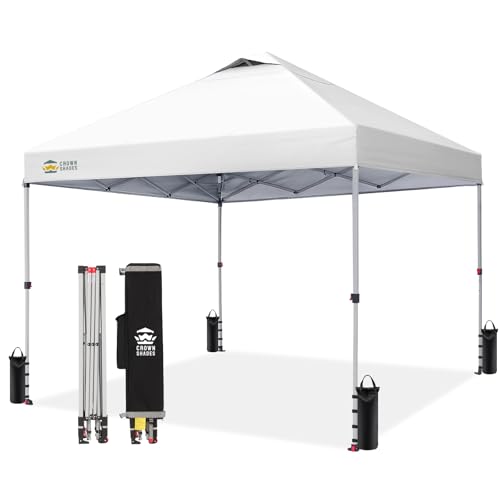
Large tents provide shade, shelter, and a recognizable home base at festivals. Quick-setup models and canopies with side walls are popular. Consider the festival tent category and the 10 x 20 easy pop-up canopy party tent for event use.
Common Mistakes When Buying a Large Tent
Even experienced campers make avoidable errors when choosing a big tent. Here are the most frequent pitfalls and how to sidestep them:
- Overestimating capacity: Stated capacities assume minimal gear. Buy one size larger than your group if you use cots or air mattresses.
- Ignoring packed size and weight: A large tent can be heavy. Check packed dimensions and weight before committing, especially if you drive a smaller vehicle.
- Underestimating setup time: Large tents can take 20–40 minutes to pitch. Practice at home and consider an instant tent if time is limited.
- Neglecting ventilation: More occupants mean more condensation. Prioritize tents with multiple vents and mesh panels.
- Skipping the footprint: A ground tarp protects the floor and extends tent life. Always use one when possible.
- Choosing the wrong season rating: Three-season tents suit most campers. Four-season tents are heavier but handle snow and high winds better.
Gear That Pairs Well with a Large Tent
A large tent is the centerpiece of a comfortable camp, but a few complementary items make the experience better:
For sleeping comfort, pair your large tent with a quality air mattress or cot. Our guides on the most comfortable way to sleep in a tent and the all-in-one sleeping bag and mattress can help you build a sleep system that matches your tent's footprint.
Maintaining Your Large Tent
Proper care extends the life of any tent. After each trip, clean and dry your large tent thoroughly before storage. Damp fabric encourages mildew, which weakens coatings and causes odors. Use a mild soap and water solution for spot cleaning, and avoid harsh detergents or machine washing. Store the tent loosely in a cool, dry place rather than compressing it tightly for long periods. Periodically check seams, zippers, and pole shock cords for wear. For more on lifespan expectations, see how long tents last.
Frequently Asked Questions About Large Tents
How many people can a large tent really sleep?
A large tent rated for 8 people typically sleeps 4–5 comfortably with gear. If you use cots or air mattresses, subtract another person or two. Always size up if comfort matters more than packing space.
Are large tents hard to set up?
Large tents take longer than small ones, but most can be pitched by two people in 15–30 minutes. Instant tents reduce this to under 10 minutes. Practice at home before your trip.
Can a large tent handle wind and rain?
Yes, if you choose a quality model with a full rainfly, sturdy poles, and proper guying. Dome and modified dome designs shed wind better than cabin tents, but cabin tents with strong frames perform well when properly staked.
Should I buy a large tent or two smaller tents?
It depends on your group. A single large tent encourages togetherness and shared space, while two smaller tents offer privacy and flexibility. Families with teenagers often prefer separate tents; younger families often prefer one large tent.
What is the best large tent for family camping?
The best choice depends on your priorities. For quick setup, look at instant cabin tents. For maximum space, consider 10- or 12-person cabin tents with room dividers. For glamping, canvas bell tents or safari tents offer a more upscale experience.
Do I need a footprint for a large tent?
A footprint is strongly recommended. It protects the tent floor from abrasion, moisture, and punctures, and makes cleanup easier. Many manufacturers sell custom footprints; a generic tarp cut to size also works.
Final Thoughts
A large tent is an investment in comfort, togetherness, and memorable outdoor experiences. By understanding capacity ratings, materials, setup requirements, and the trade-offs between design styles, you can choose a big tent that matches your camping style and lasts for years. Whether you are planning a family weekend, a group base camp, or a glamping getaway, the right large tent turns any campsite into a welcoming home away from home.
Start by defining your group size and typical conditions, then compare tents within your preferred tier. With the right information and a bit of practice, your large tent will quickly become the most appreciated piece of gear in your camping kit.