
Winter Tent Guide: Shelter for Cold Weather & Snow Camping
When the temperature drops and the snow begins to fall, your shelter is your lifeline. A true winter tent is not just a summer tent with extra guy lines—it's a purpose-built system designed to withstand snow loads, block spindrift, manage internal condensation, and create a livable microclimate in the harshest conditions. This guide will help you understand the critical differences between 3-season and 4-season tents, so you can choose a shelter that keeps you safe, warm, and confident when the mercury plummets.
Why a Dedicated Winter Tent Matters: A standard 3-season tent is designed for ventilation and mild weather. In winter, that same mesh paneling becomes a liability, allowing heat to escape and spindrift to enter. A 4-season or expedition tent prioritizes strength, warmth retention, and weatherproofing. Understanding these trade-offs is the first step toward a successful cold-weather camp.
What Defines a True Winter Tent?
A winter tent, often called a 4-season or expedition tent, is engineered around three core principles: structural integrity, thermal retention, and moisture management. Unlike their 3-season counterparts, which prioritize airflow and low weight, winter shelters use a combination of solid fabric panels (often nylon or polyester with a high hydrostatic head rating), a lower profile to resist wind, and a robust pole structure—typically four or more poles that cross at multiple points. This design allows the tent to shed snow effectively rather than collapsing under its weight. Many models also feature a "stove jack" for venting a wood-burning stove, a game-changer for extended winter trips. When you are winter camping, your tent is more than a place to sleep; it's your primary defense against hypothermia and exposure.
3-Season vs. 4-Season: The Critical Differences
Choosing the right shelter begins with understanding the fundamental design philosophies. A 3-season tent is optimized for ventilation, weight, and packability, making it ideal for spring, summer, and fall. It uses large mesh panels to reduce condensation and weight. A 4-season tent, by contrast, sacrifices some ventilation and adds weight to gain strength and warmth. The inner tent is often a solid fabric, and the fly extends nearly to the ground to block wind and spindrift. The pole structure is more complex, often with four or five poles that create a sturdy exoskeleton. For true winter camping and snow camping conditions, a 4-season tent is not a luxury—it is a necessity. If you are considering a hot tent camping setup, you will absolutely need a tent with a stove jack, which is a feature almost exclusively found on 4-season shelters.
Key Features to Evaluate in a Winter Tent
When you are researching a winter tent, look beyond the marketing terms and focus on these specific features. Each one plays a vital role in your comfort and safety.
- Pole Structure & Geometry: Look for a tent with at least four poles, ideally crossing at multiple points to create a rigid, self-supporting dome or geodesic shape. This geometry is what allows the tent to shed snow and resist wind. A dome camping style is a classic choice for winter because of its inherent strength.
- Fabric & Hydrostatic Head: The fly and floor should have a high hydrostatic head rating (often 3000mm or more) to repel melting snow and sleet. The inner tent should be a solid, breathable fabric, not mesh.
- Ventilation & Condensation Control: This is the most challenging aspect of winter tent design. You need vents that can be opened or closed from inside the tent to manage moisture from your breath and cooking. Look for high and low vents to create cross-flow. Managing condensation is a key skill for how to stay warm in winter.
- Stove Jack: If you plan to use a wood stove, a heat-resistant stove jack is essential. This allows you to run a stovepipe safely through the tent wall. This is a hallmark of a true 4-season tent with stove jack.
- Guy Lines & Snow Anchors: Winter tents come with more guy-out points and often include snow anchors or the ability to use deadman anchors (stuff sacks filled with snow) for secure pitching in setting up a tent in the snow.
Types of Winter Tents: From Basecamp to Expedition
Winter tents are not a monolith. They are designed for different objectives, and choosing the right one depends on your specific adventure.
Basecamp & Family Winter Tents: These are the largest and most comfortable options. They prioritize livable space, standing height, and often feature a stove jack. They are ideal for car camping or establishing a basecamp for multiple nights. You can find large tent models and even camping tents you can stand up in that are rated for winter use. These are perfect for family camping in colder months.
Mountaineering & Expedition Tents: These are the pinnacle of winter shelter design. They are lightweight, incredibly strong, and designed for high-altitude and extreme weather. They are typically smaller, with a low profile to resist wind, and prioritize strength-to-weight ratio above all else. They are your lifeline in avalanche safety terrain and remote montana wilderness.
Hot Tents: A subset of winter tents, these are defined by their stove jack. They allow you to heat the interior, dry wet gear, and cook in comfort. This is a specialized category, and you would search for a 4-season tent with stove jack for sale or a bell tent with stove hole.
How to Choose the Right Winter Tent for Your Needs
Your choice should be guided by three factors: your intended use, the expected conditions, and the number of people. For a solo adventurer, a small, low-profile expedition tent is ideal. For a couple or small group, a 2-person or 3-person 4-season tent offers a good balance of weight and space. For a basecamp with a stove, a larger cabin-style tent is the way to go. Always consider the snow load you might encounter. If you are camping in an area with heavy snowfall, a tent with a steep roof and a robust pole structure is non-negotiable. Before you head out, always check camping weather alerts and be prepared to change your plans. A successful winter trip is 90% preparation.
Pitching and Maintaining Your Winter Tent
Setting up a winter tent requires more care than a summer pitch. You need to clear a level area of snow and compact it, or build a snow platform if the snow is deep. Use deadman anchors or snow stakes for all guy-out points. Ensure the tent is pitched taut to prevent flapping and damage. Once inside, manage ventilation carefully to minimize condensation. In the morning, shake off any snow that has accumulated on the tent to prevent it from freezing and stressing the fabric. When you pack up, take the time to dry the tent thoroughly at home to prevent mildew. For more specific techniques, see our guide on setting up a tent in the snow. For safety, always practice leave no trace principles and be aware of winter camping safety.
Recommended Winter Tents & Cold Weather Shelters
⚠️ AFFILIATE DISCLOSURE: This website contains affiliate links. As an Amazon Associate, we earn from qualifying purchases. If you make a purchase through these links, we may receive a small commission at no additional cost to you. Read our full affiliate policy.

Bell Tent with Stove Jack, 4-6 Person 4 Season Glamping Tent | Spacious yurt design, stove jack for cold-weather camping, easy to set up, perfect for glamping
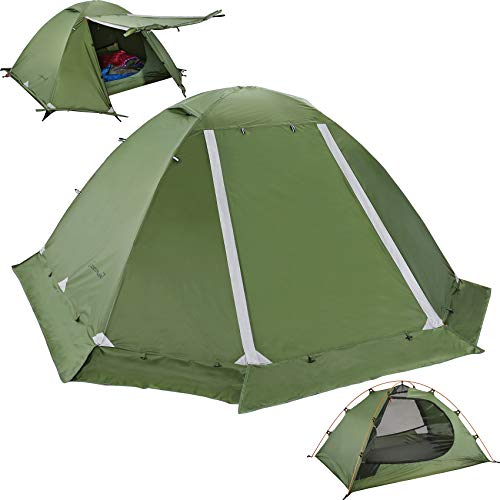
Clostnature 4 Season Backpacking Tent - 2 Person Cold Weather Winter Tent | 2 Man Snow Tent, Aluminum Pole, PU 5000, Easy Setup Tent, Lightweight, Waterproof, All Season Weather Tent for Hiking

BISINNA 4 Season Tent for Backpacking Lightweight Winter Tents 2 Person | Cold Weather Tents Waterproof Double Layer All Season Tent Aluminum Alloy Poles Easy Set Up for Camping, Hiking, Outdoor
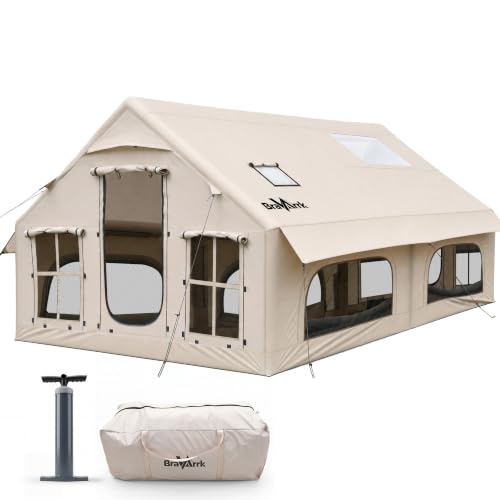
Inflatable Tent for Camping 8-12 Person, 4 Season Family Glamping Tent | with Stove Jack and PVC Skylight, PU3000mm Oxford , 7-Minute Setup Pump Included,Waterproof,Hot Tent,Blow Up Tent,Air Tent

4 Season Hot Tent with Stove Jack, 6-8 Person Poly-Cotton Cabin Tent | Breathable TC canvas roof, PU3000mm waterproof sidewall, heavy duty PE floor, 6 mesh windows, 2 doors & glow stakes included

OneTigris Stella 4 Season Camping Tent Backpacking 2 Person Waterproof Lightweight Easy Setup Instant 3000mm Waterproof Rating Outdoor Hiking Tent, Black

1 Person 4 Season Backpacking Tent, Lightweight Waterproof Winter Tent

2 Person 4 Season Backpacking Tent, Lightweight Waterproof Winter Tent
Frequently Asked Questions About Winter Tents
Can I use a 3-season tent in winter?
You can, but it is not recommended for anything beyond a mild, dry cold. A 3-season tent's mesh panels will let heat out and spindrift in. It is also not designed to support a heavy snow load and may collapse. For true winter conditions, a 4-season tent is the safe and reliable choice.
What is the best shape for a winter tent?
A dome or geodesic shape is generally considered the best for winter. These shapes are inherently strong, self-supporting, and shed snow and wind effectively from all directions. A tunnel tent can also be effective if pitched with the wind, but a dome is more versatile.
How do I prevent condensation inside my winter tent?
Ventilation is key. Use the high and low vents to create cross-flow. Avoid cooking inside without proper ventilation. If you have a double-wall tent, the inner tent is breathable, and the fly is waterproof. The space between them is where condensation forms. Wipe down the inner wall of the fly as needed. A camping towel is useful for this.
Do I need a stove jack in my winter tent?
Only if you plan to use a wood-burning stove. A stove jack allows you to safely run a stovepipe through the tent wall, providing heat and a way to dry gear. It is a game-changer for extended winter trips, but it adds weight and complexity. If you are not using a stove, a standard 4-season tent is fine.