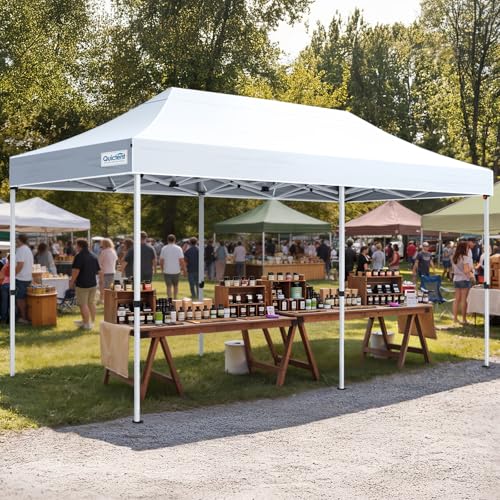
10 x 20 Easy Pop Up Canopy Party Tent: The Ultimate Buyer's Guide
Everything you need to know about choosing, setting up, and getting the most out of a 10x20 pop-up canopy tent for parties, events, and outdoor gatherings.
Start Your ResearchWhy a 10x20 pop-up canopy? When you need instant shade, reliable weather protection, and a spacious shelter that sets up in minutes, a 10 x 20 easy pop up canopy party tent is one of the most versatile investments you can make. Whether you're hosting a backyard birthday party, running a vendor booth at a farmers market, or creating a comfortable basecamp for your camping trip, this size hits the sweet spot between portability and usable space.
What Exactly Is a 10x20 Pop Up Canopy Tent?
A 10 x 20 easy pop up canopy party tent is a freestanding, portable shelter with a 200-square-foot footprint. Unlike traditional pole-and-rope tents that require assembly from scratch, pop-up canopies use a pre-assembled frame that expands outward when you pull the legs apart — no tools, no loose parts, and typically no more than two people needed to set it up. The "10x20" refers to the dimensions in feet: 10 feet deep and 20 feet wide, giving you enough room for seating, tables, food stations, or vendor displays.
These shelters are sometimes called instant canopies, pop-up tents, or event canopies. The key distinction from a camping tent is that a canopy is designed for standing height and open-sided use, whereas a camping tent is enclosed for sleeping. Some 10x20 models include side walls for full enclosure, which you can explore in our guide to a 10 x 20 pop up tent with sides. If you only need a smaller footprint, a 10 x 20 pop up canopy tent may offer a different balance of coverage and portability.
Who Should Consider a 10x20 Pop Up Canopy?
This size is popular across several use cases. Event hosts love it for parties, weddings, and graduations. Vendors use it at craft fairs, flea markets, and food festivals. Campers and tailgaters appreciate it as a shade structure or dining area. If you're camping with a group, a 10x20 canopy can serve as a communal hub, especially when paired with a 10 x 20 easy pop up canopy party tent that prioritizes quick setup.
For those new to camping, understanding the basics of how to choose tent size can help you decide whether a 10x20 canopy or a traditional camping tent better suits your needs. And if you're wondering whether a canopy can replace a camping tent entirely, our comparison of tent vs hammock and guide to camping vs glamping offer useful context.
Pros and Cons of a 10x20 Pop Up Canopy
✓ Advantages
- Sets up in minutes with minimal effort
- Provides 200 sq ft of shade and weather protection
- Freestanding — no stakes required on hard surfaces
- Adjustable height settings for different uses
- Available with side walls, screens, and accessories
- Portable enough for one or two people to transport
- Versatile across camping, events, and vendor use
✗ Limitations
- Heavier than smaller canopies (typically 40–80 lbs)
- Can be challenging to set up alone in windy conditions
- Not designed for overnight sleeping without walls
- Entry-level models may have less durable fabrics
- Requires proper anchoring to prevent wind damage
- Storage space needed when not in use
Key Features to Evaluate Before Buying
🛡️ Frame Material & Durability
Steel frames are common and offer good strength, though they can rust if the powder coating chips. Aluminum frames are lighter and rust-resistant but typically cost more. Look for reinforced joints and a frame that feels solid when fully extended. Entry-level canopies often use thinner steel, while mid-range and premium models use thicker gauge materials and better welds.
☀️ Canopy Fabric & UV Protection
Most canopies use polyester or polyethylene fabric. Polyester with a UV-resistant coating offers better longevity and color retention. Check for a UPF rating — premium canopies often provide UPF 50+ protection. The fabric should be thick enough to block sunlight without becoming brittle over time. Water resistance is another key factor; look for models with taped seams or a water-repellent finish.
📏 Height Adjustability
Most 10x20 pop-up canopies offer three height settings, typically ranging from about 6.5 feet to 8 feet at the eaves. Higher settings improve airflow and accommodate taller individuals, while lower settings provide better wind resistance. Consider your intended use: a vendor booth may benefit from a higher peak for visibility, while a camping shelter might prioritize a lower profile for stability.
🔗 Anchoring & Wind Resistance
Every canopy should come with stakes and guy lines. For hard surfaces like concrete, you'll need weight bags or sandbags. Premium models often include reinforced anchor points and heavier-duty stakes. Wind is the number one enemy of pop-up canopies — never leave one unattended in gusty conditions. If you're camping in exposed areas, consider a pop-up tent for cold and rainy weather with enhanced weatherproofing.
🎒 Portability & Storage
A 10x20 canopy typically packs into a wheeled bag that measures around 4–5 feet long. Weight varies: lighter models may be around 40 pounds, while heavier-duty versions can exceed 80 pounds. If you'll be moving it frequently, prioritize a model with a well-designed roller bag and comfortable handles. For solo campers, a 2 person compact portable pop up tent might be more manageable.
🧩 Accessories & Expandability
Many 10x20 canopies support add-on side walls, screen panels, and even full enclosure kits. This flexibility lets you adapt the shelter to different conditions — open for breezy summer days, enclosed for privacy or rain protection. Some models include built-in LED lighting or ventilation ports. If you're considering a canopy for camping, a 10 x 20 pop up tent with sides can provide more weather protection than a basic open canopy.
Entry-Level vs Mid-Range vs Premium: What to Expect
To help you navigate the market without getting bogged down in numbers, here's a tier-based comparison of what different quality levels typically offer. This framework focuses on relative positioning rather than absolute figures, so it stays useful regardless of market changes.
| Feature | Entry-Level | Mid-Range | Premium |
|---|---|---|---|
| Frame Material | Thin steel, basic powder coating | Thicker steel or entry aluminum | Heavy-duty aluminum or reinforced steel |
| Fabric Quality | Basic polyester, minimal UV coating | Polyester with UV and water-resistant coating | Heavy-duty polyester or oxford, UPF 50+, taped seams |
| Setup Mechanism | Basic pull-pin or slider | Smooth central lock or push-button | One-touch or assisted setup system |
| Height Settings | 2–3 settings, limited range | 3 settings, wider range | 3+ settings, precise adjustability |
| Wind Resistance | Basic stakes and guy lines | Reinforced anchor points, better stakes | Heavy-duty anchoring system, wind vents |
| Portability | Basic carry bag, heavier relative to features | Wheeled bag, balanced weight | Premium roller bag, optimized weight distribution |
| Durability | 1–2 seasons with regular use | 3–5 seasons with care | 5+ seasons with proper maintenance |
| Best For | Occasional backyard use | Regular events and camping | Professional vendors and frequent use |
As a general rule, moving up a tier typically means better materials, smoother setup, and greater durability. If you're planning to use your canopy regularly or in challenging conditions, a mid-range or premium model often provides better long-term value. For occasional use, an entry-level canopy can be perfectly adequate. If you're comparing canopy sizes, our guide to a 12 x 12 pop up canopy tent explains how a slightly larger or smaller footprint changes the experience.
Setup Tips and Best Practices
Setting up a 10x20 pop-up canopy is straightforward, but a few best practices make the process safer and more efficient. First, always set up with at least one helper if possible — the frame is large and awkward to handle alone. Second, choose a flat, clear area free of overhead branches and underground hazards. Third, partially expand the frame before flipping it upright, then extend the legs one at a time. Fourth, anchor immediately after setup, even on a calm day; wind can pick up quickly.
For camping-specific setup, you may want to stake the canopy over a picnic table or seating area. If you're setting up on a platform or hard ground, weight bags are essential. Our guides on setting up a tent on a platform and tents that can be set up on concrete offer additional techniques for challenging surfaces. And if rain is in the forecast, set up a tent in the rain covers strategies to keep your gear dry.
When it's time to pack up, reverse the process: lower the legs, collapse the frame, and fold the fabric carefully to avoid pinching. Store the canopy completely dry to prevent mildew. With proper care, a quality 10x20 canopy can last for many seasons. If you're wondering about longevity, our article on how long do tents last provides useful context for canopy lifespan as well.
Frequently Asked Questions
It's possible but not recommended, especially in windy conditions. A 10x20 canopy is large and can be unwieldy during setup. If you must set it up alone, do so on a calm day, partially expand the frame while it's still on the ground, and use a step-by-step approach. Having a second person makes the process faster and safer.
Yes, many campers use 10x20 canopies as shade structures, dining areas, or communal gathering spaces. However, an open canopy is not a substitute for a camping tent for sleeping — it doesn't provide enclosure, insulation, or full weather protection. For camping, consider a canopy with side walls or a dedicated camping tent. Our guide to camping in a tent in the rain and camping in the winter in a tent offer additional insights.
On hard surfaces, stakes won't work. Instead, use weight bags filled with sand or water, attached to each leg. Some canopies come with weight bags included; otherwise, they're widely available as accessories. For maximum stability, use at least 20–40 pounds of weight per leg in windy conditions. You can also use heavy-duty sandbags or even coolers filled with ice as improvised anchors.
A 10x20 canopy is an open-sided shelter designed for standing height and temporary use, while a 10x20 camping tent is an enclosed structure designed for sleeping and weather protection. Canopies are typically faster to set up and better for events, while camping tents offer more privacy, insulation, and weather resistance. Some hybrid models, like a 10 x 20 pop up tent with sides, blur the line by offering canopy-style setup with enclosed walls.
Clean the fabric with mild soap and water, then allow it to air dry completely before storing. Avoid harsh chemicals or abrasive brushes that can damage UV coatings. Inspect the frame for rust or bent joints after each use, and lubricate moving parts as needed. Store the canopy in a dry, cool place — not in a damp garage or shed where mildew can develop. With proper care, a quality canopy can last several seasons.
Most canopy fabrics are water-resistant, not fully waterproof. They can handle light rain and moisture, but heavy or prolonged rain may seep through seams or fabric. Premium models often have taped seams and stronger water-repellent coatings for better performance. If you need full rain protection, consider adding side walls or choosing a canopy specifically designed for wet weather. Our guide to pop-up tent for cold and rainy weather covers options for challenging conditions.
Explore Related Guides
- 10 x 20 Pop Up Tent with Sides
- 10 x 20 Pop Up Canopy Tent
- 12 x 12 Pop Up Canopy Tent
- How to Choose Tent Size
- Tent vs Hammock
- Camping vs Glamping
- Set Up a Tent in the Rain
- Setting Up a Tent on a Platform
- Tents That Can Be Set Up on Concrete
- Pop Up Tent for Cold and Rainy Weather
- 2 Person Compact Portable Pop Up Tent
- How Long Do Tents Last
- Camping in a Tent in the Rain
- Camping in the Winter in a Tent
Ready to Find Your Perfect 10x20 Canopy?
Now that you understand the key features, setup considerations, and quality tiers, you're ready to make an informed decision. Check out our recommended products below.
View Recommended Canopies