Tent for Beach Shade: The Complete Guide to Sun Shelters and Canopies
Protect your family from harmful UV rays and enjoy a cooler, more comfortable day at the beach. Learn how to choose the perfect beach shade tent for your needs.
Why Beach Shade Matters: A day at the beach can quickly turn uncomfortable without proper sun protection. The right tent for beach shade keeps you cool, blocks harmful UV rays, and gives you a comfortable base for relaxing, eating, and storing your gear. This guide will help you understand the features that matter most so you can choose a shelter that suits your beach habits and family size.
Why You Need a Dedicated Beach Shade Tent
Many people assume a regular camping tent will work fine at the beach. In practice, a purpose-built beach shelter is a different product category with a different set of design priorities. Beach tents are engineered for open, windy, sandy environments where quick setup, airflow, and UV protection matter far more than weatherproofing for rain.
A good beach shade tent solves several problems at once. It blocks direct sunlight, reducing the risk of sunburn and heat exhaustion. It creates a personal microclimate that can be several degrees cooler than the open sand. It also provides a visual boundary for your group, which is helpful when you are managing children, coolers, and bags in a crowded public beach.
From a practical standpoint, beach shelters are also much lighter and more portable than camping tents. Most pack down into a carry bag that fits in a car trunk or even a large beach tote. If you are new to outdoor gear in general, our first time camping tips and what to bring camping guides can help you build a solid foundational kit before you specialize for the beach.
Types of Beach Shade Tents Compared
There are four main categories of beach shade products. Each has a distinct set of strengths, and the right choice depends on how you use the beach, how many people you bring, and how much weight you are willing to carry.
1. Pop-Up Beach Tents
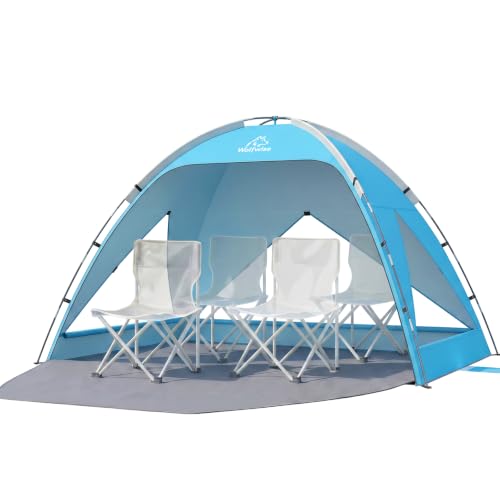
Pop-up beach tents are the most popular category for casual beachgoers. They use a flexible frame that springs into shape in seconds. Most models are designed for two to four people and include sand pockets, mesh windows, and a floor that can be unzipped or removed. A typical pop-up beach tent sun shade shelter is lightweight and can be carried by one person.
These shelters are excellent for families with young children because they set up without any assembly. The trade-off is that they can be tricky to fold back down until you practice a few times. Once you learn the technique, however, they are incredibly convenient.
Pros
- Sets up in seconds
- Very lightweight
- Affordable entry-level option
- Good airflow with mesh panels
Cons
- Folding can be frustrating at first
- Less stable in strong wind
- Limited standing height
2. Canopy and Gazebo Tents
Canopy tents, sometimes called gazebos or shade canopies, use a frame with four legs and a fabric roof. They offer much more shade area than pop-up beach tents and can be configured with side walls for extra protection. A shade pop up canopy or a gazebo tent pop up is ideal for larger groups, beach parties, or extended stays.
The main drawback is weight and setup complexity. Most canopies require two people to erect safely, especially in wind. They also take up more space in the car. If you often host beach gatherings or need a shaded area for food and tables, a canopy is worth the extra effort.
3. Beach Umbrellas and Sun Shelters
A beach umbrella is the simplest form of shade, but it is not a tent. Umbrellas are excellent for one or two people and are very easy to move as the sun shifts. However, they provide limited protection from side glare and blowing sand. A portable pop up tent with a floor and walls offers more comprehensive protection.
Some products combine the two ideas, such as a beach tent with an integrated awning or a sun shelter that extends forward like a visor. These hybrid designs are useful when you want a small footprint but more coverage than a plain umbrella.
4. Inflatable and Air-Frame Beach Tents
Inflatable beach tents use air beams instead of metal or fiberglass poles. They are very stable in wind and pack down compactly, but they require a pump and take longer to set up. They are a good choice for windy beaches where traditional pop-up tents struggle. If you are curious about inflatable designs more broadly, see our related guide on inflatable tents for sale.
Comparison Table
| Type | Setup Time | Weight | Best For | Wind Resistance |
|---|---|---|---|---|
| Pop-Up Beach Tent | Seconds | Lightweight | Couples & small families | Moderate |
| Canopy / Gazebo | 5–15 minutes | Heavy | Large groups & parties | Good with stakes |
| Beach Umbrella | Under a minute | Very light | One or two people | Poor in wind |
| Inflatable Tent | 3–10 minutes | Moderate | Windy beaches | Excellent |
Key Features to Look For in a Beach Shade Tent
Not all beach tents are created equal. The following features separate a frustrating shelter from one that genuinely improves your beach day.
UV Protection (UPF Rating)
The single most important specification for a beach shade tent is its UPF rating. UPF 50+ is the standard you should aim for, as it blocks approximately 98% of UV radiation. Lower ratings may still provide shade, but they allow more UV to pass through the fabric. Always check the manufacturer's stated UPF value rather than assuming that any fabric provides full protection.
Sand Pockets and Anchoring
Beach tents must handle sand and wind. Sand pockets are built-in flaps that you fill with sand to weigh down the corners. They are more effective than stakes on loose sand. If your tent uses stakes, look for long, wide sand stakes. Some models include both options, which gives you flexibility on different beach surfaces. If you camp on other soft surfaces too, our guide on setting up a tent on the beach covers anchoring in detail.
Ventilation and Airflow
Heat buildup is a real problem inside any enclosed shelter. Mesh windows, roof vents, and roll-up doors allow hot air to escape and breezes to pass through. A beach tent with poor ventilation can become an oven by midday. Prioritize models with multiple mesh panels and a design that encourages cross-flow.
Floor and Entry Design
Some beach tents have a full floor, some have a partial floor, and some have no floor at all. A full floor keeps sand and bugs out but can trap heat. A floorless design lets you walk in with sandy feet and is easier to shake clean. Many pop-up tents use a floor that can be zipped off, giving you the best of both worlds.
Packed Size and Weight
If you park far from the sand or carry your gear by hand, packed size and weight matter enormously. A lightweight pop-up tent that fits in a backpack is far easier to manage than a heavy canopy with a wheeled bag. For beach trips that also involve hiking, consider how the shelter integrates with your other gear. Our lightweight backpacks for hiking guide can help you choose a compatible pack.
Materials and Durability
Beach tents face salt, sun, and sand. Polyester and nylon are common fabrics. Polyester tends to resist UV degradation better and holds its shape, while nylon is lighter and more packable. Coatings such as silver or PU (polyurethane) can improve UV reflection and water resistance. For a deeper look at fabric choices, see our article on is nylon or polyester better for tents.
How to Choose the Right Size Beach Tent
Size is a balance between comfort and portability. A tent that is too small feels cramped and defeats the purpose of shade. A tent that is too large is heavy, hard to anchor, and may not fit in your car.
As a general rule, a two-person beach tent offers enough room for two adults to sit comfortably with a small cooler. A four-person tent gives a family of four room to sit and lie down, with space for bags. For groups of six or more, a canopy is usually the better choice.
If you are also considering a tent for overnight beach camping, look at models that can transition from day shelter to sleeping space. Our guides on tents for 2 person and 10 person camping tent cover capacity considerations in more depth.
Setup and Anchoring Tips for Beach Shade Tents
Setting up a beach tent is straightforward once you understand the principles. Here is a practical sequence that works for most pop-up and canopy designs.
- Choose your spot. Look for level sand away from the water line and away from crowded areas. Check the wind direction.
- Position the back into the wind. The lowest and most aerodynamic side of the tent should face the wind. This prevents the tent from catching air and flipping.
- Deploy the tent. For pop-up models, remove the strap and let it spring open. For canopies, assemble the frame and attach the fabric top.
- Fill the sand pockets. Fill every sand pocket completely. This is the most important step for stability.
- Add stakes if needed. On firmer sand, drive sand stakes at an angle away from the tent.
- Adjust guy lines. If your tent has guy lines, tension them so the fabric is taut but not stretched.
- Check ventilation. Open mesh panels and vents to promote airflow.
If you are new to tent setup in general, our guides on easy set up tent and quick set up tent offer broader advice that applies to beach models as well. For a more detailed beach-specific walkthrough, see setting up a tent on the beach.
Maintenance and Care for Beach Tents
Salt, sand, and sun are harsh on fabrics and frames. A few simple habits will extend the life of your beach shade tent significantly.
- Rinse after every trip. Fresh water removes salt and sand that can abrade fabric and corrode metal parts.
- Dry completely before storage. Mold and mildew thrive in damp fabric. Let the tent dry in the shade, not direct sun, to avoid UV damage.
- Avoid storing in extreme heat. High temperatures can degrade coatings and make fabrics brittle.
- Check seams and poles. Inspect for wear before each season. Small repairs now prevent bigger problems later.
- Practice folding. Pop-up tents fold more easily with practice. If you struggle, look up a video for your specific model.
For general guidance on tent longevity, see how long do tents last and are expensive tents worth it.
Beach Shade and Sun Safety
Shade is one part of a complete sun safety strategy. Even under a UPF 50+ tent, reflected UV from sand and water can reach your skin. Combine shade with sunscreen, protective clothing, and hydration.
Watch for signs of heat exhaustion, especially in children and older adults. Symptoms include dizziness, nausea, headache, and excessive sweating. If you notice these signs, move the person to a shaded area, offer water, and cool them down. Our common camping injuries and first aid for camping guides cover heat-related issues in more detail.
Also be mindful of weather changes. Afternoon thunderstorms can develop quickly on the coast. A beach tent is not a lightning shelter. If you hear thunder, leave the beach and seek a safe building or vehicle. Our camping weather alerts guide explains how to monitor conditions.
Related Shelter Options Worth Considering
Beach shade is part of a broader family of portable shelters. Depending on your needs, you may find that a different product category fits better.
If you want a shelter that doubles as a changing room or privacy space, a pop up changing tent is a practical alternative for short beach visits. For car-based beach trips where you want more substantial shade, a tent 10 x 10 canopy offers a large footprint. If you are interested in a full beach camping experience, our beach camping guide covers overnight considerations. And if you need a portable restroom solution for a remote beach day, see our guide on portable toilet and tent.
For those who prefer a minimalist approach, a portable hammock and stand can provide a comfortable shaded rest spot when paired with a small umbrella. And if you are shopping for a family-friendly shelter that works at the beach and at the campsite, our family tents for camping and camping gear for families guides are good next reads.
Frequently Asked Questions
Ready to Find Your Perfect Beach Shade Tent?
Explore our recommended beach shelters and sun protection gear below. Compare features, read reviews, and make an informed choice for your next beach day.
View Recommended Gear