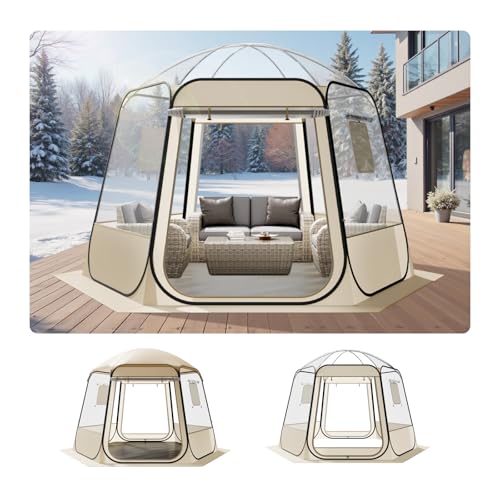
Bubble Tent Guide: Clear Dome Camping, Glamping & Buying Tips
Everything you need to know about transparent bubble tents — how they work, who they suit, what to look for in materials, and how to choose the right dome for stargazing, glamping, or backyard use.
View Recommended Bubble TentsQuick Answer: A bubble tent is an inflatable, transparent dome shelter used for stargazing, glamping, and backyard lounging. It is at its best in mild weather, on flat ground, and with access to electricity for the inflation pump — not as a replacement for a four-season backcountry tent.
What Is a Bubble Tent?
A bubble tent is a dome-shaped shelter built from transparent, heavy-duty PVC or TPU plastic. Instead of poles, the structure is held up by air chambers — you inflate the shell with a pump, stake the base down, and the resulting clear dome gives you an uninterrupted view of the sky in every direction. It is the same basic concept as a glamping dome, but in an inflatable rather than a rigid frame format.
Unlike a dome camping tent that relies on fiberglass poles and a mesh body, a bubble tent is essentially a sealed transparent room. That difference is what makes it magical for stargazing and disastrous in high wind or direct summer sun. Understanding that trade-off is the single most important step before you buy one.
Most bubble tents on the market fall into two broad categories: single-layer clear domes for backyard and event use, and double-layer models with a zip-on sunshade or reflective cover for more serious glamping setups. A smaller subset — the outdoor single tunnel inflatable bubble tent style — uses a tunnel entrance that connects to a secondary chamber, which is useful when you want a vestibule or a separate sleeping area.
Why Campers Choose Bubble Tents
The appeal of a bubble tent is almost entirely experiential. It is not the lightest shelter, it is not the most weatherproof, and it is not the cheapest option per square foot. What it delivers is a 360-degree panorama from inside your sleeping space — something no conventional tent can match.
- Stargazing from bed: A clear ceiling means you can watch the night sky without leaving your sleeping bag.
- Rain and snow viewing: Watching weather move across a transparent dome is a genuinely different experience from listening to it through nylon.
- Photo and content value: The visual signature of a bubble tent is instantly recognizable, which is why they dominate glamping listings and social media feeds.
- Backyard versatility: Many buyers never take theirs camping at all — they use them as garden reading rooms, kids' play domes, or party shelters.
If your priority is a lightweight shelter you can carry on a light backpacking trip, a bubble tent is the wrong tool. If your priority is a memorable night under the stars within reach of a vehicle, it is one of the best options available. The camping vs glamping comparison is a useful framework for deciding which side of that line you fall on.
Types of Bubble Tents
Not all clear domes are built the same way. The differences show up in setup time, ventilation, and how well the tent handles sun and rain.
| Type | Best For | Key Consideration |
|---|---|---|
| Single-layer clear dome | Backyard use, events, mild-weather glamping | Strongest panoramic view, but heats up fast in sun |
| Double-layer with sunshade | Overnight glamping, warmer climates | Zip-on cover blocks light and heat; more versatile |
| Tunnel-connected bubble tent | Family glamping, two-room layouts | Adds a vestibule or second chamber for gear |
| Bubble dome with mesh door | Summer camping with airflow needs | Improves ventilation but reduces the sealed-dome effect |
For buyers comparing shapes more broadly, it helps to look at how a bubble tent stacks up against a large tent or a big tent in terms of usable floor space and headroom. A bubble tent often feels larger than its footprint because the curved walls push outward, but the usable sleeping area at the base is usually smaller than the inflated dimensions suggest.
Materials and Construction
The shell material is the biggest factor in how long a bubble tent lasts. Almost all of them use either PVC or TPU.
- PVC: Thicker, more puncture-resistant, and the most common choice for larger domes. It is heavier and can yellow over time with UV exposure.
- TPU: Lighter, more flexible in cold weather, and generally more UV-stable. It costs more and is more prone to creasing if stored folded tightly.
Look for welded seams rather than stitched ones — stitching creates pinholes that leak air. A quality dome will also include a reinforced base skirt with grommets for staking, and an inflation valve that accepts both a manual foot pump and an electric pump.
It is worth reading up on whether nylon or polyester is better for tents even if you are buying a bubble tent, because it helps you understand why the plastic shell behaves so differently from a fabric tent in terms of condensation, breathability, and heat retention. For cold-weather planning specifically, the keeping a tent warm in cold weather guide covers the insulation principles that also apply inside a dome.
Pros and Cons of Bubble Tents
Advantages
- Unmatched 360-degree views and stargazing
- No poles to assemble — inflation does the work
- Very stable in light wind once staked
- Excellent for glamping sites and rentals
- Doubles as a backyard room or event shelter
Limitations
- Heavy and bulky to transport
- Requires a pump, and usually power, to inflate
- Limited ventilation compared with mesh tents
- Interior heats up quickly in direct sun
- Not suited to exposed or high-wind sites
- Condensation builds up on the inner surface
That condensation point deserves emphasis. Because the shell does not breathe, moisture from your breath and body accumulates on the inside of the dome overnight. A small battery-powered fan or a cracked mesh door makes a significant difference. The principles in our anti-condensation guide are written for rooftop tents but the underlying logic applies equally here.
How to Set Up a Bubble Tent
Setup is simpler than a pole tent in terms of steps, but it demands more preparation. The sequence below is the one that works reliably across most inflatable domes.
- Choose a flat, debris-free pitch. Sharp stones and twigs puncture the base. A groundsheet underneath is strongly recommended.
- Unroll the dome and locate the valves. Let the plastic relax for a few minutes in warm weather so it unfolds without stress.
- Stake the base first. Attach the base grommets to pegs before inflating, so the dome does not shift as it rises.
- Inflate in stages. Fill each chamber partially, then top them off. This prevents one chamber from over-stressing the seams.
- Attach the sunshade or cover if your model includes one, and secure any guy lines.
If you are pitching in poor conditions, the same fundamentals from our set up a tent in the rain and camping in a tent in the rain guides apply — the difference is that a bubble tent needs extra care to keep water out of the inflation valves.
What to Look For Before Buying
Buyers researching bubble tents are usually past the "is this a real product" stage and are now deciding between specific models. These are the factors that actually separate a good dome from a frustrating one.
| Factor | Entry-Level | Mid-Range | Premium |
|---|---|---|---|
| Shell material | Thin PVC, stitched seams | Thicker PVC or TPU, welded seams | UV-stabilized TPU, reinforced welded seams |
| Ventilation | Single door, no mesh | Mesh door panel plus valve vents | Multiple vents, mesh door, fan port |
| Sun protection | None | Optional zip-on shade | Included reflective cover, UV coating |
| Inflation | Manual foot pump | Foot pump plus electric adapter | Integrated electric pump |
| Best use | Backyard, occasional | Regular glamping trips | Commercial glamping, heavy use |
Beyond the tier differences, three practical checks matter more than any spec sheet:
- Ventilation openings: At least one mesh panel or a door with a mesh layer. A fully sealed dome is unpleasant after the first hour.
- Pump compatibility: Confirm the valve fits a standard electric pump, not a proprietary connector.
- Packed weight and size: Weigh this against your transport. A dome that is too heavy to move will not get used.
Bubble Tent vs Other Transparent and Glamping Shelters
If you are weighing a bubble tent against alternatives, the honest comparison comes down to how much transparency you need and how much weather protection you are willing to trade for it.
- vs. luxury tent: A luxury tent offers better insulation, privacy, and ventilation, but no panoramic ceiling. Choose based on whether the view or the comfort matters more.
- vs. glamping pod: A pod is a rigid structure with proper doors and insulation. It is more permanent and more expensive, but far more comfortable in bad weather.
- vs. safari tent: Safari tents are built for extended stays with standing headroom and real walls. A bubble tent is a novelty shelter by comparison.
- vs. tarp tent: A tarp tent is lightweight, packable, and weatherproof but completely opaque. The two serve opposite ends of the market.
- vs. mosquito tent: If insect protection is your main concern, a mesh mosquito tent is far more breathable and much lighter.
Buying tip: If you plan to use a bubble tent mainly for glamping stays rather than camping trips, look at glamping sites and glamping resort listings first. Many already offer bubble domes as part of their accommodation, which lets you test the experience before committing to ownership.
Care, Storage, and Longevity
A bubble tent that is stored badly will fail at the seams long before the material wears out. The maintenance routine is straightforward but worth following consistently.
- Clean the shell with warm water and a mild soap — never solvents or abrasive pads.
- Dry the dome completely before folding. Trapped moisture encourages mold along the seams.
- Store loosely folded in a cool, dark place rather than compressed in a tight stuff sack.
- Keep the dome out of prolonged direct UV exposure when not in use.
- Check the valves and seams at the start of each season for small leaks.
Understanding how long tents last in general gives you a realistic baseline — a well-maintained bubble tent can serve for many seasons, but the transparent shell is a wear item and will eventually cloud or stiffen with age.
Where Bubble Tents Work Best
Site selection determines whether a bubble tent is a delight or a disappointment. The best locations share three traits: flat ground, shade or filtered light, and vehicle access.
- Backyard and garden: The most common use case. No transport issues and easy access to power for the pump.
- Glamping sites: Many glamping sites and luxury glamping destinations provide pre-pitched domes, which is a low-risk way to try one.
- Mild-weather campgrounds: Look for campgrounds rather than wild camping — you need flat, maintained ground and ideally an electrical hookup.
- Destinations with clear skies: Dark-sky locations such as Joshua Tree or Big Bend are ideal for the stargazing use case.
Before booking any campsite, confirm that inflatable structures are permitted. Rules vary by land manager, and the general principles in our camping FAQ and Leave No Trace guides will help you plan responsibly.
Frequently Asked Questions
What is a bubble tent?
A bubble tent is a transparent, inflatable dome shelter made from durable PVC or TPU plastic. Air chambers hold the structure up, and a clear ceiling gives campers a panoramic view of the sky. Bubble tents are popular for glamping, stargazing, and backyard lounging.
Are bubble tents good for camping?
They work well for glamping sites, backyard use, and mild-weather camps. They are not ideal for rugged backcountry trips because they are heavier, require electricity for inflation, and offer limited ventilation compared with mesh-cabin tents.
Do bubble tents get hot inside?
Yes. Because the shell is transparent and mostly sealed, interior temperatures rise quickly in direct sun. Look for models with an outer sunshade layer, a zip-on reflective cover, or a mesh door, and pitch the tent in shade or use it at cooler times of day.
How long does it take to set up a bubble tent?
Most inflatable bubble tents take 10 to 30 minutes. You unroll the shell, stake the base, attach a pump, then inflate the air chambers. Premium models with an integrated electric pump inflate considerably faster than entry-level models using a manual foot pump.
Can a bubble tent handle rain and wind?
Light rain is fine — the shell is waterproof. Strong wind is the real problem, because the inflated shape catches air. Avoid exposed ridges and open fields, and always use every guy line and stake the base fully. If high winds are forecast, choose a different shelter.
Is a bubble tent worth it for occasional use?
If you have a backyard, flat ground, and access to power, a mid-range or entry-level bubble tent can be a worthwhile purchase for occasional use. If you need a shelter for frequent wilderness camping, a conventional tent or a luxury tent will serve you better.