Air Mattresses for Camping: Sleep Comfortably Under the Stars
Discover how to choose the perfect air mattress for tent camping, car camping, and backpacking. Compare thickness, materials, pump types, and comfort features to transform your outdoor sleep.
START YOUR RESEARCHWhy an air mattress changes everything: A good night's sleep in the wilderness isn't a luxury—it's the foundation of a great camping trip. Whether you're car camping with the family, spending a weekend in a 10-person camping tent, or embarking on a solo adventure, the right air mattress protects you from cold ground, rocky terrain, and restless nights.
Unlike foam pads or cots, air mattresses offer customizable firmness, superior cushioning, and compact packability. But with dozens of options on the market—from lightweight backpacking pads to plush 18-inch air mattresses with built-in pump—choosing the right one requires understanding your camping style, tent size, and sleep preferences.
This guide walks you through every critical decision: thickness, material durability, pump mechanisms, insulation, and size compatibility. By the end, you'll know exactly which air mattress suits your needs—and why it matters for your outdoor experience.
Key Specifications to Evaluate
Air Mattress Tiers: Entry-Level to Luxury
To simplify your decision, we classify air mattresses into four quality tiers. Each tier serves different camping styles and budgets—without mentioning specific prices. Use these descriptors to compare products in our recommendation section below.
| Tier | Best For | Typical Features | Durability & Comfort |
|---|---|---|---|
| Entry-Level | Occasional campers, budget-conscious buyers, kids' sleepovers | Basic PVC construction, manual pump or no pump, 6–10 inch thickness, simple valve system | Adequate for mild weather and light use; may lose air over time; less puncture-resistant |
| Mid-Range | Regular campers, families, weekend trips | TPU or reinforced PVC, built-in electric pump, 12–18 inch thickness, flocked surface, edge reinforcement | Good balance of comfort and durability; better air retention; suitable for 3-season camping |
| Premium | Frequent campers, cold-weather adventurers, comfort-focused buyers | High-denier TPU, advanced pump systems, 18–24 inch thickness, insulation layers, anti-slip base, carrying bag | Excellent durability and comfort; superior thermal retention; designed for extended use |
| Luxury | Glampers, base campers, those who prioritize sleep quality above all | Multi-layer construction, integrated headboard, dual-pump systems, memory foam toppers, premium fabrics | Hotel-like comfort in the outdoors; exceptional durability; often includes advanced features like auto-shutoff pumps |
💡 Pro Tip: For cold-weather camping, prioritize insulation over thickness. A 4-inch insulated pad with an R-value of 5+ will keep you warmer than a 20-inch uninsulated air mattress. Pair with a sleeping bag rated for the temperature and a sleeping bag liner for extra warmth.
Types of Air Mattresses for Different Camping Styles
1. Tent Camping Air Mattresses
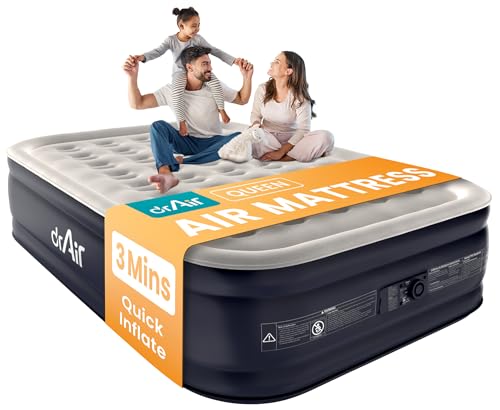
These are designed to fit inside tent footprints. Queen and full sizes work well in 6-person instant tents or 10-person instant tents. Look for models with flocked tops (prevents sliding), reinforced edges, and built-in pumps. A queen-size air mattress with built-in pump is a popular choice for couples. For families, a double-high air mattress offers easier entry and exit.
2. Backpacking & Ultralight Air Pads
When every ounce counts, backpackers choose lightweight inflatable pads. These are typically 2–3 inches thick, use TPU or nylon, and weigh under 2 pounds. Models like the ultralight camping sleeping pad or inflatable camping sleeping mat pack down to the size of a water bottle. They often require a separate pump sack or manual inflation.
3. Car Camping & Base Camp Mattresses
Car campers can afford bulk and weight. A blow-up camping mattress with a built-in electric pump that plugs into a 12V car outlet is incredibly convenient. For maximum comfort, consider a memory foam camping mattress or an air mattress with built-in pump and headboard. These transform your tent into a bedroom.
4. Self-Inflating & Hybrid Mattresses
Self-inflating pads combine open-cell foam with air chambers. They're more durable than pure air mattresses and offer better insulation. The self-inflating camping mattress is a great middle ground for campers who want convenience without a pump. Hybrid models like the all-in-one sleeping bag and mattress are perfect for minimalist campers.
5. Specialized Air Mattresses
Some campers need specific solutions: a blow-up mattress for back seat of car for stealth camping, a twin air mattress with built-in air pump for solo trips, or a raised queen air mattress for those who struggle with low beds. There's a mattress for every scenario.
Air Mattress Pros & Cons for Camping
✅ Advantages
- Superior cushioning compared to thin foam pads
- Adjustable firmness—inflate more or less to your preference
- Compact when deflated; easy to store and transport
- Available in multiple sizes to fit any tent
- Many models include built-in pumps for quick setup
- Can be used for guests at home when not camping
⚠️ Disadvantages
- Can puncture or leak over time
- Uninsulated models feel cold in low temperatures
- Heavier and bulkier than closed-cell foam pads
- Requires inflation time and effort
- May lose air overnight, requiring re-inflation
- Not ideal for rough, rocky ground without a protective layer
How to Choose the Right Air Mattress for Your Trip
Follow this decision framework to narrow down your options:
- Identify your camping style: Backpacking? Car camping? Tent camping with family? Each demands different priorities.
- Measure your tent: A queen mattress needs at least a 6-person tent. Check dimensions before buying. If you have a 4-person tent you can stand up in, a full-size mattress fits comfortably.
- Determine your sleep position: Side sleepers need thicker mattresses (12+ inches) with better support. Back sleepers can use thinner pads.
- Consider the climate: For cold weather, prioritize insulation (R-value 5+) or pair with a foam mattress camping pad underneath.
- Decide on pump type: Built-in electric pumps are convenient for car camping. Manual pumps or pump sacks work for backpacking.
- Check durability features: Look for puncture-resistant materials, reinforced seams, and warranty coverage.
- Test before your trip: Inflate at home and let it sit for 24 hours to check for leaks.
💡 Ground Protection Matters: Always use a ground tarp or footprint under your tent to prevent punctures. For extra protection, place a closed-cell foam pad or a foldable mat for sleeping between the mattress and tent floor. This also adds insulation.
Air Mattress Maintenance & Care Tips
A well-maintained air mattress can last for years. Follow these practices to extend its lifespan:
- Clean before storage: Wipe with mild soap and water; dry completely before folding.
- Store loosely: Avoid folding along the same creases repeatedly; store flat or rolled loosely.
- Keep away from sharp objects: Trim nails, remove rocks and twigs from tent floor, and use a protective mat.
- Don't over-inflate: Over-inflation stresses seams. Inflate until firm but allow slight give.
- Use a repair kit: Carry a patch kit for emergencies. Most mattresses include one.
- Store in a cool, dry place: Avoid extreme heat or direct sunlight, which can degrade materials.
Ready to Upgrade Your Camping Sleep?
Browse our curated selection of top-rated air mattresses for camping. From lightweight backpacking pads to luxurious double-high mattresses, find the perfect match for your next adventure.
VIEW RECOMMENDED AIR MATTRESSESFrequently Asked Questions
For backpacking, 2–3 inches is ideal for weight savings. For car camping and tent camping, 6–12 inches provides excellent comfort. Side sleepers benefit from 12–18 inches to prevent bottoming out. Luxury models reach 18–24 inches for a bed-like feel. Always consider your tent's height—a camping tent you can stand up in accommodates taller mattresses more easily.
Yes, for car camping and family trips. A blow-up bed with built-in pump saves time and effort. Built-in electric pumps (often rechargeable or 12V) inflate a queen mattress in 2–3 minutes. For backpacking, built-in pumps add weight, so manual pump sacks are preferred.
First, check the valve for debris or damage. Tighten the valve securely. Temperature changes cause air to contract—re-inflate as needed. If the mattress consistently loses air, use a patch kit or contact the manufacturer. Avoid over-inflation, which stresses seams. Store properly and use a ground tarp to prevent punctures.
Absolutely. Air mattresses are designed for tent camping. Ensure the mattress fits your tent's floor dimensions. For a 2-person tent, a twin or full mattress fits well. For a 10-person camping tent, you can fit multiple queen mattresses. Place a protective layer between the mattress and tent floor to prevent punctures.
Air mattresses are thicker (6+ inches), heavier, and designed for comfort in car camping or base camping. Sleeping pads are thinner (1–4 inches), lighter, and designed for backpacking. A ultralight camping sleeping pad prioritizes weight and packability, while a double-high air mattress prioritizes comfort.
Measure your tent's floor space first. A queen air mattress typically measures 60" x 80" and fits in a 6-person tent or larger. Full-size mattresses (54" x 75") work in 4-person tents. Twin mattresses (38" x 75") are ideal for solo campers or smaller tents. Always leave a few inches of clearance around the mattress for gear and movement.
Continue Your Camping Sleep Research: Explore our related guides to build a complete sleep system. Learn about sleeping bag temperature ratings, how to choose tent size, and camping beds for tents. For winter campers, see our winter sleeping bags and how to stay warm in winter guides.