Tent Trailer Guide: The Ultimate Lightweight Camping Solution
Discover why tent trailers remain one of the smartest choices for campers who want comfort, towability, and the open-air experience of a tent — without sleeping on the ground.
START YOUR RESEARCHWhy a Tent Trailer? A tent trailer — also called a pop-up camper or folding camper — bridges the gap between tent camping and a full-size RV. It tows behind a family car, stores in a garage, and unfolds into a surprisingly spacious living area with beds, a dinette, and sometimes a kitchen. For campers who want an upgrade from ground sleeping without committing to a large motorhome, it is often the ideal middle path.
What Is a Tent Trailer and Who Is It For?
A tent trailer is a towable camping trailer with a solid roof and floor that folds down for travel and expands into a livable shelter at the campsite. The walls are typically made of canvas, vinyl, or a hybrid weatherproof fabric stretched over a metal frame. When folded, the unit is compact enough to be pulled by a mid-size sedan or small SUV. When deployed, it offers standing headroom, real beds, and a level of comfort that tent campers rarely enjoy.
The appeal is straightforward. Unlike a conventional travel trailer, a tent trailer is lightweight, aerodynamic, and easy to store. Unlike a rooftop tent, it provides interior space where you can stand, cook, and change clothes. And unlike a motorhome, it does not tie up your daily driver — you unhitch at the campsite and use your tow vehicle for exploring.
Tent trailers suit a wide range of campers: families who want separate sleeping areas, couples who value a quick weekend getaway setup, retirees who want to downsize from a large RV, and first-time trailer owners who are not ready to handle a heavy tow. If you are transitioning from a ground tent and want to explore towable options, it also helps to compare what a mini camper or a compact camper offers, since these categories overlap in size and intent.
For campers who prefer to stay closer to home, a tent trailer parked in the driveway or at a nearby state campground delivers most of the same benefits without a long drive. And for those who enjoy off-grid stays, many tent trailers are light enough to reach boondocking sites that larger RVs cannot access.
How a Tent Trailer Works: Setup and Fold-Down Mechanism
Understanding the mechanics helps you evaluate models. Most tent trailers use one of three lifting systems: a manual crank, a power lift, or a gas-assist system. The roof raises first, then the bunk ends slide or fold out, and finally the canvas walls are secured. Some models require you to attach the canvas to the roof and base with Velcro, zippers, or bungee cords; premium models come with pre-attached canvas that simplifies the process considerably.
Setup time varies by model. Entry-level tent trailers with manual cranks and separate canvas panels can take 20 to 30 minutes for a first-timer. Mid-range models with assisted lifts and pre-attached canvas typically take 10 to 15 minutes. Premium models with power lifts and slide-outs may take slightly longer because there are more moving parts, but the individual steps are easier.
If you are new to trailer ownership, it is worth practicing the setup on a utility trailer platform or in your driveway before your first trip. Learning how to pitch a tent efficiently translates well to canvas management, and the same principles of tension and weatherproofing apply. Campers who have mastered setting up a tent in the rain will find the tent trailer canvas system intuitive once they understand the sequence.
Teardown follows the reverse order: canvas folded in, bunks retracted, roof lowered, and latches secured. Always allow the canvas to dry completely before folding if possible — storing a tent trailer with damp canvas is the fastest way to develop mildew.
Key Features to Evaluate in a Tent Trailer
Not all tent trailers are built the same. The features below separate an entry-level model from a premium one, and understanding them helps you match a trailer to your camping style.
Lift System
Manual crank is the entry-level standard. Power lift and gas-assist systems are mid-range and premium features that reduce physical effort and setup time, especially for solo campers.
Canvas Quality
Entry-level models use standard treated canvas. Mid-range and premium models use vinyl-coated or acrylic-coated fabrics with better UV resistance, waterproofing, and mildew resistance.
Sleeping Capacity
Most tent trailers sleep four to six people across two king or queen bunk ends and a convertible dinette. Larger high-end models with slide-outs can sleep up to eight.
Kitchen Setup
Some models have an interior galley with a sink and stove; others have an exterior pull-out kitchen. Entry-level models often have a simple two-burner stove and a small counter.
Storage
Interior cabinets, under-bunk storage, and exterior compartments vary widely. Premium models offer more organized storage and often include a built-in cooler or fridge space.
Slide-Outs
A dinette slide-out adds significant floor space and is a hallmark of mid-range and premium tent trailers. Entry-level models usually have a fixed floor plan.
Heating and Cooling
Furnaces are common in mid-range and premium models. Air conditioning is optional and typically found on premium units. Entry-level models rely on portable heaters.
Off-Grid Capability
Battery capacity, solar prep, and freshwater tank size determine how long you can stay off-grid. Premium models often include larger tanks and solar-ready wiring.
Tent Trailer Tiers: Entry-Level, Mid-Range, and Premium
The table below summarizes how tent trailers differ across quality tiers. Use it to align your expectations with the category that fits your camping frequency and comfort requirements.
| Feature | Entry-Level | Mid-Range | Premium |
|---|---|---|---|
| Lift System | Manual crank | Assisted or power lift | Power lift with backup |
| Canvas | Standard treated canvas | Vinyl or acrylic coated | Premium coated, insulated options |
| Sleeping Capacity | 4 people | 4–6 people | 6–8 people |
| Kitchen | Exterior two-burner | Interior or exterior galley | Full interior galley with fridge |
| Slide-Out | None | Dinette slide common | Dinette and/or bed slide |
| Heating | Portable heater | Built-in furnace | Furnace and AC option |
| Storage | Basic cabinets | Organized interior storage | Extensive interior and exterior |
| Best For | Weekend campers, first-timers | Families, frequent campers | Extended trips, full-season use |
Towing a Tent Trailer: What You Need to Know
Towing is the single biggest concern for new tent trailer owners, and it deserves careful attention. The good news is that tent trailers are among the easiest towables to handle because of their low profile and light weight. The caveat is that you must verify your vehicle's towing capacity, hitch rating, and tongue weight limits before you buy.
Most entry-level tent trailers can be towed by a mid-size sedan or small crossover with a properly installed hitch. Mid-range models generally require a small SUV or minivan. Premium models with slide-outs and larger tanks may need a mid-size SUV or light truck. Always check the gross vehicle weight rating (GVWR) of the trailer against your vehicle's rated towing capacity, and leave a safety margin.
Other towing essentials include a brake controller if the trailer has electric brakes, extended mirrors for visibility, and a sway control hitch for larger models. Practice backing up in an empty parking lot before your first trip — the short wheelbase of a tent trailer makes it respond quickly to steering input, which surprises many new owners.
If you are considering a tent trailer as your first towable, it also helps to understand how trailer parking works at campgrounds and how camper parking differs from standard vehicle parking. For longer trips, planning around RV sites and RV hookups ensures you have the power and water connections you need. Campers who enjoy a mix of campgrounds and off-grid spots often alternate between RV lots and boondocking sites, and a tent trailer is flexible enough to handle both.
For those who want to explore destination camping, RV travel with a tent trailer opens up options like destination camper resorts and RV ports that cater to towable units. And if you ever upgrade to a larger rig, the towing skills you build with a tent trailer transfer directly to big RV handling.
Tent Trailer Buying Guide: How to Choose
Buying a tent trailer is a process of matching your camping habits to the right tier and feature set. Work through the following questions before you start shopping.
- How many people will sleep in it? Two adults and two children fit comfortably in most mid-range models. Larger families should look at premium models with slide-outs and three sleeping areas.
- How often will you camp? A few weekends per season suits an entry-level model. Monthly trips or extended stays justify a mid-range or premium investment.
- What will you tow with? Confirm your vehicle's towing capacity first. This single factor eliminates many options and narrows your search quickly.
- Do you need a bathroom? Most tent trailers do not have a built-in bathroom. Some premium models offer a cassette toilet and shower, but many campers use a portable urinal or a portable outdoor toilet instead.
- How much setup effort are you willing to accept? Power lifts and pre-attached canvas reduce setup time and physical effort. If you camp solo, this is a major consideration.
- Will you camp off-grid? Look at freshwater tank size, battery capacity, and solar prep. Premium models are better equipped for extended off-grid stays.
When comparing models, pay attention to the condition of the canvas, the smoothness of the lift mechanism, and the integrity of the roof seals. These are the three areas where tent trailers most commonly develop problems. A well-maintained mid-range model often delivers a better experience than a neglected premium one.
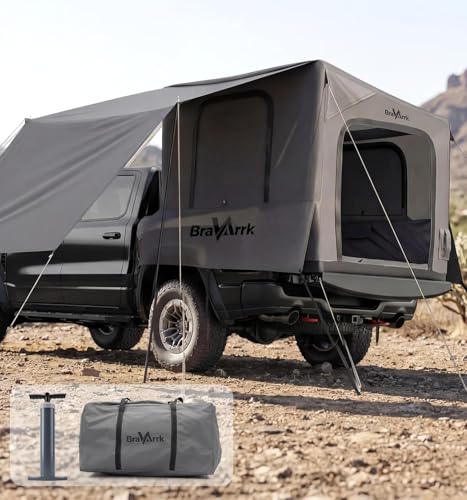
If you are also considering a hard-sided option, comparing a tent trailer against a truck shell camper or a truck bed tent with camper shell helps clarify whether you want the interior space of a trailer or the simplicity of a vehicle-based setup. Campers who prefer to stay in one place for longer periods sometimes look at campground rentals or cabin rentals as alternatives, while those who want a more permanent base explore trailer villages and camping parks.
Pre-Purchase Inspection Checklist
- Inspect canvas for tears, mildew, and seam separation
- Test the lift system through a full raise-and-lower cycle
- Check roof seals and look for water stains on interior panels
- Verify that all bunk ends slide or fold out smoothly
- Test the stove, sink, and any electrical components
- Inspect tires for dry rot and check the spare
- Confirm the hitch, chains, and breakaway cable are included and functional
- Ask for maintenance records and the original owner's manual
- Check the floor for soft spots or delamination
- Verify the trailer's GVWR against your vehicle's towing capacity
Tent Trailer Maintenance and Storage
A tent trailer rewards regular maintenance with years of reliable service. The canvas is the most vulnerable component — clean it with a mild soap solution and allow it to dry fully before folding. Apply a canvas waterproofing treatment annually, and repair small tears promptly with a canvas repair kit before they spread.
The lift system needs periodic lubrication according to the manufacturer's schedule. Cables and pulleys should be inspected for fraying or rust. Roof seals should be checked every season and resealed as needed. Tires should be inspected for cracks and replaced every five to seven years regardless of tread depth.
For storage, park the trailer on a level surface, ideally under cover or with a breathable cover. Do not use a non-breathable tarp, which traps moisture and promotes mildew. If storing outdoors, keep the roof slightly raised to allow air circulation, and place moisture absorbers inside.
Campers who camp in cold conditions should review winter camping best practices and consider how winter camping gear integrates with a tent trailer setup. A heated tent or a hot tent setup is a different approach, but the principles of insulation and condensation management apply to tent trailer canvas as well. If you camp in freezing conditions, a winter emergency kit and knowledge of winter camping safety are essential.
For safety around the campsite, always follow campfire safety rules and know how to extinguish a campfire properly. Keep a camping first aid kit stocked and review common camping injuries so you are prepared. Understanding Leave No Trace principles ensures your tent trailer camping has minimal impact on the environment.
Frequently Asked Questions About Tent Trailers
Final Thoughts: Is a Tent Trailer Right for You?
A tent trailer is one of the most versatile and accessible entry points into towable camping. It delivers the interior comfort of a small camper with the lightweight towability that makes it practical for everyday vehicles. For families, couples, and solo campers who want to upgrade from ground sleeping without jumping to a large RV, it is often the smartest choice.
The key is honest self-assessment: how you camp, how often you camp, and what you are willing to tow. If you camp a few weekends a year and want simplicity, an entry-level model is sufficient. If you camp monthly and want more comfort, a mid-range model with a slide-out and furnace is a better fit. And if you camp extensively and want a near-RV experience in a lightweight package, a premium tent trailer delivers that without the weight and cost of a full-size travel trailer.
Whether you are drawn to established campgrounds or remote BLM land, a tent trailer expands where you can go and how comfortably you can stay. It is a category worth exploring, and with the right preparation, it can transform your camping experience.