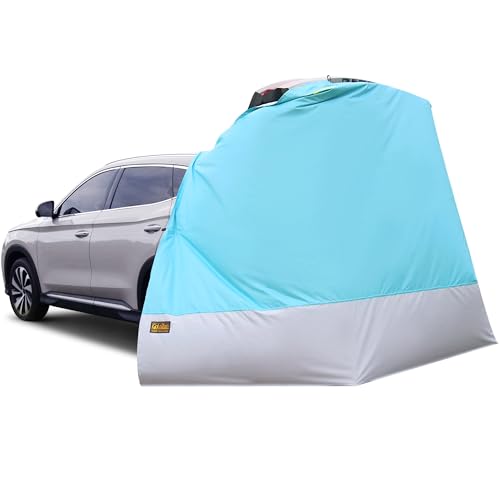
Tent for Back of Car: The Complete Car Camping Shelter Guide
Transform your vehicle into a comfortable basecamp. Learn how to choose, set up, and get the most from a tent that attaches to the back of your car.
START READINGCar camping has never been more popular. A tent for the back of your car bridges the gap between sleeping in your vehicle and pitching a traditional ground tent. It attaches to your SUV, hatchback, or minivan's rear opening, creating a seamless extension of your cargo space. You get the security and familiarity of your car plus the fresh-air freedom of a tent. This guide covers everything you need to know before choosing one.
What Exactly Is a Tent for the Back of a Car?
A tent for the back of a car — sometimes called a car boot tent, SUV tent, or vehicle tent — is a shelter designed to seal against your vehicle's rear hatch or liftgate. Unlike a traditional tent camping setup, these tents create a connected living space. You can crawl from your car's cargo area directly into the tent without stepping outside. This is especially useful in wet weather, buggy environments, or when you want quick access to your gear.
Most models feature a sleeve or boot that fits over the open rear of the vehicle. The tent body then extends outward, supported by poles and secured with stakes. Some designs are freestanding, while others rely on the car as an anchor point. If you are still deciding between a vehicle-attached shelter and a standalone option, our tent vs hammock comparison may help clarify the trade-offs.
Key Benefits of Car-Attached Tents
🚗 Seamless Vehicle Access
Move between your car and tent without going outside. Perfect for grabbing snacks, charging devices, or checking on sleeping kids.
🛡️ Extra Security & Comfort
Your vehicle acts as a secure anchor. You can sleep in the car itself or in the attached tent, depending on weather and preference.
⚡ Faster Setup Than Ground Tents
Many models attach in minutes. No need to find a perfectly flat, clear patch of ground — your car does half the work.
🌧️ Weather Protection
Step directly from your vehicle into a sheltered space. Ideal for rainy trips where you want to avoid tracking mud into your sleeping area.
👨👩👧👦 Family-Friendly Space
Creates a larger combined footprint. Parents can sleep in the tent while gear stays in the car, or vice versa.
🏕️ Versatile Camping Style
Works for weekend trips, road trips, and even overlanding adventures. Detach the tent and use it standalone if needed.
Which Vehicles Work with Back of Car Tents?
Compatibility is the single most important factor. Not every tent fits every vehicle. The critical requirement is a rear opening that can support the tent's attachment sleeve — typically a liftgate, hatchback, or barn door. Here is a quick breakdown:
| Vehicle Type | Compatibility | Notes |
|---|---|---|
| SUV / Crossover | Excellent | Most models are designed for SUVs. Rear liftgate provides ideal attachment point. |
| Hatchback | Excellent | Similar to SUVs. Check tent sleeve dimensions against your hatch opening. |
| Minivan | Good | Works well, but some models have power liftgates that may interfere. Manual operation recommended. |
| Pickup Truck (with shell) | Good | Requires a camper shell or truck bed tent for proper attachment. See our truck bed tent guide. |
| Sedan (traditional trunk) | Limited | Mostly incompatible due to horizontal trunk lid. A few universal models may work with modification. |
| Van / Camper Van | Excellent | Large rear opening. Popular with van life enthusiasts and road trippers. |
💡 Pro Tip: Always measure your vehicle's rear opening height and width before buying. Most manufacturers list compatible dimensions. If you drive a pickup, explore tents that go in the back of a pickup for specialized options.
Types of Tents for the Back of a Car
Not all car-attached tents are the same. Understanding the main categories helps you narrow down your choice based on camping style, vehicle type, and how much space you need.
1. Rear Hatch Tents (SUV Tents)
The most common type. A sleeve wraps around your open liftgate, and the tent extends backward. Great for SUVs, crossovers, and hatchbacks. Some models like the tent for the back of a SUV offer full standing height.
2. Trunk-Mounted Tents
Designed for vehicles with a traditional trunk. Less common and often require a rack system. Not ideal for most sedans but worth exploring if you have a specific vehicle setup.
3. Universal Car Tents
Adjustable sleeves that fit a range of vehicles. More affordable but may not seal as tightly. Good entry-level option if you are unsure about long-term commitment.
4. SUV Cargo Area Extensions
Minimalist shelters that cover just the open rear of your vehicle. No full tent body. Best for mild weather and quick overnight stops.
5. Standalone Tents with Car Connectors
Some standard tents come with optional car connection kits. This gives you flexibility: use it as a ground tent or attach it to your vehicle.
6. Pop-Up Car Tents
Quick-deploy designs that spring into shape. If convenience is your priority, look for a pop up tent for back of car that sets up in under a minute.
Pros and Cons: Is a Car-Attached Tent Right for You?
✅ Advantages
- Direct access to vehicle without going outside
- Extra storage space in the car
- Faster setup than many traditional tents
- Better weather protection when entering/exiting
- Works on uneven ground since car anchors one side
- Great for families with young children
- Can be used as a standalone tent if detached
- Adds living space to your vehicle
❌ Disadvantages
- Vehicle-specific fit — not universal
- You must move your car to relocate camp
- Limited to campsites where you can park next to your tent
- Can be bulky and heavy to pack
- Setup can be fiddly in wind or rain
- Not suitable for backpacking or remote camping
- Vehicle exhaust and heat concerns if engine runs
- Higher cost than basic ground tents
⚠️ Safety Note: Never run your vehicle's engine while the tent is attached. Carbon monoxide can accumulate in the tent. Always ensure proper ventilation and follow the manufacturer's safety guidelines.
How to Choose the Best Tent for Your Car
With so many options available, focus on these key factors to make the right choice. Each point below helps you avoid common mistakes and find a tent that lasts for years.
🔍 Essential Buying Criteria
- Vehicle Compatibility: Measure your rear opening. Check the tent's specified vehicle fit. Don't assume "universal" means it fits your car perfectly.
- Sleeping Capacity: How many people will sleep in the tent vs. the car? A 4-person tent may only comfortably sleep 2 adults with gear. Consider a tent with rooms if you need privacy.
- Season Rating: Three-season tents work for spring through fall. For cold weather, look at 4-season tents with stove jacks or explore winter tents.
- Waterproofing: Check the hydrostatic head rating. 1500mm+ is decent; 3000mm+ is excellent for heavy rain. Look for taped seams and a full rainfly.
- Setup Complexity: Some models pitch in 5 minutes; others take 20. If you camp frequently, prioritize ease of setup. See our guide to the easiest tent to set up and take down.
- Standing Height: If you want to change clothes or move around comfortably, look for a tent you can stand up in.
- Packed Size & Weight: Car camping allows more bulk, but you still need to store it. Check packed dimensions against your trunk space.
- Durability: Look for reinforced attachment points, quality zippers, and robust pole materials. A tent with full rain fly adds protection and longevity.
- Ventilation: Mesh panels and vents reduce condensation. Important for comfort, especially in humid climates.
- Warranty & Support: A solid warranty indicates manufacturer confidence. Check reviews for customer service experiences.
How to Set Up a Tent on the Back of Your Car
Setup is straightforward once you understand the process. Here is a step-by-step guide that works for most car-attached tent models.
🛠️ Step-by-Step Setup
- Step 1 — Park on Level Ground: Choose a flat spot. If the ground is uneven, position your car so the tent area is as level as possible. Use wheel chocks for safety.
- Step 2 — Open Your Vehicle's Rear: Fully open the liftgate or hatch. Remove any cargo that might block the attachment area.
- Step 3 — Attach the Sleeve: Slide the tent's attachment sleeve over your vehicle's rear opening. Most designs use a combination of elastic, straps, or hook-and-loop fasteners. Ensure a snug fit.
- Step 4 — Stake Out the Tent Body: Pull the tent away from the car and stake it down. Start with the corners furthest from the vehicle, then work toward the car.
- Step 5 — Insert Poles: Assemble and thread poles through sleeves or clips. Most modern tents use color-coded poles for easy matching.
- Step 6 — Secure the Connection: Tighten all straps and adjust the sleeve to eliminate gaps. A tight seal prevents water and bugs from entering.
- Step 7 — Add the Rainfly: If your tent has a rainfly, install it now. Stake out guy lines for added stability in wind.
- Step 8 — Final Check: Walk around the tent. Ensure all stakes are secure, zippers work, and the vehicle connection is tight. Test the door between car and tent.
💡 Setup Tip: Practice setting up your tent at home before your trip. This helps you identify missing parts, understand the process, and reduces stress at the campsite. If you're new to tent camping in general, start with our first time camping tips.
Tips for Getting the Most from Your Car Tent
🌡️ Temperature Control
Your car can act as a heat sink or insulator. In hot weather, crack windows for airflow. In cold weather, the car retains some warmth. For winter trips, consider a heated camping blanket or a safe tent heater.
🦟 Bug Management
Keep the car-tent connection sealed. Use mesh screens and consider a screen room if you want an insect-free sitting area. Citronella candles and repellents help around the campsite.
💧 Moisture Control
Condensation is common in car tents because the vehicle blocks airflow on one side. Use vents, leave a window cracked, and consider a condensation mat under your sleeping pad.
🔋 Power & Lighting
Car camping lets you bring more electronics. A portable power station or camping power bank keeps devices charged. Use a rustic outdoor lantern for ambient light.
🪑 Comfort & Furniture
Add a comfortable camping chair and a portable camping rug to make the tent feel like home. A small camping table is useful for meals and gear organization.
🍳 Cooking Setup
Never cook inside the tent or car. Set up a camping stove outside. A tarp or pop-up canopy with netting provides a sheltered cooking area.
Common Mistakes to Avoid
❌ Pitfalls That Ruin Car Camping Trips
- Not Measuring Your Vehicle: Guessing leads to poor fit. Always measure and compare with manufacturer specs.
- Ignoring Wind: Car tents can catch wind like a sail. Use all guy lines and choose sheltered campsites when possible.
- Forgetting the Rainfly: Even in dry forecasts, weather changes. Always pack and install the rainfly for overnight trips.
- Running the Engine: Never idle your car with the tent attached. Carbon monoxide is a serious hazard.
- Overloading the Tent: Just because it attaches to your car doesn't mean it's a storage unit. Keep heavy gear in the vehicle.
- Skipping Practice Setup: Arriving at camp after dark and fumbling with poles is frustrating. Practice at home first.
- Using the Wrong Stakes: Rocky or sandy ground requires different stakes. Bring heavy duty tent stakes for tough terrain.
- Ignoring Campground Rules: Some campgrounds restrict vehicle-attached tents. Check campfire regulations and campsite policies before booking.
Maintaining Your Car Tent for Longevity
A quality car tent can last many seasons with proper care. Follow these maintenance practices to protect your investment.
🧹 Clean After Every Trip
Shake out dirt and debris. Wipe down the floor and walls with a damp cloth. Avoid harsh chemicals that damage waterproof coatings.
☀️ Dry Completely Before Storing
Never store a damp tent. Mildew and mold ruin fabric. Set it up in your yard or garage to dry fully before packing.
🔧 Check Pole and Zipper Condition
Inspect poles for bends or cracks. Lubricate zippers with silicone spray. Replace damaged parts before they fail in the field.
📦 Store Loosely
Don't cram your tent into its stuff sack for long-term storage. Store it loosely in a breathable bag to prevent creases and fabric damage.
🛡️ Re-Waterproof Periodically
After several seasons, apply a tent-safe waterproofing spray to maintain water resistance. Focus on seams and high-wear areas.
🔩 Replace Worn Hardware
Elastic cords, stakes, and guy lines wear out. Replace them promptly. A small investment extends your tent's life significantly.
Ready to Find Your Perfect Car Tent?
Browse our recommended selection below. We've curated top-rated options for SUVs, hatchbacks, and minivans — all available through trusted retailers.
VIEW RECOMMENDED TENTS →Frequently Asked Questions
Final Thoughts: A tent for the back of your car is a game-changer for vehicle-based camping. It combines the security of your car with the openness of a tent, giving you the best of both worlds. Choose a model that fits your vehicle, matches your camping style, and fits your budget tier. With proper care, it will serve you for many adventures. Before you head out, review our what to bring on a camping trip checklist and camping FAQ for additional preparation tips.