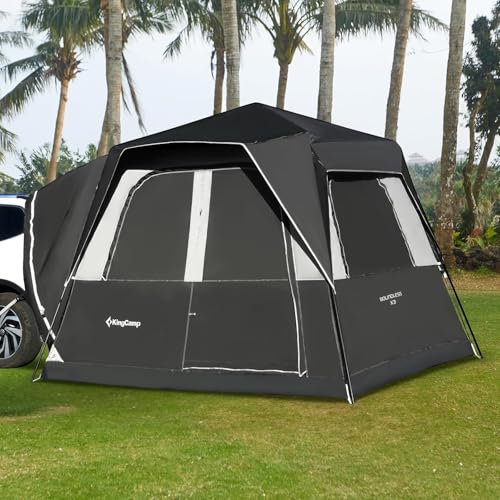
SUV Tents: The Ultimate Vehicle Camping Solution
Transform your SUV into a spacious, comfortable basecamp. Discover how the right tailgate tent can elevate your road trips and outdoor adventures.
COMPARE TENT TYPESCampLifeEssentials Insight: An SUV tent blends the security of your vehicle with the openness of a ground tent. It provides a seamless sleeping area, often using the cargo space as an extended sleeping platform, offering protection from the elements and uneven terrain.
What Exactly Is an SUV Tent?
An SUV tent, sometimes called a tailgate tent or a tent for the back of a SUV, is a specialized shelter designed to attach directly to the rear of your vehicle. Unlike standard camping tent models, these create a continuous living space that incorporates your SUV's open trunk. This setup allows you to sleep inside the vehicle on a comfortable camping mat or inflatable mattress while using the tent portion for changing, storage, or additional sleeping quarters. It effectively gives you a two-room suite in the outdoors, combining the hard-shell protection of your SUV with the breathable spaciousness of a tent.
This style of camping is a subset of car camping and is particularly popular among families, road trippers, and festival-goers who value setup speed and comfort. The best SUV tents create a weatherproof seal between the tent and your vehicle, keeping insects and rain out while allowing you to access your car's power outlets and climate control—all without ever stepping outside.
Three Main Types of SUV Attached Tents
Not all SUV tents are built the same. Your choice depends on your vehicle, budget, and how you plan to use the space. Understanding these categories is the first step to finding the perfect fit for your camping gear arsenal.
1. Tailgate / Hatchback Tents
These are the most common and affordable option, ranging from $150–$400. They use a sleeve or straps to attach around the open rear hatch of your SUV.
- Best for: Road trips, festivals, weekend camping
- Setup time: 5–10 minutes
- Key feature: Creates a sealed awning room
2. Freestanding Screen Rooms
Priced between $200–$500, these are larger structures that can be backed up to your SUV but also stand alone. They offer more livable space.
- Best for: Family camping, extended basecamps
- Setup time: 10–15 minutes
- Key feature: Massive interior height and floor space
3. Inflatable SUV Tents
A premium category at $400–$800+, these use air beams instead of poles for rapid pitching. They create an exceptionally tight seal against the vehicle.
- Best for: Luxury camping, extreme weather
- Setup time: 2–5 minutes
- Key feature: Fastest pitch, superior wind resistance
How to Choose the Right SUV Tent for Your Needs
Selecting the best tent for the back of a SUV requires more than just matching vehicle sizes. You need to think about your camping style, the climate you'll face, and the level of comfort you desire. This is not a one-size-fits-all purchase; a tent perfect for a couple on a desert road trip will be entirely wrong for a family camping in rainy conditions.
Compatibility: The Non-Negotiable Factor
The most critical step is verifying the tent fits your specific SUV model. A tent designed for the back of a pickup truck, like those found in our guide on truck bed tents, will not work. Measure the height and width of your open hatch or tailgate. Most manufacturers provide a compatibility chart. If you have a smaller crossover, ensure the tent's vehicle sleeve can cinch down tightly; for a full-size SUV like a Suburban or Expedition, you'll need a tent with a larger opening. The goal is a snug, weatherproof seal that prevents rain from dripping between the car and tent body.
Weather Protection and Seasonality
Consider when and where you'll camp. For summer road trips along the California coast, a simple screen room with a rainfly offers ventilation and sun protection. However, if you're planning a fall expedition to Colorado's high country, you'll need a full-coverage rainfly and a robust frame that can handle unexpected snow loads. Unlike a true winter camping shelter, most SUV tents are 3-season. Look for a high hydrostatic head rating (1,500mm+) and factory-sealed seams on both the tent body and fly if you anticipate rain, a lesson you'll appreciate if you've ever had to learn about setting up a tent in the rain.
Space and Livability
An SUV tent's main advantage is its ability to expand your living area. Many models offer more than 7 feet of headroom in the center, allowing you to stand up fully—a luxury compared to a typical dome tent. This makes organizing camping items like a portable camping kitchen or camping tables vastly easier. If you plan to use the tent as a lounge, prioritize models with large mesh windows and a removable floor. For sleeping extra guests, look for an SUV tent with an integrated floor and a room divider.
Don't forget that the SUV's cargo area itself becomes a core part of your shelter. Many campers build simple sleeping platforms to create a flat surface over folded-down rear seats, paired with a camping pillow and warm camping blanket. This elevates your sleeping quarters off the ground, away from rocks, moisture, and critters, making it one of the most comfortable ways to sleep outside of a full RV.
SUV Tent Options at a Glance
This table summarizes the key performance characteristics to consider, helping you quickly filter options based on your primary camping activities.
| Tent Type | Typical Price | Best For | Key Advantage | Consideration |
|---|---|---|---|---|
| Tailgate Sleeve Tent | $150–$400 | Weekend trips, couples | Direct vehicle integration, compact storage | Less living space, can feel tight with gear |
| Freestanding Screen Room | $200–$500 | Family camping, group outings | Huge interior, can stand alone from vehicle | Heavier, longer setup |
| Inflatable Air Beam Tent | $400–$800+ | Adverse weather, luxury camping | Fastest pitch, extremely sturdy in wind | Higher cost, requires pump |
| Hatchback Awning | $80–$250 | Day trips, tailgating, rain shelter | Ultra-fast setup, minimal footprint | No enclosed bug protection, not for sleeping |
Maximizing Your SUV Camping Setup
The tent is just the foundation. To truly optimize your basecamp, integrate your vehicle's native features. Run a 12V extension from your car's outlet into the tent to power a camping lantern or charge devices. The flat cargo floor of your SUV is ideal for a spacious, low-profile sleeping setup; a good camping bed or mattress can make it as comfortable as your bedroom at home. For meal prep, the rear hatch acts as a natural awning over a portable camping stove placed on a nearby camping tables. This transforms the area into a fully functional outdoor living room, protected from light rain and sun.
Organization is key in these dual-zone camps. Pack your camping essentials in clear, stackable bins that can easily transition from the cargo area to the tent floor. A dedicated camping chair inside the screen room creates a cozy indoor/outdoor lounge area. For longer expeditions to places like the Smoky Mountains or Adirondacks, where weather can shift rapidly, the ability to retreat to your vehicle's sealed cabin for safety while still having a sheltered porch space is an unmatched advantage. This makes SUV tent camping a perfect entry point for those comparing a full RV camping experience with the simplicity of a ground tent.
Finally, always practice Leave No Trace principles. The convenience of an SUV setup can sometimes lead to larger campsites with more impact. Pack out everything you packed in, and ensure your vehicle-tent combination is positioned on durable surfaces to avoid damaging vegetation.