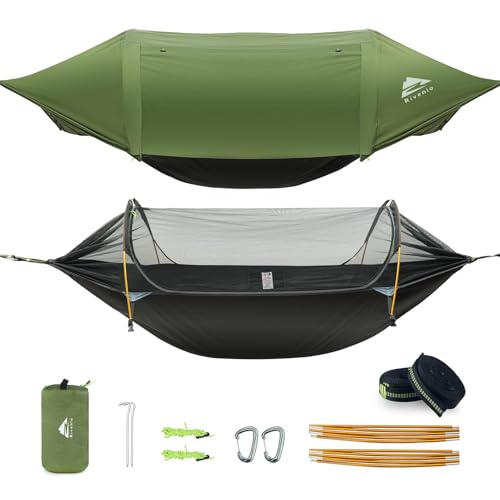
Camping Hammock with Bug Net and Rainfly: Complete Guide
Experience the ultimate in outdoor comfort and protection. Discover how a camping hammock with bug net and rainfly can transform your camping experience.
EXPLORE CAMPING HAMMOCKSWhy Choose a Camping Hammock with Bug Net and Rainfly? A camping hammock with bug net and rainfly offers a complete shelter system in one compact package. It protects you from insects, rain, and ground-dwelling critters, while providing a comfortable, elevated sleep. It's ideal for backpackers, solo campers, and anyone looking to lighten their load.
Why a Hammock with Bug Net and Rainfly is a Game-Changer
Traditional tent camping requires finding a flat, dry spot, clearing debris, and sleeping on the ground. A camping hammock with bug net and rainfly eliminates these challenges. You can set up on uneven terrain, rocky ground, or even over water. The integrated bug net keeps mosquitoes and other insects away, while the rainfly provides protection from rain and dew. This all-in-one system is perfect for first-time camping tips and seasoned adventurers alike.
For backpackers, a hammock system is incredibly lightweight and compact. It eliminates the need for a sleeping pad, ground tarp, and separate bug net. Many hammock campers find it more comfortable than sleeping on the ground. If you're considering a hammock, you might also be interested in a hammock that can be used as a tent or a camping hammock with bug net and rainfly for maximum versatility.
Key Features to Look For in a Camping Hammock
1. Integrated Bug Net
The bug net is essential for a comfortable night's sleep, especially in warm, humid climates. Look for a hammock with a fine mesh net that zips closed. Some models have a built-in net that can be flipped out of the way when not needed. Ensure the net is durable and doesn't obstruct your view. A pop-up canopy with mosquito netting 12x12 is another option for a larger bug-free space.
2. Rainfly and Weather Protection
The rainfly is your shelter from the storm. It should be large enough to cover the entire hammock at an angle that protects against wind-driven rain. Look for a rainfly made of waterproof or water-resistant material with taped seams. Some hammocks come with a rainfly included, while others require a separate purchase. A large tarp can also serve as a rainfly in a pinch.
3. Comfort and Support
Hammock comfort depends on the fabric, length, and width. A longer, wider hammock allows you to lie diagonally, which provides a flatter, more comfortable sleep. Look for a hammock that is at least 9 feet long and 4 feet wide. The fabric should be breathable and soft, yet durable. A hammock underquilt can add warmth in colder weather.
4. Suspension System
The suspension system includes the straps, whoopie slings, or ropes used to hang the hammock. Look for tree-friendly straps that are at least 1 inch wide to protect the trees. A complete suspension system should include carabiners and straps. A strap hammock is a good option for beginners. A lightweight hammock is ideal for backpacking.
5. Weight and Packability
For backpackers, weight and packability are critical. Look for a hammock system that weighs under 2-3 pounds and packs down to the size of a grapefruit or football. Consider the materials; ripstop nylon and polyester are lightweight and durable. A collapsible hammock is a great space-saving option.
6. Durability and Quality
Look for quality construction, reinforced stitching, and durable materials. The hammock should hold at least 300-400 pounds. Check the warranty and read reviews to ensure the hammock will last. A covered hammock offers additional protection.
What to Consider Before Buying a Camping Hammock
- Climate: For humid climates, a bug net is essential. For rainy climates, a large rainfly is a must. In cold weather, you'll need an underquilt and a top quilt or sleeping bag. A winter sleeping bag can be used inside a hammock.
- Camping Style: If you're car camping, weight is less of an issue. If you're backpacking, prioritize lightweight materials. A lightest swag is another lightweight option.
- Tree Availability: Hammocks require trees or other anchor points. In areas without trees, you'll need a hammock stand. A portable hammock stand is a good solution.
- Skill Level: Hammock camping has a learning curve. Practice setting up your hammock at home before your trip. Learn how to hang it at the correct angle and how to stay warm. A camping trip can be a great way to practice.
- Price Tier: Hammocks range from budget-friendly to premium. Entry-level models offer basic features, while mid-range and high-end hammocks include better materials and more amenities.
Before you buy, check the campfire regulations for your camping area. If you're camping in bear country, follow food storage rules. Always have a camping first aid kit and a way to communicate in an emergency, such as a satellite communicator.
Tips for an Unforgettable Hammock Camping Experience
To make the most of your camping hammock, follow these tips:
- Choose the Right Trees: Look for two healthy trees about 12-15 feet apart. Avoid dead trees or branches. Use tree-friendly straps to protect the bark.
- Set the Right Angle: Hang the hammock at a 30-degree angle for optimal comfort. This allows you to lie diagonally and sleep flat.
- Stay Warm: The bottom of a hammock compresses your sleeping bag, so you'll need an underquilt or a sleeping pad for insulation. A hammock underquilt is the best solution.
- Use a Ridgeline: A ridgeline helps you set the correct angle and provides a place to hang gear. A camping lantern or rechargeable lanterns can be hung from the ridgeline.
- Be a Good Neighbor: Respect quiet hours and keep your campsite clean. Store food properly to avoid attracting wildlife.
- Enjoy the Outdoors: Take time to explore the area. Go for a hike, try fishing, or simply relax in your hammock. A campfire safety refresher is always a good idea.
For those who enjoy a bit of luxury, consider a campground with a sauna tent or a water hut. If you're traveling with a pet, check if the campground is pet-friendly and review camping with dogs rules.
Maintenance and Care for Your Camping Hammock
Proper care will extend the life of your hammock. Clean the hammock after each trip with mild soap and water. Avoid using harsh chemicals that can damage the fabric's waterproof coating. Allow the hammock to dry completely before storing it to prevent mildew. Store the hammock in a cool, dry place. Check the straps and carabiners regularly for wear and tear. If you have a fabric rainfly, consider applying a tent waterproofing spray to maintain its water resistance. Following these steps will ensure your hammock is ready for many adventures to come.
Related Guides: Explore our camping checklists to ensure you pack everything you need. If you’re new to camp cooking, our first time camping tips are a great starting point. For more advanced setups, see camping kitchen ideas and camping cookware recommendations.