Camping Glacier: The Complete Guide to Ice Camping Adventures
Everything you need to know about camping on glaciers — from specialized tents and sub-zero sleeping systems to crevasse safety and Leave No Trace principles on fragile ice.
Explore the Gear GuideWhy Camping on a Glacier Is Unlike Any Other Adventure
Camping glacier is the ultimate test of preparation, respect for nature, and self-reliance. Unlike a standard camping trip, sleeping on a moving river of ice demands gear that performs in extreme cold, constant wind, and unpredictable terrain. The reward? A surreal landscape of blue ice, absolute silence, and a night sky unpolluted by city lights.
This guide is designed for the researcher who already knows they want to attempt a glacier camp and now needs to understand exactly what equipment, skills, and safety protocols are required. We'll walk through shelter, sleep systems, cooking, navigation, and the ethical considerations of visiting these fragile environments.
Shelter: Choosing a Tent That Handles Ice and Wind
Your tent is your lifeline on a glacier. Standard three-season tents will fail. You need a true four-season mountaineering tent with a low profile, strong pole structure, and bathtub-style floor. Look for tents with a high hydrostatic head rating and reinforced guy-out points, because katabatic winds on glaciers can exceed 60 mph.
For extreme conditions, some campers use a hot tent camping setup with a portable wood stove, but this is only practical on stable, lower-elevation glacier margins and requires meticulous ventilation to avoid carbon monoxide buildup. For most glacier expeditions, a double-wall dome or tunnel tent is the gold standard.
If you're transitioning from warmer climates, understanding winter tents is a good starting point, but glacier tents go further: they often feature internal pole sleeves, multiple vestibules for gear storage, and snow flaps that you bury under snow or ice for stability.
Key Tent Features for Glacier Camping
- Four-season rating: Minimum 4 poles, aerodynamic shape, and heavy-duty fabrics.
- Snow flaps: Allow you to anchor the tent by burying the edges in snow or ice.
- Ventilation: Crucial to manage condensation, which freezes inside the tent.
- Guy lines: Reflective, with multiple attachment points to secure in high winds.
For those who prefer a more minimalist approach, a tarp tent can work in mild glacier conditions, but it offers no protection against spindrift or extreme cold. Similarly, a bubble tent is not appropriate for glacier environments — it lacks structural integrity in high winds.
Sleep System: Staying Warm at Sub-Zero Temperatures
On a glacier, your sleeping bag is not just for comfort — it's a survival tool. You need a bag rated for at least -10°F (-23°C) or lower, depending on the season and altitude. Down is preferred for its warmth-to-weight ratio, but it must be treated with a water-repellent finish because condensation and accidental moisture can destroy its loft.
Pair your bag with a high R-value sleeping pad (R-5 or higher). Inflatable pads with synthetic insulation are ideal because they prevent heat loss through conduction from the ice below. Closed-cell foam pads can supplement as a backup. For a deeper dive into temperature ratings, see our sleeping bag temperature guide.
If you're looking for a combined solution, an all-in-one sleeping bag and mattress system can simplify your setup, though dedicated components usually offer better performance in extreme cold.
For winter-specific gear recommendations, explore our winter sleeping bags guide. And if you're camping on snow rather than bare ice, our article on setting up a tent in the snow provides essential techniques for anchoring and insulating your shelter.
Cooking and Hydration: Fuel for the Cold
Melting snow and ice for water is a constant task on a glacier. You'll need a stove that performs in cold temperatures — white gas or canister stoves with a remote canister or inverted canister design. Butane blends fail in freezing conditions.
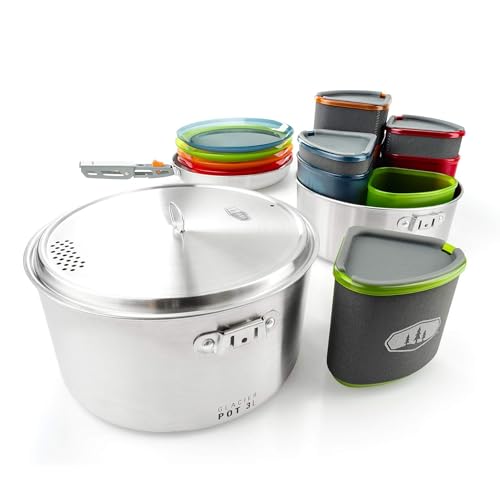
Bring a camping pot with a heat exchanger to improve fuel efficiency. For meals, focus on high-calorie, easy-to-cook foods. Our camping foods and campfire menus guides offer inspiration, though on a glacier you'll rely on a stove rather than an open fire.
Hydration is critical. Dehydration accelerates hypothermia and altitude sickness. Carry a wide-mouth water bottle that can accept hot water, and keep it inside your sleeping bag at night to prevent freezing. For more on winter hydration, see how to melt snow for water.
Safety and Navigation: Managing Crevasses, Weather, and Emergencies
Glacier travel is inherently risky. Before you even pitch your tent, you must understand crevasse rescue, rope travel, and glacier navigation. Never camp on a glacier alone. Travel with at least two other experienced people, and carry rescue gear including prusiks, pulleys, and a snow anchor.
Weather on glaciers changes rapidly. Carry a barometric altimeter or a watch with weather trends, and be prepared to retreat. Our camping weather alerts and avalanche safety guides provide foundational knowledge, but glacier-specific training is mandatory.
Communication is unreliable. Satellite communicators or personal locator beacons (PLBs) are essential. See our guides on satellite communicators and emergency beacons for options. For a comprehensive overview, visit emergency preparedness for camping.
First aid training is non-negotiable. Review our wilderness first aid and common camping injuries resources. Know how to treat frostbite and hypothermia — see prevent frostbite for detailed guidance.
Clothing: The Layering System That Keeps You Alive
On a glacier, your clothing is your first line of defense. Use a three-layer system: a moisture-wicking base layer, an insulating mid-layer (fleece or down), and a windproof/waterproof shell. Avoid cotton entirely — it retains moisture and accelerates heat loss.
Our layering clothing system guide explains this in detail. For footwear, you need insulated, waterproof mountaineering boots with crampon compatibility. See winter boots for camping for recommendations. Don't forget gaiters to keep snow out, and multiple pairs of gloves — liner gloves, insulated gloves, and waterproof over-mitts.
For more on staying warm, read how to stay warm in winter and winter camping heaters for supplemental heat options (used with extreme caution in tents).
Glacier Camping Gear: Tier Comparison
The table below compares gear tiers for glacier camping. Remember: in this environment, "entry-level" gear is still specialized and expensive — there is no true budget option for glacier safety.
| Gear Category | Entry-Level / Budget-Friendly | Mid-Range / Mid-Tier | Premium / High-End |
|---|---|---|---|
| Tent | Basic 4-season dome, heavier fabrics, fewer guy points | Double-wall mountaineering tent with snow flaps, 4+ poles | Expedition-grade tunnel or dome, carbon poles, extreme wind ratings |
| Sleeping Bag | Synthetic fill, -10°F rating, bulkier and heavier | Down fill with water-repellent treatment, -20°F rating | Expedition down bag, -40°F rating, hydrophobic down, ultra-light shell |
| Sleeping Pad | Closed-cell foam, R-value 4–5 | Inflatable with synthetic insulation, R-value 5–6 | Inflatable with down insulation, R-value 7+, multi-layer construction |
| Stove | White gas stove, manual priming | Remote-canister stove with preheat tube | Integrated system with windproof burner and heat exchanger |
| Boots | Insulated mountaineering boots, basic crampon compatibility | Double boots with removable liner, full crampon compatibility | Expedition double boots, integrated gaiter, extreme insulation |
For more detailed gear recommendations, explore our winter camping gear guide and ultralight outdoor gear resources.
Leave No Trace on Glaciers: A Moral Obligation
Glaciers are among the most fragile environments on Earth. A single footprint can persist for decades. Human waste, food scraps, and even gray water must be packed out. Use a wag bag or portable toilet system — never bury waste in snow or ice, as it will eventually be exposed.
Follow Leave No Trace principles rigorously. Camp on durable surfaces (rock or established ice camps), minimize campfire use (fires are generally prohibited on glaciers), and pack out all trash, including biodegradable items.
Before your trip, check national park rules and BLM camping rules if you're camping on public land. Some glaciers require permits and have specific regulations.
Frequently Asked Questions About Glacier Camping
Can I camp on a glacier without a guide?
Technically yes, but only if you have extensive mountaineering and glacier travel experience. For most people, hiring a certified guide is the safest and most responsible choice. Glaciers have hidden crevasses that can be fatal without proper rope systems and rescue skills.
What is the best time of year for glacier camping?
Late spring to early summer is often ideal in many regions, as temperatures are milder and crevasses are still bridged by snow. However, this varies by location. Always check local conditions and permits. For general timing, see best time to camp.
How do I prevent my water from freezing?
Keep your water bottle inside your sleeping bag or inside your jacket. Use a wide-mouth bottle that can accept hot water. Insulated bottle sleeves help, but body heat is the most reliable method. See how to melt snow for water for more tips.
What should I do if I fall into a crevasse?
This is an emergency requiring immediate rescue. If you're traveling on a rope team, your partners will perform a crevasse rescue. If you're alone, you must have prusiks and the strength to ascend the rope. Never travel on a glacier without crevasse rescue training and gear.
Is it safe to use a campfire on a glacier?
No. Campfires are generally prohibited on glaciers and in many alpine environments. They leave scars, melt ice, and are difficult to control. Use a stove for all cooking. See campfire regulations for more information.
Ready to Plan Your Glacier Adventure?
Start by reviewing our comprehensive gear guides, then check local regulations and hire a guide if you're new to glacier travel. The ice is waiting — but only for the well-prepared.
Get the Glacier Camping ChecklistGlacier Camping Destinations to Consider
Some of the world's most accessible glacier camping opportunities are found in national parks and wilderness areas. In the United States, consider Winter Camping Yellowstone for its unique geothermal features near snow and ice, or Snow Camping Alaska for true expedition-style glacier experiences.
For those seeking a guided experience, glamping resorts near glacier margins offer a softer introduction. And if you're looking for a broader range of cold-weather destinations, explore best winter camping in the US and winter camping in Canada.
Always verify access, permits, and current conditions before planning a glacier trip. Many glacier areas require advance reservations — see do I need a reservation for guidance.