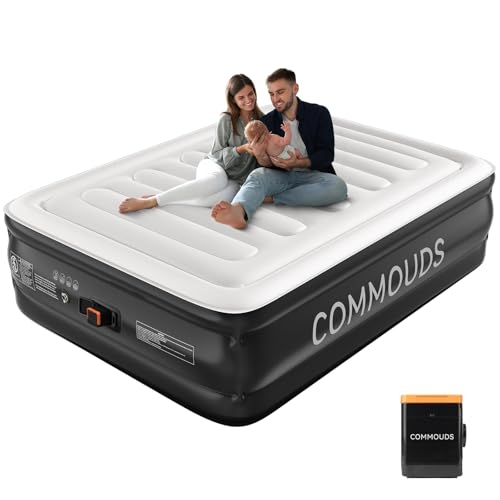
Air Mattress Without Built In Pump: The Complete Guide
Learn why manual inflatable mattresses offer superior control, durability, and versatility for camping and guest use — and how to choose the right one.
EXPLORE THE GUIDEQuick Summary: An air mattress without a built-in pump relies on an external pump or manual inflation. These models are typically lighter, more compact, and easier to repair than their integrated-pump counterparts. They are ideal for campers who want full control over firmness and a mattress that packs down small.
Why Choose an Air Mattress Without a Built-In Pump?
Air mattresses without built-in pumps have carved out a dedicated following among campers, backpackers, and hosts who need a reliable spare bed. Unlike self-inflating or integrated-pump models, these mattresses require you to bring your own inflation method — but that trade-off comes with real advantages.
The first advantage is weight and packability. Removing the built-in pump eliminates a bulky motor and battery compartment, allowing the mattress to fold down to a much smaller size. This matters enormously for anyone using a backpacking tent 2 person 3 season setup where every gram counts. A manual mattress can often fit into a side pocket of your pack, whereas a built-in pump model typically occupies a dedicated compartment.
The second advantage is durability and repairability. Built-in pumps are the most common failure point on air mattresses. When the motor dies, the entire mattress becomes useless. With a pump-free design, the only components that can fail are the valve and the mattress body — both of which are simple to repair with a patch kit. This makes manual mattresses a smarter long-term investment for anyone who camps frequently.
The third advantage is firmness control. Using an external pump lets you fine-tune the air pressure with precision. You can under-inflate slightly for a softer feel or over-inflate for a firmer, more supportive surface. Built-in pumps often inflate to a preset pressure and stop, leaving you with less control.
Finally, manual mattresses are generally quieter. The whirring of a built-in pump can disturb tent neighbors at night or wake a sleeping child during a late-night top-up. External inflation is silent after the initial pump session.
How Do Manual Air Mattresses Work?
Every air mattress without a built-in pump relies on two core elements: the valve system and the inflation method. Understanding both helps you choose the right model.
Valve Types
- Boston valve (screw valve): The most common type. A large opening for fast inflation and a smaller screw cap for fine-tuning. Reliable and easy to replace.
- Pinch valve: Squeeze to open, release to seal. Convenient but can wear out over time.
- Double-lock valve: Two-stage system that prevents air loss when disconnecting the pump. Preferred for high-end models.
- Flat valve: Low-profile design often found on ultralight sleeping pads. Requires a matching pump nozzle.
Inflation Methods
You can inflate a manual air mattress with a foot pump, hand pump, battery-powered electric pump, or even a portable air pump for air mattress. The choice depends on your camping style. Foot pumps are compact and require no power, making them ideal for BLM camping where electricity is unavailable. Electric pumps are faster but need a power source or 12V car outlet.
Manual vs. Built-In Pump: Side-by-Side Comparison
| Feature | Without Built-In Pump | With Built-In Pump |
|---|---|---|
| Weight | Lighter (no motor/battery) | Heavier |
| Packed Size | Very compact | Bulky |
| Inflation Speed | Depends on external pump | Fast (integrated) |
| Firmness Control | Precise, manual | Preset, limited |
| Repairability | High (simple valves) | Low (motor failure = total loss) |
| Noise | Silent after inflation | Motor noise during use |
| Power Needed | None (with manual pump) | Yes (battery or outlet) |
| Best For | Campers, backpackers, emergency spare | Home guests, car camping |
Quality Tiers: What to Expect at Each Level
Air mattresses without built-in pumps fall into distinct quality tiers. Understanding these helps you match the product to your needs without overspending.
Entry-Level — These models use basic PVC construction and a single Boston valve. They are lightweight and affordable, but may lose air overnight and have a shorter lifespan. Best for occasional use, like a spare bed for a visiting guest or a one-time camping trip. If you are building a list of camping gear for beginners, an entry-level manual mattress is a reasonable starting point.
Mid-Range — Mid-tier mattresses use thicker PVC or TPU materials, reinforced seams, and dual-lock valves. They hold air better, feel more comfortable, and last several seasons. Many mid-range models include a flocked top surface for extra comfort and reduced sheet slippage. This is the sweet spot for regular campers.
Premium — High-end manual mattresses feature TPU construction, welded seams, and precision valves. They are lighter, more durable, and often backed by multi-year warranties. Some premium models use a 4 inch self inflating sleeping pad design that combines foam and air for superior insulation and comfort. These are ideal for serious backpackers and cold-weather campers.
Pros and Cons of Pump-Free Air Mattresses
✔ Pros
- Lighter and more compact
- No motor to fail
- Precise firmness control
- Silent operation
- No power source required
- Easy to repair
- More affordable at entry level
✘ Cons
- Requires separate pump
- Slower to inflate manually
- Physical effort with foot/hand pump
- Pump can be forgotten at home
- Some models lose air faster
How to Choose the Right Manual Air Mattress
Before buying, consider these factors to ensure you get a mattress that fits your needs.
1. Size and Capacity
Manual mattresses come in twin, full, queen, and king sizes. For camping, a twin or full is usually sufficient. For guest use, a queen or heavy duty queen size air mattress provides more comfort. Always check the weight capacity — heavier users should look for models rated for higher loads.
2. Material and Thickness
PVC is the most common material, but TPU is lighter, more durable, and more environmentally friendly. Thickness matters too: a 6-inch mattress is fine for occasional use, while a 9-inch or thicker model provides better support and insulation from the ground.
3. Valve Quality
A high-quality valve prevents air loss and makes inflation easier. Look for double-lock or Boston valves with a large opening. Avoid cheap pinch valves that wear out quickly.
4. Pump Compatibility
Check that the valve matches your pump nozzle. Most mattresses use a standard Boston valve, which works with most external pumps. If you plan to use a portable air pump for air mattress, verify compatibility before buying.
5. Insulation and Comfort
For cold-weather camping, consider a mattress with an insulated top or a flocked surface. You can also pair it with a camping pad for under sleeping bag for extra warmth. A mattress pad for sleeping on floor can add cushioning if you sleep directly on the ground.
Best Uses for Air Mattresses Without Built-In Pumps
These mattresses shine in specific scenarios. Here are the most common use cases:
- Backpacking and thru-hiking: The lightweight design is ideal for long-distance trails. Pair with a backpacking tent 2 person 4 season for a complete ultralight sleep system.
- Car camping and road trips: Keep a manual mattress and a 12V pump in your vehicle for spontaneous overnight stops. See our car camping road trip packing list for essentials.
- Emergency spare bed: Store a manual mattress in a closet for guests. It takes up minimal space and inflates in minutes with a foot pump.
- Festival and event camping: Lightweight and easy to carry, these mattresses are perfect for multi-day events where you set up and break down camp frequently.
- Cold-weather camping: Pair with a sleeping bag for very cold weather and an insulated pad for warmth. Manual mattresses allow you to adjust firmness as temperatures change.
Maintenance and Care Tips
To extend the life of your manual air mattress, follow these simple practices:
- Store it loosely folded, not tightly compressed, to prevent seam stress.
- Keep it away from sharp objects and rough ground. Use a ground cloth or tarp underneath.
- Clean with mild soap and water. Avoid harsh chemicals that degrade PVC or TPU.
- Dry thoroughly before storing to prevent mold and mildew.
- Check the valve regularly for wear and replace if needed.
- Carry a patch kit for emergency repairs. Most punctures are fixable in minutes.
If you are camping in wet conditions, review our guide on essentials for camping in the rain to keep your sleep system dry. And if you are camping in your vehicle, see essentials for camping in your car for space-saving tips.
Frequently Asked Questions
Final Thoughts
An air mattress without a built-in pump is a smart choice for campers who value portability, durability, and control. While it requires an external pump, the benefits — lighter weight, easier repairs, and precise firmness — outweigh the minor inconvenience for most outdoor enthusiasts.
When choosing, match the tier to your needs: entry-level for occasional use, mid-range for regular camping, and premium for backpacking and extreme conditions. Always carry a compatible pump and a patch kit. With proper care, a quality manual air mattress will serve you for many seasons.
For more camping gear guidance, explore our camping FAQ and how to choose tent size guides. If you are planning a trip, check our best time to camp recommendations and do I need a reservation guide.