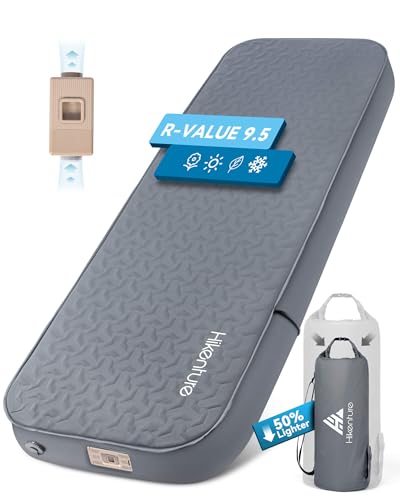
4 Inch Self Inflating Sleeping Pad: The Ultimate Comfort Guide
Are you tired of waking up with a sore back? Discover why a 4-inch self inflating sleeping pad might be the missing piece for your car camping setup.
Why Thickness Matters: The 4-Inch Difference
When you are deep in the woods, a good night's sleep is not a luxury—it is a necessity. For years, campers have struggled with thin foam pads that offer minimal cushioning. Enter the 4 inch self inflating sleeping pad. This category of camping mattress has revolutionized comfort for car campers and base campers who refuse to compromise on sleep quality.
Unlike traditional backpacking pads that prioritize weight savings over comfort, a 4-inch pad is designed with one goal in mind: mimicking the feel of your bed at home. The extra thickness provides a critical buffer between your body and the hard, uneven ground, making it an excellent choice for side sleepers and those with back pain.
If you are transitioning from a standard air mattress, you might be surprised by the stability. While a king size air mattress for camping offers space, it often lacks the supportive foam core found in self-inflating models. A 4-inch pad combines the best of both worlds: the loft of an air bed with the insulation and support of foam.
How Self-Inflating Technology Works
You might be wondering how a pad inflates itself without a pump. The magic lies in the open-cell foam core inside. When you open the valve, the foam springs back to its original shape, sucking air into the pad. This process creates a firm, supportive surface.
However, with a 4-inch pad, the foam is thicker and denser. This means the self-inflation process might not get it to your desired firmness. Most campers simply add a few breaths of air to top it off. This is a stark contrast to an air mattress without built in pump, which requires a separate pump or a lot of lung power to fill completely.
The self-inflating mechanism also contributes to insulation. The foam traps air, creating a barrier against the cold ground. This is measured by the R-value. For a 4-inch pad, you can often expect higher R-values, making them suitable for three-season camping. If you are heading into colder months, you might want to pair a high-R pad with a sleeping bag for camping in winter to ensure you stay warm.
4-Inch vs. 3-Inch vs. 2-Inch: Which Is Right for You?
Choosing the right thickness depends entirely on how you camp. Below is a comparison of the most common thicknesses to help you decide.
| Pad Thickness | Best For | Comfort Level | Packed Size |
|---|---|---|---|
| 2-Inch | Minimalist backpacking, ultralight trips | Basic (entry-level) | Very Compact |
| 3-Inch | Weekend backpacking, side sleepers | Good (mid-range) | Moderate |
| 4-Inch | Car camping, base camp, luxury glamping | Excellent (premium) | Bulky |
As you can see, a 4-inch pad is the top-tier choice for comfort. It is ideal for those who drive to their campsite. If you are hiking miles into the backcountry, you might prefer a ultralight bikepacking sleeping bag and a thinner pad to save weight. But if your car is nearby, the bulk is a small trade-off for a night of uninterrupted sleep.
Key Features to Look For in a 4-Inch Pad
Not all thick pads are created equal. When shopping for a 4 inch self inflating sleeping pad, pay attention to these critical factors:
- R-Value: This measures insulation. For three-season camping, look for an R-value of 4.0 or higher. For winter, aim for 5.0+. If you already have a sleeping bag for very cold weather, a high-R pad is a perfect companion.
- Valve Type: A two-way valve is a game-changer. It allows you to inflate without air escaping and deflate quickly.
- Surface Material: Look for a pad with a non-slip top. A brushed polyester or TPU layer prevents your sleeping bag for adults for winter from sliding off during the night.
- Weight: A 4-inch pad is heavy. If you plan to move it around the campsite, consider a pad with a carry handle or stuff sack.
If you are building a complete sleep system, you might also consider a full size sleeping pad for camping to ensure you have enough room to stretch out. For couples, a king size sleeping bags for adults paired with a large pad creates a cozy, bed-like experience.
Care and Maintenance for Longevity
To ensure your 4-inch pad lasts for years, proper care is essential. Always store it unrolled with the valve open. This prevents the foam from losing its memory and reduces the risk of mold. When cleaning, use mild soap and water, and avoid harsh chemicals.
If you are camping in wet conditions, place a camping pad for under sleeping bag as a protective layer, or use a ground sheet. This adds an extra layer of protection against punctures from twigs or rocks.
Frequently Asked Questions
Is a 4 inch self inflating pad too heavy for backpacking?
Generally, yes. The weight and packed size are usually too large for backpacking. For hiking, you would be better served by a 3-inch or thinner ultralight pad. A 4-inch pad is best for car camping or base camp.
Do I need a pump for a 4 inch self inflating pad?
Most 4-inch self-inflating pads have a foam core that expands automatically. However, because of the thickness, you often need to add a few breaths of air manually to reach full firmness. Some models come with a built-in pump sack.
What R-value should I look for in a thick sleeping pad?
For three-season camping, an R-value of 4.0 or higher is recommended. If you plan to camp in winter, look for an R-value of 5.0 or above to prevent cold ground from seeping through.