Vendor Tent Guide: Choosing the Right Pop-Up Canopy for Markets & Events
A vendor tent is the foundation of your market booth — it protects your inventory, frames your brand, and sets the tone for every customer interaction. This guide breaks down canopy sizes, frame construction, fabric grades, and setup strategies so you can choose with confidence.
Jump to Buying GuideWhat a Vendor Tent Is and Who Needs One
A vendor tent — often called a pop-up canopy, market shelter, or trade show tent — is a freestanding, collapsible structure that provides overhead coverage and a defined selling space. Unlike a camping tent that prioritizes sleeping comfort, a vendor tent is engineered for rapid deployment, repeated transport, and customer-facing presentation. The frame folds into a wheeled bag, the canopy top stretches over the frame, and the entire unit sets up in minutes without tools.
These structures serve a wide range of commercial and semi-commercial users. Farmers market sellers use them to protect produce from sun and rain. Craft fair vendors rely on them to display handmade goods at eye level. Food vendors need canopy coverage that complies with local health department rules. Trade show exhibitors use branded canopies to create a recognizable booth footprint. Even event organizers and community groups deploy them as registration desks, information points, or shade stations.
If you are new to outdoor selling, it helps to think of your canopy as a piece of portable infrastructure rather than a simple accessory. A well-chosen unit survives seasons of weekend markets, resists gusty afternoons in open parking lots, and keeps your inventory dry during sudden showers. A poorly chosen unit wobbles, leaks at the seams, and forces you to replace it within a single season — a costly outcome for any small business. For campers who also sell occasionally, the same principles of weather protection apply as when you set up a tent in the rain.
Types of Vendor Tents Compared
The market offers several distinct canopy architectures, each with trade-offs in setup speed, stability, and price tier. Understanding these categories prevents the common mistake of buying a shelter that does not match your selling environment.
Pop-Up Canopy (Instant Canopy)
The most common vendor tent type. The frame uses a scissor or accordion mechanism that expands in one motion. Entry-level models set up in under two minutes with one person. Mid-range and premium pop-ups add reinforced truss bars, taller peak heights, and heavier fabric. These are ideal for vendors who set up and break down frequently, such as weekly farmers market sellers.
Straight-Leg vs. Slant-Leg Canopy
Straight-leg canopies have vertical legs that maximize usable floor space — important when your booth is measured precisely, as at trade shows. Slant-leg canopies angle outward, which improves stability but reduces the footprint at ground level. For vendors paying per linear foot of booth space, straight-leg designs are almost always the better choice. The same logic applies when selecting a 10 x 10 canopy tent with sides for enclosed booth setups.
Pop-Up Canopy with Sides and Walls
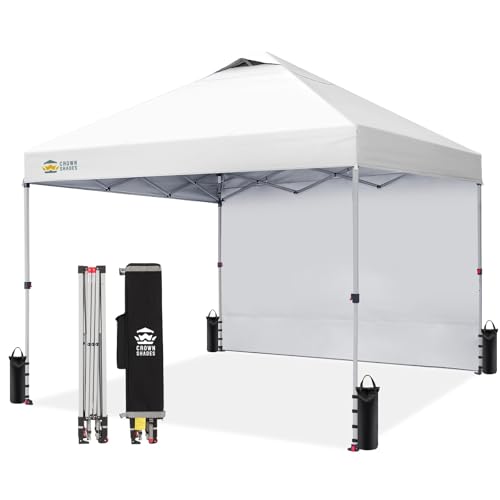
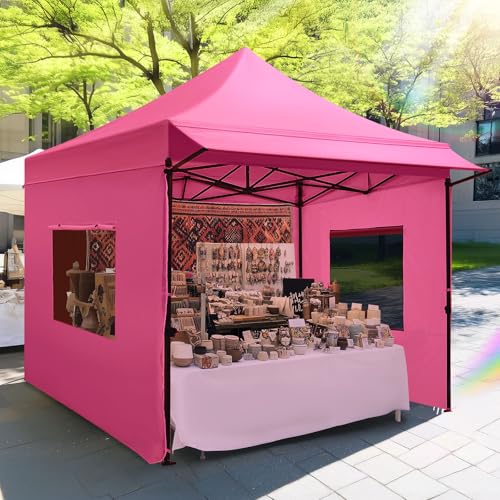
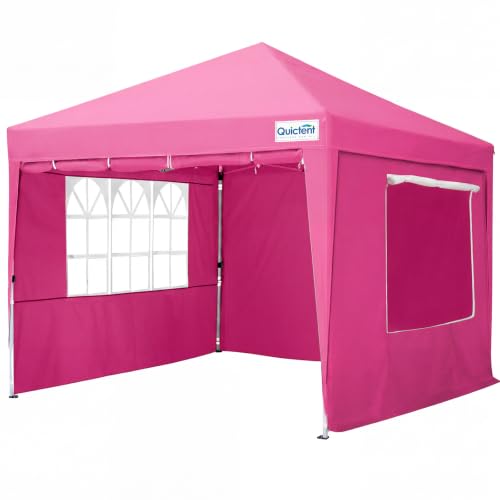
Add-on side walls transform an open canopy into an enclosed booth. Vendors use them for wind protection, privacy during setup, and rain shielding. Some canopies ship with side walls included; others require separate purchase. If you sell at cold-weather markets or need a secure overnight enclosure, prioritize a model with compatible side wall attachments.
Heavy-Duty Commercial Canopy
Built for daily or near-daily use, commercial canopies use thicker gauge aluminum or steel frames, reinforced joints, and higher-denier fabric. They weigh more and cost more than entry-level units, but they hold up under repeated transport and sustained wind. Event rental companies and full-time market vendors typically standardize on this category. If you also camp, a comparable investment logic applies to whether expensive tents are worth it.
Custom Branded Canopy
Custom canopies include printed canopy tops, valances, or full side walls with your logo and booth number. They are popular at trade shows and craft fairs where brand recognition matters. Lead times are longer, so order well before your event season. For a smaller-format branded option, a 10x10 custom pop-up canopy tent with logo graphics is a practical starting point.
Quick rule of thumb: If you sell once a month, an entry-level or mid-range pop-up canopy is sufficient. If you sell weekly or travel to multi-day events, invest in a commercial-grade frame — the reduced setup frustration and longer service life justify the higher tier.
Choosing the Right Canopy Size
Canopy size determines how much merchandise you can display, how many people can work inside the booth, and whether you comply with event space allocations. Most markets assign booth footprints in 10-foot increments, which is why 10x10 is the de facto standard.
| Canopy Size | Typical Use Case | People Inside | Best For |
|---|---|---|---|
| 10x10 | Standard single booth | 1–2 | Most markets, craft fairs, single-table vendors |
| 10x15 | Wide single or narrow double booth | 2 | Vendors with two display tables |
| 10x20 | Double booth | 2–3 | Food vendors, large merchandise displays, corner booths |
| 12x12 | Oversized single booth | 2 | Events with generous spacing or premium placements |
Height matters as much as floor dimensions. Peak height affects headroom and airflow; eave height (the lower edge of the canopy) determines whether customers can approach your table comfortably. Entry-level canopies often have lower eave heights, which can feel cramped for taller vendors. Mid-range and premium units typically offer higher peaks and better clearance. If you plan to hang signage or lighting from the frame, confirm the peak height before purchase.
When in doubt, size up. A 10x10 canopy packed with merchandise feels cramped to customers, and cramped booths reduce browsing time. A slightly larger canopy with organized display space creates a more inviting booth. The same principle of matching shelter size to occupants applies when you choose tent size for camping trips.
Frame Construction and Durability
The frame is the structural backbone of a vendor tent. It determines wind resistance, setup smoothness, and how many seasons the canopy survives. Frames fall into three broad categories.
Steel Frames
Steel is heavy, strong, and comparatively affordable. Entry-level steel frames are common in budget canopies; they resist bending well but rust if the coating chips. Mid-range steel frames use thicker tubing and powder coating for better corrosion resistance. Steel is a reasonable choice for vendors who leave the canopy assembled for long stretches, such as seasonal market stands.
Aluminum Frames
Aluminum is lighter than steel and does not rust, making it the preferred material for vendors who transport their canopy frequently. Premium aluminum frames use square or hexagonal tubing with reinforced truss joints. They cost more at the entry point but often deliver a better long-term ownership experience. If you set up and break down several times a week, aluminum is usually the smarter tier choice.
Fiberglass and Composite Frames
Less common in vendor canopies but found in lightweight pop-ups, fiberglass frames are affordable and corrosion-proof but less rigid. They suit occasional use and short-duration events rather than heavy commercial deployment.
Look for these frame features when comparing models:
- Truss bars: Reinforcing bars along the roof that prevent sagging and improve wind resistance.
- Push-button or pull-pin height adjustment: Allows you to set leg height without tools.
- Wheeled carry bag: Essential for transport; a canopy without a wheeled bag is a daily frustration.
- Reinforced corner joints: The most common failure point on entry-level frames.
If you also maintain camping gear, the same attention to frame integrity applies when evaluating tents that can be erected by one person.
Fabric, Weatherproofing, and UV Protection
Canopy fabric is measured in denier (fabric weight) and rated for water resistance and UV blocking. Understanding these ratings prevents the unpleasant surprise of a canopy that leaks during its first rainstorm or fades within a season.
Denier and Fabric Weight
Entry-level canopies often use 150D to 210D polyester. Mid-range models move to 300D to 420D, while premium commercial canopies use 500D and above. Higher denier means thicker fabric, better tear resistance, and improved opacity. A thin canopy lets sunlight through, which can overheat your booth and fade merchandise.
Water Resistance
Most canopies use polyester with a polyurethane (PU) coating. Look for taped seams — the seams are the first place water enters an untreated canopy. Water-resistant fabric sheds light rain; waterproof fabric with sealed seams handles sustained precipitation. If your market operates rain or shine, prioritize a canopy top rated for waterproof performance. For camping equivalents, see whether nylon or polyester is better for tents.
UV Protection
UV-blocking coatings extend fabric life and protect both you and your merchandise. UPF ratings of 50+ are common on mid-range and premium canopies. Without UV treatment, fabric becomes brittle and fades quickly — a particular risk for vendors in sunny climates who leave canopies set up for long hours.
Canopy Top Colors and Heat
Dark canopy tops absorb heat and can make the booth uncomfortable in direct sun. Light-colored tops reflect heat but show dirt more readily. White and light gray tops are popular for summer markets; dark tops suit branded booth designs. Whatever the color, a vented canopy top improves airflow and reduces wind lift.
Weatherproofing check: Before your first event, set up the canopy and spray it with a garden hose. Inspect the seams, corners, and attachment points. Any leak or pooling indicates the canopy needs seam sealing or a higher waterproofing tier.
Buying Guide: Matching Tiers to Use Cases
Vendor canopies are best compared by quality tier rather than by price. The table below maps tiers to typical use cases so you can choose based on how often you sell and what conditions you face.
| Quality Tier | Frame | Fabric | Best Use Case |
|---|---|---|---|
| Entry-Level | Light steel or aluminum, minimal truss | 150D–210D polyester, water-repellent | Occasional markets, backyard events, first-time vendors |
| Mid-Range | Reinforced aluminum, partial truss | 300D–420D polyester, water-resistant, UV-treated | Weekly markets, craft fairs, seasonal vendors |
| Premium | Heavy-duty aluminum or steel, full truss | 500D+, waterproof, taped seams, UPF 50+ | Daily commercial use, multi-day events, rental fleets |
Entry-level canopies are budget-friendly and adequate for vendors who sell a handful of times per year. They set up quickly and are light enough for one person to handle. The trade-off is durability: thin fabric fades, frames flex in wind, and seams may leak after a season of use. For a first market season, an entry-level unit is a reasonable way to test whether selling is right for you.
Mid-range canopies are the sweet spot for most active vendors. They offer noticeably better frame rigidity, thicker fabric, and UV treatment without the weight and cost of commercial units. If you sell weekly or attend a full season of craft fairs, a mid-range canopy will likely outlast two or three entry-level units. The same value logic applies when comparing how long tents last across tiers.
Premium commercial canopies are built for daily deployment. They handle repeated setup and breakdown, resist sustained wind, and maintain appearance through heavy use. They are heavier and require more storage space, so they suit vendors with a dedicated vehicle and storage area. Event rental companies and full-time market vendors typically standardize on this tier.
Regardless of tier, buy from a seller with clear warranty terms and replacement parts availability. Canopy tops wear out before frames do; being able to replace just the top extends the life of the entire unit.
Setup, Anchoring, and Wind Safety
A vendor tent is only as safe as its anchoring. Pop-up canopies are lightweight by design, and wind is the single greatest threat to both the canopy and the people around it. Follow these practices at every event.
Setup Sequence
- Choose level ground and clear the area of sharp objects that could puncture the canopy bag or fabric.
- With the canopy still folded, place it at the center of your booth footprint.
- Expand the frame according to the manufacturer's instructions — usually a central hub pull or a scissor expansion.
- Lock all leg height adjusters and confirm the frame is fully seated.
- Attach the canopy top, starting at opposite corners and working around the frame.
- Secure the canopy with weighted feet, sandbags, or stakes before attaching side walls or signage.
Anchoring Methods
Weighted feet and sandbags are the standard anchoring method on pavement and at indoor events. Each leg should carry a weight appropriate to the canopy size and expected wind. Steel tent stakes work on grass and dirt; for hard ground, use spiral anchors. Guy lines add stability in open areas. Never rely on the canopy's own weight alone — a gust can lift an unanchored canopy.
Wind Safety Rules
- Check the event's wind policy and the canopy's wind rating before setup.
- Lower the canopy to its lowest leg setting when wind is forecast.
- Remove side walls and signage in gusty conditions to reduce sail area.
- Never leave a pop-up canopy unattended in wind.
- If wind exceeds the canopy's rating, take it down. No merchandise is worth a collapsed frame or an injury.
These practices mirror the precautions used when setting up a tent on the beach, where wind and loose ground demand extra anchoring attention.
Accessories That Improve Booth Performance
The canopy is the core purchase, but a handful of accessories make the booth more functional, more comfortable, and more professional.
Side Walls
Side walls provide wind protection, rain shielding, and privacy during setup. They also create a backdrop for signage. Choose side walls made from the same fabric as the canopy top for consistent appearance and weather performance.
Weighted Feet and Sandbags
Weighted feet are the first accessory to buy. They anchor the canopy and reduce the risk of wind lift. Sandbags are versatile and easy to reposition; purpose-built weighted feet are more stable on pavement.
Lighting
Evening markets and indoor events require booth lighting. Battery-powered LED strip lights or clamp lights attach to the frame and illuminate merchandise without cables. For camping-adjacent setups, a 12-volt LED strip light can be adapted to canopy use.
Signage and Banners
A canopy valance or hanging banner identifies your booth from a distance. Printed canopy tops and side walls provide permanent branding. Ensure signage is secured so it does not become a sail in wind.
Floor Mats and Ground Cover
A ground mat defines the booth footprint, keeps merchandise clean, and improves comfort during long selling days. Interlocking foam mats or outdoor rugs work well on pavement and grass.
Storage and Transport
A wheeled carry bag protects the canopy during transport. For vendors who also camp, camping storage bins are useful for organizing small merchandise and accessories between events.
Frequently Asked Questions
What size vendor tent is best for a market booth?
A 10x10 pop-up canopy is the standard for most market booths and trade shows. It fits a single vendor space, sets up quickly, and provides enough coverage for a table, merchandise, and one to two people. Larger 10x20 canopies suit double booths or vendors with extensive displays.
What does a vendor tent canopy weight rating mean?
The weight rating refers to the maximum load the canopy frame can support, typically from wind and snow. Higher ratings indicate stronger frame construction. Always use weighted feet or stakes and never leave a pop-up canopy unattended in gusty conditions.
Are vendor tents waterproof?
Most mid-range and premium vendor canopies use water-resistant polyester or nylon with a PU coating. Entry-level models may only be water-repellent. For all-weather markets, choose a canopy with taped seams and a canopy top rated for sustained rain.
Can one person set up a vendor tent?
Yes. Most pop-up canopies are designed for one-person setup using a central hub or scissor frame. Entry-level 10x10 models set up in minutes. Larger 10x20 models are easier with two people, especially in wind. Practice at home before your first market.
What accessories do I need for a vendor tent?
Common accessories include weighted feet or sandbags, side walls for wind and rain protection, a canopy banner or valance for branding, LED lighting for evening markets, and a ground mat. Steel tent stakes and guy lines add stability in open areas.
How do I clean and store a vendor canopy?
Set up the canopy and rinse the fabric with mild soap and water, then allow it to dry fully before folding. Store in a dry, ventilated space. Never store a damp canopy — mildew damages fabric and seams. Check the frame for bent bars or loose joints before each season.
Ready to Choose Your Vendor Tent?
Review the recommended pop-up canopies below, compare tiers against your selling schedule, and set up your booth with confidence.
View Recommended Canopies