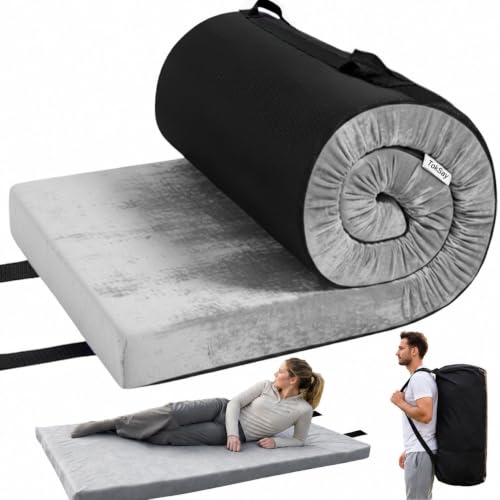
Memory Foam Mattress Topper for Camping: Sleep Better Outdoors
Transform your tent, cot, or RV bed into a comfortable sleep surface with a memory foam mattress topper designed for outdoor adventures.
SEE RECOMMENDED TOPPERSWhy a topper matters: Camping mattresses, air pads, and cots often prioritize portability over comfort. A memory foam mattress topper bridges that gap by adding pressure relief, warmth, and a familiar sleep feel — without replacing your entire camping sleep system.
If you have ever woken up on a camping trip with a stiff back, sore hips, or the feeling that you barely slept, you are not alone. The thin air pads and basic cots that make camping gear so portable often fall short when it comes to actual comfort. A memory foam mattress topper for camping is one of the simplest upgrades you can make to your outdoor sleep setup, and it can change the way you feel about camping entirely.
Memory foam conforms to your body, distributes weight evenly, and reduces pressure points — the same reasons it is popular in home mattresses. When adapted for camping, it brings that comfort into a tent, a rooftop tent, a camper van, or an RV. The trade-off is bulk and weight, which is why toppers are best suited for car camping, RV trips, and base camp setups rather than long-distance backpacking. If you are still deciding on your core sleep system, our guide to the most comfortable way to sleep in a tent is a helpful starting point.
Why Choose a Memory Foam Topper for Camping?
A memory foam topper is not just a luxury — for many campers it is the difference between a miserable night and a restorative one. Here are the main benefits that make it worth the extra packing space.
Pressure Relief
Memory foam molds to the shape of your body, cushioning hips, shoulders, and knees. This is especially valuable for side sleepers who often wake up with numb arms or sore pressure points on thin camping pads.
Warmth & Insulation
Air mattresses and cots can feel cold because air circulates beneath you. A memory foam topper adds a layer of insulation that traps body heat, making it a smart choice for cold-weather camping gear setups.
Familiar Sleep Feel
If you sleep on memory foam at home, a camping topper recreates that familiar sensation. This reduces the adjustment period and helps you fall asleep faster in an unfamiliar environment.
Versatile Compatibility
Toppers work on air mattresses, camping cots, self-inflating mattresses, and even directly on the floor of a large tent. That flexibility makes them a practical addition to almost any camp setup.
Motion Isolation
When two people share a sleeping surface, memory foam absorbs movement. This means your partner's tossing and turning is less likely to wake you — a real benefit for couples camping together.
Adjustable Firmness
Toppers come in a range of densities and thicknesses. A thinner, denser topper feels firmer, while a thicker, softer topper feels plush. You can fine-tune the feel of an otherwise too-firm cot or too-soft air mattress.
Types of Memory Foam Toppers for Camping
Not all memory foam toppers are built the same. The right choice depends on how you camp, how you sleep, and how much space you can spare. The table below compares the most common options.
| Type | Best For | Packability | Comfort Tier |
|---|---|---|---|
| Traditional Memory Foam | Car camping, RV beds, long trips | Low — bulky and heavy | Mid-range to premium |
| Gel-Infused Memory Foam | Warm climates, hot sleepers | Low — similar to traditional | Premium |
| Open-Cell Memory Foam | Campers who want airflow and breathability | Low to medium | Mid-range to premium |
| Memory Foam Hybrid Pad | Campers who want a thinner, more portable option | Medium | Entry-level to mid-range |
| Roll-Up Memory Foam Topper | Campers with limited storage space | Medium to high | Mid-range |
Traditional memory foam offers the most contouring but packs down poorly. Gel-infused and open-cell variants address the heat retention problem that plagues classic memory foam. Hybrid pads blend memory foam with support foam to reduce thickness and weight, making them a good compromise for campers who want some contouring without a full-size topper. Roll-up models are the most storage-friendly but may sacrifice a bit of density.
Thickness and Firmness: What Works Best for Camping?
Thickness and firmness are the two factors that most influence how a topper feels. For camping, the sweet spot is usually a 2-inch to 3-inch topper. A 2-inch topper provides noticeable pressure relief while still being manageable to roll or fold. A 3-inch topper feels closer to a home mattress but takes up more room in your vehicle or tent.
Firmness is determined by foam density. Lower-density foams feel softer and plusher, while higher-density foams feel firmer and more supportive. If you sleep on a very firm cot, a softer topper can soften the surface. If you sleep on an air mattress that already feels soft, a firmer topper can add support and prevent you from sinking too far. Campers with back or hip pain often prefer a medium-firm topper that balances contouring with support — similar to what you would look for in a memory foam mattress topper for bad back.
Side sleepers generally benefit from a thicker, softer topper because their hips and shoulders need more cushioning. Back and stomach sleepers often do better with a thinner, firmer topper that keeps the spine aligned. If you are unsure which category you fall into, our guide to a memory foam mattress topper for side sleepers breaks down the differences in more detail.
Pros and Cons of Memory Foam Toppers for Camping
Advantages
- Significantly improves sleep comfort on thin pads and cots
- Adds warmth and insulation in cold conditions
- Reduces pressure points and morning soreness
- Works with air mattresses, cots, and tent floors
- Absorbs movement for couples sharing a bed
- Available in multiple thicknesses and firmness levels
Limitations
- Bulky and heavy compared to air pads
- Not suitable for backpacking or ultralight trips
- Traditional memory foam can sleep warm
- Requires careful cleaning and thorough drying
- Takes up storage space in a vehicle or tent
- May need trimming to fit specific camping pads
How to Choose the Right Camping Memory Foam Topper
Choosing a topper comes down to matching the product to your camping style. Here is a practical framework you can apply before you buy.
Start with your sleep system. If you sleep on an air mattress, a topper adds insulation and prevents the "cold air" feeling. If you sleep on a cot, a topper softens the hard surface. If you sleep directly on a tent floor, a thicker topper is essential. Our article on the most comfortable way to sleep in a tent covers these combinations in depth.
Consider your climate. In hot, humid conditions, gel-infused or open-cell memory foam is worth the upgrade because it dissipates heat better. In cold weather, traditional memory foam's heat retention becomes an advantage. If you camp in both extremes, a temperature-regulating mattress pad or a memory foam mattress topper with cooling gel can help balance things out.
Think about portability. If you drive to your campsite, a full-size topper is fine. If you hike even a short distance, a roll-up or hybrid topper is more practical. Backpackers should generally skip memory foam altogether and choose an ultralight backpacking sleeping pad instead.
Measure your sleeping surface. Toppers are available in common sizes like twin, full, queen, and king, but camping pads and cots often have non-standard dimensions. Measure before you buy, and if needed, trim the topper to fit. A sharp electric knife or serrated blade works well for cutting memory foam cleanly.
Setup, Care, and Storage Tips
A memory foam topper will last longer and perform better if you treat it well. Here are the habits that matter most.
Let it expand. Memory foam is often compressed for shipping. Unroll it at home and give it 24 to 48 hours to fully expand before your trip. This also lets any manufacturing odor dissipate.
Use a protector. A waterproof mattress protector or a fitted sheet keeps moisture, dirt, and sweat out of the foam. This is especially important in humid environments where mold can develop.
Dry thoroughly. Never pack a damp topper. Moisture trapped inside memory foam can lead to mildew and breakdown of the foam cells. Air dry it in the sun or a well-ventilated area before rolling it up.
Store smart. Keep the topper in a breathable cotton storage bag rather than a vacuum-sealed plastic bag for long-term storage. Vacuum sealing is fine for transport, but prolonged compression can reduce the foam's ability to bounce back.
Spot clean only. Memory foam should not be machine washed or soaked. Use a damp cloth with mild detergent for stains, then blot dry and air out. For more extensive care guidance, see our overview of a temperature control mattress topper, which covers similar maintenance principles.
Who Should Consider a Memory Foam Topper for Camping?
A memory foam topper is not for every camper, but it is a game-changer for specific groups:
Car campers and RVers benefit the most because they have the space to transport a full-size topper. Families appreciate the added comfort for kids and adults alike, especially on multi-night trips. Couples value the motion isolation and the ability to share a comfortable surface. Side sleepers and people with back or hip pain often find that a topper is the single most impactful comfort upgrade they can make. And cold-weather campers gain an extra layer of insulation that helps them stay warm through the night.
On the other hand, backpackers, thru-hikers, and ultralight enthusiasts should generally avoid memory foam due to its weight and bulk. For those campers, an inflatable or self-inflating pad is a better fit. If you are building a lightweight setup from scratch, our guide to essential equipment for backpacking can help you prioritize.
Frequently Asked Questions
Is a memory foam mattress topper good for camping?
Yes, it can dramatically improve camping sleep comfort by adding pressure relief and insulation. However, it adds bulk and weight, so it is best suited for car camping, RV trips, and base camp setups rather than backpacking.
How thick should a camping memory foam topper be?
For camping, a 2-inch to 3-inch memory foam topper is usually ideal. Thinner options pack smaller but offer less pressure relief, while thicker options feel more like a home mattress but take up significant space.
Can you cut a memory foam mattress topper to fit a camping pad?
Yes, most memory foam toppers can be trimmed with a sharp knife or electric carving knife to match the dimensions of a camping pad, cot, or air mattress. Measure carefully and cut slowly for a clean edge.
How do you clean a memory foam topper after camping?
Spot clean with a damp cloth and mild detergent, then air dry completely before storing. Avoid machine washing or soaking memory foam, as moisture can damage the foam structure and promote mold.
Does a memory foam topper make you hot when camping?
Traditional memory foam traps heat, which can be uncomfortable in warm weather. Look for gel-infused or open-cell memory foam toppers designed for better airflow if you camp in hot conditions.