Heavy Duty Cot: The Complete Buying Guide for Campers Who Need Real Support
If you are tired of flimsy camp beds that sag, wobble, or collapse after a few nights, a heavy duty cot is the upgrade you have been looking for. This guide breaks down everything you need to know before choosing a rugged, high-capacity camping cot that will last for seasons.
VIEW RECOMMENDED COTSWhy this guide matters: A heavy duty cot is not just a luxury—it is a practical investment for anyone who values sleep quality and durability in the outdoors. Whether you are a larger camper, a side sleeper, or someone who simply refuses to compromise on comfort, this page will help you understand the key features, trade-offs, and buying criteria so you can choose with confidence.
What Exactly Makes a Cot "Heavy Duty"?
A heavy duty cot is a camping bed engineered to support more weight, withstand rougher handling, and deliver a more stable sleeping surface than a standard lightweight cot. While the term is not standardized across the industry, most manufacturers and experienced campers agree that a heavy duty cot typically includes several of the following characteristics:
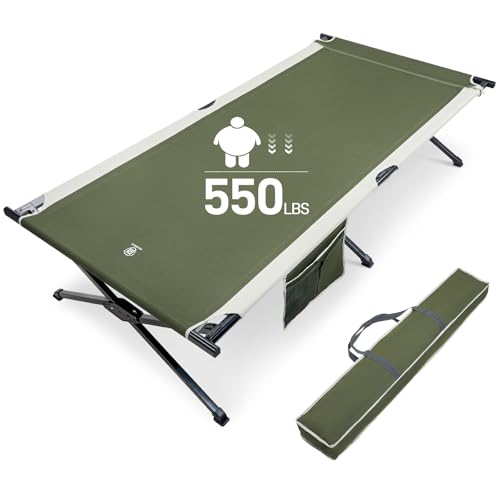
- Higher weight capacity: Most heavy duty models are rated for at least 300 pounds (often 400–500 pounds or more), compared to 250 pounds or less for standard cots.
- Reinforced frame: Thicker aluminum or steel tubing, additional cross-braces, and stronger joints are common. Some models use a dual-bar or A-frame design for extra rigidity.
- Durable fabric: Heavy duty cots usually feature 600D–1200D Oxford polyester or canvas, often with a water-resistant or PVC coating. The fabric is tightly woven and less prone to stretching or tearing.
- Wider sleeping surface: Many heavy duty cots are 30–40 inches wide (compared to 24–26 inches for standard cots), giving you room to roll over without feeling confined.
- Sturdier legs and feet: Wide, flat feet or reinforced leg caps prevent sinking into soft ground and reduce wobble. Some models use a "no-sink" design with wider contact points.
- Higher ground clearance: Many heavy duty cots sit 15–20 inches off the ground, making it easier to get in and out—especially helpful for older campers or anyone with knee or back issues.
If you are searching for a cot that will hold up to repeated use, support a heavier sleeper, or simply feel more like a real bed, a heavy duty model is the right direction. If you are a lightweight backpacker counting every ounce, a standard cot or a sleeping pad for the floor may be a better fit—but for car camping, base camp, or family trips, a heavy duty cot is hard to beat.
Key Features to Evaluate Before You Buy
Not all heavy duty cots are created equal. The following criteria will help you compare models on the factors that matter most for long-term satisfaction.
1. Weight Capacity and Frame Construction
The weight capacity is your first filter. Look for a cot rated well above your body weight—a common rule of thumb is to choose a cot with a capacity at least 50 pounds more than the heaviest person who will use it. This margin accounts for uneven ground, dynamic movement during sleep, and long-term wear. Steel frames are typically the most durable and affordable, but they are heavier. Aluminum frames are lighter and rust-resistant, making them a good choice if you need to move the cot frequently. Many premium heavy duty cots use a combination: aluminum legs with steel reinforcement at high-stress joints.
Also examine the locking mechanism. A good heavy duty cot should have secure, audible locks that engage firmly. Avoid cots with plastic joints at critical stress points—metal-on-metal or reinforced nylon is preferable.
2. Fabric Quality and Comfort
The sleeping surface material directly affects comfort and durability. Heavy duty cots typically use 600D–1200D Oxford polyester or canvas. Higher denier numbers mean thicker, more abrasion-resistant fabric. Look for:
- Water-resistant coating: PU or PVC coating helps with damp conditions and makes cleanup easier.
- Tight weave: Prevents the fabric from stretching out over time. A sagging cot is a common complaint with cheaper models.
- Reinforced seams: Double-stitched or bar-tacked seams at stress points (corners, attachment loops) dramatically extend lifespan.
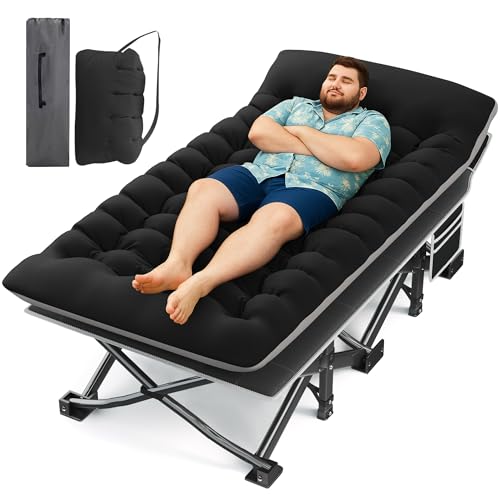
- Comfort features: Some heavy duty cots include a built-in mattress pad, a pillow pocket, or a slightly contoured surface. If you are a side sleeper, consider adding a memory foam mattress topper for side sleepers on top of the cot for extra pressure relief.
3. Size and Dimensions
Heavy duty cots come in several size categories:
- Standard (approx. 75 x 25–28 inches): Suitable for average-height campers who want a compact footprint.
- Oversized (approx. 80–85 x 30–40 inches): Ideal for taller or larger campers, or anyone who wants extra room to stretch out. These are the most common "heavy duty" sizes.
- XXL / Extra-Wide (approx. 85+ x 40+ inches): The most spacious option, often used in base camps or family camping setups.
Check the packed size as well—especially if you have limited vehicle space. Some heavy duty cots fold down to a manageable size, while others are bulky. If you are setting up a comfortable base camp, you might also want a comfortable camp chair to complement your sleeping setup.
4. Height and Ground Clearance
Heavy duty cots generally offer two height profiles:
- Low-profile (8–12 inches): Lighter and more compact, but harder to get in and out of.
- High-profile (15–20+ inches): Easier on knees and back, provides under-cot storage space, and feels more like a traditional bed. These are often preferred by older campers or anyone with mobility concerns.
If you plan to use the cot inside a tent, double-check the tent's interior height to ensure the cot fits comfortably with room to move. A tent you can stand up in pairs well with a high-profile cot.
5. Portability and Setup
Heavy duty does not automatically mean difficult to set up. Many modern heavy duty cots use a simple folding mechanism that unfolds in under a minute. Look for:
- Tool-free assembly: No loose parts to lose.
- Carry bag included: Essential for transport and storage.
- Weight: Heavy duty cots typically range from 15 to 30 pounds. If you need to carry the cot any distance from your vehicle, consider a lighter aluminum model.
For those who camp with a partner, a double cot or two single cots placed side by side can work well. If you are setting up a full base camp, you might also consider a folding outdoor chair and table to complete the living area.
Heavy Duty Cot Comparison: Entry-Level vs. Mid-Range vs. Premium
The table below summarizes how heavy duty cots typically differ across quality tiers. This will help you set expectations and choose the right level for your needs. Remember that these are generalizations—individual models vary, so always check the specific specifications.
| Feature | Entry-Level | Mid-Range | Premium |
|---|---|---|---|
| Weight Capacity | 300–350 lbs | 350–450 lbs | 450–600+ lbs |
| Frame Material | Steel or basic aluminum | Reinforced aluminum or steel alloy | Heavy-gauge aluminum with steel joints |
| Fabric | 600D Oxford, basic coating | 600D–900D Oxford, PU coating | 900D–1200D Oxford or canvas, PVC/waterproof coating |
| Comfort Features | Basic flat surface | Padded surface or pillow pocket | Built-in pad, contoured surface, pillow pocket, side pockets |
| Setup | Simple folding, may require some effort | Smooth folding mechanism | Quick-release, tool-free, very smooth |
| Durability | Good for occasional use | Solid for regular use | Excellent for frequent, heavy use |
| Best For | Budget-conscious occasional campers | Regular campers who want reliability | Heavy users, larger campers, long base camps |
When comparing tiers, keep in mind that a mid-range heavy duty cot often offers the best balance of durability, comfort, and portability for most campers. Premium models are worth considering if you camp frequently, need the highest weight capacity, or simply want the most comfortable sleep possible outdoors.
Who Should Choose a Heavy Duty Cot?
A heavy duty cot is a smart choice for a wide range of campers. You will benefit most if you fall into one or more of these categories:
Larger or Taller Campers
If you weigh more than 250 pounds or are taller than 6 feet, a standard cot may feel cramped or unstable. Heavy duty cots offer higher weight limits and longer, wider sleeping surfaces.
Side Sleepers and Active Sleepers
A sturdy cot with a taut sleeping surface reduces sagging and motion transfer. Pair it with a memory foam mattress topper for back and neck pain if you need extra cushioning.
Campers with Back or Joint Issues
Getting up from a low cot can be painful. A high-profile heavy duty cot (15–20 inches) is much easier on knees and back. Many older campers find this feature alone justifies the upgrade.
Frequent Campers and Base Camps
If you camp regularly or set up a base camp for multiple nights, the durability and comfort of a heavy duty cot pay for themselves over time. They hold up better to repeated setup and takedown.
Family Camping with Kids
When camping with children, durability is key. A heavy duty cot can handle kids jumping on it, and the extra width gives them room to roll around. If you are camping with little ones, a camping with kids guide can help you plan a smoother trip.
Car Campers and RV Owners
If you have vehicle support, the extra weight and bulk of a heavy duty cot is not a problem. You get the benefits of a more bed-like sleeping surface without worrying about pack size.
Setting Up and Caring for Your Heavy Duty Cot
Proper setup and maintenance will extend the life of your cot and ensure it performs well for years. Here are some practical tips:
- Choose a level, clear spot: Remove rocks, roots, and debris before setting up. Even the sturdiest cot can wobble on uneven ground. If you are in a tent, consider using a footprint underneath to protect both the tent floor and the cot feet.
- Fully engage all locks: Before lying down, press down on each corner to confirm the locking mechanisms are fully engaged. A partially locked leg is a common cause of collapse.
- Do not exceed the weight rating: Even heavy duty cots have limits. Check the manufacturer's rating and stay within it—this includes any gear you place on the cot.
- Clean and dry before storage: Wipe down the frame and fabric with a damp cloth, then let it dry completely before folding. Storing a damp cot encourages mildew and fabric degradation.
- Store in a dry place: Keep the cot in its carry bag in a dry, temperature-controlled area. Avoid leaving it compressed for extended periods if possible.
- Inspect before each trip: Check the fabric for tears, the frame for bends or cracks, and the locking mechanisms for smooth operation. Address small issues before they become big ones.
If you are setting up camp in cold or wet conditions, a heavy duty cot keeps you off the cold ground, which is a significant comfort advantage. For winter trips, combine your cot with a winter sleeping bag and a winter blanket for a warmer night's sleep.
Common Mistakes to Avoid When Buying a Heavy Duty Cot
Even experienced campers sometimes make these mistakes. Keep them in mind as you shop:
- Focusing only on weight capacity: While important, capacity is just one factor. A cot rated for 500 pounds but with a sagging fabric or wobbly frame will still disappoint. Look at the overall construction.
- Ignoring packed size: A heavy duty cot can be bulky. Measure your vehicle's cargo space and compare it to the cot's packed dimensions before buying.
- Assuming all "heavy duty" labels are equal: Some manufacturers use "heavy duty" loosely. Check the specific weight rating, fabric denier, and frame material rather than relying on the label alone.
- Skipping the test setup: Set up the cot at home before your trip. This lets you confirm the locking mechanisms work smoothly and gives you a chance to familiarize yourself with the setup process.
- Neglecting comfort add-ons: A cot alone may not be comfortable enough for everyone. Consider a sleeping pad or topper. A self-inflating pad can add warmth and cushioning without much bulk.
- Using the cot on soft ground without support: On sand or very soft soil, cot feet can sink. Look for cots with wide feet, or place a mat or board underneath. If you are setting up a tent on the beach, this is especially important.
Frequently Asked Questions About Heavy Duty Cots
What is the difference between a heavy duty cot and a standard camping cot?
A heavy duty cot is built with stronger materials, higher weight capacities, and more reinforcement than a standard cot. The differences typically include thicker frame tubing, higher-denier fabric, wider sleeping surfaces, and sturdier locking mechanisms. The result is a cot that lasts longer, feels more stable, and supports heavier sleepers.
Can a heavy duty cot be used indoors?
Yes, many people use heavy duty cots as temporary beds at home, in cabins, or for guests. The higher ground clearance and sturdier build make them a practical alternative to air mattresses for some situations. Just check that the cot's dimensions fit your indoor space and that the feet will not scratch your floor—placing a rug or mat underneath helps.
How much weight can a heavy duty cot hold?
Most heavy duty cots are rated for at least 300 pounds, with many mid-range and premium models rated for 400–500 pounds or more. Always check the specific manufacturer's rating for the model you are considering. Never exceed the rated capacity.
Are heavy duty cots comfortable for side sleepers?
They can be, especially if you add a sleeping pad or topper. The taut fabric surface of a quality heavy duty cot provides good support, but side sleepers often benefit from extra cushioning at the hips and shoulders. A mattress topper for side sleepers with hip pain can make a significant difference.
How do I prevent my cot from wobbling?
Wobbling is usually caused by uneven ground or improperly engaged locks. Always set up on a level surface, fully engage all locking mechanisms, and check that the cot feet are resting flat. If the ground is soft, place a flat board or mat under the feet to distribute the weight. Choosing a cot with a wider base or A-frame design also improves stability.
Can I use a heavy duty cot in a tent?
Yes, but check the tent's floor dimensions and interior height first. A high-profile heavy duty cot (15–20 inches) requires a tent with enough vertical space for you to sit up comfortably. A tent you can stand up in is a good match for a tall cot. Also consider the tent's floor area—an oversized cot may leave little room for gear or movement.
How long does a heavy duty cot last?
With proper care and regular maintenance, a quality heavy duty cot can last many seasons—often five years or more with frequent use. The key factors are storing it dry, avoiding exceeding the weight limit, and inspecting it for wear before each trip. Cheaper models may have a shorter lifespan, especially if the fabric stretches or the frame bends.
Related Gear and Guides
If you are building a complete camping sleep system, these related articles can help you make informed choices:
- Sleeping pad for car camping – a great alternative or supplement to a cot when space is tight.
- All-in-one sleeping bag and mattress – a compact option for minimalist campers.
- Heavy duty camping chair – pair your rugged cot with a chair built to the same standard.
- Heavy duty tent stakes – secure your tent in windy conditions.
- Camping canopy tent – add shade and rain protection to your base camp.
- Base camp setup – a complete guide to organizing a comfortable, durable camp.
- Car camping checklist – make sure you have everything you need for your next trip.
- First time camping tips – essential advice for new campers.