Commercial Canopy Buying Guide: Heavy-Duty Pop-Up Shelters for Vendors and Events
A commercial canopy is not just a bigger version of a recreational pop-up tent. It is a structural investment built to withstand repeated setup cycles, wind loading, sun exposure, and the demands of daily commercial use. This guide explains what separates commercial-grade canopies from consumer models, how to evaluate frame and fabric quality, and which features matter most for vendors, event organizers, and outdoor businesses.
Who This Guide Is For: If you are a market vendor, food truck operator, event coordinator, or anyone who sets up a canopy multiple times per week, the information below will help you choose a shelter that lasts for years rather than seasons. If you camp recreationally and need occasional shade, a lighter-duty option may suit you better, and you can explore camping shelter options for that purpose.
What Makes a Canopy "Commercial Grade"?
The term "commercial canopy" refers to a pop-up shelter engineered for frequent, heavy-duty use in business or public event settings. Unlike a standard recreational canopy, a commercial-grade model typically uses thicker gauge steel or aluminum in the frame, reinforced truss bars, heavier denier fabric, and a higher-quality canopy top with UV-resistant coating and waterproof seams.
The practical difference shows up in three areas: durability, stability, and repairability. A commercial frame is designed to survive thousands of setup and tear-down cycles without developing wobble or joint failure. The canopy top resists fading and tearing under prolonged sun exposure. And when something does wear out, individual parts are usually replaceable rather than requiring a full replacement.
For campers who only need occasional shade at a campsite, a lighter pop-up canopy may be adequate. But if your canopy is part of your livelihood, the upgrade to commercial grade pays for itself in reduced replacements and fewer mid-event failures. Understanding the difference between camping shelter types helps put commercial canopies in context.
Frame Construction: Steel vs. Aluminum vs. Truss Systems
The frame is the single most important component of a commercial canopy. It determines how much wind the shelter can handle, how stable it feels, and how long it will last. There are three main frame categories to understand.
Steel Frames
Steel is the most common material for commercial canopies because it offers high strength at a relatively accessible price point. Entry-level commercial frames use thinner steel tubing, while mid-range and premium frames use thicker gauge steel with reinforced corner brackets and welded joints. Steel is heavier than aluminum, which can be an advantage in windy conditions because the added weight improves stability. However, steel is susceptible to rust if the powder coating chips, so inspect welds and joints regularly.
Aluminum Frames
Aluminum frames are lighter and naturally rust-resistant, making them ideal for vendors who move locations frequently or set up solo. High-end aluminum canopies often use aircraft-grade alloys that approach steel in strength while weighing significantly less. The trade-off is that aluminum can be more expensive at the same strength level, and lighter frames may require additional anchoring in gusty conditions.
Truss Systems and Cross-Bracing
Truss bars are the diagonal or horizontal reinforcements that connect the legs and prevent lateral movement. A true commercial canopy uses full truss construction on all four sides, not just the front and back. Some models offer "dual truss" or "quad truss" designs with extra bracing at the corners and midpoints. The more truss bars, the more stable the shelter, but also the heavier and more complex the setup. For high-wind areas or daily commercial use, full truss construction is strongly recommended.
When comparing frames, look for reinforced nylon or metal sliders, thumb-press buttons rather than pull-pins (which can snag), and welded or bolted corner plates rather than riveted connections. These small details separate a canopy that lasts a season from one that lasts five or more.
Canopy Fabric: Denier, Coating, and Weather Resistance
The canopy top is the second critical component. Commercial canopy fabrics are typically rated by denier (a measure of thread thickness) and coating type. Here is what to look for.
Denier Rating
Denier indicates the linear density of the fabric threads. Higher denier means thicker, heavier, and generally more durable fabric. Entry-level commercial canopies often use 300D to 400D polyester, while mid-range and premium models use 500D to 600D or higher. Some high-end canopies use ripstop fabric, which resists tearing even if a puncture occurs. For daily commercial use, 500D or above is a reasonable baseline.
Coatings and Treatments
Most commercial canopy tops are coated with polyurethane (PU) or polyvinyl chloride (PVC) on the underside. PU coatings are lighter and more flexible, while PVC coatings are heavier and more water-resistant. Look for a canopy that explicitly states waterproof (not just water-resistant) and UV-resistant. UV resistance is critical for vendors who set up outdoors daily, as untreated fabric will fade and become brittle within months.
Seam sealing is another indicator of quality. Better canopies have heat-sealed or taped seams rather than simple stitched seams, which can wick water. If you plan to use your canopy in rainy conditions, seam quality is non-negotiable. For related weather protection, see our guide to setting up a tent in the rain, which covers similar waterproofing principles.
Canopy Top Styles
Commercial canopies are available with flat tops, peaked tops, and pyramid-style tops. A peaked or pyramid top sheds water and wind more effectively than a flat top, making it the preferred choice for outdoor events in unpredictable weather. Flat tops are sometimes preferred for branding because they offer a cleaner surface for logos, but they require more careful tensioning to avoid water pooling.
Choosing the Right Size and Configuration
Commercial canopies come in standard sizes, with 10x10 and 10x20 being the most common for vendor use. The right size depends on your intended application.
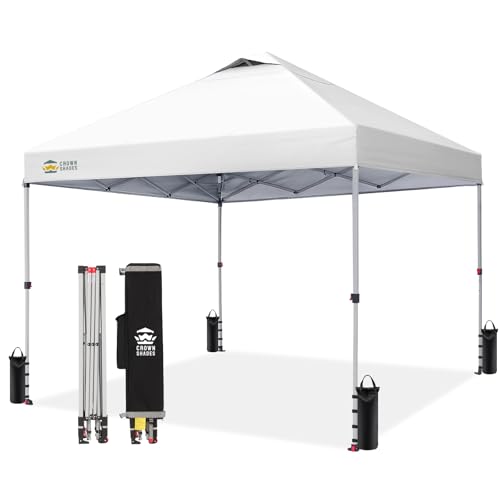
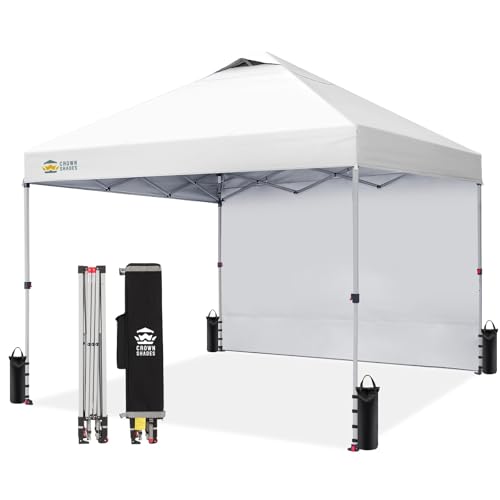
A 10x10 commercial canopy is the standard booth size for farmers markets, craft fairs, and many food vendor spaces. It provides enough coverage for a table, a few chairs, and product display, while remaining manageable for one or two people to set up. If you need a larger footprint for a market stall, a 10x10 canopy tent with sides offers added wind and privacy protection.
A 10x20 commercial canopy doubles the footprint and is common for food service, larger product displays, and event check-in areas. These larger canopies often require at least two people to set up safely and may need additional anchoring in windy conditions. For a more permanent or branded setup, consider a custom pop-up canopy with your logo, which allows you to combine commercial-grade construction with professional branding.
Beyond 10x20, some manufacturers offer 12x12, 10x15, and larger configurations. Larger canopies are heavier and more expensive, so they only make sense if you consistently need the extra space. For most vendors, a 10x10 or 10x20 is the practical sweet spot.
Height is another consideration. Standard commercial canopies offer adjustable leg heights, typically ranging from about 6.5 feet to 8 feet at the valance. If you need to accommodate tall displays or equipment, look for a model with a higher maximum height. Some canopies also offer a "high peak" design that increases interior headroom without extending the footprint.
Weight, Portability, and Setup Complexity
Commercial canopies are heavier than recreational models, and this is intentional. The added weight comes from thicker frame tubing, more truss bars, and heavier fabric. A typical 10x10 commercial canopy with a wheeled bag weighs between 50 and 80 pounds, while a 10x20 model can exceed 100 pounds. If you move your canopy frequently, weight becomes a real logistical factor.
For solo vendors, an aluminum-frame canopy with a wheeled carry bag is often the best compromise between durability and portability. For those who set up in the same location every day, a heavier steel-frame canopy with full truss construction may be preferable because it offers greater stability and does not need to be moved as often.
Setup complexity is closely tied to frame design. Most commercial canopies use a "pop-up" or "instant" mechanism where the frame unfolds and locks into place with minimal assembly. However, the number of locking points, the type of sliders, and the tensioning system all affect setup time. Better canopies use smooth-glide sliders and clear locking indicators, which reduce setup time and frustration. If setup speed is critical, look for a model marketed as "instant" or "one-person setup," though be aware that very light instant canopies may compromise on stability.
For campers who need a canopy for occasional use rather than daily commercial operation, the trade-offs are different. A lighter, more portable canopy may be sufficient, and you can compare options in our guide to camping shelter solutions.
Anchoring Systems and Wind Resistance
Wind is the most common cause of canopy failure, and even a heavy commercial canopy can become airborne if not properly anchored. Every commercial canopy should be secured with appropriate anchors for the surface and conditions.
Standard anchoring options include:
- Stakes: Best for grass and soft soil. Look for long, thick stakes with a wide head. Auger-style stakes provide better holding power in loose soil.
- Weight plates: Best for pavement, concrete, and indoor use. Commercial weight plates typically range from 20 to 40 pounds each. For a 10x10 canopy in moderate wind, at least 40 pounds per leg is a reasonable baseline.
- Sandbags: A flexible option for pavement and grass. Sandbags can be filled on-site and emptied for transport, though they add significant weight to your load.
- Guy lines and ropes: Essential for high-wind conditions. Guy lines attach to the canopy top and anchor to the ground or a fixed object, providing lateral stability that leg weights alone cannot achieve.
No canopy is truly wind-proof. If sustained winds exceed 30 mph or gusts exceed 40 mph, most commercial canopies should be taken down. If you regularly set up in windy locations, choose a canopy with a lower profile, full truss construction, and a peaked top, and always use guy lines in addition to leg weights.
Sidewalls, Accessories, and Customization
Sidewalls transform a basic canopy into a more enclosed, weather-protected space. Commercial sidewalls are typically made from the same fabric as the canopy top and attach with velcro, zippers, or clips. Common configurations include:
- Solid sidewalls: Provide full wind and privacy protection. Ideal for vendors who need to secure their space after hours.
- Mesh sidewalls: Allow airflow while keeping insects out. Useful in warm climates and for food service where ventilation matters.
- Window sidewalls: Combine privacy with visibility. Often used for vendor booths that want to display products while protecting from wind.
- Half walls: Cover only the lower portion of the canopy, providing wind protection while keeping the upper area open.
Other useful accessories include:
- Wheeled carry bags: Make transport significantly easier. Look for bags with reinforced wheels and a sturdy handle.
- Canopy lights: For evening events. LED strip lights or clip-on lights are common. For more permanent setups, see our guide to dusk-to-dawn sensors for automated lighting control.
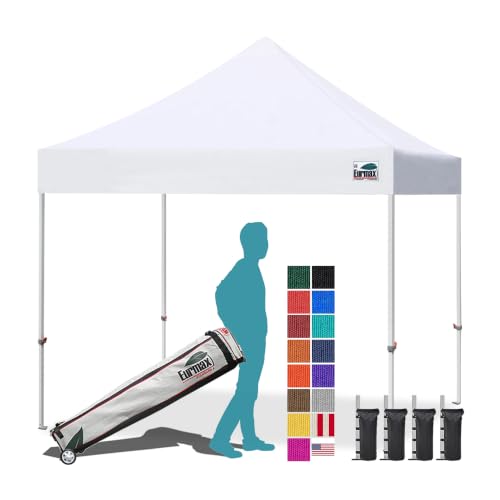
- Canopy weights: As discussed above, essential for stability. Some canopies come with weight bags included.
- Replacement tops: A major advantage of commercial canopies is that individual parts are replaceable. If your top fades or tears, you can often order a replacement without buying a whole new frame.
Common Commercial Canopy Use Cases
Commercial canopies serve a wide range of applications, and the ideal features vary by use case.
Market and Craft Fair Vendors
Vendors typically need a 10x10 canopy that can be set up by one person, with sidewalls for wind protection and branding options for their logo. Durability is critical because these canopies are set up and taken down dozens of times per season. A mid-range steel or aluminum frame with 500D fabric and a wheeled bag is a common choice.
Food Service Operations
Food vendors often use 10x20 canopies or larger to accommodate cooking equipment, prep areas, and serving lines. Ventilation is important, so mesh or half walls are often preferred over solid walls. Fire-resistant fabric may be required by local regulations, so check your local requirements. A camping regulations overview can help you understand common rules that may apply to outdoor setups.
Event Check-In and Information Booths
Event organizers often need a canopy that looks professional, accommodates a table and chairs, and can be branded with signage. A 10x10 or 10x20 canopy with solid sidewalls and a clean, peaked top works well. Stability is important if the event runs all day in an open area.
Outdoor Sports and Recreation
Canopies are used at sports events, tournaments, and recreation areas for shade, equipment storage, and spectator comfort. For these applications, a lighter commercial canopy may be sufficient, and portability may matter more than maximum wind resistance. If you are organizing a sports event, see our guide to camping sports events and soccer tournaments for additional planning considerations.
Camping and Recreation (Light Commercial Use)
Some campers and outdoor enthusiasts use commercial canopies for base camp shade, group gathering areas, or extended camping trips. In these cases, a lighter commercial canopy or a high-quality recreational canopy may be adequate. For more on camping-specific shelter options, explore our camping shelter guide and camping tents with ventilation.
Maintenance Tips for Long-Term Performance
A commercial canopy is an investment, and proper maintenance extends its life significantly. Here are the most important practices:
- Clean and dry before storage: Dirt and moisture degrade fabric and promote mildew. Wipe down the frame and allow the canopy top to dry completely before packing.
- Inspect frame joints and sliders: Check for bent tubing, loose bolts, or worn sliders. Replace damaged parts promptly to prevent further wear.
- Lubricate moving parts: A small amount of silicone spray on sliders and locking mechanisms keeps setup smooth.
- Store in a dry, cool place: Avoid leaving your canopy in a hot vehicle or damp garage for extended periods.
- Use guy lines in wind: Even if you are only setting up for a few hours, guy lines prevent unnecessary stress on the frame.
- Replace the top when needed: A faded or torn top compromises weather protection. Replacement tops are far less expensive than a new canopy.
With proper care, a quality commercial canopy can last five to ten years or more, even with regular use. The key is to buy a canopy that is appropriately rated for your use case and then maintain it consistently.
Frequently Asked Questions
How do I know if a canopy is truly commercial grade?
Look for full truss construction on all four sides, 500D or higher fabric, reinforced corner brackets, and a frame weight that feels substantial. If the manufacturer does not clearly state the denier and frame gauge, it is likely a recreational model.
Can one person set up a commercial canopy?
A 10x10 commercial canopy can often be set up by one person, especially with an instant frame design. A 10x20 or larger canopy generally requires two people for safe setup.
What is the best canopy for windy conditions?
A canopy with full truss construction, a peaked top, and proper anchoring (guy lines plus weights) performs best in wind. No canopy should be used in sustained winds above 30 mph.
Are replacement parts available?
Quality commercial canopy brands typically offer replacement tops, frames, and bags. This is one of the main advantages of buying commercial grade rather than disposable recreational models.
How much weight do I need to anchor a canopy?
For a 10x10 canopy in moderate conditions, at least 40 pounds per leg is a reasonable baseline. In higher wind, add guy lines and increase weight. Always check the manufacturer's recommendations.
Can I use a commercial canopy for camping?
Yes, though it may be heavier than necessary for casual camping. A commercial canopy works well for base camp shade or group gathering areas. For lighter camping shelter options, see our camping shelter guide.