Camping Pots and Pans: The Complete Guide to Outdoor Cookware
Everything you need to know about choosing, using, and caring for camping cookware. From lightweight backpacking sets to durable family-sized pots and pans for car camping adventures.
START EXPLORINGWhy Camping Cookware Matters: A good meal in the outdoors transforms a simple camping trip into a memorable experience. The right pots and pans make cooking at camp easier, more efficient, and more enjoyable — whether you're simmering a stew over a campfire or boiling water on a portable stove.
Why Invest in Dedicated Camping Pots and Pans?
Many campers start their outdoor cooking journey using regular kitchen cookware, only to discover that it's bulky, heavy, and often incompatible with camp stoves. Dedicated camping pots and pans are engineered for the unique demands of outdoor cooking — they're lighter, more compact, and built to withstand the rigors of campfire heat and repeated transport.
Whether you're a solo backpacker counting every ounce or a family car camper preparing meals for a crowd, the right cookware set directly impacts your comfort and efficiency at camp. A well-chosen camping cooking pot set nests together to save pack space, heats evenly over open flames, and cleans up quickly with minimal water — a critical consideration when every drop counts.
Space-Saving Design
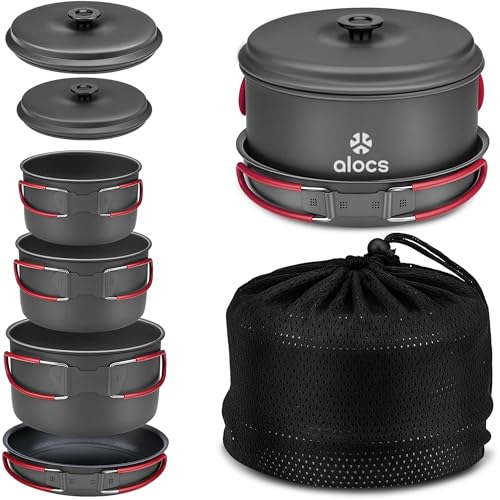
Camping cookware nests and stacks to minimize pack volume. Handles fold flat, and lids double as plates or strainers, making the most of every square inch in your pack.
Built for the Outdoors
Reinforced bases, heat-resistant handles, and rugged materials ensure your cookware survives campfire embers, rocky terrain, and years of adventure.
Optimized Heat Transfer
Thin-walled construction and conductive materials reduce fuel consumption by heating food faster, saving you stove fuel and firewood on every trip.
Multi-Function Pieces
Many camping sets include convertible pieces — a pot that becomes a bowl, a lid that serves as a frying pan — reducing the number of items you need to carry.
Choosing the Right Material for Your Camping Cookware
The material of your camping pots and pans affects weight, heat distribution, durability, and cooking performance. Here's how the most common options compare:
| Material | Weight | Heat Distribution | Durability | Best For |
|---|---|---|---|---|
| Aluminum | Lightweight | Excellent | Moderate | Backpacking, budget-friendly sets |
| Hard-Anodized Aluminum | Light-moderate | Excellent | High | All-around camping, scratch resistance |
| Stainless Steel | Moderate-heavy | Good (even) | Very High | Car camping, family use, durability |
| Titanium | Ultralight | Moderate | Very High | Ultralight backpacking, premium setups |
| Non-Stick Coated | Varies | Good | Moderate | Easy cooking, low-oil meals, beginners |
| Cast Iron | Heavy | Exceptional | Extreme | Car camping, campfire cooking, searing |
For backpackers, aluminum and titanium are the top choices due to their low weight. Car campers and families often prefer stainless steel for its durability and even heating, while cast iron remains a favorite for campfire cooking enthusiasts who don't mind the extra weight. If easy cleanup is your priority, cooking utensils for camping paired with non-stick cookware can simplify your camp kitchen routine.
Types of Camping Pots and Pans Sets
1. Solo Backpacking Sets (1-2 Pieces)
Designed for minimalists, these compact sets typically include a single pot with a lid that doubles as a frying pan or bowl. They're ultralight, often under a pound, and nest perfectly with a backpacking stove and fuel canister. Ideal for solo adventurers who prioritize weight savings above all else.
2. Couple & Small Family Sets (3-6 Pieces)
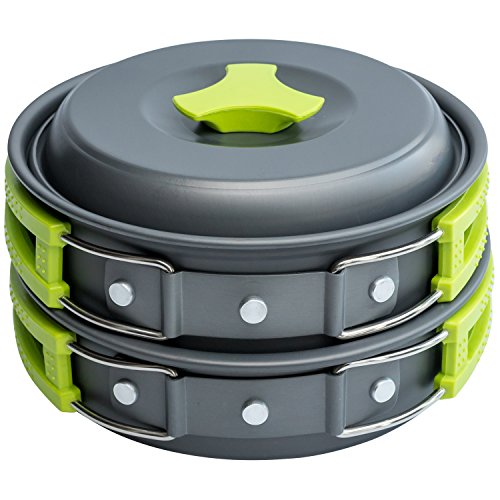
These mid-range sets usually include a 1.5-2 liter pot, a smaller pot, and a frying pan with shared lids. They offer a good balance between packability and cooking capability, allowing you to prepare more complex meals for two to four people. Many mess kit for camping options fall into this category.
3. Group & Family Sets (8+ Pieces)
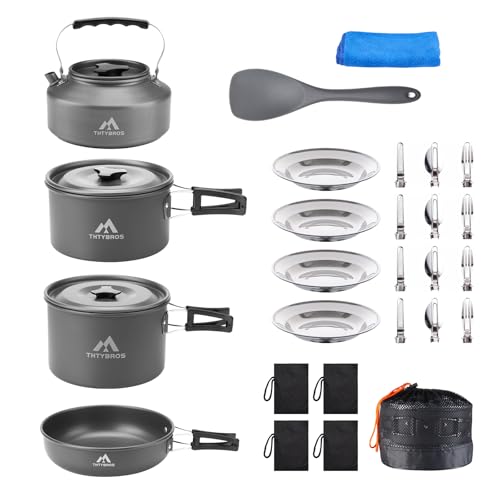
Large sets designed for car camping and group trips include multiple pots of varying sizes, large frying pans, and sometimes kettles or specialized pieces. They're heavier but offer the versatility to cook full meals for large groups. Look for sets with removable handles to save space during transport.
4. Specialized Cookware
Beyond standard sets, specialized camping cookware includes pressure cookers for high-altitude cooking, portable wood ovens for pizza enthusiasts, and single burner propane stoves that integrate with specific pot designs. These niche items cater to campers with specific culinary goals.
Key Features to Evaluate Before Buying
- Nesting Capability: Pieces should nest inside each other to save pack space. Check that handles and lids fit without rattling during transport.
- Heat-Resistant Handles: Look for silicone, bakelite, or foldable metal handles that stay cool and don't transfer heat from the pot body.
- Even Heating Base: A thick, flat base ensures even heat distribution and prevents hot spots that burn food. This is especially important for stainless steel.
- Secure Lids: Lids should fit snugly to retain heat and moisture. Some double as strainers or plates for added utility.
- Non-Scratch Interior: If using non-stick, verify the coating is PFOA-free and durable enough for metal utensils (or commit to using silicone/wood utensils).
- Volume Markings: Internal measurement lines help you add precise amounts of water for rice, pasta, or dehydrated meals.
- Compatibility: Ensure the cookware works with your stove type — induction-compatible for electric stoves, flat-bottomed for canister stoves, or durable enough for open fires.
- Cleaning Ease: Rounded interior corners and non-stick surfaces simplify cleanup, especially when water is scarce.
Advantages and Limitations of Camping-Specific Cookware
✓ Advantages
- Significantly lighter than kitchen cookware
- Nests compactly for efficient packing
- Handles fold or detach to save space
- Designed for camp stove stability
- Durable finishes resist scratching and rust
- Multi-functional pieces reduce item count
- Optimized for quick heating and fuel efficiency
✗ Limitations
- Thin walls can cause uneven heating on some models
- Smaller capacity limits meal size for groups
- Non-stick coatings can wear over time
- Titanium is expensive for the average camper
- Limited availability of replacement parts
- Some sets prioritize weight over cooking performance
- Handles can become hot if not properly designed
Camp Cooking Tips for Better Meals Outdoors
- Preheat Gradually: Camp stoves and campfires don't have precise temperature control. Preheat your pan slowly to avoid hot spots and burnt food.
- Use the Right Fuel: Different stoves perform differently with various cookware. A 2-burner camping stove offers more control for complex meals than a single canister stove.
- Pack a Scraper: A small silicone spatula or scraper helps you get every last bit of food and simplifies cleaning. It also protects non-stick surfaces.
- Minimize Water for Cleaning: Wipe cookware with a paper towel before washing. Use a spray bottle with diluted biodegradable soap to conserve water.
- Organize Your Camp Kitchen: A camping gear for cooking organizer keeps pots, pans, and utensils accessible and protected during transport.
- Test New Recipes at Home: Before relying on a new recipe at camp, test it on your camping stove at home. Altitude and wind affect cooking times.
- Protect Non-Stick Surfaces: Use silicone or wooden utensils with non-stick cookware. Store pots with a cloth or paper towel between them to prevent scratching.
- Consider Altitude: At high altitudes, water boils at lower temperatures, requiring longer cooking times. A pressure cooker can dramatically reduce cooking time and fuel use.
How to Care for Your Camping Pots and Pans
Proper maintenance extends the life of your camping cookware and ensures safe food preparation for years of adventures.
- Clean After Every Use: Don't let food residue sit overnight. It attracts wildlife and becomes harder to remove.
- Season Cast Iron: If you use cast iron, re-season it after each trip with a thin layer of cooking oil to prevent rust.
- Avoid Abrasive Cleaners: Harsh scouring pads damage non-stick coatings and scratch aluminum surfaces. Use a soft sponge or specialized camp cleaner.
- Dry Thoroughly: Moisture leads to corrosion, especially on aluminum and cast iron. Dry cookware completely before packing.
- Store Properly: Use a dedicated stuff sack or mesh bag to protect cookware from scratches and dents during transport.
- Inspect Handles and Lids: Check for loose screws or worn parts before each trip. Tighten or replace as needed.
- Follow Leave No Trace: When cleaning at camp, strain food particles and pack them out. Scatter wash water at least 200 feet from water sources.
Frequently Asked Questions
Ready to Upgrade Your Camp Kitchen?
Explore our recommended camping pots and pans sets below. Whether you're a solo backpacker or a family camper, we've curated options for every adventure style.
VIEW RECOMMENDED GEAR