
Backpack Tent Guide: Find Your Perfect Trail Shelter
Lightweight, durable, and reliable — a backpack tent is your home on the trail. We break down everything from weight and packability to weather resistance and setup ease, so you can choose the ideal shelter for your next backcountry journey.
Whether you're a thru-hiker or weekend warrior, our expert picks and detailed comparisons help you buy with confidence.
Why trust our guide? We've analyzed dozens of backpacking gear options, tested durability, and compared real-world weights. If you're looking for the lightest ultralight tents or a robust 4-season shelter, we've got you covered. Pair your tent with the right comfortable backpacks and hike supply essentials for a seamless trip.
What Is a Backpack Tent?
A backpack tent (or backpacking tent) is designed specifically for hikers and backpackers who carry their shelter on foot. Compared to car-camping tents, they prioritize lightweight materials, compact packed size, and easy setup — without sacrificing weather protection. Most modern backpack tents use high-strength aluminum or carbon fiber poles, silicone-coated nylon or polyester fabrics, and taped seams to keep you dry.
When choosing a backpack tent, key factors include weight (trail weight vs. packed weight), floor space (square footage per person), vestibule storage for gear, and season rating (3-season vs. 4-season). For solo hikers, a 1-person tent may weigh under 2 lbs; for couples, a 2-person tent typically ranges from 2.5–4 lbs.
How to Choose the Right Backpack Tent
Selecting the best backpack tent depends on your hiking style, budget, and the conditions you'll face. Here are the core decision points:
- Capacity: 1-person, 2-person, or 3-person? For solo hikers, a 1P tent saves weight. For couples, a 2P with two doors and vestibules is ideal. If you're sharing with a dog, look for a camping with dogs friendly floorplan.
- Weight: The lighter, the better — but consider durability. Ultralight fabrics (e.g., Dyneema®) are expensive but extremely light. For most backpackers, a trail weight under 3 lbs (1.36 kg) for a 2-person tent is a sweet spot.
- Seasonality: 3-season tents are perfect for spring, summer, and fall. For winter camping or high-altitude expeditions, choose a 4-season tent with stronger poles and better snow-shedding ability. Check our winter tents guide for more.
- Setup ease: Freestanding tents are easier to pitch on various surfaces. Non-freestanding designs (like trekking-pole tents) save weight but require staking. If you're new, look for easy setup 2-person tents.
- Ventilation & condensation: Double-wall tents (inner mesh + outer fly) reduce condensation. Single-wall tents are lighter but may need more ventilation in humid conditions.
Top Backpack Tents – Expert Picks
Below are some of the best backpack tents available right now, based on weight, durability, and value. We update these selections regularly to reflect the latest models.
⚠️ AFFILIATE DISCLOSURE: This website contains affiliate links. As an Amazon Associate, we earn from qualifying purchases. If you make a purchase through these links, we may receive a small commission at no additional cost to you. Read our full affiliate policy.

Night Cat Backpacking Tent for One 1 to 2 Persons Lightweight Waterproof Camping Hiking Tent for Adults Kids Scouts Easy Setup Single Layer 2.2x1.2m

Forceatt Tent for 2 Person is Waterproof and Windproof, Camping Tent for 3 to 4 Seasons,Lightweight Aluminum Pole Backpacking Tent Can be Set Up Quickly,Great for Hiking…

Night Cat Upgraded Backpacking Tents 1 2 Persons Easy Clip Setup Camping Tent Adults Scouts Heavy Rainproof Compact Lightweight,Single-Size

camppal 1 Person Tent for Camping Hiking Mountain Hunting Backpacking Tents 4 Season Resistance to Windproof Rainproof and Waterproof

Night Cat 2-Persons Backpacking Tent: Waterproof Lightweight Camping Tent for Two People Hiking Outdoor Mountain with Aluminum Poles and Rainfly Army Green

Sutekus Single Tent Camouflage Patterns Camping Tent One Person Tent for Camping Hiking 【Outdoor Equipment】

Night Cat Pop-up Camping Tent: 1 Person Tent Waterproof Instant Easy Setup Outdoor Tent
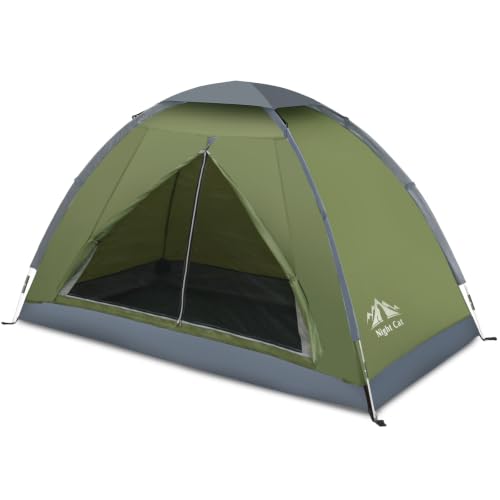
Night Cat Backpacking Tent for 1 2 People Camping Tent for Adults Scouts Kids Waterproof Roomy Lightweight Compact with Carrying Bag
Key Features to Compare
Weight & Packed Size
Check the minimum trail weight (tent + poles + fly) vs. packed weight (includes stakes, stuff sack). For backpacking, every ounce counts. A 2-person tent under 3 lbs is considered ultralight. Packed size should be under 18 inches to fit horizontally in most packs.
Weather Protection
Look for hydrostatic head ratings (e.g., 1500mm+ for floor, 1200mm+ for fly). Taped seams and a bathtub-style floor prevent water ingress. For windy conditions, a low-profile dome or tunnel design sheds wind better. See our setting up in rain guide for tips.
Livability & Storage
Interior peak height, vestibule size, and number of doors matter. Two doors and two vestibules are ideal for couples. Gear lofts, pockets, and hang loops keep small items organized. For family trips, consider a big family tent but for backpacking, keep it minimal.
Durability & Materials
Fabrics like nylon 6.6 or polyester with silicone coatings offer high tear strength. Aluminum poles (DAC, Easton) are lightweight and strong. For extreme conditions, a 4-season tent with stove jack adds versatility.
Frequently Asked Questions
Backpack tents are lighter, more compact, and use thinner fabrics and poles to save weight. Camping tents prioritize space and durability over packability, making them heavier and bulkier.
Expect to pay $200–$600 for a quality 2-person backpack tent. Ultralight models (using Dyneema®) can cost $700+. The products shown above reflect current market prices for reputable brands.
Yes, but you might find it cramped. Backpack tents prioritize minimalism, so they have less headroom and floor space than car-camping tents. However, they work great for solo or couple car camping if you value lightweight convenience.
For long-distance hiking, look for a 2-person, 3-season tent under 3 lbs with good ventilation. Many thru-hikers choose freestanding or semi-freestanding designs for ease of pitching on various terrain. Check our backpacking gear page for more.
Ready to hit the trail?
Choose your backpack tent wisely — it's the single most important piece of gear for a successful backpacking trip. Combine it with a quality sleeping bag and camping mat for a comfortable night under the stars. Don't forget to check our camping checklists to pack all essentials.