10 Person Straight Wall Cabin Tent: The Ultimate Family Basecamp
Everything you need to know about space, setup, weather protection, and features before buying a 10-person straight wall cabin tent.
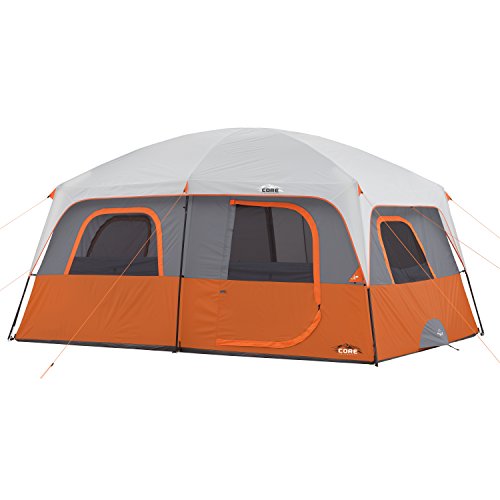
When you're camping with a large group or a big family, a standard dome tent simply won't cut it. You need space to stand, room to move, and separate areas for sleeping and gear. That's exactly where a 10 person straight wall cabin tent shines. Unlike traditional dome tents that slope inward, straight wall cabin tents maximize every inch of floor space, giving you near-vertical walls and a ceiling height that lets most adults stand upright.
In this comprehensive guide, we'll walk you through everything you need to consider before making a purchase. From interior layout and weather resistance to setup difficulty and ventilation, we'll help you understand what separates a good cabin tent from a great one. By the end, you'll be confident in choosing the right shelter for your next outdoor adventure. If you're still weighing your options, our guide on how to choose tent size can help you confirm whether a 10-person model is the right fit for your group.
Why Choose a 10 Person Straight Wall Cabin Tent?
A 10-person straight wall cabin tent is designed for comfort and livability. Unlike backpacking tents that prioritize low weight, these tents prioritize space and convenience. Here are the main reasons campers choose this style:
- Stand-Up Height: Most 10-person cabin tents offer center heights between 78 and 84 inches, allowing most adults to stand fully upright. This makes changing clothes, moving around, and organizing gear far easier.
- Maximum Floor Space: Straight walls mean the entire floor area is usable. You won't lose space to sloping ceilings or curved corners.
- Room Dividers: Many models include removable room dividers, effectively creating two or three separate sleeping areas. This is ideal for families with kids or couples who want privacy.
- Multiple Doors and Windows: Large cabin tents typically feature two or more doors and several windows, improving ventilation and making it easy to enter and exit without disturbing others.
- Gear Storage: Built-in pockets, gear lofts, and even electrical cord ports are common features that help keep your living space organized.
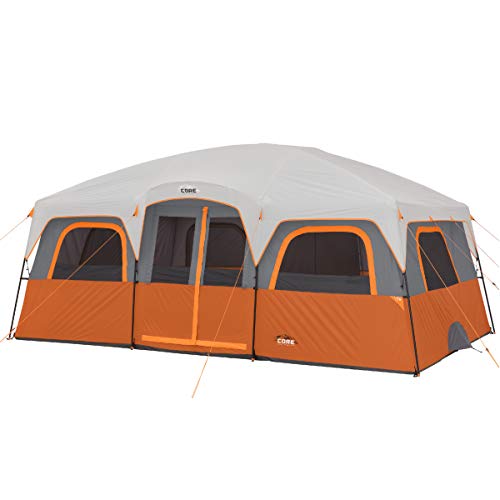
If you're comparing this style to other large tents, you might also look at a 12-person straight wall cabin tent for even more space, or consider whether a 6-person straight wall cabin tent with screen room might be sufficient for smaller groups.
Key Features to Look For in a 10 Person Cabin Tent
Not all cabin tents are created equal. When shopping for a 10-person straight wall cabin tent, pay close attention to these features:
1. Floor Dimensions and Layout
A true 10-person tent should offer at least 140 square feet of floor space, though many premium models exceed 160 square feet. Look for dimensions around 14 x 10 feet or 16 x 11 feet. The layout should accommodate multiple air mattresses or sleeping bags without feeling cramped. If you plan to use king-size air mattresses for camping, verify that the tent's dimensions can fit them side by side.
2. Weather Resistance
Your tent is your shelter, so weather protection is non-negotiable. Look for:
- Waterproof Rainfly: A full-coverage rainfly that extends over the windows and doors is essential. Some budget models only include a partial rainfly, which can lead to leaks during heavy rain.
- Taped or Welded Seams: Seams are the most common failure point for water intrusion. Quality tents feature taped or welded seams that prevent leaking.
- Bathtub Floor: A bathtub-style floor with raised edges keeps ground moisture from seeping in.
- Wind Stability: Straight wall tents can act like sails in strong wind. Look for sturdy fiberglass or steel poles, multiple guy-out points, and a robust frame design. If you frequently camp in exposed areas, you may want to read our guide on whether canvas tents are better than nylon for durability and wind resistance.
3. Ventilation
Large tents can become stuffy quickly, especially in warm weather. Good ventilation is critical. Look for:
- Mesh panels on doors and windows
- Roof vents or mesh ceiling panels
- Ground vents for cross-ventilation
- Ability to open windows from the inside
Proper airflow helps reduce condensation and keeps the interior comfortable during summer camping trips. For hot weather, consider pairing your tent with a battery-operated hurricane lantern for evening lighting without adding heat.
4. Setup and Takedown
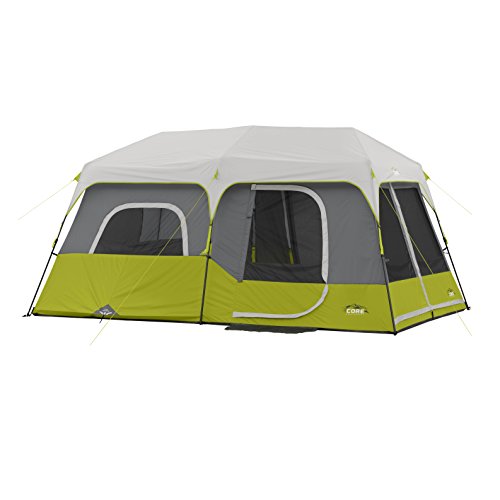
While 10-person tents are not backpacking tents, setup shouldn't be a nightmare. Many modern models feature color-coded poles, instant setup mechanisms, or pre-attached poles. If ease of setup is a priority, you might prefer an instant cabin tent with LED lights, which can be pitched in under two minutes.
5. Additional Features
- Electrical Cord Port: Allows you to run power into the tent for lights, fans, or charging devices.
- Gear Lofts and Pockets: Keeps small items off the floor and organized.
- Room Dividers: Creates separate sleeping spaces for privacy.
- Screen Porch or Awning: Some models include a screened-in porch area for bug-free lounging.
Straight Wall Cabin Tent vs. Dome Tent: What's the Difference?
Understanding the difference between these two styles will help you make an informed decision.
| Feature | Straight Wall Cabin Tent | Dome Tent |
|---|---|---|
| Interior Space | Maximum usable floor space; near-vertical walls | Sloped walls reduce usable space |
| Standing Height | Usually 78–84 inches at center | Often lower, especially near edges |
| Wind Resistance | Moderate; can catch wind | Better; aerodynamic shape |
| Setup | Can be more complex due to size | Generally simpler and faster |
| Best For | Families, base camps, extended stays | Backpacking, quick trips, windy conditions |
For a 10-person group, the straight wall cabin tent is almost always the better choice for comfort. However, if you frequently camp in very windy areas, you may want to explore alternative designs like a 10-person modified dome tent with screen porch.
Pros and Cons of a 10 Person Straight Wall Cabin Tent
✅ Pros
- Exceptional interior space and headroom
- Room dividers for privacy
- Multiple doors and windows for ventilation
- Ideal for families and large groups
- Often includes gear storage features
❌ Cons
- Heavier and bulkier than dome tents
- More difficult to set up alone
- Less wind-resistant in exposed areas
- Requires a large, level campsite
If you're camping in a windy or exposed location, consider a 6-person straight wall cabin tent with screen room as a more manageable alternative, or explore camping tents you can stand up in for other options.
How to Choose the Right 10 Person Straight Wall Cabin Tent
With so many options on the market, narrowing down your choice can feel overwhelming. Here's a simple framework:
Step 1: Determine Your Group Size and Sleeping Arrangement
Will you have 10 people sleeping on the floor, or will you use air mattresses? If you plan to use queen-size air mattresses with built-in pump, you'll need a tent that can accommodate multiple large mattresses. A tent rated for 10 people typically fits 2–3 queen air mattresses comfortably.
Step 2: Prioritize Weather Protection
If you camp in rainy or humid conditions, invest in a model with a full-coverage rainfly and taped seams. Our guide on essentials for camping in the rain can help you prepare for wet weather camping.
Step 3: Consider Setup Difficulty
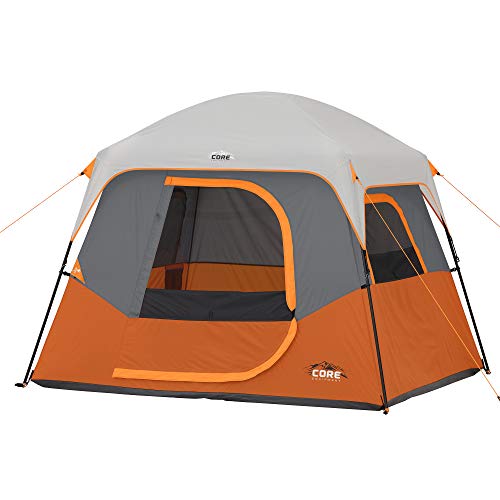
If you'll be setting up alone, look for instant cabin tents or models with color-coded poles. A 4-person cabin camping tent with instant setup is easier to manage solo, but if you need the space, many 10-person models now offer simplified setup systems.
Step 4: Look for Ventilation and Comfort Features
Mesh ceilings, large windows, and ground vents make a huge difference in comfort. If you camp in warm climates, prioritize airflow. You might also consider a battery-powered decorative lantern for ambiance and lighting.
Step 5: Check for Extra Features
Electrical ports, gear lofts, and room dividers add convenience. Some models even include a 10-person instant cabin tent with screen room, which provides a bug-free outdoor living area.
Tips for Setting Up Your 10 Person Cabin Tent
- Choose a Level Site: Clear the area of rocks, sticks, and debris. A level surface prevents uncomfortable sleeping and reduces strain on the tent frame.
- Use a Ground Tarp: A footprint or tarp beneath the tent protects the floor from abrasion and moisture.
- Stake It Down: Even in calm weather, stake all corners and guy lines. A sudden gust can send an unsecured tent tumbling.
- Practice at Home: Set up your tent once before your trip. This helps you identify missing parts and learn the process.
- Pack a Repair Kit: Include extra stakes, guy lines, and a patch kit for emergencies.
If you're new to tent camping, our guide on first time camping tips offers a wealth of practical advice.
Maintaining Your Cabin Tent
Proper care extends the life of your tent. Always dry your tent thoroughly before storing it to prevent mold and mildew. Clean it with mild soap and water, and avoid harsh chemicals. Store it in a cool, dry place away from direct sunlight. For more detailed care instructions, see our article on how long do tents last.
If you're considering a canvas tent, be sure to read our guide on canvas tent waterproofing treatment to keep it in top condition.
Frequently Asked Questions
Can a 10 person straight wall cabin tent fit 10 adults comfortably?
Yes, but comfort depends on sleeping arrangements. If you're using sleeping bags on the floor, 10 adults can fit. However, if you're using air mattresses, you'll likely fit 6–8 adults comfortably. Always check the floor dimensions before purchasing.
Is a straight wall cabin tent good for winter camping?
Straight wall cabin tents can be used in winter, but they are not specifically designed for snow loads or extreme cold. For winter camping, look for a 4-season tent with stove jack or a dedicated winter tent. You can also improve warmth with a safe tent heater for camping.
How many air mattresses fit in a 10 person cabin tent?
Typically, you can fit two to three queen-size air mattresses or four to five twin-size mattresses. It depends on the tent's floor dimensions. For example, a 14 x 10 tent can usually fit two queen mattresses side by side with room to spare.
Are 10 person cabin tents hard to set up?
They are more involved than smaller tents, but many modern models feature color-coded poles and instant setup mechanisms. With two people, setup usually takes 10–20 minutes. Practicing at home makes the process much smoother.
Can I use a 10 person cabin tent for backpacking?
No. These tents are far too heavy and bulky for backpacking. They are designed for car camping, base camps, and extended family trips. For backpacking, consider a 3-person 3-season backpacking tent or similar lightweight options.
Final Thoughts
A 10 person straight wall cabin tent is an investment in comfort and convenience for large-group camping. It offers the space, headroom, and features that make extended camping trips enjoyable for everyone. By considering your group's needs, prioritizing weather protection, and choosing a model with the right features, you'll create a home away from home that keeps everyone happy and dry.
Before you head out, make sure you have all the essentials. Our list of camping gear for beginners is a great starting point. And if you're planning a road trip, don't miss our car camping road trip packing list.
Ready to find the perfect tent? Check out our recommended products below.