Rock Climbing Crash Pads: Your Complete Buying Guide
Everything you need to know about bouldering crash pads — foam types, closure systems, size selection, and safety features — so you can climb confidently and land softly.
VIEW RECOMMENDED GEARWhy a Crash Pad Matters: Bouldering is one of the most accessible forms of climbing, but it also carries inherent risk. A quality crash pad is not just an accessory — it is your primary safety system. Understanding how to choose the right one can mean the difference between a confident send and a serious injury.
What Is a Rock Climbing Crash Pad?
A rock climbing crash pad is a portable, foldable foam mat designed to protect climbers during bouldering — a style of climbing performed on shorter rock formations without ropes or harnesses. Unlike traditional camping sleeping pads, crash pads are engineered to absorb high-impact falls from heights of 10 to 15 feet or more. They typically feature a closed-cell foam base layer for structural integrity and an open-cell foam top layer for energy absorption. The outer shell is usually made from durable, abrasion-resistant materials like 900D or 1000D nylon or polyester. For those who also enjoy overnight adventures, understanding the difference between dedicated climbing protection and general outdoor gear is essential — much like choosing between a sleeping pad for the floor and a specialized bouldering mat.
Key Features to Evaluate
Foam Construction & Layering
The core of any crash pad is its foam. Most quality pads use a dual-density system: a firm closed-cell foam (like EVA) on the bottom for structure and a softer open-cell foam on top for impact absorption. Some premium models use three or more layers for enhanced performance. Entry-level pads often use a single-density foam that compresses over time, while mid-range and premium options maintain their shock-absorbing properties far longer.
Closure Systems: Hinge vs. Taco
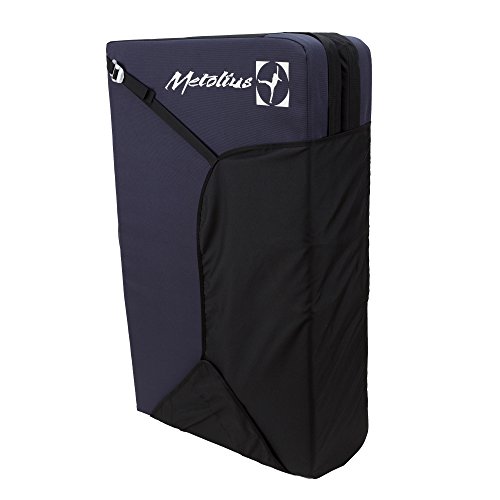
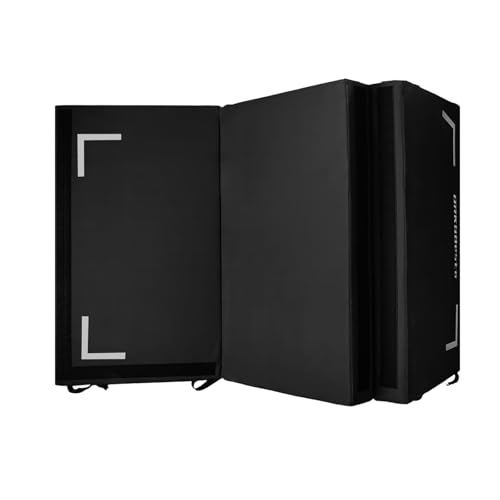
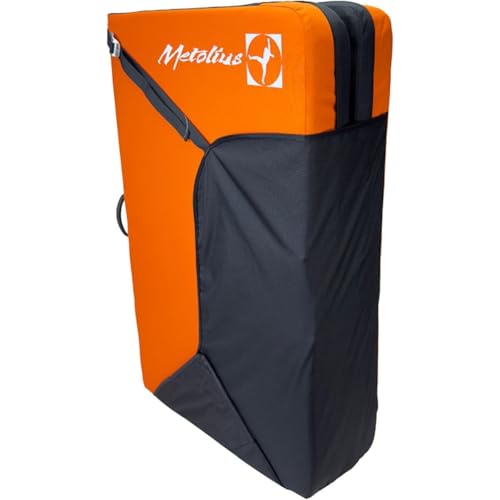
Crash pads fold in one of two ways. Hinge-style pads fold in half like a book, offering a flat landing surface and often better coverage. Taco-style pads fold in thirds, creating a more compact package for carrying but with a curved profile that can leave gaps. Hinge pads are generally preferred for serious bouldering, while taco pads excel for short approaches and tight storage spaces.
Size & Coverage
Crash pads range from small (roughly 3 x 3 feet) to large (up to 5 x 4 feet). Larger pads provide more landing zone but are heavier and bulkier. Many climbers pair a large primary pad with a smaller secondary pad to create a customizable landing zone. Consider your height, the type of problems you climb, and how far you typically carry your gear.
Carrying System & Portability
Look for padded shoulder straps, a hip belt, and a sternum strap for comfortable carries. Some pads convert into a backpack-style carry system, while others use a simple strap. Features like a top grab handle, compression straps, and a built-in flap for carrying shoes and chalk make a big difference on longer approaches.
Shell Material & Durability
The outer fabric must resist abrasion from rough rock, dirt, and repeated folding. High-denier nylon (900D–1680D) or polyester is standard. Look for reinforced stitching, bar-tacked stress points, and a durable water-repellent (DWR) finish. A quality shell can extend the life of your pad by years.
Additional Features
Some pads include a carpeted top surface for cleaning shoes, a flap for storing a spotter's gear, or a removable foam layer for customization. Corner straps, buckle protection, and reflective accents are small details that improve usability and safety. For those who combine climbing trips with camping, pairing your crash pad with a comfortable camping chair with footrest can make rest days far more enjoyable.
Crash Pad Tiers at a Glance
Crash pads generally fall into three broad tiers. Use this table to understand the trade-offs between them. Remember that tier descriptors reflect relative market position, not absolute price.
| Feature | Entry-Level | Mid-Range | Premium |
|---|---|---|---|
| Foam Layers | 2 layers (basic) | 2–3 layers (optimized) | 3+ layers (advanced) |
| Foam Durability | Compresses over time | Maintains shape well | Long-lasting, high-rebound |
| Closure Type | Hinge or taco | Hinge or taco | Hinge (often with flap) |
| Shell Material | 600D–900D nylon | 900D–1000D nylon | 1000D–1680D nylon |
| Carrying Comfort | Basic straps | Padded straps + hip belt | Full suspension system |
| Weight | Lighter but less durable | Balanced | Heavier but more protective |
| Best For | Casual bouldering, beginners | Regular climbers, varied terrain | Serious boulderers, highballs |
How to Choose the Right Crash Pad
Selecting a crash pad is a personal decision that depends on your climbing style, local terrain, and how much you value portability versus protection. Here is a step-by-step approach:
Crash Pad Buying Checklist
- Assess the height of problems you typically climb
- Decide between hinge and taco closure
- Measure your height and choose coverage accordingly
- Check the foam layering and density
- Evaluate the shell denier and stitching quality
- Test the carrying system with weight inside
- Consider storage space in your vehicle
- Look for a warranty and foam replacement options
- Read reviews from climbers in your area
- Pair with a smaller secondary pad for flexibility
Hinge vs. Taco: Pros and Cons
- Flat, gap-free landing surface
- Better for highball problems
- Often larger coverage area
- Can be folded and used as a seat
- Bulkier to carry
- Heavier than taco equivalents
- Hinge can wear over time
- Less compact for travel
- Compact and easy to carry
- Lighter for long approaches
- Fits in smaller vehicles
- Quick to deploy
- Curved edges can create gaps
- Less effective on uneven ground
- Smaller effective landing zone
- Foam may break down faster at folds
Crash Pad Safety Best Practices
Owning a crash pad is only part of the equation. How you use it matters just as much. Follow these safety practices every time you boulder:
- Always spot your partner. A spotter guides the climber's fall toward the center of the pad and protects the head and neck.
- Position pads carefully. Place pads directly under the fall zone, overlapping edges to avoid gaps. On uneven ground, use rocks or gear to level the pad.
- Inspect your pad regularly. Check for worn foam, ripped seams, and broken buckles. Replace foam when it no longer springs back.
- Carry a first aid kit. Even with a crash pad, minor injuries can happen. A well-stocked first aid kit for camping is essential for any outdoor trip.
- Know when to walk away. Wet rock, fatigue, and poor landings are all reasons to save the problem for another day.
For climbers who also venture into remote areas, understanding what to do if lost and carrying emergency SOS signals adds an extra layer of preparedness. And if you are combining climbing with camping, a reliable camping heater for tent can make cold-weather trips far more comfortable.
Caring for Your Crash Pad
A crash pad is an investment. Proper care extends its life and ensures it performs when you need it most:
- Store it open and flat. Never store a crash pad folded for long periods — this compresses the foam and reduces its shock absorption.
- Keep it clean. Brush off dirt and sand after each session. For deeper cleaning, use mild soap and water, then air dry completely.
- Avoid extreme heat. Do not leave your pad in a hot car or direct sunlight for extended periods, as heat can degrade foam and adhesives.
- Repair minor damage promptly. Use a patch kit for small tears in the shell to prevent them from spreading.
- Rotate your pads. If you own multiple pads, rotate their use to distribute wear evenly.
Ready to Find Your Perfect Crash Pad?
Browse our curated selection of recommended rock climbing crash pads below. We have handpicked options across entry-level, mid-range, and premium tiers to suit every boulderer's needs.
SHOP RECOMMENDED CRASH PADSFrequently Asked Questions
How thick should a crash pad be?
Most quality crash pads are between 3 and 5 inches thick when open. Thicker pads offer more impact absorption but are heavier and bulkier. For most boulderers, a 4-inch pad with dual-density foam provides an excellent balance of protection and portability.
Can I use a camping sleeping pad as a crash pad?
No. Camping sleeping pads are designed for comfort, not impact absorption. They lack the structural foam layers and durable shell needed to protect against falls. Always use a purpose-built crash pad for bouldering. If you need a sleeping pad for overnight trips, choose a dedicated sleeping pad for the floor instead.
How long does a crash pad last?
With proper care, a quality crash pad can last 5 to 10 years. Foam degradation is the primary limiting factor. Entry-level pads may need replacement sooner, while premium pads with high-quality foam can maintain performance for many seasons.
Do I need more than one crash pad?
Many climbers start with one large pad and add a smaller secondary pad later. Multiple pads allow you to create a larger, more customizable landing zone and are especially useful for traverses or problems with multiple fall zones.
What is the difference between open-cell and closed-cell foam?
Closed-cell foam is firmer, more durable, and resists water absorption. It provides structural support and is typically used as the base layer. Open-cell foam is softer and excels at absorbing impact energy. Quality crash pads combine both for optimal performance.
Can I check a crash pad on a flight?
Most airlines allow crash pads as checked luggage, but policies vary. Some climbers ship their pads ahead or rent locally. Always check with your airline before traveling. For camping trips that involve flying, consider compact gear like a ultra-lightweight camping chair that packs easily.
Related Guides & Resources
Expand your outdoor knowledge with these related articles:
- Top Rated Camping Gear — Our picks for the best outdoor equipment.
- Camping Gear for Cooking — Everything you need for outdoor meals.
- Winter Camping Gear Guide — Stay warm and safe in cold conditions.
- Rock Climbing Crash Pads — This comprehensive guide.
- Camping in the Rain — Tips for wet-weather adventures.
- Good Places to Camp — Find your next campsite.
- Common Camping Injuries — Prevention and treatment.
- Leave No Trace Principles — Protect the places you love.