Potable Water Container for Camping: The Complete Buying Guide
Everything you need to know about choosing, using, and maintaining a safe drinking water container for your next outdoor adventure — from capacity and material to spigots and sanitation.
What Is a Potable Water Container?
A potable water container is any vessel specifically designed, manufactured, and labeled to safely store water intended for human consumption. The word potable simply means "safe to drink." Unlike general-purpose buckets or repurposed jugs, a true potable water container is made from food-grade materials that will not leach chemicals, harbor bacteria, or alter the taste of your water — even after hours in the sun or days at camp.
When you're camping, access to clean drinking water is not a convenience — it's a safety requirement. Dehydration, waterborne illness, and the logistical headache of running out of water can quickly ruin a trip. A purpose-built container solves all three problems: it keeps your water clean, makes it easy to dispense, and lets you carry a reliable supply from a trusted source to your campsite.
If you're new to camping in general, it helps to start with a broader foundation. Our guide to camping essentials for first-timers covers the full picture of what a safe, comfortable camp requires. But for water specifically, this article is your deep dive.
Why the Right Container Matters
It's tempting to grab any old plastic jug and call it a day. But the container you choose directly affects three critical factors:
- Safety: Non-food-grade plastics can leach BPA, phthalates, and other chemicals into your water — especially when exposed to heat. A container that has previously held chemicals, fuel, or cleaning products can never be fully purified for drinking water.
- Taste: Even safe plastics can impart a "plastic taste" to water if they're low quality or have been sitting in the sun. Food-grade, BPA-free materials preserve the neutral taste of clean water.
- Convenience: A container with a good spigot, a sturdy handle, and the right capacity makes camp life dramatically easier. A bad one leaks, tips over, or requires awkward pouring.
Types of Camping Water Containers
Camping water containers come in several distinct designs, each suited to different camping styles. Understanding the trade-offs helps you match a container to your trip.
1. Rigid Jerry Cans (Water Cans)
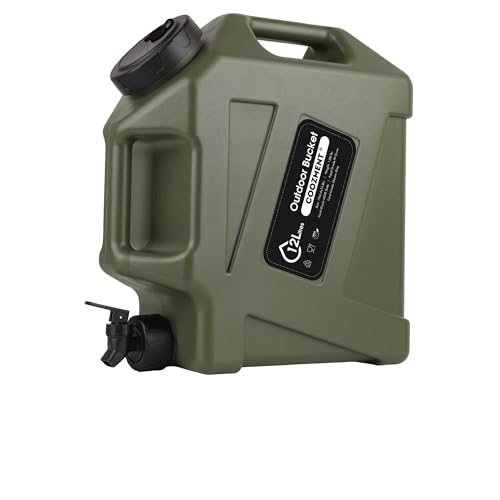
These are the classic rectangular or square containers, usually with a built-in handle and a screw cap or spigot. They're rugged, stackable, and excellent for car camping, basecamps, and RV trips. High-end models are designed to be nearly indestructible. The trade-off is bulk — they take up the same space whether full or empty.
2. Collapsible Water Containers
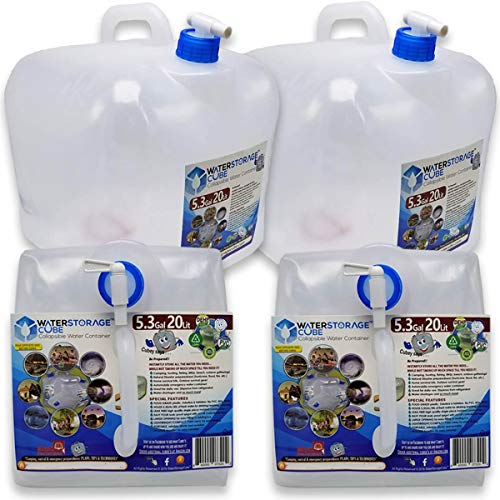
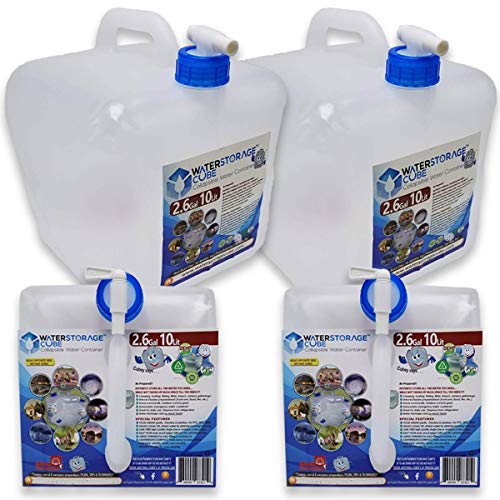
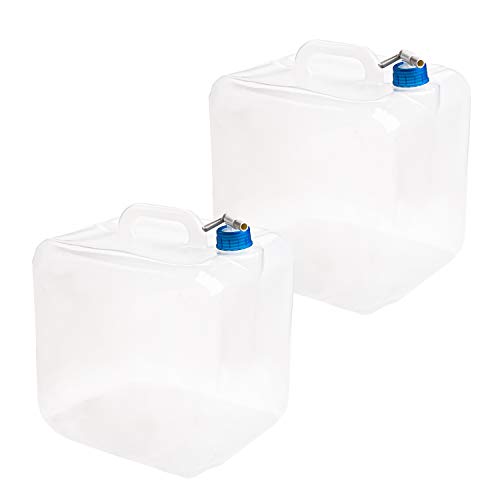
Made from soft, flexible food-grade plastic or TPU, these flatten down to a fraction of their size when empty. They're a favorite among backpackers and paddlers because they pack small and weigh little. Many come with a spigot for gravity dispensing. However, they're more prone to pinhole leaks and punctures over time, so they're best for lighter-duty use.
3. Water Jugs with Spigots
These are the tall, slim containers you often see at campsites and picnics — typically 2 to 5 gallons, with a spigot near the bottom and a handle on top. They're ideal for group camping and family trips where multiple people need easy access to water. Look for models with a wide mouth for easy filling and cleaning.
4. Water Bladders and Reservoirs
These are flexible bags that fit inside a backpack, connected to a drinking tube. They're the gold standard for hiking and backpacking because they let you drink hands-free while on the move. For camping specifically, a hydration bladder works best as a personal water supply, while a separate larger container handles camp needs. If you're building a backpacking setup, our guide to the camping backpack with water bladder explains how these systems integrate.
5. Insulated Water Coolers
These are heavy-duty containers with insulation that keeps water cold for extended periods. They're larger, heavier, and more expensive than standard jugs, but on a hot summer trip, cold water is a genuine morale booster. Insulated models are best for car camping and basecamps where weight isn't a concern.
How to Choose the Right Capacity
The most common question campers ask is: "How much water do I actually need?" The answer depends on your trip length, group size, activity level, and climate.
| Situation | Recommended Daily Water (per person) | Suggested Container Size |
|---|---|---|
| Solo camping, mild weather | 1 gallon | 2–3 gallon jug |
| Couple, weekend trip | 1 gallon each | 5–6 gallon jug or two 3-gallon jugs |
| Family of four, 3 days | 1 gallon each | Two 5-gallon containers |
| Hot climate / high altitude | 1.5–2 gallons each | Larger or multiple containers |
| Backpacking (no resupply) | 3–4 liters (carried) | 2–3L bladder + collapsible backup |
Pro tip: Always confirm whether your campsite has a potable water source before you pack. Many developed campgrounds do, which means you can carry a smaller container and refill. Dispersed and primitive sites often have no water at all. Our guides to dispersed camping in national parks and BLM camping cover what to expect at undeveloped sites.
For backpacking trips where every ounce counts, weight becomes the dominant factor. Our guide to ultralight backpacking cooking gear shares the same weight-saving philosophy you should apply to your water system.
Materials: BPA-Free, Food-Grade & More
The material your container is made from is the single most important safety factor. Here's what you'll encounter:
High-Density Polyethylene (HDPE)
The most common material for camping water containers. It's durable, affordable, and — when food-grade — completely safe for drinking water. Look for the recycling code #2 and an explicit "BPA-free" or "food-grade" label. HDPE is opaque, which helps prevent algae growth.
Low-Density Polyethylene (LDPE)
Softer and more flexible than HDPE, often used for collapsible containers. It's food-safe when labeled as such but less puncture-resistant than HDPE.
Polycarbonate
Historically used for rigid water bottles and some large containers. Older polycarbonate contains BPA, which is why you should avoid unlabeled polycarbonate for drinking water. Modern BPA-free polycarbonate exists but is less common in camping containers.
TPU (Thermoplastic Polyurethane)
Used in high-quality collapsible containers and hydration bladders. It's flexible, tough, and food-safe. TPU tends to be more expensive than standard polyethylene but lasts longer and resists cracking.
Stainless Steel
Found in insulated water coolers and some smaller containers. It's inert, durable, and doesn't retain odors or flavors. The trade-off is weight and cost — stainless steel containers sit at the premium and luxury tiers.
Key Features to Look For
Beyond material and capacity, these features separate a frustrating container from a great one:
- Spigot quality: A leaky spigot is the #1 complaint among campers. Look for spigots with rubber gaskets, a locking mechanism, and a design that's easy to disassemble for cleaning. Mid-tier and premium models typically use more robust spigot assemblies than entry-level jugs.
- Wide mouth opening: Makes filling from a tap or stream far easier and allows you to reach inside for thorough cleaning. Narrow-mouth containers are harder to sanitize properly.
- Handle design: A molded-in handle or a sturdy carrying strap matters more than you'd think, especially with a full 5-gallon container that can weigh over 40 pounds. Test the balance before you buy if possible.
- Vent cap: A secondary vent allows air to enter as water flows out, giving you a smooth, fast pour instead of a glugging trickle. This is a hallmark of well-designed mid-range and premium containers.
- Stackability: If you're bringing multiple containers, stackable designs save valuable vehicle space.
- Freezer-safe construction: Some containers can be partially filled and frozen to keep water cold. Check the manufacturer's guidelines — freezing a full container can crack it.
- UV resistance: If your container will sit in direct sun, UV-resistant material prevents the plastic from becoming brittle and degrading over time.
If you're camping in hot, sunny conditions, keeping water cool becomes a priority. Insulated containers pair well with a small insulated backpack cooler bag for day trips away from camp.
Container Type Comparison Table
Here's a side-by-side look at the main container types, using neutral quality tiers instead of price figures.
| Type | Best For | Typical Tier | Durability | Portability |
|---|---|---|---|---|
| Rigid Jerry Can | Car camping, basecamp, RV | Mid-range | Excellent | Moderate |
| Collapsible Container | Backpacking, paddling, space-saving | Entry-level | Fair | Excellent |
| Water Jug with Spigot | Group camping, family trips | Entry-level to Mid-range | Good | Good |
| Hydration Bladder | Hiking, backpacking, on-the-move | Mid-range | Good | Excellent |
| Insulated Water Cooler | Hot weather, luxury car camping | Premium to Luxury | Excellent | Low |
As a general rule, entry-level containers are fine for occasional weekend trips, while mid-range models offer better spigots and thicker walls that hold up to regular use. Premium and luxury containers add insulation, superior materials, and longer warranties — worthwhile if you camp frequently or in demanding conditions.
Cleaning & Sanitation Best Practices
A potable water container is only as safe as its cleanliness. Even a food-grade container can grow mold, bacteria, and biofilm if neglected. Follow this routine:
- After every trip: Empty any remaining water. Wash the container with warm water and mild dish soap, using a soft bottle brush to reach all interior surfaces, especially the spigot and threads.
- Sanitize periodically: Mix one teaspoon of unscented household bleach per quart of water. Swish the solution around the container, let it sit for a few minutes, then rinse thoroughly with clean water. Commercial water container sanitizers are also available and are gentler on plastic.
- Dry completely: Invert the container and let it air dry with the cap off. Any trapped moisture becomes a breeding ground for mold.
- Store properly: Keep containers in a cool, dark place with the cap off or loosely fitted. Never store them sealed with residual moisture inside.
- Replace when needed: Collapsible containers and bladders have a limited lifespan. If you notice persistent odors, discoloration, cracks, or a spigot that won't stop leaking, replace the container.
Common Mistakes to Avoid
- Underestimating your needs: Running out of water at a remote campsite is more than inconvenient — it's a safety issue. Always pack a buffer.
- Using non-food-grade containers: A repurposed milk jug or chemical bucket is never safe for drinking water.
- Leaving water in direct sun: Heat accelerates chemical leaching and promotes bacterial growth. Store containers in shade or inside your vehicle.
- Ignoring the spigot: A cheap spigot can leak overnight, wasting your entire supply. Inspect and test it before your trip.
- Forgetting a backup: A collapsible backup container takes up almost no space and can save a trip if your primary container fails.
Water is also a critical part of emergency preparedness. Our guide to emergency preparedness for camping covers how to build a broader safety plan that includes water, communication, and first aid.
Frequently Asked Questions
What does potable water mean?
Potable water is water that is safe for human consumption — free from harmful bacteria, viruses, parasites, and chemical contaminants. Potable water containers are specifically designed and labeled to store this type of water safely.
How much water should I bring for camping?
A common guideline is one gallon per person per day for drinking and basic hygiene. In hot weather, at high altitude, or during strenuous activity, plan for 1.5 to 2 gallons per person per day. Always check whether your campsite has a potable water source.
Are collapsible water containers good for camping?
Yes — they're excellent for camping because they save space when empty, are lightweight, and often come with handles or spigots. However, they may be less durable than rigid containers and can develop leaks over time with heavy use.
Can I use any plastic container for drinking water?
No. You should only use containers specifically designed and labeled as food-grade or BPA-free for potable water. Other plastics may leach harmful chemicals into the water, especially when exposed to heat or sunlight.
How do I clean and maintain my water container?
Rinse with warm soapy water after each trip, then sanitize with a diluted bleach solution (one teaspoon of unscented bleach per quart of water) or a commercial cleaner. Rinse thoroughly and allow it to air dry completely before storing with the cap off.
Can I freeze water in my camping container?
Only if the manufacturer explicitly says it's freezer-safe. Never fill a container completely and freeze it — water expands as it freezes and can crack the plastic. Leave at least a quarter of the volume empty for expansion.
Final Thoughts
Choosing the right potable water container for camping comes down to three questions: How much water do I need? How far do I have to carry it? And how long do I need it to last?
For car camping and family trips, a rugged 5-gallon jug with a quality spigot is the workhorse solution. For backpacking and paddling, a collapsible container or hydration bladder saves critical space and weight. For hot-weather luxury camping, an insulated cooler keeps every sip refreshing.
Whatever you choose, prioritize food-grade materials, a reliable spigot, and a realistic capacity for your group. Pair your water system with a solid understanding of the Leave No Trace principles — proper water handling is a core part of minimizing your impact on the outdoors. And if you're still assembling your overall kit, our guide to what to bring on a camping trip will help you fill in the gaps.
Clean water is the foundation of a safe, enjoyable camping trip. Get the container right, and everything else becomes easier.
Ready to Gear Up?
Check out our top picks for camping water containers and other essential outdoor gear below.
View Recommended Gear ↓