Hammock with Mosquito Net and Rain Fly: The Complete Guide
Everything you need to know about all-in-one hammock shelter systems — from integrated bug protection to weatherproof rain coverage. Make an informed decision before you buy.
VIEW RECOMMENDED MODELSWhy this guide matters: A hammock with mosquito net and rain fly combines three essential camping functions into one lightweight system. Unlike a basic hammock, these integrated shelters protect you from insects and precipitation while keeping you off the ground. This guide explains every component, helps you evaluate quality tiers, and walks you through setup so you can sleep comfortably in the wild.
What Is a Hammock with Mosquito Net and Rain Fly?
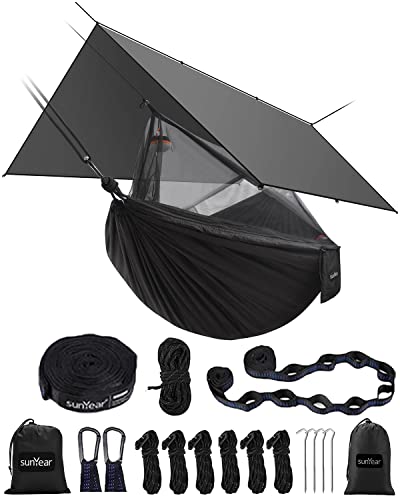
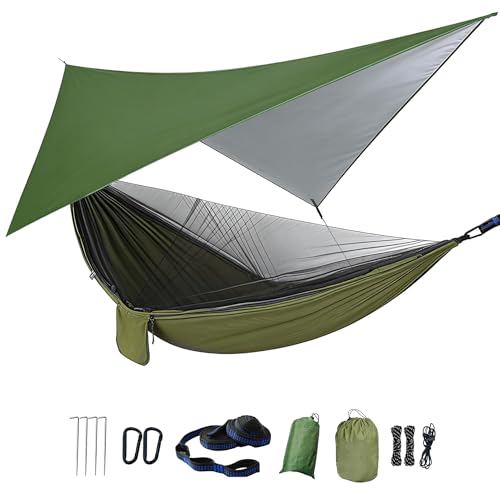
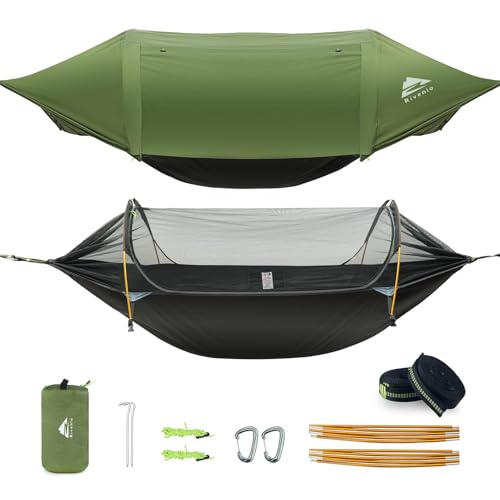
A hammock with mosquito net and rain fly is a complete suspended camping shelter. The hammock body cradles you above the ground, the integrated mosquito net (also called a bug net) zips closed around you to block insects, and the rain fly (a separate tarp) suspends overhead to deflect rain, wind, and dew. Together, these three elements create a portable, elevated campsite that requires no flat ground.
This system differs from a standard rope hammock or a simple parachute hammock. Those basic options lack bug protection and weather coverage, making them unsuitable for overnight camping in most environments. The integrated design also differs from buying components separately — a complete system ensures the net and fly are sized to work together. If you are still weighing shelter types, our comparison of tent vs hammock explains when each excels.
The Three Core Components Explained
🛏️ Hammock Body
The sleeping surface, typically made from ripstop nylon or polyester. Single hammocks suit solo campers; double hammocks offer room to spread out or sleep diagonally for a flatter lie. Gather-end and spreader-bar designs behave differently — gather-end models pack smaller, while spreader-bar models feel more like a bed.
🦟 Mosquito Net
Fine mesh that zips around the hammock to exclude mosquitoes, no-see-ums, and other biting insects. Quality nets use no-see-um rated mesh, have durable zippers, and include structural ridgelines that keep mesh off your face. Some nets are permanently attached; others are removable for daytime use.
☔ Rain Fly
A tarp suspended above the hammock on a separate ridgeline or the same tree anchors. Hexagonal and asymmetric shapes save weight while providing coverage. Look for silnylon or silpoly fabric, taped seams, and sufficient coverage to protect against wind-driven rain. The fly also blocks dew and provides privacy.
Quality Tiers: Entry-Level, Mid-Range, and Premium
Hammock shelter systems fall into three broad quality tiers. Understanding these tiers helps you match a product to your camping frequency and conditions — without relying on price figures that change over time.
| Tier | Typical Materials | Best For | Key Trade-Offs |
|---|---|---|---|
| Entry-Level | Polyester or basic nylon, heavier mesh, coated tarp fabric | Occasional campers, backyard use, fair-weather trips | Heavier packed weight, bulkier, fewer suspension options |
| Mid-Range | Ripstop nylon, no-see-um mesh, silpoly rain fly | Regular weekend campers, backpackers, three-season use | Balanced weight and durability; some features may be simplified |
| Premium | High-denier ripstop, silnylon, premium zippers, spliced suspensions | Frequent backpackers, long-distance hikers, harsh conditions | Higher initial investment; may require separate component purchases |
Mid-range systems typically offer the best value for most campers. They provide reliable bug and rain protection, reasonable packed weight, and durable construction. Entry-level systems work well for beginners testing hammock camping. Premium systems reward users who camp frequently and prioritize weight savings and long-term durability. If you are comparing this shelter to other options, our camping hammock with mosquito net and rainfly guide covers additional considerations.
Key Features to Evaluate Before Buying
- Weight limit and construction: Check the manufacturer's specified capacity. Entry-level models often handle lighter loads; premium models support more. Consider your weight plus gear and always stay within limits.
- Integrated vs. separate bug net: Integrated nets are convenient and ensure proper fit. Removable nets let you use the hammock as a lounger during the day. Some campers prefer a separate 2-person camping hammock with mosquito net for flexibility.
- Rain fly coverage and shape: Hexagonal flies save weight but offer less coverage. Rectangular or asymmetric flies provide more protection in wind-driven rain. Consider the fly's size relative to your hammock.
- Suspension system: Tree straps protect bark and are required in many parks. Whoopie slings, buckles, and daisy chains offer different adjustment speeds. Some systems include straps; others sell them separately. Our Leave No Trace guide explains why tree-friendly suspension matters.
- Packed size and weight: Backpackers should prioritize compact packed volume and low weight. Car campers can accept heavier, bulkier systems with more comfort features.
- Zipper quality and net attachment: A smooth, durable zipper prevents frustration and failure. Look for YKK-style zippers or equivalent. Mesh should attach securely without gaps.
- Ventilation and condensation: Mesh panels and fly design affect airflow. Good ventilation reduces condensation inside the net. Position the fly to allow airflow while blocking rain.
How to Set Up a Hammock with Mosquito Net and Rain Fly
Proper setup determines comfort and weather protection. Practice at home before your trip so you can pitch quickly in the field.
- Choose your trees: Find two healthy trees roughly 12 to 15 feet apart. Avoid dead branches, poison ivy, and trees with soft bark. Check local regulations — some parks prohibit hammock use. Our state park rules guide covers common restrictions.
- Attach tree straps: Wrap straps around each trunk at a height that allows a 30-degree hang angle. Wide straps protect bark. Never use rope directly on trees.
- Suspend the hammock: Connect the hammock ends to the straps using carabiners or the included suspension. Aim for a 30-degree angle from the anchor point to the hammock. A flatter hang is more comfortable for sleeping.
- Deploy the mosquito net: Unzip the net, climb in, and zip closed. Adjust the structural ridgeline so mesh stays off your face. Check for gaps around the zipper and entry points.
- Attach the rain fly: Suspend the fly above the hammock using a separate ridgeline or the same trees. Position it high enough for ventilation but low enough to block wind-driven rain. Stake out corners if your fly has tie-outs.
- Adjust and test: Lie in the hammock and check comfort. Adjust the hang angle, net tension, and fly position as needed. Ensure the fly covers the full length of the hammock and extends beyond the ends.
💡 Pro Tips for Hammock Camping with Bug Net and Rain Fly
- Use an underquilt in cool weather: Sleeping bag insulation compresses under your body in a hammock. An underquilt suspends beneath the hammock to trap warmth. This is essential below 65°F (18°C).
- Add a sleeping pad for insulation: If you do not have an underquilt, place a sleeping pad inside the hammock. Our most comfortable sleeping pad for car camping guide covers pad options.
- Pitch the fly low in storms: Lower the fly and angle it into the wind to block driving rain. Add guy lines for stability.
- Check for widow-makers: Look up before hanging. Dead branches above your hammock can fall. Choose trees without overhead hazards.
- Respect tree bark: Use wide straps and avoid trees with thin or fragile bark. Leave the site as you found it. Our Leave No Trace principles guide explains best practices.
- Practice at home first: Set up your hammock in the backyard before your trip. Learn the adjustments and identify missing gear.
Hammock with Rain Fly vs. Tent: Which Should You Choose?
Both shelters have strengths. The right choice depends on terrain, climate, and personal preference.
| Factor | Hammock with Net & Fly | Tent |
|---|---|---|
| Terrain | Works on uneven, rocky, or sloped ground; needs trees | Requires flat, clear ground; works above treeline |
| Comfort | Off-ground comfort; airflow underneath; some prefer the gentle sway | Familiar bed-like feel; space to sit up and move around |
| Weather Protection | Excellent with a well-pitched fly; vulnerable to wind without proper positioning | Strong wind and rain protection with a quality tent; better in extreme cold |
| Weight & Packability | Often lighter and more compact than equivalent tents | Heavier and bulkier, especially for family sizes |
| Gear Storage | Limited; gear hangs below or stays in a pack on the ground | More room for gear inside; vestibules add storage |
| Cold Weather | Requires underquilt or pad; colder than tents without extra insulation | Warmer with proper sleeping bag; retains heat better |
Many campers own both and choose based on conditions. Hammocks shine in humid, buggy environments and uneven terrain. Tents excel in cold, exposed, or treeless areas. If you are new to camping, our first time camping tips guide can help you decide which shelter to start with.
Best Use Cases for a Hammock with Mosquito Net and Rain Fly
This shelter system suits a range of camping scenarios:
- Backpacking and thru-hiking: Lightweight systems reduce pack weight. The compact packed size frees room for food and water. Our backpacking for beginners guide covers gear basics.
- Summer and humid climates: Airflow beneath and around the hammock keeps you cooler than a tent. Bug net protection is essential in mosquito-heavy areas.
- River and lake trips: Hammocks work on uneven riverbanks where tents struggle. The elevated sleep keeps you dry in minor flooding. Our lake camping guide covers waterside considerations.
- Solo camping: A hammock shelter is compact and easy to pitch alone. Our solo camping guide explains additional solo tips.
- Festival camping: Quick setup and compact footprint suit crowded festival grounds. Our things to bring to a festival camping list helps you pack.
- Car camping: A hammock adds a comfortable alternative when tent space is limited. Our car camping guide covers vehicle-based trips.
Common Mistakes to Avoid
- Hanging too tight: A taut hammock is uncomfortable and puts stress on trees and gear. Aim for a 30-degree angle.
- Skipping tree straps: Rope damages bark and violates rules in many parks. Always use wide straps. Our state park rules guide explains common regulations.
- Forgetting insulation underneath: Sleeping bags compress in a hammock. Use an underquilt or pad for warmth below 65°F.
- Pitching the fly too high: A high fly lets wind-driven rain soak you. Lower it in storms and angle into the wind.
- Ignoring weather forecasts: Hammocks are vulnerable to severe wind. Check conditions and have a backup plan. Our weather alerts guide covers monitoring systems.
- Choosing the wrong trees: Dead or weak trees can drop limbs. Inspect trees carefully and avoid overhead hazards.
- Not testing gear at home: First-time setup in the dark or rain is frustrating. Practice before your trip.
Frequently Asked Questions
A hammock with mosquito net and rain fly is a complete camping shelter system that combines a suspended sleeping hammock, an integrated bug net to protect against insects, and a separate rain fly (tarp) that attaches above to keep you dry during rain. This all-in-one system eliminates the need for a tent while providing protection from bugs and weather.
Neither is universally better; the choice depends on terrain, personal preference, and camping style. Hammocks excel in uneven terrain, rocky ground, and humid conditions where airflow is valuable. Tents offer more space for gear, better insulation in cold weather, and work well when trees are unavailable. Many campers own both and choose based on conditions.
Setup involves: 1) Finding two healthy trees 12-15 feet apart, 2) Attaching tree straps at appropriate height, 3) Suspending the hammock at a 30-degree angle for optimal comfort, 4) Deploying the integrated mosquito net and securing it, 5) Attaching the rain fly above using separate stakes or the same tree anchors, 6) Adjusting the fly for coverage and ventilation. Practice at home before your trip.
Weight limits vary by construction and materials. Entry-level hammocks often support around 250-300 pounds, mid-range models typically handle 300-400 pounds, and premium or double hammocks may support 400-500 pounds or more. Always check the manufacturer's specified limit and consider your weight plus gear. Exceeding limits risks failure and injury.
Yes, but you need additional insulation. The bottom of a hammock compresses sleeping bag insulation, creating cold spots. Use an underquilt specifically designed for hammocks, or place a sleeping pad inside the hammock. A larger rain fly or winter-specific tarp helps block wind and retain heat. Some campers use hammock hot tents with stove jacks for extreme cold.
Beginners should look for complete systems that include hammock, bug net, rain fly, tree straps, and carabiners in one package. Mid-range complete systems offer the best balance of ease, durability, and features. Look for easy-to-use buckle or whoopie sling suspension, ample rain fly coverage, and clear setup instructions. Practice setup at home first.
Ready to Choose Your Hammock Shelter?
Browse our recommended hammocks with mosquito nets and rain flies. Each model is selected for specific camping styles and conditions.
SEE RECOMMENDED HAMMOCKS