Camping Cooking Ware: The Complete Guide to Outdoor Cookware
Everything you need to know about choosing, using, and maintaining camping cooking ware. From lightweight backpacking pots to full camp kitchen setups, discover the right gear for your outdoor adventures.
Explore Top PicksWhy Camping Cooking Ware Matters: The right cookware transforms your outdoor experience. It saves pack space, reduces fuel consumption, and makes meal preparation a joy rather than a chore. Whether you're a weekend car camper or a thru-hiker, understanding materials, nesting systems, and heat efficiency is key to eating well in the wild.
Why the Right Camping Cooking Ware Makes All the Difference
Camping cooking ware is not just about pots and pans — it's a complete system that includes stoves, utensils, cleaning tools, and storage. A well-chosen setup lets you cook nutritious meals, boil water efficiently, and clean up quickly, even in remote locations. Beginners often overlook the importance of nesting cookware, heat distribution, and material weight, leading to bulky packs and frustrating cooking experiences.
This guide covers everything from material science (aluminum vs. stainless steel vs. titanium) to practical considerations like non-stick coatings, handles that stay cool, and the best portable camp kitchen setups. We'll also explore how to pair your cookware with the right camping stove for optimal performance. By the end, you'll be equipped to make informed decisions and enjoy delicious outdoor meals.
Camping Cookware Materials: Which One Is Right for You?
The material of your camping cooking ware affects weight, durability, heat conduction, and cooking performance. Here's a breakdown of the most common options:
Aluminum
Lightweight and excellent heat conductor. Often used in entry-level and mid-range cookware. Anodized aluminum is harder and more scratch-resistant. Best for: backpackers and campers who prioritize weight savings.
- Pros: Light, heats fast, affordable
- Cons: Can dent, reacts with acidic foods if untreated
Stainless Steel
Durable, rust-resistant, and easy to clean. Heavier than aluminum but more robust. Often found in mid-range to premium sets. Best for: car campers and those who cook frequently over open fires.
- Pros: Tough, non-reactive, dishwasher safe
- Cons: Heavier, slower to heat
Titanium
Ultralight and incredibly strong. Excellent for ultralight backpacking. Premium tier. Poor heat distribution but very efficient for boiling water. Best for: thru-hikers and minimalists.
- Pros: Featherweight, durable, corrosion-proof
- Cons: Expensive, hotspots, not ideal for frying
Cast Iron
Superb heat retention and even cooking. Very heavy, so best for car camping or base camp. Often used for Dutch ovens and skillets. Best for: families and gourmet outdoor cooking.
- Pros: Excellent searing, versatile, lasts generations
- Cons: Very heavy, requires seasoning
Essential Camping Cooking Ware: Pots, Pans, and More
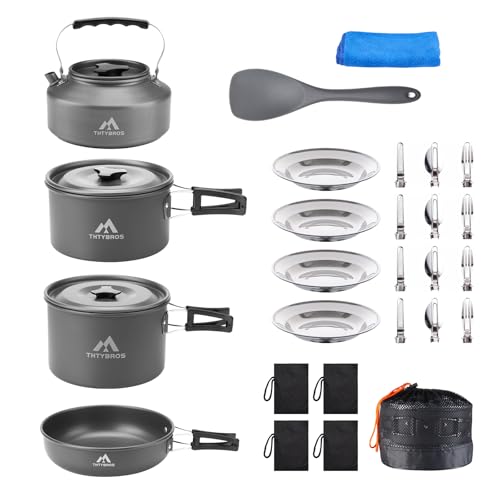
A typical camping cookware set includes several key pieces. Understanding their functions helps you build a kit that suits your cooking style. For those who want a complete solution, a portable camp kitchen can integrate storage, preparation, and cooking surfaces.
| Item | Purpose | Typical Tier |
|---|---|---|
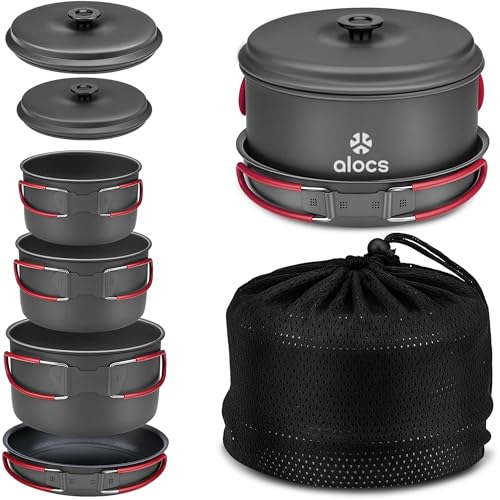
| Nesting Pots | Boiling water, soups, stews. Nest together to save space. | entry-level to premium |
| Frying Pan / Skillet | Sautéing, frying eggs, pancakes. Non-stick is common. | mid-range to premium |
| Kettle | Quick boiling for coffee, tea, or dehydrated meals. | entry-level to mid-range |
| Bowls & Plates | Serving and eating. Often collapsible or nested. | budget-friendly to mid-tier |
| Utensils | Spatula, spoon, ladle. Often made of silicone or bamboo. | affordable to high-end |
| Cleaning Kit | Scrubber, biodegradable soap, towel. Essential for hygiene. | all tiers |
Pairing Cookware with the Right Stove
Your cookware choice should complement your stove. A two-burner stove works well with larger pots and pans for family cooking, while an ultralight backpacking stove pairs best with a single titanium pot. For propane users, a propane stove top offers consistent heat and is compatible with most flat-bottomed cookware.
Consider fuel efficiency: wider pots with lids and heat exchangers can reduce boiling time and fuel consumption. If you're camping in cold weather, a winter camping heater can keep you warm while cooking, but always follow safety guidelines. Also, remember that campfire safety rules apply when cooking over open flames.
How to Choose Camping Cooking Ware: A Buyer's Checklist
1. Weight & Packability
For backpacking, every ounce counts. Look for nesting sets and titanium or hard-anodized aluminum. Car campers can prioritize durability and capacity over weight.
2. Heat Distribution
Aluminum and copper cores heat evenly. Titanium develops hotspots. If you fry frequently, choose a pan with a thick base or non-stick coating.
3. Handles & Lids
Heat-resistant handles (silicone or folding wire) prevent burns. Lids with strainers and steam vents add convenience. Locking handles save space.
4. Non-Stick vs. Bare
Non-stick coatings simplify cleaning but can scratch. Bare stainless or cast iron requires more oil but lasts longer. Consider your cooking style.
5. Cleaning Ease
Rounded corners and non-stick surfaces are easier to clean. A small scrubber and biodegradable soap are must-haves. Leave No Trace principles apply.
6. Versatility
Multi-purpose items (e.g., a pot that doubles as a bowl) reduce clutter. Some sets include a camping kettle and camping cooker in one.
Entry-Level vs. Mid-Range vs. Premium: What to Expect
Camping cooking ware falls into three broad tiers. Entry-level sets are budget-friendly and often made of aluminum; they're great for occasional campers. Mid-range options offer better durability, non-stick coatings, and nesting designs. Premium cookware uses titanium or high-grade stainless steel, with superior craftsmanship and often lifetime warranties. The table below summarizes typical characteristics.
| Tier | Materials | Best For | Typical Features |
|---|---|---|---|
| Entry-Level | Aluminum, thin stainless steel | Occasional campers, beginners | Basic nesting, lightweight, limited durability |
| Mid-Range | Hard-anodized aluminum, quality stainless | Regular campers, families | Non-stick, heat-resistant handles, better nesting |
| Premium | Titanium, multi-ply stainless, cast iron | Backpackers, gourmet outdoor cooks | Ultralight, exceptional heat distribution, lifetime warranty |
Cleaning and Maintaining Your Camping Cooking Ware
Proper care extends the life of your cookware and keeps meals safe. After each use, wipe away food residue with a scraper or paper towel. Use biodegradable soap and a soft scrubber; avoid abrasive pads on non-stick surfaces. Dry thoroughly before storing to prevent rust, especially with cast iron. For cast iron, re-season with a thin layer of oil after cleaning.
Store cookware in a dry place. If you're camping in humid or rainy conditions, consider a waterproof stuff sack. Also, be mindful of food storage rules to avoid attracting wildlife. A clean camp is a safe camp.
Frequently Asked Questions About Camping Cooking Ware
What is the best material for camping cookware?
It depends on your needs. Aluminum is lightweight and affordable, stainless steel is durable, and titanium is ultralight but expensive. Cast iron is great for car camping but heavy. For backpacking, titanium or hard-anodized aluminum are top choices.
Can I use regular kitchen cookware for camping?
You can, but regular cookware is often heavier and bulkier. Camping-specific cookware is designed to nest, have heat-resistant handles, and withstand outdoor conditions. If you're car camping, regular pots and pans can work, but lightweight options are more convenient.
How do I clean camping cookware without harming the environment?
Use biodegradable soap and carry water away from natural sources. Scrape food into a trash bag, then wash with a small amount of soap and a scrubber. Pack out all grey water if required. Follow Leave No Trace principles.
Is non-stick cookware safe for camping?
Yes, modern non-stick coatings are safe when used properly. Avoid overheating (above 500°F) and don't use metal utensils that can scratch the surface. Non-stick is convenient for low-oil cooking and easy cleanup.
What size pot do I need for solo camping?
A 1-liter pot is usually sufficient for solo backpacking, while 1.5–2 liters works for two people. For group camping, consider a 3–4 liter pot. Nesting sets often include multiple sizes.
Ready to Upgrade Your Camp Kitchen?
Explore our recommended camping cooking ware and gear below. Whether you're a solo backpacker or a family camper, we've curated top-rated options to fit your needs.
View Recommended GearFor more outdoor cooking inspiration, check out our guides on fun things to cook over a fire and camping meals that don't require cooking. If you're planning a trip, don't miss our essential camping packing list and campfire regulations guide. Safe cooking starts with a well-prepared camp.