Walleye Fishing Gear: The Complete Guide to Rods, Reels, and Tackle
Everything you need to know about selecting the right walleye fishing gear. From rod and reel combos to line, lures, and terminal tackle, this guide covers the essential equipment that helps anglers target walleye with confidence.
Why Walleye Gear Matters: Walleye are known for their light-sensitive eyes, sharp teeth, and tendency to hold in deeper structure. The right gear helps you feel subtle bites, present lures at the correct depth, and land fish consistently. This guide walks you through each component of a walleye fishing setup so you can build a kit that matches your fishing style and waters.
Understanding Walleye Behavior and Why Gear Selection Matters
Walleye are ambush predators that often feed in low-light conditions, during early morning, late evening, or after dark. Their eyes are adapted to see well in dim light, which means they tend to avoid bright, direct sunlight and hold in deeper water or shaded structure during the day. This behavioral pattern directly influences the gear you choose: you need equipment that can present lures at various depths, transmit subtle strikes, and handle the occasional larger fish.
Because walleye often strike softly, especially when water temperatures are cold or when they are in a neutral mood, rod sensitivity becomes critically important. A rod with a fast or extra-fast action helps you detect light taps and set the hook before the fish spits the lure. Similarly, a reel with a smooth, reliable drag prevents line breakage when a walleye makes a sudden run. Anglers who also enjoy other species may find that some gear overlaps with setups used for steelhead fishing gear or crappie fishing gear, though walleye-specific rods and reels tend to be tailored for different techniques.
Walleye Fishing Rods: Action, Power, and Length
The rod is arguably the most important piece of walleye fishing gear. It determines how well you can cast, how much feel you have, and how effectively you can set the hook. When choosing a walleye rod, consider the following characteristics:
Action and Power
Action refers to where the rod bends, while power describes how much force is needed to bend it. For walleye, a fast-action rod that bends primarily in the upper third is a popular choice because it offers a good balance of sensitivity and hook-setting power. Rods with moderate action can be useful for crankbait fishing because they absorb the shock of a fleeing fish and help keep treble hooks pinned.
In terms of power, medium-light and medium power rods are the most versatile for walleye. A medium-light rod is ideal for finesse presentations such as jigs and live bait rigs, while a medium-power rod handles larger crankbaits and heavier jigs. Anglers who fish in rivers with strong current may prefer a medium-heavy rod to control the boat and fight fish in moving water.
Rod Length
Rod length affects casting distance, leverage, and how easily you can maneuver the rod in a boat. For walleye fishing, rods between 6 and 7 feet are common. A 6-foot to 6-foot-6-inch rod is easier to handle in tight spaces and when vertical jigging, while a 7-foot or longer rod provides longer casts and better line control when trolling or fishing from shore. If you fish from a kayak or a small boat, a slightly shorter rod may be more practical.
Some anglers who also camp and fish in remote locations may want gear that doubles for other outdoor activities. If you are building a multi-purpose kit, you might look at gear for fly fishing for different techniques, but keep in mind that fly fishing gear is not typically used for walleye.
Walleye Fishing Reels: Spinning vs. Baitcasting
The reel is the second core component of your walleye setup. Two main types of reels are used for walleye: spinning reels and baitcasting reels. Each has advantages depending on your fishing style.
Spinning Reels
Spinning reels are the most popular choice for walleye anglers, especially for finesse techniques. They are easy to use, handle light lines well, and cast lightweight lures with minimal backlash. A spinning reel in the 1000 to 3000 size range is suitable for most walleye fishing. Look for a reel with a smooth drag system, a gear ratio around 5.2:1 to 6.2:1, and a sturdy body that can handle the occasional larger fish.
When selecting a spinning reel, consider the line capacity and the type of line you plan to use. Braided line, fluorocarbon, and monofilament all have different diameters and handling characteristics. A reel with a braid-ready spool can be an advantage if you prefer braided main line.
Baitcasting Reels
Baitcasting reels are favored by anglers who do a lot of trolling or who need precise control when casting heavier lures. They offer greater accuracy and power, but they require more practice to master. For walleye, a low-profile baitcasting reel with a gear ratio between 6.2:1 and 7.1:1 works well for crankbaits and spinner rigs. Look for a reel with a reliable drag and a comfortable thumb bar.
Some anglers who fish for walleye also target other species and may already own a fishing rod spinner combo that can be adapted for walleye. However, dedicated walleye rods and reels are usually optimized for the techniques and lure weights common in walleye fishing.
Fishing Line for Walleye: Braid, Fluorocarbon, and Monofilament
The line you choose affects sensitivity, visibility, and how your lure behaves in the water. Walleye can be line-shy, especially in clear water, so line selection is an important part of your gear strategy.
Braided Line
Braided line has virtually no stretch, which translates into excellent sensitivity and solid hook sets. It is a great choice for vertical jigging and fishing in deep water where feeling the bottom and detecting light bites is crucial. Because braid is highly visible, most anglers use a fluorocarbon leader between the braid and the lure. A leader of 12 to 24 inches is common.
Fluorocarbon Line
Fluorocarbon is nearly invisible underwater and has low stretch compared to monofilament. It is an excellent choice for leaders and for finesse presentations in clear water. Many walleye anglers use fluorocarbon as a main line when fishing with spinning gear, especially in situations where line visibility could spook fish. It is also abrasion-resistant, which helps when fishing around rocks and wood.
Monofilament Line
Monofilament is the most forgiving line type. It has some stretch, which can help when fighting fish with treble hooks, and it is relatively inexpensive. However, its stretch reduces sensitivity, making it less ideal for deep jigging or detecting subtle bites. Monofilament is a good choice for beginners or for fishing crankbaits where a little stretch can be an advantage.
Walleye Lures and Terminal Tackle
Walleye can be caught on a wide variety of lures, but some categories consistently produce fish. The best approach is to carry a selection that covers different depths and presentations.
Jigs
Jigs are the cornerstone of walleye fishing. A jig consists of a weighted head and a hook, often dressed with a soft plastic trailer or live bait. Round-head jigs are the most common, but banana jigs, stand-up jigs, and football jigs each have their place. Jig weight depends on depth, current, and wind; a good starting range is 1/8 ounce to 1/2 ounce. For deeper water or strong current, heavier jigs may be necessary.
Soft plastic trailers for jigs include curly-tail grubs, paddle-tail swimbaits, and minnow-style plastics. Live bait such as nightcrawlers, leeches, and minnows can also be threaded onto a jig. A jig and minnow combination is a classic walleye presentation that works in many situations.
Crankbaits
Crankbaits are productive for walleye, especially when fish are actively feeding or when you are trolling. Shallow-running crankbaits work well in the spring and fall when walleye move into shallower water, while deep-diving crankbaits are needed for summer fishing when fish hold in deeper structure. Crankbaits that imitate baitfish such as perch, shad, or smelt are good choices. Trolling crankbaits along weed edges, rock piles, and drop-offs is a proven technique.
Spinner Rigs and Worm Harnesses
Spinner rigs, also known as worm harnesses, are a staple for walleye fishing. They consist of a leader with one or more spinner blades, beads, and a hook. When trolled or drifted, the blades spin and create flash and vibration that attract walleye. A nightcrawler or leech threaded onto the hook completes the presentation. Spinner rigs are particularly effective in the summer when walleye are spread out and feeding on baitfish.
Other Lures
Other lures that catch walleye include spoons, blade baits, and swimbaits. Spoons are useful for vertical jigging in deep water, while blade baits excel in cold water when walleye are less active. Swimbaits can be fished on a jig head or a weighted hook and imitate baitfish effectively.
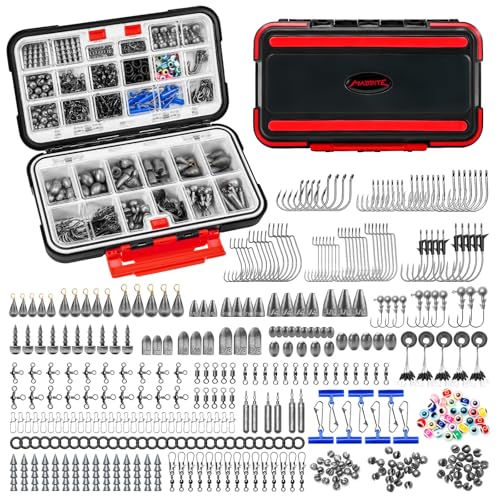
Terminal Tackle and Accessories
Terminal tackle includes the small but essential items that connect your line to your lure and help you fish effectively.
Hooks
Walleye have sharp teeth, so hook selection matters. Circle hooks are a good choice for live bait rigs because they tend to hook fish in the corner of the mouth, reducing deep hooking. Octopus hooks and wide-gap hooks are also popular. For soft plastics, a jig hook or an offset worm hook works well. Carry a range of sizes, from size 1 to 3/0, to match your bait and target fish size.
Weights and Sinkers
Weights help you get your lure or bait to the desired depth and keep it there. Common options include split shot, bullet weights, and bottom bouncers. Bottom bouncers are especially useful for trolling spinner rigs along the bottom. A bottom bouncer consists of a wire arm with a weight and a snap for attaching a leader. The weight keeps the rig near the bottom while the arm helps prevent snags.
Swivels and Snaps
Swivels and snaps make it easy to change lures and help reduce line twist. Use a barrel swivel when fishing with spinners or spoons to prevent line twist, and a snap when you want to change crankbaits quickly. Choose sizes that match your line and target fish; too large a snap can affect lure action, while too small a snap may fail under pressure.
Leaders
Leaders are important when fishing for walleye, especially in clear water. A fluorocarbon leader of 12 to 24 inches is a good starting point. In waters with northern pike or muskie, a wire leader may be necessary to prevent bite-offs, though wire can reduce strikes from walleye. If you are fishing in an area where toothy fish are common, consider using a heavier fluorocarbon leader or a thin wire leader.
Matching Gear to Walleye Fishing Techniques
Different walleye fishing techniques call for slightly different gear setups. Below is a breakdown of common techniques and the gear that works best for each.
Vertical Jigging
Vertical jigging is a finesse technique that requires sensitivity and control. A medium-light, fast-action spinning rod paired with a 1000 to 2500 size spinning reel spooled with braided line and a fluorocarbon leader is an excellent setup. The braid provides sensitivity, while the leader adds invisibility. Jigs in the 1/8 to 3/8 ounce range are typical, depending on depth and current.
Trolling
Trolling allows you to cover water and target suspended fish. A medium-power, moderate-action rod paired with a line-counter reel or a baitcasting reel works well. Line-counter reels help you repeat successful presentations by letting you return your lure to the exact depth where fish were caught. Crankbaits, spinner rigs, and spoons are all effective trolling lures.
Casting
Casting from shore, a boat, or a kayak is a versatile way to fish for walleye. A 6-foot-6-inch to 7-foot medium-light spinning rod with a fast action is a good all-around choice. Cast jigs, crankbaits, or swimbaits toward structure and retrieve them at varying speeds until you find what the fish want.
Live Bait Rigging
Live bait rigging involves using a walking sinker, a swivel, a leader, and a hook baited with a nightcrawler, leech, or minnow. A medium-light spinning rod with a sensitive tip is ideal for this technique because it allows you to feel the bait and detect light bites. A slow, steady drift or a controlled troll works well.
Building a Versatile Walleye Gear Kit
If you are new to walleye fishing, you do not need to buy everything at once. A basic kit that covers most situations includes:
- A 6-foot-6-inch to 7-foot medium-light spinning rod with a fast action
- A 1000 to 2500 size spinning reel with a smooth drag
- Braided main line in 10 to 15 pound test
- Fluorocarbon leader material in 8 to 12 pound test
- An assortment of jigs in 1/8, 1/4, and 3/8 ounce sizes
- Soft plastic trailers in natural colors
- A few crankbaits in shallow- and deep-diving models
- Spinner rig components or pre-tied worm harnesses
- Hooks, swivels, snaps, and split shot
- A small tackle box or bag to organize everything
As you gain experience, you can add technique-specific rods and reels, a wider range of lures, and specialized terminal tackle. Anglers who also enjoy other outdoor activities may find that some of their existing gear, such as a waterproof backpack for carrying tackle or a rucksack hiking backpack for hike-in fishing trips, can be adapted for walleye fishing adventures.
Seasonal Walleye Gear Considerations
Walleye behavior changes with the seasons, and your gear should adapt accordingly.
Spring
In spring, walleye move into shallower water to spawn and feed. Light jigs, shallow-running crankbaits, and live bait rigs are effective. A medium-light rod with a fast action is ideal for detecting light bites in cool water.
Summer
During summer, walleye often move deeper during the day and feed more actively at dawn and dusk. Deep-diving crankbaits, bottom bouncers with spinner rigs, and heavier jigs come into play. Trolling with line-counter reels helps you target suspended fish.
Fall
In fall, walleye feed heavily to prepare for winter. They may move back into shallower water, especially around structure. Crankbaits, jigs, and spinner rigs all produce fish. A versatile medium-power rod handles a variety of lures.
Winter
Ice fishing for walleye requires specialized gear, including short ice rods, small reels, and lightweight jigs and spoons. If you fish in winter, you may also need ice fishing safety equipment and warm clothing. For those who enjoy winter camping as well, a winter sleeping bag and proper layering clothing are essential for comfort and safety.
Maintaining Your Walleye Fishing Gear
Proper maintenance extends the life of your gear and ensures it performs when you need it. After each trip, rinse your rods and reels with fresh water, especially if you fished in saltwater or brackish water. Dry them thoroughly before storing. Check your line for nicks and abrasions, and replace it regularly. Lubricate your reel according to the manufacturer's instructions. Store your tackle in a dry, organized tackle box or bag to prevent rust and tangles.
If you camp while fishing, make sure your gear is stored safely away from wildlife. Follow food storage rules and keep scented items, including bait and attractants, secured. A camping with dogs trip can be a great way to combine fishing and camping, but keep your tackle out of reach of curious pets.
Safety and Regulations for Walleye Fishing
Before you head out, check local fishing regulations, including seasons, bag limits, and size restrictions. Walleye are managed carefully in many waters, and regulations can vary significantly from one lake or river to another. A valid fishing license is required in most jurisdictions. If you are fishing from a boat, ensure you have the required safety equipment, including life jackets, a throwable flotation device, and a sound-producing device.
If you are camping near your fishing spot, follow Leave No Trace principles and campfire safety rules. Be aware of camping weather alerts and have a plan for emergency communication if you are fishing in remote areas. Carry a first aid kit for camping and know how to respond to common camping injuries such as cuts from hooks or fish spines.
Frequently Asked Questions About Walleye Fishing Gear
What is the best rod for walleye fishing?
A medium-light, fast-action spinning rod between 6 and 7 feet is the most versatile choice for walleye. It offers good sensitivity for detecting light bites and enough power to set the hook and fight fish. For trolling or casting heavier lures, a medium-power rod may be better.
What type of line is best for walleye?
Braided line with a fluorocarbon leader is a popular choice for its sensitivity and low visibility. Fluorocarbon main line is also a good option for finesse fishing in clear water. Monofilament is forgiving and works well for crankbait fishing, but it has more stretch and less sensitivity.
What size reel do I need for walleye?
A spinning reel in the 1000 to 3000 size range is suitable for most walleye fishing. For baitcasting, a low-profile reel with a gear ratio between 6.2:1 and 7.1:1 works well for trolling and casting crankbaits.
What are the best lures for walleye?
Jigs with soft plastic trailers, crankbaits, spinner rigs, spoons, and blade baits are all effective for walleye. The best choice depends on the season, water depth, and the mood of the fish. A selection of jigs and crankbaits in various sizes and colors covers most situations.
Do I need a special rod for jigging walleye?
A sensitive rod with a fast action is beneficial for jigging because it helps you feel the bottom and detect subtle strikes. Many anglers use a medium-light spinning rod for vertical jigging, paired with braided line and a fluorocarbon leader.
Can I use the same gear for walleye and other fish?
Some gear overlaps with setups used for other species such as crappie fishing gear or steelhead fishing gear, but walleye-specific rods and reels are optimized for the techniques and lure weights common in walleye fishing. A versatile medium-light spinning combo can work for multiple species, but dedicated gear often performs better for specific techniques.
What terminal tackle should I carry for walleye?
Carry a variety of hooks (circle hooks, octopus hooks, jig hooks), weights (split shot, bullet weights, bottom bouncers), swivels, snaps, and fluorocarbon leader material. A small tackle box or bag helps keep everything organized and accessible.
How do I maintain my walleye fishing gear?
Rinse rods and reels with fresh water after each trip, dry them thoroughly, and lubricate reels as needed. Check line for damage and replace it regularly. Store tackle in a dry, organized container to prevent rust and tangles.
Final Thoughts on Walleye Fishing Gear
Building a walleye fishing gear kit is a process. Start with a versatile rod and reel combo, add the line and terminal tackle you need for your local waters, and expand your lure selection as you learn what works. Focus on sensitivity, presentation, and adaptability, and you will be well-equipped to target walleye in a variety of conditions. Whether you fish from shore, a boat, or through the ice, the right gear makes every trip more enjoyable and more productive.
If you also enjoy camping and hiking, consider how your fishing gear fits into your broader outdoor kit. A camping backpack with tent and sleeping bag can be useful for overnight fishing trips, and a hiking backpack with tent and sleeping bag is a good option for hike-in adventures. For anglers who want to combine fishing with other activities, a waterproof backpack helps keep gear dry, and a rucksack hiking backpack offers comfortable carrying for longer treks.