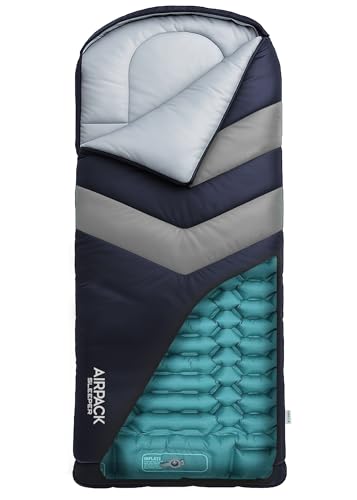
Sleeping Bags with Air Mattress Built In: The Complete Comfort Guide
Discover how all-in-one sleeping systems eliminate the gap between you and the ground. Learn which designs deliver reliable insulation, effortless inflation, and packable convenience for your next camping adventure.
Explore Top PicksWhy an integrated sleeping system? Traditional camping requires you to carry a sleeping bag, a sleeping pad, and sometimes a separate air mattress. An all-in-one design fuses these layers into a single unit, removing the frustration of sliding off your pad in the middle of the night. For campers who value simplicity without sacrificing warmth, this category is a game-changer.
What Exactly Is a Sleeping Bag with a Built-In Air Mattress?
A sleeping bag with a built-in air mattress is a hybrid camping sleep system. The mattress is permanently attached to the underside of the sleeping bag, creating a single cohesive unit. When you inflate the mattress, the bag's insulation wraps around you while the air chamber lifts you off the cold, uneven ground. This design is especially valuable for side sleepers and anyone who has ever woken up stiff after a night on a thin foam pad.
These systems typically fall into two categories: self-inflating models that use open-cell foam to draw in air, and manual or pump-assisted air chambers that require inflation before bed. The best choice depends on your priorities. If you want the most comfortable way to sleep in a tent, an integrated system removes the guesswork of matching a pad to a bag.
For campers who already own a separate air mattress, a comparable level of comfort can be achieved with an all-in-one sleeping bag and mattress combination. However, the truly integrated designs shine when you want one item to pack, one item to inflate, and one item to store.
How Integrated Sleep Systems Work
The engineering behind these systems is straightforward but thoughtful. A durable air chamber—often made from TPU or PVC—forms the base. Above it, a layer of synthetic insulation (or sometimes down) is quilted into the bag's shell. The mattress and bag are connected by a zipper, stitching, or a sleeve system that prevents the bag from shifting during the night.
Inflation methods vary. Entry-level models often include a built-in foot pump or a simple valve that you blow into. Mid-range and premium options frequently feature a built-in battery pump, which can inflate the mattress in under a minute. If you prefer a manual approach but want to avoid lung power, an air mattress with built-in battery pump offers a convenient middle ground for standalone mattresses.
Deflation is equally important. A well-designed system will have a large dump valve that releases air quickly, allowing you to roll the unit tightly for storage. Some models even include a compression sack that doubles as a pump, killing two birds with one stone.
Integrated Sleeping Bag vs. Separate Gear
Before committing to an all-in-one system, it helps to see how it stacks up against the traditional approach of carrying a separate bag and pad. The table below breaks down the key differences.
| Feature | Integrated System | Separate Bag + Pad |
|---|---|---|
| Setup Time | Fast; one item to inflate and unroll | Slower; must align bag and pad, risk of sliding |
| Packing | Single unit; less bulk overall | Two items; more storage flexibility |
| Comfort | Consistent; no gaps or cold spots | Variable; depends on pad quality and fit |
| Versatility | Limited; cannot use bag alone | High; mix and match for different trips |
| Weight | Often heavier due to integrated pump | Can be lighter with ultralight components |
| Best For | Car campers, families, comfort seekers | Backpackers, minimalists, gear tinkerers |
Editor's Note: If you already own a high-quality air mattress, you may not need an integrated system. Pairing your existing mattress with a sleeping bag that has a built-in sleeve or attachment points can deliver similar results. For example, a raised air mattress with built-in pump combined with a rectangular bag works well for car camping.
Pros and Cons of Sleeping Bags with Built-In Air Mattresses
No piece of gear is perfect for every situation. Here is an honest look at the advantages and drawbacks of this hybrid design.
Advantages
- Eliminates the "sliding off the pad" problem entirely
- Faster setup and takedown at the campsite
- Consistent insulation with no cold gaps
- Ideal for side sleepers and restless sleepers
- Fewer items to pack and keep track of
- Many models include a built-in pump for convenience
Drawbacks
- Generally heavier and bulkier than separate ultralight gear
- Less versatile; cannot use the bag without the mattress
- Higher upfront investment for quality models
- Repair can be more complex if the mattress punctures
- Not ideal for backpacking where every ounce counts
- Limited temperature ratings compared to specialized bags
What to Look for Before You Buy
Not all integrated sleep systems are created equal. Here are the key factors to evaluate as you shop.
1. Inflation Mechanism. A built-in battery pump offers the most convenience, especially if you arrive at camp after dark. Manual foot pumps are reliable and never run out of power, but they require more effort. If you prefer a standalone mattress with a similar pump, look for an air mattress with built-in rechargeable pump.
2. Insulation and Temperature Rating. The sleeping bag portion should have a temperature rating that matches the conditions you camp in. Three-season bags are the most common, but winter campers should look for models rated for freezing temperatures. Pairing a winter-rated system with a winter sleeping bag mindset ensures you stay warm when the mercury drops.
3. Mattress Thickness and Support. Thicker mattresses provide better separation from the ground, which is crucial for side sleepers and those with back pain. A high air mattress with built-in pump offers excellent support, and integrated systems with similar thickness deliver comparable comfort.
4. Packed Size and Weight. If you are car camping, weight is less of a concern. But if you plan to hike to your site, every pound matters. Look for systems that compress down reasonably well and consider whether the integrated pump is worth the added weight.
5. Durability and Materials. The mattress shell should be puncture-resistant, and the bag's exterior should be ripstop nylon or polyester. Check the warranty and read reviews about long-term durability. For everyday use at home or base camp, a most durable air mattress for everyday use sets a high bar for material quality.
6. Ease of Deflation and Storage. A system that is difficult to deflate and roll will frustrate you every morning. Look for large dump valves and included compression sacks. Some campers prefer a blow-up bed with built-in pump for the same reason—fast deflation and easy storage.
How to Set Up Your Integrated Sleep System for Maximum Comfort
Even the best gear needs proper setup to perform. Follow these steps to get the most out of your sleeping bag with a built-in air mattress.
Step 1: Choose a Level Spot. Clear your tent floor of rocks, twigs, and debris. Even the thickest mattress can transmit a sharp object through to your back. If you are camping on a slope, position your head slightly uphill to prevent sliding.
Step 2: Inflate Fully. Under-inflation leads to a saggy, uncomfortable night. Inflate the mattress until it feels firm but still conforms slightly to your body. If you are using a manual pump, take your time and avoid over-inflating, which can stress the seams.
Step 3: Lay Out the Bag. Unzip the bag completely and lay it flat over the mattress. If your system has a sleeve or attachment points, secure them now. This prevents the bag from twisting or bunching during the night.
Step 4: Add a Pillow. A camping pillow makes a significant difference in sleep quality. Some integrated systems include a pillow pocket, but a dedicated pillow is always a good idea.
Step 5: Ventilate if Needed. If the night is warmer than expected, open the bag's foot vent or unzip the side to regulate temperature. Integrated systems can run warm because the mattress traps heat, so adjust as needed.
Step 6: Deflate and Roll in the Morning. Open the dump valve and let the air escape while you pack other gear. Once deflated, roll the unit tightly from the foot end toward the head, pushing air out as you go. Store it loosely in its sack to preserve the insulation's loft.
Who Is This Product For?
An integrated sleeping system is not for everyone, but it excels for specific camping styles.
Car Campers and Families: If you drive to your campsite and have room to spare, the comfort and convenience of an all-in-one system are hard to beat. Kids especially love the "bed-like" feel, and parents appreciate the quick setup. Pair it with a 10-person instant cabin tent with screen room for a family base camp that feels like a second home.
Side Sleepers and Restless Sleepers: If you toss and turn, a separate pad and bag will betray you. An integrated system keeps everything in place, so you wake up refreshed rather than tangled.
Campers with Back or Hip Pain: The extra thickness and support of an air mattress can make camping accessible for people who cannot sleep on thin foam. A memory foam mattress topper for bad back is a great home solution, but on the trail, an integrated air system is the next best thing.
Weekend Warriors and Festival Goers: If you camp a few times a year and want a no-fuss setup, an integrated system is a smart investment. It removes the learning curve of matching gear and lets you focus on enjoying the outdoors.
Who Should Look Elsewhere: Backpackers counting every ounce, ultralight enthusiasts, and campers who already own a premium pad and bag combination may find this category redundant or too heavy.
Frequently Asked Questions
Can I use the sleeping bag without the air mattress?
In most integrated systems, the sleeping bag is permanently attached to the mattress, so you cannot use it separately. However, some models feature a zipper that allows you to detach the bag for use as a standalone quilt or blanket. Check the product specifications before buying if versatility is important to you.
How do I repair a puncture in the built-in air mattress?
Most integrated systems come with a repair patch kit. Clean the area around the puncture, apply the patch, and let it cure according to the manufacturer's instructions. For larger tears, you may need a professional repair or a replacement mattress. To prevent punctures, always use a ground tarp under your tent and clear sharp objects from your campsite.
Are these systems suitable for winter camping?
Some are, but you must check the temperature rating. A three-season integrated system is not designed for freezing temperatures. For winter camping, look for a system with a rating of 0°F or lower, or pair a winter sleeping bag with a separate insulated pad. The air mattress in an integrated system can actually feel colder because air circulates beneath you, so supplemental insulation may be needed.
How long does it take to inflate and deflate?
With a built-in battery pump, inflation typically takes 1–2 minutes. Manual foot pumps may take 3–5 minutes. Deflation is usually faster, around 1–2 minutes, especially if the mattress has a large dump valve. Practice at home before your trip so you know what to expect.
Can I use a regular sleeping bag with an air mattress?
Absolutely. Many campers use a standard sleeping bag on top of a separate air mattress. To prevent sliding, look for a sleeping bag with a pad sleeve or use a non-slip rug pad between the bag and mattress. An inflatable air bed with built-in pump paired with a rectangular sleeping bag is a classic combination.
What is the weight limit for these systems?
Weight limits vary by model. Entry-level systems may support up to 250 lbs, while premium models can handle 300 lbs or more. Always check the manufacturer's specifications. If you are near the limit, consider a standalone double high air mattress with built-in pump that has a higher weight capacity, and pair it with a separate bag.