RV Portable Toilet: The Complete Guide for Campers & Road Trippers
Everything you need to know about choosing, using, and maintaining a portable toilet for your RV, campervan, or camping setup. Compare composting, cassette, and portable models to find your perfect fit.
START READINGWhy a Portable Toilet Matters: A reliable toilet solution transforms your RV experience. Whether you're boondocking off-grid, staying at a full-hookup campground, or converting a campervan, the right portable toilet ensures comfort, hygiene, and independence on the road.
Understanding RV Portable Toilets: Types and How They Work
When you're outfitting an RV, campervan, or travel trailer, the bathroom situation is one of the most important decisions you'll make. A portable toilet is more than just a convenience—it's a cornerstone of hygiene and comfort during your travels. Unlike a traditional home toilet, RV portable toilets are designed to operate with minimal water, manage waste effectively, and fit into compact spaces. Understanding the different types available will help you choose the right system for your specific needs, whether you're a weekend warrior or a full-time road resident.
There are three primary categories of portable toilets for RVs and camping: composting toilets, cassette toilets, and portable (self-contained) toilets. Each has its own advantages, maintenance requirements, and ideal use cases. Additionally, some campers opt for small camper vans with shower and toilet setups that integrate these systems seamlessly, while others prefer a standalone solution that can be moved between vehicles or tents. For those considering a more comprehensive build, exploring camper vans with shower and toilet can provide inspiration for a fully self-contained rig.
Let's break down each type so you can make an informed decision based on your travel style, budget tier, and maintenance preferences.
Composting Toilets: The Eco-Friendly Choice
Composting toilets separate liquid and solid waste, using a carbon-rich cover material (like peat moss or coconut coir) to break down solids through aerobic decomposition. They require no water for flushing, making them ideal for boondocking and off-grid adventures. High-end composting toilets often feature a crank or automatic mixing mechanism, while entry-level models require manual turning. Mid-range models typically balance ease of use with capacity, making them popular among full-time RVers who prioritize sustainability. If you're interested in minimizing your environmental footprint, this is a top-tier choice. Pairing a composting toilet with biodegradable soap for cleaning further reduces your impact.
Cassette Toilets: The Convenient Middle Ground
Cassette toilets feature a removable tank (the "cassette") that you empty at a designated disposal station. They use a small amount of water and chemicals to manage waste and odors. Mid-priced cassette toilets are a popular choice for campervans and smaller RVs because they're relatively easy to install and use. The key advantage is that you can empty the cassette without moving your entire vehicle. Premium cassette models offer larger tank capacities and improved sealing systems to prevent odors. When staying at established campgrounds, look for RV parks and campgrounds that offer convenient dump stations.
Portable (Self-Contained) Toilets: The Flexible Option
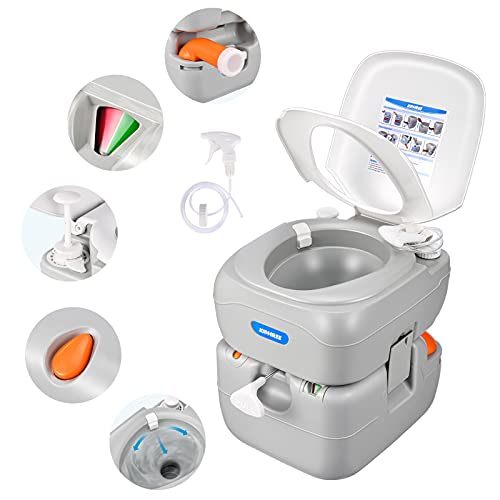
These are the most budget-friendly and versatile options. They resemble a small, portable toilet seat with a built-in holding tank. They require no installation and can be used in tents, RVs, or even in the back of a truck. Entry-level portable toilets are simple and effective for occasional use, while high-end models offer features like taller seats, larger tanks, and more robust flushing mechanisms. They're perfect for camping alone or as a backup for larger groups. For those who want the ultimate flexibility, a portable toilet can be used alongside a pop-up camping shower toilet changing room tent to create a complete private bathroom setup anywhere.
💡 Pro Tip: Regardless of which type you choose, always use RV-safe toilet paper to prevent clogs and breakdowns. Pair your toilet with a quality camping first aid kit to handle any minor health issues on the road.
How to Choose the Right RV Portable Toilet
Selecting the right portable toilet depends on several factors: your vehicle type, travel frequency, group size, and willingness to handle maintenance. Here's a step-by-step framework to guide your decision.
1. Assess Your Space and Installation Capabilities
If you have a dedicated bathroom area in your RV, a cassette or composting toilet can be permanently installed. For campervans or truck campers with limited space, a portable toilet that can be stowed away is often the best choice. Consider the dimensions carefully—some portable toilets are designed to fit under a bed or in a storage compartment. If you're working with a pickup truck, you might explore slide-in campers for pickup trucks that can be outfitted with compact toilet solutions.
2. Determine Your Power and Water Requirements
Composting toilets are the most self-sufficient, requiring no water or power (though some high-end models use a small fan). Cassette toilets need a water source for flushing and a chemical additive. Portable toilets are completely self-contained. If you're planning to camp in remote areas without hookups, a composting or portable toilet is your best bet. For extended stays, consider RV park long-term options that provide full hookups and disposal facilities.
3. Consider Capacity and Group Size
A solo traveler has different needs than a family of four. Entry-level portable toilets typically have smaller tanks suitable for 1-2 people for a weekend. Mid-range models offer larger capacities, and premium composting toilets can accommodate a family for weeks without emptying. If you're traveling with a group, it's worth exploring group camping checklist resources to plan your sanitation logistics.
4. Evaluate Maintenance and Disposal Options
Composting toilets require regular emptying of the solid waste bin (every few weeks) and more frequent emptying of the liquid tank. Cassette toilets need to be emptied every 2-4 days, depending on use. Portable toilets are similar. Always plan your route to include disposal stations—many RV parks near me offer dump stations for public use. If you're staying at a campground, check their amenities beforehand; some state park camping areas have limited facilities.
5. Factor in Budget Tiers
When comparing options, think in terms of quality tiers rather than specific numbers. Entry-level portable toilets are budget-friendly and great for occasional use. Mid-range cassette toilets offer a balance of convenience and durability. High-end composting toilets are a premium investment for eco-conscious full-timers. Luxury models may include advanced features like automatic mixing and odor control. Choose the tier that aligns with your travel frequency and comfort expectations.
Comparison: Composting vs. Cassette vs. Portable Toilets
This table provides a side-by-side comparison of the three main types of RV portable toilets to help you visualize the trade-offs.
| Feature | Composting Toilet | Cassette Toilet | Portable Toilet |
|---|---|---|---|
| Water Usage | None | Low (for flushing) | None (self-contained) |
| Power Requirement | Optional (fan/mixer) | None | None |
| Installation | Permanent or semi-permanent | Permanent (with removable tank) | None (freestanding) |
| Emptying Frequency | Every 2-4 weeks (solids) | Every 2-4 days | Every 1-3 days |
| Odor Control | Excellent (aerobic process) | Good (chemicals/seals) | Moderate (chemicals) |
| Best For | Off-grid, eco-conscious, full-timers | Campervans, small RVs, weekend trips | Tents, truck beds, occasional use |
| Quality Tier | Mid-range to luxury | Entry-level to premium | Budget-friendly to mid-range |
💡 Pro Tip: No matter which system you choose, always keep a supply of biodegradable soap and environmentally friendly shampoo for camping on hand for personal hygiene. A clean toilet area is a happy toilet area!
Installation and Setup Tips for Your RV Portable Toilet
Proper installation is key to a leak-free, odor-free experience. Here's what to keep in mind:
For Composting Toilets
Ensure the unit is level and securely mounted. Most composting toilets require a vent pipe to the exterior to exhaust odors and moisture. If you're installing in a DIY campervan conversion, plan the vent route carefully. Some models include a 12-volt fan that should be wired to your RV's electrical system.
For Cassette Toilets
The cassette toilet must be installed with the cassette accessible from the exterior of the RV for easy emptying. This typically means cutting a hatch in the side of your vehicle. Ensure all seals are tight to prevent leaks. If you're not comfortable with DIY installation, professional installation is recommended—especially for pull-behind campers for sale by owner that may have pre-existing plumbing.
For Portable Toilets
Setup is simple: place the toilet on a level surface, add water and chemicals (if required), and you're ready to go. For added stability, some models include mounting brackets. When using a portable toilet in a tent, consider placing it inside a pop-up privacy tent instant portable outdoor shower tent for privacy and dignity.
Maintenance and Cleaning: Keeping Your Portable Toilet Fresh
Regular maintenance is the secret to a pleasant RV bathroom experience. Follow these guidelines:
- Empty Regularly: Don't wait until the tank is full. Emptying before capacity prevents spills and reduces odor. Locate dump stations along your route using apps or by searching for RV parks close to me.
- Use the Right Chemicals: For cassette and portable toilets, use enzyme-based or formaldehyde-free chemicals to break down waste and control odors. Avoid harsh bleach, which can damage seals.
- Clean Thoroughly: After each trip, clean the toilet with biodegradable soap and water. For composting toilets, follow the manufacturer's instructions for replacing the cover material.
- Inspect Seals and Gaskets: Lubricate seals with silicone-based lubricant (like sliding lubricant) to keep them pliable and leak-free.
- Winterize: If you're storing your RV in freezing temperatures, drain all water from cassette toilets and add antifreeze to prevent damage. For winter camping, check out our winter camping guide for more tips.
Common Problems and Troubleshooting
Even the best-laid plans can go awry. Here's how to handle common issues:
Odor Issues
Persistent odors usually indicate a seal issue or an imbalance in the composting process. For composting toilets, add more carbon material and ensure the fan is working. For cassette toilets, check the seal around the cassette and the vent. Using a high-quality holding tank treatment can also help.
Clogs
Clogs are rare in portable toilets but can happen if too much toilet paper is used. Always use RV-safe toilet paper and flush with plenty of water (for cassette toilets). If a clog occurs, use a plunger or a flexible drain snake. Avoid chemical drain cleaners, which can damage plastic components.
Leaks
Leaks are often caused by worn gaskets or loose connections. Inspect all seals and tighten as needed. For portable toilets, check the lid and tank connections. If a leak persists, contact the manufacturer or replace the faulty part.
Portable Toilet Accessories and Add-Ons
Enhance your RV toilet experience with these practical accessories:
- Toilet Tissue: Always use RV-safe or rapid-dissolve toilet paper. Store it in a camping storage bin to keep it dry.
- Odor Control: Keep a small container of baking soda or an odor absorber near the toilet.
- Privacy Shelter: A pop-up privacy tent is essential if your toilet is located outside the main living area.
- Sanitizer: Keep a bottle of hand sanitizer or biodegradable soap near the toilet for quick handwashing.
- Spare Parts: Carry spare gaskets, seals, and fuses (for composting toilets) to handle minor repairs on the road.
💡 Pro Tip: If you're planning a long road trip, consider packing a camping first aid kit that includes gloves and disinfectant wipes for toilet maintenance tasks.
Frequently Asked Questions About RV Portable Toilets
Yes, many RVs come with built-in toilets that are similar to residential models, but they use much less water. However, if you're converting a campervan or adding a toilet to a smaller rig, a portable or cassette toilet is often more practical. These systems are designed to be self-contained and easy to empty.
For a two-person RV, a cassette toilet typically needs to be emptied every 2-4 days, depending on usage. Larger cassettes can last longer. It's best to empty before the tank is completely full to avoid spills and odors. Plan your route to include dump stations, which are often available at RV parks and campgrounds.
For full-time RVers or those who frequently boondock, composting toilets are an excellent investment. They eliminate the need for water hookups and reduce waste frequency. They also produce nutrient-rich compost (which must be disposed of properly). If you're an eco-conscious traveler, a composting toilet is a top-tier choice that aligns with sustainable practices like Leave No Trace principles.
Regular maintenance and proper chemicals are key. For cassette and portable toilets, use an enzyme-based treatment and keep the seals clean and lubricated. For composting toilets, ensure the fan is working and maintain the correct carbon-to-waste ratio. Proper ventilation is also crucial. If you're camping in hot weather, consider keeping a small vented propane heater on hand for colder nights, but always ensure proper ventilation for your toilet area.
Absolutely! Portable toilets are perfect for tent camping. For privacy, set it up inside a dedicated privacy tent, such as a pop-up camping shower toilet changing room tent. This creates a clean, dignified bathroom space anywhere you camp.
Final Thoughts: Choosing Your RV Portable Toilet
Your RV portable toilet is one of the most important pieces of gear you'll invest in. It affects your comfort, hygiene, and ability to travel freely. By understanding the three main types—composting, cassette, and portable—and evaluating your space, travel style, and maintenance preferences, you can make a confident choice. Remember to consider the quality tier that matches your needs, from budget-friendly entry-level portable toilets to premium composting systems.
Whether you're outfitting a slide-in truck camper for a 6-foot bed or planning a cross-country adventure in a full-size RV, a reliable toilet solution is essential. Combine it with other essentials like a camping first aid kit and a camping storage bin for a well-organized, worry-free trip. And if you're ever in doubt about where to empty your tank, search for RV parking close to me or consult campground directories.
Ready to hit the road with confidence? Explore our recommended portable toilets below and find the perfect match for your rig.