Portable Solar Lights: The Complete Guide for Campers
Everything you need to know about choosing, using, and maintaining solar-powered lighting for your next outdoor adventure.
START READINGWhy Portable Solar Lights Belong in Every Camping Kit
When the sun sets over your campsite, having a reliable light source transforms the experience. Portable solar lights have become one of the most practical additions to modern camping gear because they combine convenience, sustainability, and dependability in a single compact package. Unlike traditional lanterns that rely on disposable batteries or propane, solar-powered lights recharge from the sun during the day and illuminate your camp at night without any fuel or ongoing cost.
For campers who practice Leave No Trace principles, solar lighting offers an environmentally friendly alternative to gas lanterns and battery-hungry flashlights. The growing popularity of these lights also reflects a broader trend in outdoor gear: campers want equipment that is lightweight, versatile, and capable of performing in challenging conditions. Whether you are planning a weekend camping trip or preparing for an extended backcountry expedition, understanding how solar lights work will help you make a smarter purchase.
How Portable Solar Lights Work
At the heart of every solar light is a photovoltaic panel that converts sunlight into electrical energy. This energy is stored in a rechargeable battery, typically lithium-ion or nickel-metal hydride, which powers an LED bulb when darkness falls. Most models include a light sensor that automatically turns the lamp on at dusk and off at dawn, allowing you to set it and forget it.
The efficiency of this system depends on three factors: the size and quality of the solar panel, the capacity of the battery, and the efficiency of the LED. A larger panel collects more energy in less time, while a higher-capacity battery stores more power for longer nights. LED efficiency determines how much light you get from the stored energy. Understanding these components helps you evaluate specifications and avoid marketing hype when comparing products.
Many portable solar lights also include a USB charging port as a backup. This dual-charging capability is especially useful during extended periods of cloud cover or when you are camping in shaded areas. If you are building a broader off-grid power setup, you may also want to explore solar chargers for camping and portable power stations to complement your lighting.
Types of Portable Solar Lights
The market offers several distinct categories of solar lights, each suited to different camping scenarios. Understanding the differences will help you match the product to your needs.
Collapsible Solar Lanterns
These are the most popular option for campers. They compress into a flat disc for storage and expand into a lantern shape when in use. Collapsible lanterns are lightweight, affordable, and easy to hang inside a tent or from a tree branch. Most entry-level and mid-range models fall into this category, offering a few brightness settings and several hours of runtime. They are ideal for tent camping essentials and casual car camping.
Solar String Lights
Solar string lights consist of a small panel connected to a strand of LED bulbs. They are perfect for creating ambient lighting around a campsite, under an awning, or along a pop-up canopy. While they do not provide task lighting bright enough for reading, they excel at setting a warm, welcoming mood. Many campers use them in combination with a primary lantern.
Solar Camping Lanterns with Power Banks
Some premium solar lights double as power banks, allowing you to charge small devices like phones or headlamps. These multi-functional units are heavier and more expensive than basic lanterns, but they reduce the number of gadgets you need to carry. They are a smart choice for backpackers who want to minimize weight and maximize utility. Pairing one with a camping power bank can further extend your off-grid capabilities.
Solar Floodlights and Area Lights
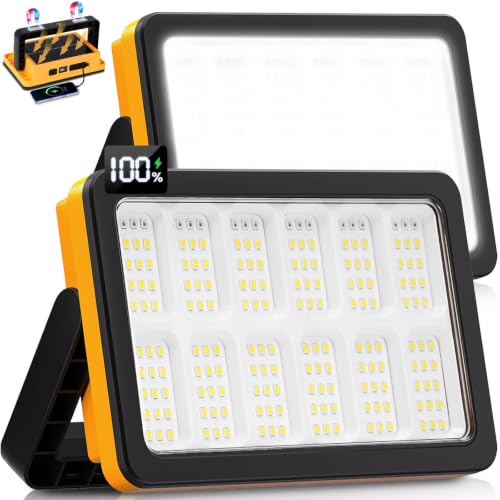
For group camping or basecamp setups, larger solar floodlights provide broad illumination across a wide area. These units typically have detachable panels that can be positioned for optimal sun exposure while the light remains in a central location. They are heavier and bulkier, making them better suited to car camping than backpacking.
Key Features to Compare Before Buying
Not all solar lights are created equal. When evaluating options, focus on these critical specifications to ensure you get a product that meets your needs.
Brightness and Lumens
Brightness is measured in lumens. Entry-level lanterns typically produce 50 to 100 lumens, which is sufficient for ambient lighting inside a tent. Mid-range models offer 100 to 300 lumens, enough for cooking and reading. High-end and premium units can exceed 500 lumens, providing illumination for larger areas. Consider how you plan to use the light: a dim ambient glow for sleeping versus bright task lighting for cooking require different output levels.
Battery Life and Runtime
Runtime depends on battery capacity and brightness setting. Most quality lanterns offer 6 to 12 hours on a single charge at moderate brightness, with some extending to 20 hours or more on low settings. High brightness modes drain the battery faster, often cutting runtime in half. Look for models with multiple brightness settings so you can balance output and duration.
Water and Dust Resistance
Camping exposes gear to moisture, dust, and unexpected weather. An IPX rating indicates the level of protection. IPX4 means splash-resistant, suitable for light rain. IPX6 and above offer protection against heavy rain and splashing. For camping in the rain, a higher IPX rating is strongly recommended. Dust resistance (indicated by the first digit in IP ratings like IP65) is also valuable in arid environments.
Charging Time and Panel Quality
Charging time varies from 4 to 12 hours depending on panel size and sunlight intensity. Monocrystalline panels are generally more efficient than polycrystalline ones, especially in low-light conditions. A larger panel charges faster but adds bulk. For backpacking, prioritize a balance between panel size and weight. For basecamp use, a larger panel is worth the trade-off.
Durability and Build Quality
Look for lights with rugged housings, reinforced hinges, and quality materials. Entry-level models often use plastic that can crack under stress, while mid-range and premium options may feature rubberized coatings, metal components, or shock-resistant designs. If you camp frequently or in harsh environments, investing in a more durable model pays off over time.
Weight and Portability
For backpackers, every ounce counts. Collapsible lanterns typically weigh between 2 and 8 ounces, making them ideal for ultralight setups. Larger floodlights and power bank models can weigh a pound or more, which is acceptable for car camping but impractical for long hikes. If you are backpacking for beginners, start with a lightweight collapsible lantern and upgrade as your needs evolve.
How to Choose the Right Portable Solar Light
Selecting the right light comes down to matching features to your camping style. Here is a practical framework to guide your decision.
- Solo backpackers: Prioritize lightweight collapsible lanterns with moderate brightness (100–200 lumens) and USB backup charging. Durability and water resistance are important if you hike in wet climates.
- Family car campers: Choose larger lanterns or floodlights with higher lumen output and multiple brightness settings. Consider solar string lights for ambiance and a primary lantern for task lighting.
- Group campers: Look for high-output area lights with detachable panels and long runtime. A model with a power bank function can be a bonus for charging devices.
- Winter campers: Cold temperatures reduce battery performance. Choose a light with a high-capacity battery and keep it insulated. Pair it with a power bank for backup. If you camp in extreme cold, review our winter camping gear guide for additional tips.
- Emergency preparedness: A solar light with a power bank function and multiple charging options is valuable for emergency preparedness camping. Store it in your winter emergency kit or car kit.
Practical Tips for Using Portable Solar Lights at Camp
Getting the most out of your solar light requires a bit of planning. These tips will help you maximize performance and extend the life of your gear.
Position Panels for Maximum Sun Exposure
Place solar panels in direct sunlight, ideally facing the sun's path. Avoid shading from trees, tents, or other gear. If your light has a detachable panel, position it in an open area while keeping the light itself where you need it. Rotating the panel throughout the day can improve charging efficiency.
Charge Before You Leave Home
Even if you plan to rely on solar charging, top off your light via USB before departure. This ensures you have a full battery on the first night, especially if you arrive late or the weather is cloudy. It also gives you a chance to verify that the light works properly before you are off-grid.
Use Low Brightness When Possible
Reserve high brightness modes for tasks that require them. Using lower settings extends runtime significantly and reduces the need for frequent recharging. Many lanterns have a dedicated low mode that provides enough light for reading or navigating inside a tent.
Protect Your Light from the Elements
Even water-resistant lights benefit from extra protection during heavy rain or storms. Store your light inside your tent or under a canopy when not in use. Avoid leaving it outside during extended periods of bad weather, as prolonged exposure can degrade seals and materials.
Clean the Solar Panel Regularly
Dust, dirt, and fingerprints reduce panel efficiency. Wipe the panel with a soft, damp cloth before charging. In dusty environments, clean it daily to maintain optimal performance.
Store Properly During Off-Season
When not in use, charge the battery to about 50 percent and store the light in a cool, dry place. Avoid storing it fully discharged or fully charged for long periods, as both can shorten battery life. Recharge every few months to keep the battery healthy.
Maintenance and Troubleshooting
Portable solar lights are low-maintenance, but occasional care will keep them performing well for years.
- Light not turning on: Ensure the battery is charged. If the light has a power button, check that it is not stuck. Some models require a long press to activate.
- Dim output: The battery may be low, or the panel may be dirty. Clean the panel and charge the light fully.
- Slow charging: Check for shading, dirty panels, or cloudy conditions. Position the panel for maximum sun exposure.
- Battery not holding charge: After 2–3 years of regular use, the battery may need replacement. Check if your model has a user-replaceable battery.
If you are camping in remote areas, consider carrying a backup light source such as a camping lantern or headlamp. Redundancy is a core principle of safe camping, especially when camping alone.
Safety Considerations
While solar lights are inherently safer than fuel-based alternatives, a few precautions are worth noting.
- Use lights with warm or adjustable color temperatures to reduce eye strain and avoid disturbing wildlife.
- Avoid leaving lights on all night in areas where they might attract insects or interfere with nocturnal animals.
- Follow quiet hours and campground rules regarding outdoor lighting.
- Keep lights away from flammable materials, especially if they generate any heat (most LED solar lights do not).
- For emergency signaling, a dedicated SOS signal device is more effective than a lantern.
Environmental Benefits of Solar Lighting
Choosing solar lights reduces your reliance on disposable batteries and fossil fuels. Over time, this lowers your environmental footprint and eliminates the waste associated with traditional camping lights. Solar lights also produce no emissions and operate silently, making them ideal for wild camping and dispersed camping where minimal impact is essential.
For campers who value sustainability, solar lighting is a natural extension of the Leave No Trace philosophy. It is a small but meaningful step toward more responsible outdoor recreation.
Frequently Asked Questions
How long do portable solar lights take to charge?
Most portable solar lights fully charge in 4 to 8 hours of direct sunlight. Smaller collapsible lanterns may charge faster, while larger units with bigger batteries can take longer. Overcast conditions will significantly slow charging.
Can portable solar lights work on cloudy days?
Yes, but with reduced efficiency. Solar panels still collect diffused light on cloudy days, though charging may take two to three times longer. Many models also support USB charging as a backup.
Are solar camping lights waterproof?
Water resistance varies by model. Look for an IPX rating (e.g., IPX4 for splash resistance, IPX6 or higher for heavy rain). Not all solar lights are designed for full submersion.
How long do portable solar lights last?
A quality solar light can last several years with proper care. The battery is usually the first component to degrade, typically after 2 to 3 years of regular use. Solar panels themselves can last much longer.
Can I use portable solar lights for backpacking?
Yes. Collapsible solar lanterns are lightweight and pack flat, making them ideal for backpacking. Look for models under 8 ounces with USB backup charging.
Final Thoughts
Portable solar lights have earned their place in modern camping kits. They are convenient, sustainable, and increasingly affordable across all tiers. By understanding how they work and what features matter most, you can choose a light that fits your camping style and enhances every trip.
Whether you are a solo backpacker, a family camper, or someone building an emergency preparedness kit, a quality solar light is a smart investment. Explore our recommended products below to find the right model for your next adventure. For more gear guidance, browse our camping gear guides and camping checklists.