Portable Pots and Pans for Camping: The Complete Buyer's Guide
Everything you need to know about choosing lightweight, durable, and efficient camping cookware for your next outdoor adventure.
Why Your Camping Cookware Matters More Than You Think
When you're miles from the nearest kitchen, the right portable pots and pans for camping can transform a frustrating outdoor meal into a genuinely enjoyable experience. Unlike home cookware, camping pots and pans must balance weight, durability, heat distribution, and packability—all while withstanding the rigors of outdoor use.
Whether you're a weekend car camper or a seasoned backpacker, the cookware you choose directly impacts how well you eat, how much weight you carry, and how much space you have for other essential gear. A well-chosen set of camping cookware can last for years, making it one of the smartest investments in your outdoor kit.
This guide will walk you through every consideration—from material science to nesting design—so you can make an informed decision before you buy. If you're just starting to build your camping kit, you may also want to review our list of camping gear for beginners to ensure you cover all your bases.
Key Features to Evaluate in Camping Cookware
Before comparing specific products, it helps to understand the core attributes that define quality camping pots and pans. These factors will guide your decision regardless of your budget or camping style.
Material: Aluminum, Stainless Steel, or Titanium?
The material of your cookware affects weight, heat conductivity, durability, and cooking performance. Here's how the three main options compare:
- Aluminum: The most common choice for camping cookware. It's lightweight, conducts heat evenly, and is generally the most affordable option. However, bare aluminum can react with acidic foods and may dent under heavy impact. Anodized aluminum offers a harder, non-reactive surface.
- Stainless Steel: Durable, non-reactive, and easy to clean. Stainless steel cookware is heavier than aluminum and conducts heat less evenly, but it can last a lifetime with proper care. Many stainless steel camping sets feature an aluminum core or clad construction to improve heat distribution.
- Titanium: The premium choice for ultralight backpackers. Titanium is incredibly strong, corrosion-resistant, and significantly lighter than both aluminum and steel. It doesn't conduct heat as evenly as aluminum, so you'll need to stir more frequently, but for weight-conscious adventurers, it's often worth the trade-off.
If you're planning cold-weather adventures, your cookware needs may overlap with your winter camping gear—titanium and stainless steel perform better in freezing temperatures than some coated aluminum options.
Weight and Packability
For backpackers, every ounce counts. A nesting cookware set—where pots, pans, and sometimes even bowls and utensils fit inside one another—can dramatically reduce the space your kitchen kit occupies in your pack. Look for sets with folding or detachable handles to further minimize bulk.
Car campers and RV enthusiasts have more flexibility. You can prioritize cooking surface area and sturdiness over ultralight design. If you're building a comprehensive car camping setup, consider pairing your cookware with other essentials from our car camping essentials on a budget guide.
Heat Distribution and Cooking Performance
Even heat distribution prevents hot spots that can burn food and make cleanup difficult. Aluminum and copper-core cookware excel here, while titanium requires more attention. Non-stick coatings can improve cooking ease but may wear over time and require gentle handling.
Durability and Construction
Look for welded or riveted handles, reinforced rims, and quality finishes. Cheaply constructed cookware may warp, crack, or develop loose handles after just a few trips. Brands that offer lifetime warranties typically produce more durable products.
Compatibility with Your Camp Stove
Not all cookware works with all stoves. If you use an induction cooktop (rare in camping but possible in some RVs), you'll need magnetic stainless steel or cast iron. For standard propane or butane camp stoves, any material works. Flat-bottomed pots and pans are essential for stability on most camp stove burners.
If you're still deciding on your cooking setup, our guide to dual-fuel single burner camp stoves can help you choose a stove that pairs well with your cookware.
Quick Tip: Measure your camp stove's burner grate before buying cookware. A pot that's too small may be unstable, while one that's too large can block airflow and reduce stove efficiency.
Types of Portable Pots and Pans for Camping
Camping cookware comes in several configurations, each suited to different camping styles and group sizes.
Nesting Cookware Sets
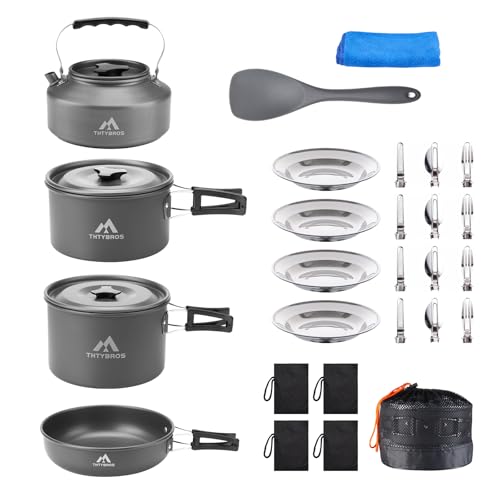
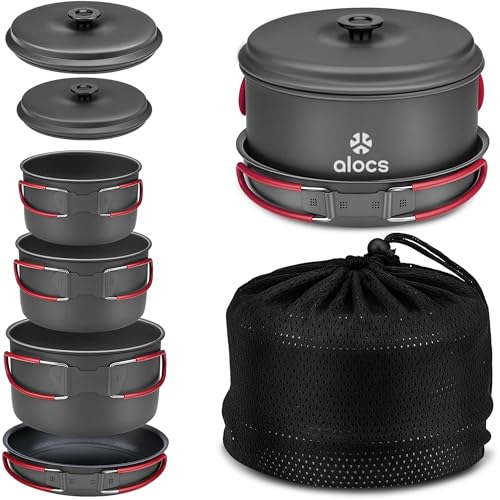
These sets typically include one or two pots, a frying pan, and sometimes lids, bowls, and utensils—all designed to nest inside one another. They're the most popular choice for backpackers and campers who want a complete kit in a compact package.
Single Pot or Pan
If you're a minimalist or already own some cookware, buying individual pieces lets you customize your kit. A single titanium pot with a lid can handle boiling water, rehydrating meals, and simple one-pot dishes. A lightweight frying pan adds versatility for eggs, pancakes, and sautéed vegetables.
For solo adventurers, a single pot may be all you need. Check our solo camping guide for more tips on minimizing your gear without sacrificing comfort.
Multi-Person Cookware Sets
Larger sets designed for families or groups include bigger pots and pans, often with removable handles and nesting storage. These are ideal for family camping trips where you're cooking for three or more people.
Specialty Cookware
Beyond pots and pans, consider accessories like:
- Camping kettles: For boiling water quickly and efficiently.
- Griddles: For cooking multiple items at once.
- Dutch ovens: For baking, stews, and slow-cooked meals (best for car camping due to weight).
- Foil packets: Not cookware per se, but a technique that pairs well with simple pots and pans. See our easy foil packet meals for camping for inspiration.
Camping Cookware Material Comparison
Use this table to quickly compare the three primary materials used in camping cookware. Tier classifications reflect relative market positioning and typical construction quality.
| Material | Weight | Heat Distribution | Durability | Typical Tier | Best For |
|---|---|---|---|---|---|
| Aluminum (bare) | Light | Excellent | Moderate | Entry-Level | Budget-conscious car campers |
| Anodized Aluminum | Light | Excellent | Good | Mid-Range | All-around camping |
| Stainless Steel | Moderate | Fair | Excellent | Mid-Range | Durability-focused campers |
| Titanium | Ultralight | Fair | Excellent | Premium | Backpackers and ultralight enthusiasts |
As a general rule, entry-level aluminum sets are perfectly adequate for occasional car camping. Mid-range anodized or stainless steel options offer a good balance of performance and longevity for regular campers. Premium titanium cookware is best reserved for backpackers who prioritize every ounce.
How to Choose the Right Cookware for Your Camping Style
For Backpackers
Prioritize weight above all else. A titanium or hard-anodized aluminum nesting set weighing under a pound is ideal. Look for pots with volume markings (so you can measure water without a separate cup) and lids that double as strainers or plates.
Pair your cookware with a lightweight stove and consider a portable pots and pans set that includes a mesh storage bag to keep everything organized.
For Car Campers
You have more freedom to prioritize cooking performance and capacity. A larger stainless steel or hard-anodized set with comfortable handles and a sturdy construction will serve you well for years. Consider a set that includes a frying pan with a lid—it's surprisingly versatile.
Don't forget to check our camping checklists to make sure you've packed all your kitchen essentials.
For Families and Groups
Look for sets with larger pots (3 liters or more) and multiple pans. Detachable handles are a nice feature because they make storage easier and allow you to use the same handle across multiple pieces. A family camping checklist can help you plan meals and cookware needs for larger groups.
For Winter Camping
Cold weather affects cookware performance. Titanium and stainless steel are less likely to become brittle in freezing temperatures than some aluminum alloys. A wider pot with a lid retains heat better and melts snow more efficiently. Our winter camping gear guide covers additional considerations for cold-weather cooking.
Care and Maintenance Tips for Camping Cookware
Proper care extends the life of your cookware and ensures safe, enjoyable meals trip after trip.
- Clean promptly: Food residue left on cookware can attract wildlife and make cleanup harder later. If you can't wash immediately, at least scrape and wipe your pots and pans.
- Use the right utensils: Metal utensils can scratch non-stick coatings. Bring silicone, wood, or plastic utensils if your cookware has a non-stick surface.
- Avoid extreme temperature changes: Pouring cold water into a hot pot can warp aluminum and damage some coatings. Let cookware cool slightly before washing.
- Store properly: Use a mesh bag or stuff sack to protect your cookware from scratches and dents during transport. Nesting sets often come with their own storage bag.
- Season cast iron and carbon steel: If you use cast iron or carbon steel camping cookware, season it regularly to maintain its non-stick properties and prevent rust.
Following Leave No Trace principles also means properly disposing of food waste and gray water. Our guide to Leave No Trace principles covers best practices for minimizing your impact while camping.
Frequently Asked Questions About Camping Cookware
What is the best material for camping pots and pans?
There's no single "best" material—it depends on your priorities. Aluminum is lightweight and affordable, stainless steel is durable and non-reactive, and titanium is ultralight but comes at a premium tier. For most campers, hard-anodized aluminum offers the best balance of performance and value.
How many pots and pans do I need for camping?
For solo camping, one pot and one small frying pan are usually sufficient. Couples may want a two-pot set plus a pan. Families and groups should consider a larger set with at least two pots and two pans. Nesting sets are designed to cover these needs efficiently.
Can I use my home cookware for camping?
You can, but home cookware is typically heavier and bulkier than purpose-built camping cookware. It may also be damaged by the uneven heat of a campfire or portable stove. For occasional car camping, it's a viable option; for backpacking, dedicated camping cookware is strongly recommended.
How do I clean camping cookware without a sink?
Use a small amount of biodegradable soap and a scrubber or abrasive pad. Heat a little water in the pot to loosen stubborn residue. For a waterless cleanup, wipe with a paper towel or use a specialized camp wipe. Always pack out all food waste and gray water.
Are non-stick camping pots and pans worth it?
Non-stick coatings make cooking and cleaning easier, especially for eggs and sticky foods. However, they can scratch and wear over time, and some campers prefer to avoid synthetic coatings. If you choose non-stick, use gentle utensils and avoid overheating the pan.
What size pot is best for boiling water for dehydrated meals?
A 1-liter pot is sufficient for one to two people rehydrating backpacking meals. For groups, a 2-liter or larger pot is more efficient. Look for pots with volume markings to make measuring water easier.
Ready to Upgrade Your Camp Kitchen?
Now that you understand what to look for in portable pots and pans for camping, you're ready to choose the right set for your adventures. Browse our recommended camping cookware below and find the perfect match for your next trip.
View Recommended Cookware