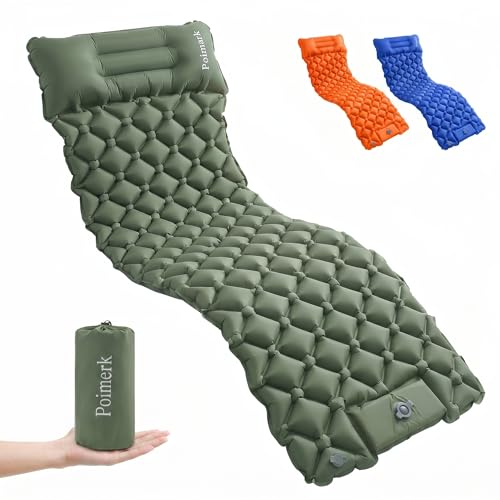
Lightweight Air Mattress for Backpacking: Your Key to Trail Comfort
For backpackers, every ounce counts. A good night's sleep is not a luxury—it's a necessity for performance and enjoyment. A lightweight air mattress is the cornerstone of a successful backpacking sleep system, offering an unparalleled balance of comfort, packability, and weight savings.
When you're miles from the trailhead, the quality of your rest directly impacts your energy levels, mood, and safety. A bulky, heavy sleeping pad can ruin an otherwise perfect adventure. This guide will walk you through everything you need to know to choose the perfect lightweight air mattress for backpacking. We'll explore the critical factors like weight, packed size, warmth (R-value), and comfort, empowering you to make an informed decision for your next ultralight adventure.
Why a Lightweight Air Mattress is Essential for Backpacking
Unlike car camping, where space and weight are less of a concern, backpacking demands gear that is efficient and portable. A dedicated backpacking air mattress, often called a sleeping pad, serves three critical functions: comfort, insulation, and cushioning. It separates you from the hard, uneven ground and, most importantly, from the cold earth that can rapidly drain your body heat. An all-in-one sleeping bag and mattress system can be a convenient alternative, but for maximum versatility and performance, a standalone pad is often the preferred choice for serious backpackers.
Key Factors When Choosing a Backpacking Air Mattress
Selecting the right pad involves balancing several key characteristics. Understanding these will help you find the perfect match for your specific needs and hiking style.
1. Weight and Packed Size
This is the primary concern for backpackers. The lightest models are often inflatable pads that pack down to the size of a water bottle. When every gram matters, an ultralight tent and a minimal sleeping pad are your best friends. Consider the packed size as well; a pad that is light but takes up a huge amount of space in your pack can be just as problematic. A compact, lightweight air mattress is a non-negotiable item on any hiking trip packing list.
2. Warmth (R-Value)
The R-value measures a pad's ability to resist heat flow. The higher the number, the better the insulation. For three-season backpacking, an R-value between 2.0 and 3.5 is generally sufficient. For winter or cold-weather camping, you'll need a pad with an R-value of 4.0 or higher. This is crucial for staying warm in winter conditions. A pad with a high R-value is essential for winter camping gear.
3. Comfort and Thickness
Air mattresses offer superior comfort compared to closed-cell foam pads. Thickness typically ranges from 2 to 4 inches. While a thicker pad is more comfortable, it also adds weight and bulk. Side sleepers often prefer a thicker pad (3 inches or more) to prevent their hips from bottoming out. If you suffer from back pain, a mattress topper for back and neck pain might be a consideration for car camping, but for backpacking, the pad itself must provide the support.
4. Type of Construction
Most lightweight backpacking pads are either air pads or self-inflating pads. Air pads are the lightest and most compact but require inflation (often with a pump sack or your breath). Self-inflating pads are more convenient but are typically heavier and bulkier. For the ultimate in lightweight performance, an air pad is the way to go. Some pads even feature a manual air mattress hand pump integrated into the design, which is a great feature to look for.
How to Choose the Best Lightweight Air Mattress
Your choice should be guided by your adventures. Are you a weekend warrior or a thru-hiker? Do you camp primarily in summer or do you push into shoulder seasons?
- For Ultralight Summer Backpacking: Prioritize a pad with a weight under 1 lb, a packed size smaller than a liter bottle, and an R-value around 2.0. The lightweight air mattress for backpacking you choose here is all about minimizing weight.
- For Three-Season Versatility: Look for a pad with an R-value between 3.0 and 4.5. It should still be relatively light (1-1.5 lbs) and packable. This is the sweet spot for most backpackers.
- For Winter and Extreme Cold: You'll need a high R-value (5.0+) pad. Weight and bulk will increase, but the insulation is non-negotiable for safety and comfort. Pair it with a winter sleeping bag for a complete cold-weather sleep system.
Tips for Using and Maintaining Your Pad
To ensure your investment lasts for many seasons, proper care is essential. Always use a ground sheet or footprint under your tent to protect the pad from punctures. Inflate your pad at the end of the day, allowing the air inside to warm up and expand, which can make it feel firmer. When deflating, open the valve and roll from the foot end to push all the air out. Store your pad unrolled and with the valve open in a cool, dry place to prevent mold and maintain the integrity of the internal foam or insulation.
Final Thoughts: Invest in Your Rest
A high-quality lightweight air mattress is one of the best investments a backpacker can make. It is the difference between a miserable, sleepless night and a restorative rest that prepares you for the next day's journey. By understanding the key metrics of weight, R-value, and comfort, you can confidently select the perfect pad to camp like a pro. For more tips on gearing up, explore our guides on essentials for camping in a tent and preparing for your weekend camping trip.