LED Camping Lights: The Complete Guide to Portable Outdoor Illumination
From lanterns and string lights to headlamps and collapsible lanterns — learn how to choose the right LED camping lights for your tent, campsite, and emergency kit.
SEE RECOMMENDED LIGHTSWhy LED Camping Lights Matter: A reliable light source transforms a campsite after sunset. LED technology delivers bright, efficient, long-lasting illumination with minimal battery drain — making it the standard for modern camping. This guide helps you understand the key specs, types, and features so you can choose with confidence.
Why LED Is the Standard for Camping Lights
LED (Light Emitting Diode) technology has largely replaced incandescent and fluorescent bulbs in camping gear for several practical reasons. LEDs convert most of their energy into light rather than heat, which means they run cooler, last far longer, and consume less battery power. For campers, this translates into lighter gear, fewer battery changes, and more reliable performance in the field.
Modern LED camping lights also offer adjustable brightness, multiple color modes (white, warm, red), and USB-C rechargeability. Many models double as power banks, letting you top up a phone in an emergency. If you are building a broader kit, pairing your lights with other camping gadgets and a reliable camping power bank keeps everything charged and ready.
Types of LED Camping Lights
Different camping scenarios call for different lighting formats. Below are the main categories you will encounter, along with their typical strengths.
LED Camping Lanterns
The classic campsite light. Lanterns provide 360-degree illumination for a table, tent, or group area. Look for collapsible designs for packing and models with warm or adjustable color temperatures for a more natural feel. A good LED camping lantern is the anchor of any lighting setup.
LED String Lights
Perfect for tent interiors, awnings, and creating ambient light around camp. String lights are lightweight, pack small, and often run on USB power or small battery packs. They are ideal for family camping and glamping setups where atmosphere matters.
LED Headlamps
Hands-free lighting for hiking, cooking, setting up tents, and nighttime bathroom trips. A headlamp is arguably the most versatile personal light you can carry. Choose one with a red night-vision mode and a lock function to prevent accidental battery drain in your pack.
Collapsible & Pocket Lights
Ultralight campers favor collapsible lanterns that flatten to the size of a deck of cards. These are excellent backup lights, tent reading lights, or emergency lights in a survival kit. They typically offer a few brightness settings and USB charging.
Solar & Rechargeable Lights
Solar lanterns and USB-rechargeable models reduce dependence on disposable batteries. They pair well with solar chargers for camping and are a smart choice for multi-day trips. Runtime varies widely, so check low-mode specs.
Site & Area Lights
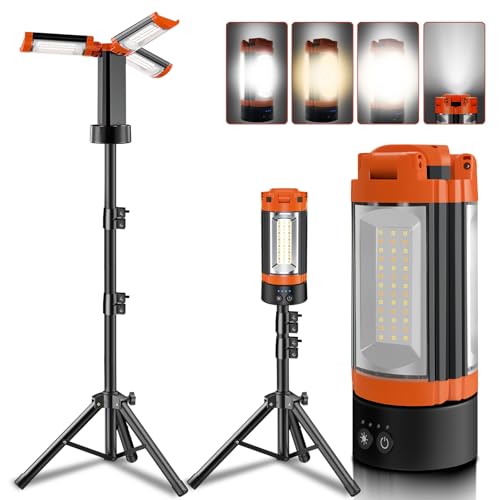
Larger area lights illuminate a whole campsite or picnic table. Some models include tripod mounts or magnetic bases. These are useful for group camping and basecamp setups where a single central light source works best.
Key Features to Compare Before Buying
When comparing LED camping lights, focus on the specs that affect real-world usability rather than marketing claims.
| Feature | What to Look For | Why It Matters |
|---|---|---|
| Brightness (Lumens) | Entry-level: a few hundred lumens. Mid-range: several hundred to ~1,000. Premium: 1,000+ with dimming. | Higher lumens light a larger area, but dimming is more useful for tent use. |
| Runtime | Look for runtime on low, medium, and high modes separately. | Low mode runtime matters most for overnight and emergency use. |
| Battery Type | USB-C rechargeable, AA/AAA, or hybrid (both). | Rechargeable is convenient; hybrid gives backup flexibility. |
| Water Resistance | IPX4 minimum for rain; IPX7 for submersion. | Protects the light in wet weather and accidental drops in water. |
| Color Modes | White, warm white, red, and sometimes green or blue. | Red preserves night vision and attracts fewer insects. |
| Weight & Packed Size | Collapsible designs save space; ultralight models for backpacking. | Critical for backpackers and minimalist campers. |
| Mounting Options | Hanging hook, magnet, tripod thread, clip. | Determines where and how you can position the light. |
| Power Bank Function | USB-out port for charging small devices. | Adds emergency value on longer trips. |
Pros and Cons of LED Camping Lights
Advantages
- Very energy-efficient — long runtime per battery charge
- Durable, shock-resistant, and often water-resistant
- Adjustable brightness and color modes
- Lightweight and compact, especially collapsible models
- Rechargeable options reduce waste and long-term cost
- Cool operation — safe inside tents
Limitations
- Brightness can be overstated by some manufacturers
- Cold weather reduces lithium battery performance
- Very cheap models may have poor water resistance
- Some rechargeable lights cannot swap batteries mid-trip
- Color temperature varies — some LEDs feel harsh
How to Choose the Right LED Camping Lights
Start with your camping style. Car campers and families can prioritize brightness, area coverage, and convenient recharging. Backpackers and thru-hikers should prioritize low weight, compact packed size, and reliable low-mode runtime. Winter campers need lights that tolerate cold and ideally use lithium batteries that perform better in freezing temperatures — consider pairing them with a winter emergency kit.
For tent interiors, a warm-white or adjustable-color lantern is more pleasant than a harsh cool-white beam. For campsite cooking and setup, a headlamp frees both hands. For group areas, a larger area light or a set of string lights creates a comfortable shared space. Many campers carry a combination: a headlamp each, one lantern per tent, and a string light or area light for the main site.
If you are still assembling your overall setup, it helps to think about how your lights fit with the rest of your camping equipment and your camping checklist so nothing is forgotten. And if you camp in wet conditions, choose at least IPX4 and store lights in a dry bag or camping duffel bag.
LED vs Other Camping Light Technologies
LED has largely replaced older options, but it helps to understand the trade-offs. Incandescent and halogen lights are bright but inefficient, hot, and battery-hungry. Fluorescent lanterns were once common but are fragile and slow to warm in cold weather. LED wins on efficiency, durability, and versatility. The main practical differences today are within LED categories: panel-style vs. bulb-style, rechargeable vs. disposable, and flood vs. spot beam patterns. A flood pattern lights a wide area; a spot pattern throws light farther. Many lanterns use a combination or offer adjustable beam patterns.
Safety and Maintenance Tips
LED lights run cool, but batteries are the main safety consideration. Do not leave lithium batteries charging unattended for long periods, and avoid puncturing or crushing battery packs. Store spare batteries in a dry, cool place and away from metal objects that could short terminals. For tent use, hanging lights are safer than placing them on the floor where they can be stepped on. If you use a light with a built-in power bank, keep it out of direct sun while charging. For more safety guidance, see our camping safety section and our emergency preparedness guide.
Frequently Asked Questions
How long do LED camping lights typically last on a single charge?
Runtime varies by brightness setting and battery capacity. Entry-level models often provide several hours on high and up to a full night on low, while premium rechargeable lanterns can run for multiple nights on eco mode. Always check the manufacturer's runtime specifications for each brightness level.
Are LED camping lights waterproof?
Many LED camping lights carry an IPX rating. IPX4 handles splashes and light rain, while IPX7 can survive temporary submersion. For wet climates, look for at least IPX4; for kayaking or canoe trips, IPX7 is preferable.
What is the difference between lumens and watts for camping lights?
Lumens measure light output (brightness), while watts measure power consumption. LED lights produce far more lumens per watt than older incandescent bulbs, so a low-wattage LED can be very bright. Focus on lumens for brightness and battery capacity for runtime.
Can I use LED camping lights as emergency lighting at home?
Yes. Rechargeable LED lanterns and collapsible lights are excellent for power outages. Choose models with long runtime on low, USB-C charging, and a power-bank function so you can also charge a phone during an emergency.
Ready to Light Up Your Campsite?
Browse our recommended LED camping lights below. We have selected options for tents, backpacking, family camping, and emergency preparedness.
VIEW RECOMMENDED LIGHTS