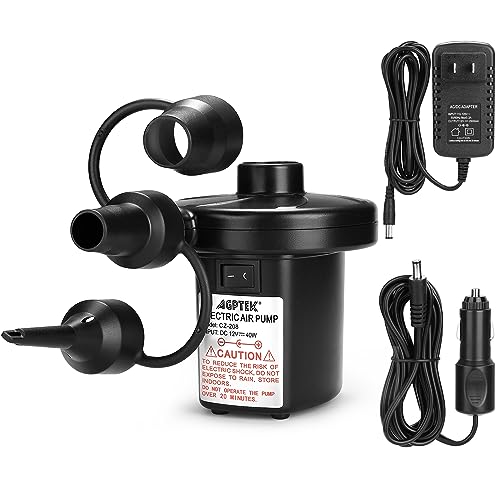
Electric Air Pump for Inflatables: The unsung hero of comfortable camping. Whether you're inflating an air mattress, a pool toy, or a stand-up paddleboard, a reliable electric pump saves time, breath, and frustration. This guide breaks down everything you need to know before choosing one—types, power sources, nozzle compatibility, and the features that matter most for camping and outdoor use.
Why a Dedicated Electric Pump Beats Manual Inflation
Manual hand pumps and lung power work for small inflatables, but when you're dealing with a queen-size air mattress or a 10-person tent with a screened porch, the effort adds up fast. An electric air pump delivers consistent airflow, reduces physical strain, and gets you from unpacking to relaxing in minutes. For campers who value their time and energy—especially after a long hike or a late arrival at the campsite—an electric pump is a practical upgrade.
Beyond convenience, electric pumps are more hygienic than mouth inflation and often come with built-in pressure gauges to prevent over-inflation. That matters for self-inflating pads and sleeping pads for car camping, where the right firmness makes the difference between a good night's sleep and a restless one.
Types of Electric Air Pumps for Inflatables
Not all electric pumps are created equal. The right choice depends on how you camp, what you're inflating, and where you'll be using it. Here's a breakdown of the main categories:
- Rechargeable Battery Pumps: Cordless and portable, ideal for backcountry or car camping. Most use lithium-ion batteries and offer enough power for multiple inflatables on a single charge. Look for models with USB-C charging for convenience.
- 12V DC Car Pumps: Plug into your vehicle's 12V socket. Great for car camping and truck bed camping setups, but limited by cord length and engine access.
- AC Wall Pumps: Designed for home use or campgrounds with electrical hookups. Generally more powerful and faster, but less versatile for remote trips.
- Dual-Power Pumps: Combine AC and DC options, or include a rechargeable battery. These offer the most flexibility for campers who switch between home prep and on-the-go inflation.
For campers who want a single pump that handles everything from blow-up beds to inflatables for SUV camping, a dual-power or high-capacity rechargeable model is the most future-proof choice.
Key Features to Look For in a Camping Air Pump
When comparing electric pumps, focus on these practical specs rather than marketing claims:
- Nozzle Compatibility: Most pumps include multiple nozzle adapters for valves on air mattresses, pool toys, and inflatable furniture. Check that the pump supports the valve type on your gear—especially for queen air mattresses and double-high models.
- Inflation Speed (CFM): Cubic feet per minute measures airflow. Higher CFM means faster inflation, but often at the cost of higher power draw. Mid-range pumps typically balance speed and efficiency well.
- Pressure (PSI): Some inflatables require higher pressure for firmness. If you're inflating paddleboards (not listed, so we skip link) or high-pressure items, look for a pump with a PSI rating that matches your gear.
- Deflation Mode: A pump that can reverse airflow makes packing up quicker and flatter. Essential for tight storage in car camping mattresses and pop-up tents with air mattresses.
- Noise Level: Electric pumps can be loud. If you're camping in a quiet campground, a model with lower decibel ratings is a courtesy to neighbors.
- Build Quality: Look for reinforced hoses, heat-resistant materials, and a sturdy housing. Cheap pumps often overheat during long inflations.
Entry-Level, Mid-Range, and Premium Pumps: What to Expect
Using universal quality descriptors (no prices, no currency), here's how the tiers compare:
| Feature | Entry-Level | Mid-Range | Premium |
|---|---|---|---|
| Inflation Speed | Moderate, best for small items | Good for most camping inflatables | Fast, handles large mattresses and multiple items |
| Nozzle Options | Basic adapters, limited compatibility | Multiple nozzles for common valves | Universal adapter set with storage |
| Power Source | Single source (AC or DC) | Dual-power or rechargeable | Rechargeable with fast-charge, or multi-source |
| Build Quality | Plastic housing, shorter hose | Reinforced hose, better heat dissipation | Metal components, longer hose, carrying case |
| Deflation Mode | Often missing | Usually included | Included with dedicated deflate port |
| Noise Level | Louder | Moderate | Quieter operation |
For occasional campers inflating a single queen air mattress, an entry-level pump may suffice. But if you're outfitting a family trip with 10-person instant cabin tents, multiple sleeping pads, and pool toys, a mid-range or premium pump pays off in reliability and speed.
Camping Scenarios Where an Electric Pump Shines
An electric pump isn't just for air mattresses. Here are real camping situations where it becomes indispensable:
- Base Camp Setup: Inflating multiple pads and pillows for a group? See our base camp setup guide for how a pump fits into a streamlined camp.
- Family Camping: Kids' pool toys, inflatable loungers, and extra mattresses add up. A pump keeps setup stress-free—see our camping with kids tips.
- Winter Camping: Inflating insulated sleeping pads in cold weather is faster with a pump, and you avoid trapping moist breath inside the pad. Read our winter camping gear guide for cold-weather essentials.
- Beach and Lake Trips: Inflatable beach chairs, umbrellas, and floats are easier to manage with a rechargeable pump. Our beach camping guide covers more sand-friendly gear.
- Car and Truck Camping: A 12V pump plugs right into your vehicle, making it perfect for truck bed camping and SUV inflatable beds.
Maintenance and Safety Tips
To get the most from your electric pump, follow these simple practices:
- Store the pump in a dry, dust-free place. Moisture can damage internal components.
- Check the hose and nozzles for cracks before each trip. A loose seal wastes time and energy.
- Don't run the pump continuously for more than 10–15 minutes. Let it cool between large inflatables to prevent overheating.
- If using a rechargeable pump, top off the battery before every camping trip—even if it shows a full charge.
- Keep the pump away from water and damp ground. Use a dry mat or place it on a camp table.
Frequently Asked Questions
Bottom line: An electric air pump for inflatables is a small investment that pays off in comfort and convenience on every camping trip. Match the pump to your power source and inflatable types, and you'll wonder how you ever managed without one. Explore our recommended models below to find the right fit for your camp kit.