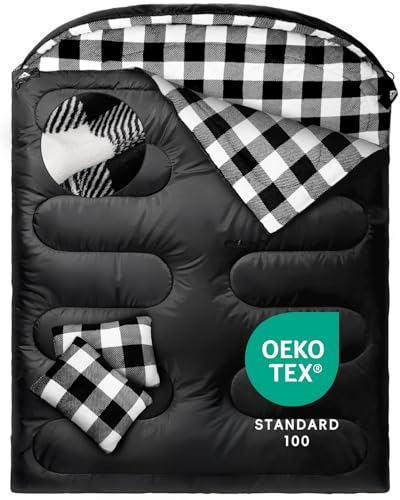
2 Person Sleeping Bag for Cold Weather: The Complete Guide
Everything couples and adventure partners need to choose the perfect double sleeping bag for freezing nights — temperature ratings, insulation types, shapes, and expert cold-weather camping tips.
Sharing a sleeping bag with a partner can be one of the most rewarding ways to camp — you stay warmer, closer, and more comfortable through the night. But when temperatures drop below freezing, a standard double bag simply won't cut it. A 2 person sleeping bag for cold weather is engineered differently: it uses higher-loft insulation, a tighter cut to reduce dead air space, and often a mummy-style hood to trap heat around both sleepers.
If you've been searching for a reliable double bag for winter or high-altitude trips, you're in the right place. This guide breaks down exactly what to look for, how temperature ratings actually work, and which features make the difference between a miserable shivering night and a warm, restorative sleep. For a broader look at winter-ready sleep systems, see our sleeping bag for very cold weather guide.
Why Choose a 2 Person Sleeping Bag for Cold Weather?
Beyond the obvious romantic appeal, a double sleeping bag offers real thermal advantages in cold conditions. Two bodies generate more radiant heat than one, and a shared bag creates a larger microclimate that stabilizes temperature. However, not all double bags are created equal — many are designed for mild summer nights and will fail in freezing weather.
🔥 Shared Warmth
Two people generate significantly more body heat than one, raising the internal temperature of the bag by several degrees.
💤 Less Tossing
A wider shared space reduces the "mummy bag claustrophobia" that keeps some campers awake and restless.
🎒 Packability
One double bag often packs smaller and lighter than two separate cold-weather bags, saving pack space.
💰 Better Value
A single high-quality double bag typically costs less than two equivalent single bags of the same rating.
If you're still deciding between a shared bag and separate sleep systems, our sleeping bag temperature guide explains how ratings compare across styles.
Understanding Temperature Ratings for Cold Weather
The single most important spec on any sleeping bag is its temperature rating — but those numbers can be misleading. Most reputable brands now use the EN/ISO 23537 standard, which provides three ratings: Comfort, Limit, and Extreme. For a 2 person bag, you should focus on the Comfort rating for the colder sleeper and the Limit rating for the warmer sleeper.
| Rating Type | What It Means | Best For |
|---|---|---|
| Comfort | The temperature at which an average woman can sleep comfortably. | Cold sleepers, couples where one person runs cold. |
| Limit | The temperature at which an average man can sleep comfortably. | Warm sleepers, general cold-weather camping. |
| Extreme | Survival rating only — not for comfortable sleep. | Emergency use only. |
Rule of thumb: Choose a bag with a Comfort rating at least 10°F (5°C) lower than the lowest temperature you expect. For freezing nights, that means a Comfort rating of 20°F (-7°C) or lower. For serious winter trips, look at bags rated for 0°F (-18°C) or below. For a deeper dive, see our guide to sleeping bags for 30 degree weather and 20 degree weather.
Insulation: Down vs. Synthetic for Cold Weather
The insulation inside your bag determines how well it traps heat. For cold-weather double bags, you'll choose between down and synthetic fill — each has trade-offs.
| Feature | Down Insulation | Synthetic Insulation |
|---|---|---|
| Warmth-to-Weight | Excellent — highest warmth per ounce. | Good — bulkier and heavier for same warmth. |
| Packability | Compresses very small. | Compresses less; takes more pack space. |
| Moisture Resistance | Poor when wet; loses loft. | Retains warmth even when damp. |
| Durability | Lasts decades with proper care. | Loft degrades over time. |
| Best For | Dry cold, backpacking, ultra-cold trips. | Damp climates, car camping, budget-conscious buyers. |
Down bags with a hydrophobic treatment (like DWR-coated down) offer the best of both worlds for cold, wet conditions. If you're camping in persistent rain or snow, synthetic may be the safer choice. For more on winter-specific gear, visit our winter sleeping bags hub.
Shape and Features That Matter in the Cold
Not all double bags are shaped the same. For cold weather, the shape directly affects how efficiently you retain heat.
Mummy Double Bags
These taper toward the feet and often include a shared hood. They offer the best heat retention because there's less empty space to warm up. However, they can feel restrictive for couples who like to move around.
Semi-Rectangular Double Bags
A compromise between mummy and rectangular. They provide more room than a mummy but still have some taper for thermal efficiency. Many can be unzipped fully to use as a quilt in milder weather.
Rectangular Double Bags
The roomiest option, but the least thermally efficient. Only suitable for cold weather if they have a high fill weight and draft tubes. Often better for car camping than backpacking.
✅ Must-Have Cold Weather Features
- Draft collar around the neck/shoulders
- Draft tube along the zipper
- Insulated hood (or two hoods)
- Anti-snag zipper backing
- Loft-stabilizing baffles (down bags)
- Water-repellent shell fabric
❌ Features to Avoid in Cold Weather
- Cotton lining (absorbs moisture)
- Single-layer construction
- Oversized rectangular cut
- No hood or draft collar
- Cheap, non-baffled down
- Zippers without backing
If you're comparing a double bag to separate sleep systems, our tent vs hammock guide also touches on sleep comfort trade-offs.
The Sleeping Pad Factor: Why Your Bag Isn't Enough
A sleeping bag only insulates from the top and sides — the bottom is compressed and provides almost no warmth. In cold weather, the ground will pull heat out of your body faster than the air. That's why a high-R-value sleeping pad is non-negotiable.
For freezing conditions, look for an R-value of 4 or higher. For serious winter camping, R-6 or above is recommended. If you're using a double bag, consider a double-wide pad or two pads strapped together. Our guide to the 4 inch self inflating sleeping pad covers some excellent cold-weather options.
How to Stay Warm in a 2 Person Sleeping Bag
Even the best bag won't keep you warm if you use it wrong. Here are proven strategies for cold-weather couples camping:
- Start warm. Do a few minutes of light exercise or drink a warm (non-alcoholic) beverage before bed. Never get into a cold bag with cold skin.
- Wear a base layer. Merino wool or synthetic thermals wick moisture and add warmth. Avoid cotton.
- Wear a hat. You lose significant heat through your head. A beanie or balaclava makes a big difference.
- Pre-warm with a hot water bottle. Fill a Nalgene with hot water, seal it tight, and tuck it into the bag 10 minutes before bed.
- Use a sleeping bag liner. A silk or fleece liner adds 5–15°F of warmth and keeps your bag clean. See our sleeping bag liner guide for options.
- Eat a snack. Your body generates heat through digestion. A high-calorie snack before bed helps.
- Seal the bag. Cinch the hood, close draft collars, and make sure no gaps let cold air in.
- Go to the bathroom before bed. A full bladder makes your body work to stay warm.
For more winter-specific skills, check out our how to stay warm in winter article and our winter camping safety guide.
Comparing 2 Person Sleeping Bag Types by Tier
To help you navigate the market without relying on prices, here's a tier-based comparison of what you can expect at different quality levels. This classification is consistent across our site.
| Tier | Insulation | Construction | Best Use Case |
|---|---|---|---|
| Entry-Level | Synthetic, basic fill | Single-layer, simple stitching | Occasional summer/fall camping, mild cold snaps |
| Mid-Range | Better synthetic or 600-700 fill down | Draft collar, zipper tube, semi-rectangular | Regular 3-season camping, light winter use |
| Premium | 800+ fill hydrophobic down | Baffled construction, mummy hood, full draft protection | Serious winter camping, backpacking in cold |
| Luxury | Highest fill power down, custom options | Expedition-grade, welded baffles, water-resistant shell | Extreme cold, professional expeditions |
Remember: mid-range bags often offer the best balance of warmth, weight, and durability for most couples. Only go luxury if you're regularly camping in sub-zero conditions.
Frequently Asked Questions
Can two people share a single sleeping bag in cold weather?
It's possible but not recommended. A single bag is too narrow, and two people compress the insulation, creating cold spots. A dedicated 2 person bag is wider and designed for shared body heat.
What is the best temperature rating for a couple's winter sleeping bag?
For winter camping where temperatures drop to 20°F (-7°C), look for a bag with a Comfort rating of 10°F (-12°C) or lower. For sub-zero conditions, choose a bag rated to -10°F (-23°C) or below.
Are double sleeping bags warmer than two single bags?
Generally yes, because two bodies share a larger thermal envelope. However, if one person is a cold sleeper and the other is warm, separate bags with different ratings may be more practical.
How do I clean a down 2 person sleeping bag?
Use a front-loading washing machine with a gentle, down-specific detergent. Tumble dry on low with clean tennis balls to restore loft. Never dry clean or use fabric softener. For more tips, see our winter camping gear care guide.
What should I look for in a cold weather double bag for backpacking?
Prioritize low weight and small packed size. Look for a down bag with a high fill power, a mummy or semi-rectangular shape, and a weight under 5 lbs. Also ensure it has a compression stuff sack.
Final Thoughts: Choosing Your Cold Weather Double Bag
Investing in a quality 2 person sleeping bag for cold weather transforms winter camping from an endurance test into a genuinely enjoyable experience. Focus on the Comfort temperature rating, choose insulation that matches your climate (down for dry cold, synthetic for wet), and don't neglect your sleeping pad. With the right gear and the tips above, you and your partner can sleep warm and wake up ready for adventure.
For more cold-weather camping knowledge, explore our winter camping section, and don't forget to check our camping checklists before your next trip.