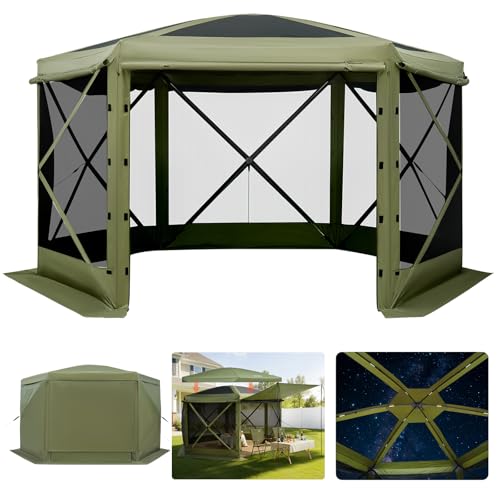
12 x 12 Pop Up Canopy with Screen: The Complete Buyer's Guide
Everything you need to know about choosing, using, and enjoying a 12x12 pop up canopy with screen walls. From mesh enclosure benefits to setup tips and weather resistance, this guide helps you make a confident decision.
Why a 12x12 screened canopy? A 12x12 pop up canopy with screen delivers generous shade and reliable insect protection in one portable package. The screen walls create a breathable, bug-free zone that's perfect for camping, backyard gatherings, picnics, and outdoor events. Unlike smaller canopies, the 12x12 footprint provides ample room for seating, tables, and gear without feeling cramped. Whether you're planning a family camping trip or simply want a comfortable outdoor retreat at home, a screened pop up canopy is a versatile investment that pays off season after season.
What Is a 12x12 Pop Up Canopy with Screen?
A 12x12 pop up canopy with screen is a freestanding shelter that combines a 12-foot by 12-foot canopy top with mesh screen walls. The frame is typically made from steel or aluminum and features a pop-up or instant setup mechanism that allows one or two people to deploy it in minutes. The screen walls—usually made from fine polyester mesh—keep mosquitoes, flies, and other insects out while allowing airflow to pass through. Some models include zippered doors for easy entry and exit, while others have removable screen panels that convert the canopy into a standard open-air shelter.
The 12x12 size is a popular middle ground: it's large enough to cover a picnic table and several chairs, yet compact enough to transport in a carry bag. Many campers pair a screened canopy with their main tent to create a dedicated bug-free living space, while tailgaters and event organizers use them as outdoor staging areas. If you're exploring other canopy configurations, you might also consider a 12 x 12 pop up canopy with side walls for added privacy and wind protection, or a 12 ft x 12 ft pop up canopy if you prefer a simpler open design. For those who need a larger footprint, a 12 x 12 pop up canopy tent offers similar screen options with room to spare.
Key Features to Look For
Screen Wall Material
Look for fine-gauge polyester or nylon mesh that blocks even tiny insects like no-see-ums while maintaining visibility and airflow. Mid-range and premium models often use tighter weaves for superior protection.
Frame Construction
Steel frames are durable and handle wind well but are heavier. Aluminum frames are lighter and rust-resistant, making them ideal for frequent transport. Entry-level canopies typically use thinner steel, while high-end models feature reinforced aluminum or powder-coated steel.
Canopy Top Fabric
Look for 150D to 300D polyester or oxford fabric with a PU or silver coating for UV protection and water resistance. Premium canopies often include a 500D fabric with taped seams for superior weather performance.
Setup Mechanism
Pop-up or instant frames use pre-attached poles and a central hub that expands with minimal effort. Mid-range models typically offer smoother deployment than entry-level options, while top-tier canopies may include one-push or hydraulic assist systems.
Height Adjustability
Most 12x12 canopies offer 3 to 4 height settings, allowing you to raise the canopy for standing room or lower it for better wind resistance. Look for push-button or pin-lock adjustments for easy changes.
Ventilation & Airflow
Screen walls provide excellent cross-ventilation, but some canopies include roof vents or mesh panels in the top for added airflow. This is especially valuable in hot, humid climates where heat buildup is a concern.
Portability & Carry Bag
A wheeled carry bag makes transport significantly easier, especially for heavier steel-frame models. Look for padded handles and reinforced stitching on the bag for durability.
Weather Resistance
While no pop-up canopy is designed for extreme weather, better models include water-repellent tops, wind vents, and sturdy stakes or tie-down points. Always use guy lines and weights in windy conditions.
Quality Tiers: Entry-Level, Mid-Range, and Premium
Understanding the differences between quality tiers helps you choose a canopy that matches your usage frequency and expectations. Here's how the three main tiers compare:
| Feature | Entry-Level | Mid-Range | Premium |
|---|---|---|---|
| Frame Material | Thin steel or basic aluminum | Powder-coated steel or reinforced aluminum | Heavy-duty aluminum or aircraft-grade steel |
| Canopy Fabric | 150D polyester, basic UV coating | 200D–300D oxford, PU coating | 500D+ fabric, silver or titanium coating |
| Screen Mesh | Standard polyester mesh | Fine-gauge no-see-um mesh | Premium no-see-um mesh with reinforced edges |
| Setup Mechanism | Basic pop-up, stiff joints | Smooth pop-up with hub lock | One-push or assisted deployment |
| Height Settings | 2–3 positions | 3–4 positions with push-button | 4+ positions with easy-lock system |
| Carry Bag | Basic nylon bag | Wheeled bag with reinforced base | Heavy-duty wheeled bag with padded handles |
| Best For | Occasional backyard use | Regular camping and events | Frequent use and demanding conditions |
Editor's note: Mid-range models typically offer the best balance of durability, ease of use, and features for most campers. Entry-level canopies are fine for occasional use, but if you plan to camp regularly or face wind and rain, investing in a mid-range or premium model will pay off in the long run. For a step up in privacy and weather protection, a heavy duty pop up canopy 12x12 with sides is worth considering.
Benefits of a Screened 12x12 Canopy
- Insect protection: Screen walls keep mosquitoes, flies, and other pests out, making your outdoor space comfortable day and night.
- Breathable shade: Unlike solid walls, mesh screens allow air to circulate, reducing heat buildup inside the canopy.
- Versatile configuration: Many models let you remove or roll up screen panels, converting the canopy into an open shelter when bugs aren't a concern.
- Generous space: A 12x12 footprint comfortably fits a picnic table, chairs, and gear, making it ideal for families and groups.
- Quick setup: Pop-up frames deploy in minutes, so you spend less time setting up and more time enjoying the outdoors.
- Multi-purpose use: Use it for camping, backyard parties, tailgating, beach trips, and farmers markets. Pair it with a camping loveseat or camp furniture for a complete outdoor living setup.
- UV protection: Quality canopy tops block harmful UV rays, protecting you and your family from sunburn.
- Privacy: Screen walls offer some visual privacy while still allowing you to see out and enjoy the view.
How to Choose the Right 12x12 Pop Up Canopy with Screen
Choosing the right canopy comes down to understanding your specific needs. Here's a step-by-step approach:
1. Assess Your Usage Frequency
If you camp a few times a year, an entry-level or mid-range canopy will serve you well. If you're a weekend warrior or use your canopy for business purposes, invest in a mid-range or premium model with a sturdier frame and better fabric. For those who camp in windy or rainy conditions, a heavy duty pop up canopy 10x20 with sidewalls offers even more coverage and protection.
2. Consider Your Climate
In hot, humid areas, prioritize airflow and UV protection. In rainy regions, look for water-repellent fabric and taped seams. In windy areas, choose a canopy with a sturdy frame, wind vents, and strong tie-down points. If you camp in cold weather, a 12 x 12 pop up canopy with side walls can help retain heat while still offering screen options.
3. Check the Screen Mesh Quality
Not all screen mesh is created equal. Fine-gauge no-see-um mesh is essential if you camp in areas with tiny biting insects. Mid-range and premium canopies typically use tighter weaves that block even the smallest pests. If you're mostly dealing with mosquitoes and flies, standard mesh is usually sufficient.
4. Evaluate Portability
Steel-frame canopies are heavier but more durable. Aluminum-frame canopies are lighter and easier to transport, making them ideal for camping trips where you need to carry gear. If you'll be moving your canopy frequently, look for a wheeled carry bag and a lightweight frame. For a smaller option that's easier to transport, consider a 10 x 10 pop up canopy with screen.
5. Look for Setup Convenience
Pop-up canopies are designed for quick setup, but some are easier to deploy than others. Mid-range and premium models often feature smoother hub systems and fewer pinch points. If you'll be setting up alone, look for a canopy that's designed for one-person deployment.
6. Don't Forget Accessories
Weights, stakes, and guy lines are essential for securing your canopy in windy conditions. Some canopies come with these accessories included, while others require separate purchase. A 10 x 10 pop up canopy replacement top is also worth considering if you want to extend the life of your canopy or switch between screen and solid configurations.
Setup Tips for Your 12x12 Screened Canopy
- Choose a level surface: Set up on flat ground to prevent the frame from twisting or tipping. If you're on a slope, adjust the legs to compensate.
- Use two people for setup: While many canopies can be deployed solo, having a second person makes the process faster and safer, especially in windy conditions.
- Secure the frame: Always stake down the legs and use guy lines if wind is expected. Canopy weights are also effective for hard surfaces like concrete or decks.
- Orient the screen walls: Position the canopy so the screen walls face the direction of the wind. This reduces wind load on the frame and keeps the interior comfortable.
- Adjust height: Raise the canopy to the desired height before attaching screen walls. This makes it easier to reach the frame and ensures the walls fit properly.
- Use sandbags or weights: If you're setting up on a hard surface, sandbags or canopy weights are essential. Never rely on stakes alone in windy conditions.
- Practice at home: Set up your canopy at home before your trip. This helps you identify any missing parts and gives you confidence for quick deployment at the campsite.
- Store properly: After use, clean and dry the canopy thoroughly before storing it. This prevents mold and extends the life of the fabric and mesh.
Maintenance and Care
Proper maintenance ensures your 12x12 pop up canopy with screen lasts for many seasons. Here are key care tips:
- Clean after every use: Wipe down the frame and fabric with a damp cloth. For deeper cleaning, use mild soap and water. Avoid harsh chemicals that can damage the fabric coating.
- Dry completely before storing: Moisture is the enemy of canopy fabric and mesh. Allow the canopy to air dry completely before folding and storing it.
- Inspect for damage: Check the frame for bent poles, the fabric for tears, and the mesh for holes. Repair minor damage promptly to prevent it from worsening.
- Store in a cool, dry place: Avoid storing your canopy in extreme heat or cold, which can degrade the fabric and mesh over time.
- Use a canopy cover: If you store your canopy outdoors, use a protective cover to keep dust, debris, and moisture out.
- Lubricate the joints: A small amount of silicone spray on the frame joints keeps the pop-up mechanism working smoothly.
Safety Considerations
While a 12x12 pop up canopy with screen is generally safe, there are important precautions to keep in mind:
- Never use in high winds: Pop-up canopies are not designed for extreme weather. If winds exceed 20–25 mph, take the canopy down to prevent damage or injury.
- Don't leave unattended: A sudden gust of wind can turn an unsecured canopy into a hazard. Always secure your canopy and never leave it unattended in windy conditions.
- Use stakes and weights: Even on calm days, secure your canopy with stakes or weights. This prevents tipping and keeps the canopy in place.
- Keep away from fire: Canopy fabric is flammable. Keep the canopy away from campfires, grills, and other open flames.
- Check for overhead hazards: Before setting up, look for power lines, tree branches, and other overhead hazards. Ensure the canopy has clearance.
- Don't hang heavy items: While some canopies have hooks or loops, avoid hanging heavy items that could damage the frame or cause tipping.
- Practice fire safety: If you're using a campfire or stove near your canopy, follow campfire safety rules and keep a fire extinguisher nearby.
Frequently Asked Questions
Can a 12x12 pop up canopy with screen be used in rain?
Most quality canopies are water-resistant, not waterproof. Light rain is usually fine, but heavy or prolonged rain can cause water to pool on the canopy top and leak through seams. If you expect rain, look for a canopy with taped seams and a water-repellent coating, and always angle the canopy slightly to allow water to run off.
How many people does a 12x12 canopy fit?
A 12x12 canopy provides 144 square feet of coverage, which comfortably fits 6–8 people seated around a picnic table, or 10–12 people standing. It's a great size for family camping, backyard parties, and small events.
Are screen walls removable?
Many 12x12 canopies with screen walls feature removable or roll-up panels, allowing you to convert the canopy into an open shelter. This versatility is a major advantage, as it lets you adapt the canopy to different conditions and activities.
Can I use a 12x12 canopy on a beach?
Yes, but you'll need to secure it properly. Sand stakes or sandbags are essential, as regular stakes won't hold in loose sand. Also, be mindful of wind—beach environments can be breezy, so choose a calm day or use extra guy lines. For beach-specific options, consider a beach shade canopy that blows in the wind or a sun shade for beach that blows in the wind designed for sandy, windy conditions.
How long does a 12x12 pop up canopy last?
With proper care, an entry-level canopy may last 1–2 seasons, a mid-range canopy 3–5 seasons, and a premium canopy 5+ seasons. Storage conditions, usage frequency, and weather exposure all affect longevity. Regular cleaning and proper storage significantly extend the life of your canopy.
What's the difference between a 12x12 canopy and a 10x10 canopy?
The main difference is size. A 12x12 canopy offers 144 square feet of coverage, while a 10x10 offers 100 square feet. The 12x12 provides more room for tables, chairs, and gear, making it better for larger groups. However, the 10x10 is lighter and easier to transport. If you're torn between the two, consider a 10 x 10 pop up canopy with screen as a more portable alternative.
Can I set up a 12x12 canopy by myself?
Many pop-up canopies are designed for one-person setup, but a 12x12 canopy can be awkward to deploy alone due to its size. If you'll be setting up solo, look for a canopy with a smooth hub system and practice at home first. Having a second person makes the process much easier, especially in windy conditions.
Do I need to buy accessories separately?
Some canopies include stakes, guy lines, and a carry bag, while others sell these separately. Weights and sandbags are almost always sold separately. Before you buy, check what's included so you can budget for any additional accessories you'll need.
Ready to Find Your Perfect 12x12 Screened Canopy?
Browse our recommended selection of top-rated 12x12 pop up canopies with screen walls. Whether you're a casual camper or a seasoned outdoor enthusiast, there's a canopy that fits your needs.
View Recommended Canopies