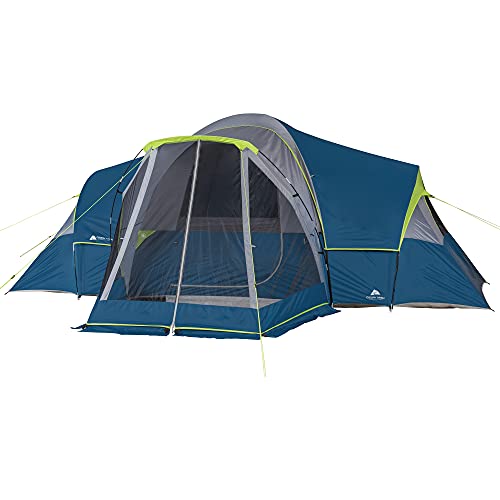
10 Person Dome Tent with Screen Porch
The ultimate basecamp for large families and groups. Discover how a screened porch transforms your camping experience — keeping bugs out, letting breezes in, and giving everyone room to spread out.
EXPLORE THE GUIDEWhy a 10-person dome tent with screen porch? It solves the biggest problem with large-group camping: keeping everyone comfortable without feeling cramped. The screen porch acts as a transition zone between the great outdoors and your sleeping quarters — a place for muddy boots, board games, morning coffee, and bug-free evenings. This guide breaks down everything you need to know before choosing your tent.
Why a 10-Person Dome Tent with Screen Porch?
Camping with a large group is a completely different experience from solo or couple trips. You need space for sleeping bags, gear, kids, pets, and all the little essentials that make outdoor living comfortable. A standard 10-person dome tent gives you the sleeping capacity, but adding a screen porch takes it to another level. The porch becomes your outdoor living room — a place to relax without being swarmed by mosquitoes or exposed to sudden rain showers.
Dome tents are popular for good reason. Their curved architecture sheds wind and rain effectively, and many modern dome models use color-coded poles and clip systems that make setup surprisingly straightforward. For families who want a home away from home, a 10 person dome tent with screen porch hits the sweet spot between space, weather protection, and livability.
When you're camping with a group, having a dedicated screened area means you can leave the main tent door open for ventilation without inviting every insect in the forest. It also gives you a dry place to sit out a passing storm. If you're new to group camping, our first time camping tips can help you plan beyond just the tent.
Key Features to Evaluate
Sleeping Capacity & Floor Space
A 10-person rating typically means the tent can sleep ten people shoulder-to-shoulder on sleeping bags. Real-world comfort is different. Look for at least 140–160 square feet of floor space if you want room for gear and air mattresses. The screen porch adds separate square footage that doesn't count toward sleeping capacity.
Screen Porch Size & Function
The porch can range from a small vestibule to a full second room. Larger porches often have their own floor and sometimes a second door. Consider whether you want the porch primarily for gear storage, bug-free lounging, or both. A full-coverage porch with mesh walls and a rainfly is the most versatile.
Peak Height & Stand-Up Room
Large dome tents often have center heights between 6 and 7 feet. This matters for changing clothes and moving around without stooping. If standing height is a priority, look for models marketed as "cabin-style" or "modified dome" — but be aware that taller tents can catch more wind.
Weather Protection
Check the rainfly coverage — a full-coverage fly that extends over the porch is ideal. Taped seams, a bathtub-style floor, and waterproof coatings (measured in millimeters) all contribute to staying dry. Dome shapes handle wind better than cabin tents, but stakes and guylines still matter.
Ventilation & Condensation
Ten people produce a lot of moisture. Mesh walls, ceiling vents, and a well-designed rainfly that allows airflow are critical. The screen porch also helps by giving you an alternative to sealing up the main tent completely. Look for low vents and high vents to create cross-flow.
Setup Complexity
Dome tents with color-coded poles and clips are generally easier to pitch than large cabin tents. Some 10-person models use three or more poles and can be a two-person job in wind. If you frequently camp alone or with younger children, consider an instant-setup or pop-up style — though these are less common in the 10-person dome category.
Dome vs. Cabin vs. Instant: Which Style Fits You?
Not all 10-person tents are built the same. The dome shape is one option among several. Here's how the main styles compare for large-group camping:
| Feature | Dome Tent | Cabin Tent | Instant Tent |
|---|---|---|---|
| Wind resistance | Excellent — curved walls shed wind | Moderate — vertical walls catch wind | Good — depends on pole design |
| Stand-up height | Often 6–7 ft at center | Usually 6.5–7.5 ft throughout | Varies, often 6–7 ft |
| Setup time | Moderate — 10–20 minutes | Longer — more poles and pieces | Fast — often under 5 minutes |
| Screen porch options | Common — many models include one | Less common but available | Growing — some models offer porches |
| Packed size | Large but manageable | Usually bulkier and heavier | Long and heavy due to pre-attached poles |
| Best for | Families wanting weather protection + porch | Groups prioritizing interior room | Campers who value speed above all |
If you're specifically interested in the convenience of an instant tent but still want a screened area, look at 10 person instant tent with screen room options. For those who want a more traditional dome but with extra living space, a 10 person modified dome tent with screen porch combines the best of both worlds.
Pros and Cons of a 10-Person Dome with Screen Porch
What We Love
- Separate screened area keeps bugs out of the main sleeping space
- Dome shape handles wind and rain better than cabin tents
- Plenty of room for air mattresses, cots, and gear
- Screen porch doubles as a mudroom, dining area, or play space
- Many models offer excellent ventilation for hot-weather camping
- Creates a sense of "home base" for large groups
Things to Consider
- Heavier and bulkier than smaller tents — not ideal for backpacking
- Requires a large, level campsite footprint
- Setup can be challenging in strong wind without help
- More interior space means more area to keep clean and dry
- Higher profile tents can be harder to keep warm in cold weather
- Not all "10-person" tents actually fit 10 sleeping bags comfortably with gear
For cold-weather trips, a 10-person dome tent with screen porch is usually a three-season shelter. If you camp in freezing conditions, you'll want to look at winter tents and review our winter camping gear guide for insulation strategies.
How to Choose the Right 10-Person Dome Tent
Start with your actual group size. A tent rated for 10 people fits 10 sleeping bags side by side, but if you're bringing air mattresses or cots, that number drops fast. A queen air mattress takes up the space of roughly two sleeping bags. If you plan to use large mattresses, consider a 10-person tent as a comfortable option for 4–6 people with gear, or look at 12 person tent with screened in porch for even more room.
Next, think about your typical camping environment. If you camp in rainy regions, prioritize a full-coverage rainfly and a bathtub floor. If you camp in hot, humid areas, ventilation and the screen porch become even more valuable. If you camp in open, windy areas, a lower-profile dome with sturdy poles is better than a tall cabin tent.
Setup is another key factor. Some 10-person dome tents use a simple three-pole design that two people can pitch in 10 minutes. Others have multiple rooms and a more complex pole structure. Read reviews that specifically mention setup difficulty, especially if you'll be setting up without a partner. If easy setup is your top priority, browse our easiest tent to set up for family recommendations.
Finally, consider the porch design. Some porches are fully enclosed with mesh and a rainfly, while others are more like open awnings. A fully enclosed screen porch gives you the most usable space in buggy or rainy conditions. If you want a tent you can stand up in throughout, check out camping tents you can stand up in.
Setup, Care, and Maintenance Tips
Pitching a large dome tent is easier when you have a system. Lay out the footprint first, then assemble the poles according to the color coding. Feed poles through sleeves or clip them in place before raising the tent. With two people, one can hold the tent up while the other attaches the rainfly. Always stake out the corners before adding the rainfly — this keeps the tent from shifting in the wind.
After your trip, clean and dry the tent thoroughly before storing it. Even a small amount of moisture can lead to mildew, which damages waterproof coatings and creates odors. Use a mild soap and water solution for spot cleaning, and avoid harsh chemicals. Store the tent loosely in a cool, dry place — not compressed in its stuff sack for long periods.
If you're camping in rainy conditions, our guide on camping in the rain in a tent covers additional strategies for staying dry. And if you're new to tent camping in general, tips for tent camping in the rain will help you avoid common mistakes.
Frequently Asked Questions
Final Thoughts
A 10-person dome tent with screen porch is one of the most practical investments for family and group camping. It gives you the sleeping space you need, the weather protection you want, and the extra living area that makes camping feel less like roughing it and more like a comfortable outdoor retreat. The screen porch, in particular, is a game-changer — it keeps bugs away, provides shade, and gives everyone a place to gather without tracking dirt into the sleeping area.
When choosing your tent, focus on floor dimensions, peak height, rainfly coverage, and setup method. Read reviews from campers who have used the tent in conditions similar to yours. And don't forget the accessories: a footprint, extra stakes, and a seam sealer can extend the life of your tent and improve its performance. For a complete rundown of what you'll need, see our list of camping supplies for tent camping.
Whether you're planning a weekend getaway with extended family or a basecamp for a week-long adventure, the right 10-person dome tent with screen porch will serve you well for years. Take your time, compare your options, and get ready to enjoy the outdoors with everyone you love.