RV Electrical Hookup: The Complete Guide
Master RV electrical hookups – 30‑amp vs 50‑amp, adapters, surge protection, extension cords, and safety tips. Power your home on wheels with confidence.
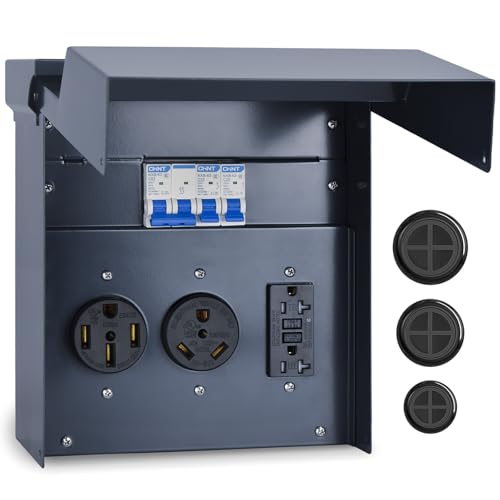
Shop Top-Rated RV Power Gear →Whether you're a full-time RVer or a weekend warrior, understanding your RV electrical hookup is non-negotiable. A proper connection keeps your lights, fridge, AC, and appliances running smoothly — and prevents costly damage. This guide covers everything from 30‑amp vs 50‑amp service to surge protectors, extension cords, and adapter safety. We'll also help you choose the right gear for your RV campsite or RV resort campground.
30‑Amp vs 50‑Amp: Which One Do You Need?
30‑Amp Service (120V)
- Common in smaller RVs, travel trailers, and pop-ups
- Powers one AC unit, fridge, converter, and basic outlets
- NEMA TT-30 plug (3-prong)
- Maximum load: ~3,600 watts
Best for: Class B vans, teardrops, mini travel trailers.
50‑Amp Service (120/240V)
- Larger RVs, fifth wheels, luxury coaches
- Runs two AC units, washer/dryer, electric stovetop
- NEMA 14-50 plug (4-prong)
- Maximum load: ~12,000 watts (two legs of 50A each)
Best for: luxury travel trailers, bunkhouse models, and big rigs.
Adapters, Cords & Connectors
🔌 Essential adapters every RVer should own:
- 30‑amp to 15‑amp adapter – for home garage or standard outlet (use sparingly, limited load)
- 50‑amp to 30‑amp adapter – lets you plug a 30‑amp RV into a 50‑amp pedestal (safe, but you'll only draw 30A)
- 30‑amp to 50‑amp adapter – allows a 50‑amp RV to connect to a 30‑amp pedestal (you'll be limited to 30A, may trip breaker if overused)
- Dogbone adapters (locking vs straight blade) – always use heavy-duty, UL-listed models
Always carry a quality RV extension cord (at least 25 ft, 10-gauge for 30A, 6-gauge for 50A). Never use household extension cords – they're not rated for continuous RV loads.
Surge Protection & Electrical Safety
A surge protector / EMS (electrical management system) is the single most important investment for your RV's electrical health. Campground power can be unstable – low voltage, high voltage, or reverse polarity can fry your converter, AC, and appliances.
- Low voltage protection: shuts off power if voltage drops below 104V
- High voltage protection: cuts power above 132V
- Reverse polarity & open ground detection – prevents dangerous mis-wiring
- Hardwired units are permanent; portable units are plug-and-play
For RV park stays, check pedestal condition before plugging in. If you're overnight RV parking at a friend's house, always use a proper adapter and verify the outlet is grounded.
Extension Cords & Power Management
Choosing the right cord
- 30A: 10‑gauge, 25ft or 50ft (keep as short as possible)
- 50A: 6‑gauge, 25ft or 50ft (heavy-duty, twist-lock)
- Look for copper conductors, not aluminum
- Weather-resistant jacket (UV/water proof)
Load management tips
- Don't run AC and microwave simultaneously on 30A
- Use energy-monitoring plugs to track usage
- Upgrade to portable power stations for off-grid days
- Consider solar chargers to reduce pedestal dependency
RV Wiring Basics & Troubleshooting
Most RVs use a 120V AC system (for outlets, appliances) and a 12V DC system (lights, water pump, furnace controls). The converter changes 120V to 12V to charge your battery. A faulty hookup can damage both systems.
- No power at outlets? Check the pedestal breaker, then your RV's main breaker.
- Lights flicker? Could be loose connection at the pedestal or worn cord.
- GFCI keeps tripping? Moisture in outdoor outlets – use weatherproof covers.
- Always carry a multimeter to test pedestal voltage before plugging in.
If you're planning extended boondocking, a portable power station plus solar charging can reduce your need for hookups – but for most state park and campground stays, a reliable hookup is still the backbone of your RV experience.
📍 Related: Find RV campsites · RV resort stays · Overnight RV parking · Budget-friendly RV parks
✅ Ready to plug in? Choose the right adapter, always use a surge protector, and keep your cords clean and dry. A proper hookup means a worry‑free camping trip.