
Roll Up Tonneau Cover Guide
Find the perfect truck bed cover for your needs. From soft vinyl to hard roll-up and hybrid options, we help you decide with confidence.
Shop Top PicksWhat Is a Roll Up Tonneau Cover?
A roll up tonneau cover is a flexible truck bed cover that rolls up toward the cab, giving you full access to your truck bed in seconds. It’s one of the most popular types of tonneau covers because it balances protection, convenience, and affordability.
Unlike hard folding covers, a roll-up cover stores compactly and doesn't block your rear window when fully open. It's ideal for truck owners who frequently haul oversized cargo but still want to keep their gear protected from weather and theft when the bed is closed.
🚀 Full Bed Access
Rolls up completely to use 100% of your truck bed. Great for hauling furniture, bikes, or large equipment.
💧 Weather Protection
Heavy-duty vinyl or canvas materials resist rain, snow, and UV rays, keeping cargo dry and clean.
🔧 Easy Installation
Most models use clamp-on systems that require no drilling—install in under 30 minutes with basic hand tools.
🔒 Basic Security
While not as secure as hard covers, many roll-up models integrate with your tailgate lock for peace of mind.
Types of Roll Up Tonneau Covers
Not all roll-up covers are the same. Here’s how to choose between the three main types.
| Type | Material | Security | Price Range | Best For |
|---|---|---|---|---|
| Soft Vinyl Roll-Up | 24oz marine-grade vinyl | Basic (tailgate lock) | $200–$600 | Budget-conscious, daily drivers |
| Hard Roll-Up | Aluminum slats + fabric | High (slash-resistant) | $1,000–$2,000+ | Premium protection & security |
| Hybrid (Canvas with Aluminum) | Multi-layer woven fabric | Medium-High | $800–$1,500 | Durability + sleek look |
Why Choose a Roll Up Tonneau Cover?
If you're comparing options, here's why a roll-up tonneau cover might be the right choice for your truck:
- Versatility: Roll it up when you need the full bed, unroll it for instant protection.
- Fuel Economy: Reduces aerodynamic drag, which can improve gas mileage on highways.
- No-Drill Installation: Most models use clamps that won't damage your truck bed.
- Low Profile: Sits flush with bed rails for a clean, factory look.
- Lightweight: Easy to remove and store when not in use.
How to Choose the Right Roll Up Cover
Before buying, consider these key factors to make sure you get the best cover for your truck and lifestyle.
1. Truck Bed Fitment
Measure your truck bed length accurately. Common sizes are 5.5 ft, 5.8 ft, 6.5 ft, and 8 ft. Covers are model-specific, so check compatibility with your truck's make, model, and year. Some covers won't fit trucks with factory bed liners, storage boxes, or utility tracks, so always read the fitment notes [citation:1][citation:4].
For trucks with unique bed features, like the Chevy Silverado CarbonPro bed, make sure to verify if the cover is compatible to avoid issues during installation [citation:1].
2. Material & Weather Resistance
Soft roll-up covers typically use 24 oz vinyl with marine-grade stitching, which handles rain and sun well [citation:7]. In extreme cold, vinyl can become stiff and may need tension adjustments [citation:8].
If you live in a harsh climate, consider a hybrid or hard roll-up cover. The Truxedo Sentry CT, for example, uses a 5-layer woven fabric with aluminum slats that resists cuts and performs well in all temperatures [citation:6].
3. Installation & Ease of Use
Almost all roll-up covers use a clamp-on system that requires no drilling. Installation should take 15–30 minutes [citation:3][citation:7]. Features like the WeatherTech AutoLatch II system allow for one-pull release, making it effortless to open from either side of the bed [citation:3].
4. Security Level
Soft vinyl covers provide basic protection—they keep your gear out of sight and deter casual theft. However, a determined thief can cut through vinyl with a knife. For higher security, opt for a hard roll-up cover with aluminum slats that is slash-resistant [citation:6].
5. Budget
Roll-up covers range from $200 to $2,000+. The most popular covers are around $300–$500 and offer excellent value for most truck owners [citation:2][citation:7]. If you're looking for premium features like integrated locks and impact resistance, expect to pay $1,000 or more.
Top Rated Roll Up Tonneau Covers
⚠️ AFFILIATE DISCLOSURE: This website contains affiliate links. As an Amazon Associate, we earn from qualifying purchases. If you make a purchase through these links, we may receive a small commission at no additional cost to you. Read our full affiliate policy.

Rough Country Soft Roll Up Tonneau Cover for Chevy Silverado 1500 & GMC Sierra 1500 (2019–2026) – Marine-Grade Vinyl, No-Drill Install, Fits 5'10" Short Bed

MOSTPLUS 5.5FT Roll-Up Soft Vinyl Truck Bed Tonneau Cover Compatible for Ford F150 F-150 2009-2025 2026 Short Bed On Top (67Inch)

Gator Soft Roll Up Truck Bed Tonneau Cover - Easy-to-Install - No-Drill Installation - Durable Vinyl Roll Up Tonneau Cover - Low-Profile Design - 2019-2026 Chevy/GMC Silverado/Sierra 5'10" Bed

Rough Country Soft Roll Up Truck Bed Tonneau Cover for Chevy Silverado & GMC Sierra 2500HD/3500HD (2020-2026) - Fit 6'9 Bed, Weatherproof Bed Cover

MOSTPLUS Roll-Up Soft Vinyl Truck Bed Tonneau Cover Compatible for 2014-2019 Chevy Chevrolet Silverado/GMC Sierra 1500 | 2019 Classic/Legacy ONLY On Top (5.8 FT Feed Bed) Fleetside

Tyger Auto T1 Soft Roll-up Truck Bed Tonneau Cover Compatible with 2019-2026 Ram 1500 (Not Fit 19-24 Classic) | 5'7" (67") Bed | TG-BC1D9046

Tyger Auto T1 Soft Roll-up Truck Bed Tonneau Cover Compatible with 2019-2026 Chevy Silverado GMC Sierra 1500 (Not Fit 19 LD/Limited) | 5'10" (70") Bed | TG-BC1C9053
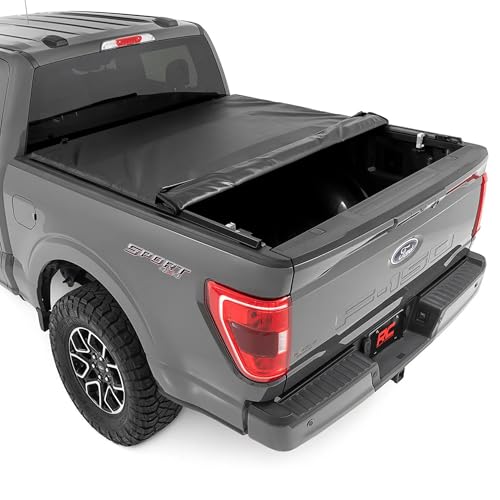
Rough Country Soft Roll-Up Truck Bed Cover for Ford F-150, Lightning & Raptor (2015–2026) – Fits 5'7 Bed, Low-Profile All-Weather Tonneau Cover
Installation & Maintenance Tips
Installing your roll-up tonneau cover is straightforward, but here are a few tips to ensure a perfect fit:
- Clean the Bed Rails: Before installation, wipe down the bed rails to ensure the clamps and seals adhere properly.
- Check Tension: After installation, adjust the tension dials or straps to remove wrinkles. A taut cover will shed water better and reduce wind noise [citation:1].
- Regular Cleaning: Wash the cover with mild soap and water. Avoid high-pressure washers, which can damage seals.
- Winter Care: In freezing conditions, roll up the cover slowly to avoid cracking the vinyl. Some covers may require occasional re-tensioning after cold spells [citation:8].
Related Reading:
- Check out our camping storage and organization tips for more ways to maximize your truck bed.
- Learn about camping etiquette for a better outdoor experience.
- For more gear ideas, explore our camping gear section.
Frequently Asked Questions
Can I use a roll-up tonneau cover with a bed liner?
Yes, most roll-up covers are compatible with bed liners, including spray-in and drop-in liners. However, some covers may not work with thick plastic bed liners that cover the side rails. Check the product's fitment notes [citation:1].
How long does a soft tonneau cover last?
With proper care, a high-quality soft vinyl cover can last 5–7 years. Vinyl covers can be affected by extreme sun and cold, which may cause fading or stiffness over time. Look for marine-grade vinyl for better longevity [citation:7].
Can I go through a car wash with a roll-up cover?
Yes, you can take your truck through an automatic car wash. Just make sure the cover is fully closed and latched. Some users report the truck bed stays completely dry after a car wash [citation:1].
Are roll-up covers waterproof?
Most roll-up covers are water-resistant, not fully waterproof. They will keep heavy rain and snow out, but some moisture may get in under extreme conditions or if the cover isn't properly tensioned. Front and rear seals are designed to form a tight barrier, as seen in the WeatherTech system [citation:3].
Do I need to drill holes to install a roll-up tonneau cover?
No. The best roll-up covers use clamp-on mounting systems, which do not require any drilling. This preserves your truck's resale value and simplifies the installation process [citation:2][citation:8].