Outdoor Gas Cooking Stove: The Ultimate Buying Guide
Everything you need to know about choosing, using, and maintaining a portable gas stove for camping, backpacking, and outdoor adventures.
START READINGWhy an Outdoor Gas Cooking Stove? A reliable gas stove is the heart of any camp kitchen. It provides instant heat, precise temperature control, and unmatched convenience compared to open fires. Whether you're a weekend car camper or a seasoned backpacker, the right stove transforms your outdoor cooking experience.
Types of Outdoor Gas Cooking Stoves
Not all gas stoves are created equal. Understanding the different types helps you match the stove to your camping style. If you're new to camping, you might also want to check our first-time camping tips for broader guidance.
1. Canister Stoves (Backpacking)
Ultralight and compact, these screw directly onto a pressurized gas canister. Ideal for solo backpackers and minimalist trips where every ounce counts.
- Extremely lightweight (often under 100g)
- Fast boiling times
- Simple push-and-turn ignition
- Best for: Backpacking, bikepacking, emergency kits
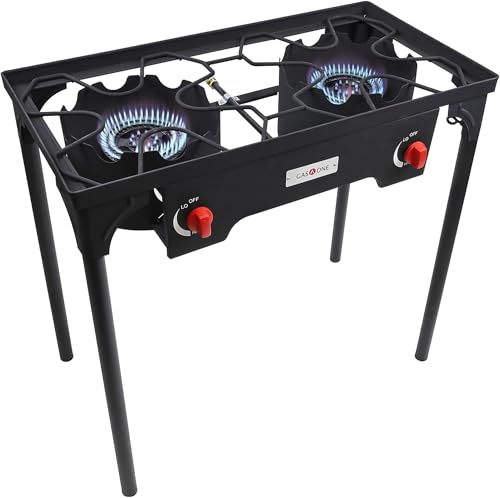
2. Two-Burner Propane Stoves
The classic car camping workhorse. These run on standard 16 oz propane cylinders or larger refillable tanks, offering stable cooking for groups.
- Wide, stable cooking surface
- Wind-resistant design
- Compatible with standard propane tanks
- Best for: Family camping, car camping, tailgating
Note: Ensure you have the right connection; some models require 16 oz propane tanks.
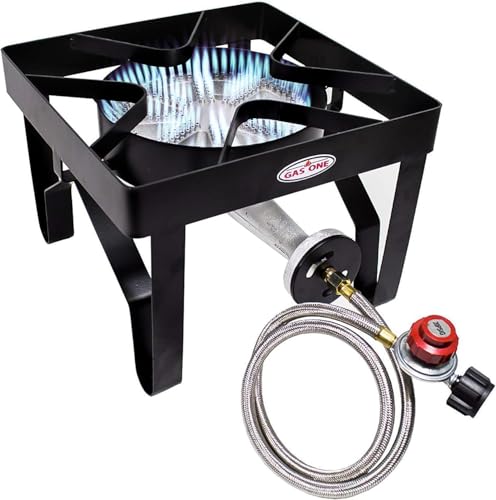
3. Single-Burner Portable Stoves
A versatile middle ground. These are larger than canister stoves but more portable than two-burner models. Many are designed for woks or large pots.
- High heat output for stir-frying
- Often includes a carrying case
- Can use both butane and propane blends
- Best for: Overlanding, basecamp cooking, group trips
For a dedicated single-burner option, see our guide to a camping gas cook top.
4. Integrated Systems (All-in-One)
These combine the burner, pot, and sometimes the fuel canister into a single unit. They are incredibly efficient for boiling water and melting snow.
- Maximum fuel efficiency
- Compact nested design
- Excellent for high-altitude or cold weather
- Best for: Mountaineering, alpine climbing, extreme conditions
Key Features to Evaluate
When comparing models, focus on these critical factors. Remember, a higher tier (e.g., premium) often means better build quality and more refined controls, not just more features.
- BTU Output: Higher BTUs mean faster boiling but higher fuel consumption. Mid-range stoves typically balance this well.
- Ignition Type: Piezo igniters are convenient but can fail; always carry a lighter as backup.
- Wind Resistance: A stove with a built-in windscreen or a recessed burner performs better in exposed conditions. For windy beach trips, consider a pop-up beach canopy for shelter.
- Fuel Type: Isobutane/propane mixes perform better in cold; pure propane works in lower temperatures but requires heavier tanks.
- Stability: A wide base and low center of gravity prevent tipping. This is crucial if you're cooking on uneven ground.
- Simmer Control: Precise flame adjustment is the hallmark of a quality stove. Entry-level models often lack a true simmer.
Quick Comparison by Tier
Use this table to understand what you get at different quality tiers. This classification is relative and independent of current market pricing.
| Feature | Entry-Level | Mid-Range | Premium |
|---|---|---|---|
| Build Material | Stamped steel, basic plastic | Stainless steel, reinforced plastics | Cast aluminum, brass, premium alloys |
| Ignition | Manual match/lighter | Piezo igniter | Auto-ignition with safety shut-off |
| Simmer Control | Limited | Good | Excellent, precise |
| Wind Resistance | Poor without add-on | Moderate, built-in windscreen | Excellent, integrated design |
| Weight | Heavier | Moderate | Lightweight (for backpacking) or robust (for basecamp) |
| Warranty | 1 year | 2-3 years | Limited lifetime |
Safety & Maintenance Essentials
Gas stoves are safe when used correctly. Always follow these guidelines, and for a comprehensive safety approach, review our campfire safety rules as well, since many principles overlap.
🔍 Check for Leaks
Before every trip, connect the stove to fuel and listen for hissing. Apply soapy water to connections; bubbles indicate a leak. Never use a leaking stove.
💨 Ventilation is Key
Never use a gas stove inside a tent, RV, or enclosed space. Carbon monoxide is odorless and deadly. Always cook in well-ventilated areas.
🔥 Keep Flammables Away
Maintain a clear zone around the stove. Keep clothing, paper, and other flammable materials at a safe distance. If a fire starts, use a campfire extinguishing method if safe to do so.
🧼 Regular Cleaning
Clean burner heads and fuel lines periodically. Clogged ports lead to uneven flames and inefficient burning. A clean stove is a reliable stove.
Understanding Fuel Types
The fuel you choose affects performance, especially in cold weather. Here's a quick breakdown:
- Isobutane/Propane Mix: The standard for canister stoves. Works well in above-freezing temperatures. Not ideal for winter camping.
- Pure Propane: Works in colder temperatures (down to -40°F/-40°C) but requires heavier, bulkier tanks. Great for car camping.
- Butane: Common in single-burner portable stoves. Poor cold-weather performance. Best for warm-weather camping.
- Refillable Tanks: Eco-friendly and cost-effective for frequent campers. Requires specific adapters. For winter trips, check our winter camping gear guide for fuel recommendations.
If you're looking for a compact solution for a small group, a gas burner stove portable model might be the perfect fit.
How to Choose the Right Stove for You
Answer these questions to narrow down your options:
- How many people are you cooking for? Solo travelers need a canister stove; families need a two-burner.
- How will you carry it? Backpacking demands ultralight; car camping prioritizes stability and power.
- What's the climate? Cold weather requires propane or an integrated system.
- What do you cook? Boiling water is easy; simmering sauces or stir-frying demands precise control.
For a deeper dive into general gear selection, see our tent size guide — the same principles of matching gear to your needs apply here.
Ready to Upgrade Your Camp Kitchen?
Explore our curated selection of top-rated outdoor gas cooking stoves below. We've done the research so you can cook with confidence.
VIEW RECOMMENDED STOVESFrequently Asked Questions
Can I use a gas stove inside a tent?
Absolutely not. Carbon monoxide poisoning is a serious risk. Always cook outside or in a well-ventilated area.
How do I know if my stove is safe to use?
Perform a leak test before each trip. Check for hissing sounds and use soapy water on connections. If you smell gas, turn off the fuel immediately.
What's the best fuel for cold weather?
Pure propane performs best in cold. Isobutane mixes can work if you keep the canister warm (e.g., in your sleeping bag). For extreme cold, an integrated system with a liquid-feed option is ideal.
How do I clean my gas stove?
Disconnect fuel, remove burner heads, and scrub with a soft brush. Wipe down surfaces with a damp cloth. Avoid submerging in water unless the manufacturer specifies it's safe.