Military Modular Sleep System: The Complete Guide
Everything you need to know about the legendary MSS sleeping bag system — components, performance in extreme cold, layering configurations, and how to choose the right setup for your outdoor adventures.
EXPLORE THE SYSTEMWhy the Military Modular Sleep System Matters: Originally engineered for soldiers operating in sub-zero environments, the MSS has become a benchmark for versatile, bombproof sleep insulation. Its multi-layer design lets you adapt from mild autumn nights to brutal winter conditions using a single, integrated system.
What Is a Military Modular Sleep System?
The Military Modular Sleep System (MSS) is a layered sleeping bag system developed for the U.S. Armed Forces to provide reliable insulation across a wide range of climates and temperatures. Instead of forcing soldiers to carry multiple sleeping bags, the MSS uses interchangeable components that can be combined or used separately depending on conditions.
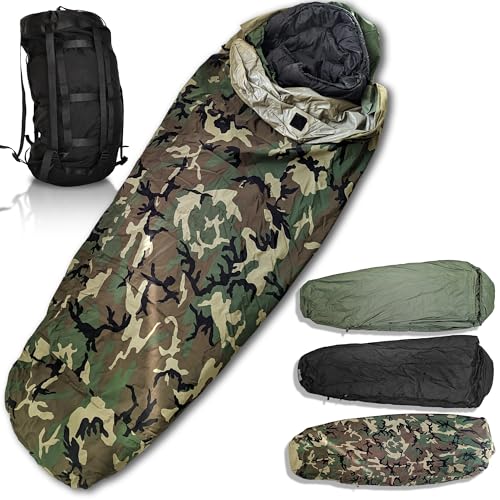
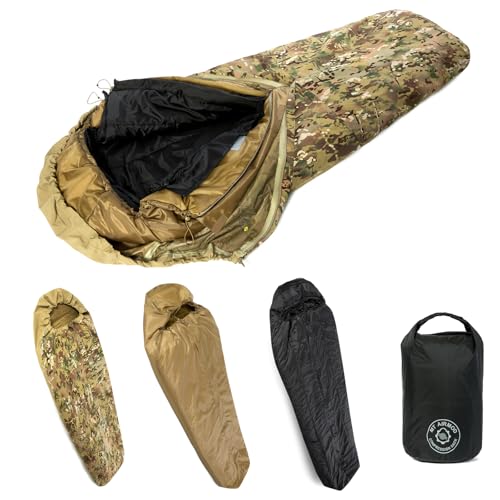
At its core, the system includes a lightweight patrol bag, a heavier intermediate cold-weather bag, and a waterproof bivy cover. Together, these three components form a complete sleep solution that can handle everything from cool summer nights to extreme winter cold. This modular approach is what makes the MSS so attractive to campers, preppers, and outdoor enthusiasts who want one system that does it all.
For anyone researching serious cold-weather gear, the MSS represents a proven, field-tested alternative to consumer sleeping bags. If you're also exploring lighter options for warmer trips, you might want to compare it with an ultralight down sleeping bag to understand the trade-offs between weight, warmth, and durability.
The Components of the Modular Sleep System
Understanding each component is essential before you decide whether the MSS fits your camping style. The system is built around three primary layers, each with a specific role.
Patrol Sleeping Bag
The lightest component, designed for mild temperatures and quick trips. It works as a standalone bag in warm weather or as an inner layer when combined with the intermediate bag. Its compact size makes it ideal for minimalist setups.
Intermediate Cold Weather Bag
The mid-weight workhorse of the system. Used alone in cool conditions or paired with the patrol bag for serious cold. Its synthetic insulation resists moisture and retains warmth even when damp — a critical advantage in wet environments.
Waterproof Bivy Cover
The outermost shell that protects the entire system from rain, snow, and wind. It adds a few degrees of warmth, blocks drafts, and can be used as a standalone emergency shelter. The bivy is what turns the MSS into a true all-weather solution.
Stuff Sack & Compression Bag
A heavy-duty stuff sack keeps the system organized and compressible for transport. When fully packed, the complete MSS takes up a significant amount of space — a trade-off for its extreme versatility and durability.
How the Modular System Works
The genius of the MSS lies in its configurability. You don't always need all three layers, and that's the point. Here's how to think about the different configurations:
- Patrol bag only: Best for warm summer nights, indoor use, or as a lightweight travel bag. Breathable and compact.
- Intermediate bag only: Ideal for spring and autumn camping. Provides solid warmth without excessive bulk.
- Patrol + Intermediate: The classic cold-weather combo. Nesting the two bags traps additional air and dramatically increases warmth. Suitable for freezing and below-freezing temperatures.
- Full system (all three layers): Maximum insulation for extreme cold. The bivy adds weather protection and seals in warmth. This is the configuration soldiers use in arctic conditions.
This layered approach mirrors the principles used in winter clothing layering systems — each layer has a job, and together they outperform any single heavy layer. For campers who want to extend their season into winter, the MSS is one of the most cost-effective ways to do it without buying multiple specialized bags.
Performance in Real-World Conditions
The MSS was designed for military use, which means it was tested in some of the harshest environments on earth. Its synthetic insulation is a key advantage: unlike down, it retains insulating properties even when wet. That makes it far more forgiving in rainy, humid, or snowy conditions.
However, synthetic insulation is heavier and bulkier than down. If you're counting every ounce for a long backpacking trip, the MSS may feel like overkill. But for car camping, base camps, emergency preparedness, and winter expeditions where reliability matters more than weight, it's hard to beat.
The bivy cover is another standout feature. It's fully waterproof and windproof, which means you can sleep under the stars without a tent in moderate conditions. That said, most users pair the MSS with a tent for added comfort and bug protection. If you're camping in cold weather, consider how you'll manage condensation — a topic covered in our guide to keeping a tent warm in cold weather.
MSS vs. Traditional Sleeping Bags
How does the modular sleep system stack up against a standard consumer sleeping bag? Here's a side-by-side comparison to help you decide.
| Feature | Military Modular Sleep System | Traditional Sleeping Bag |
|---|---|---|
| Versatility | Multiple configurations for different temperatures | Single temperature rating |
| Weather Resistance | Waterproof bivy cover included | Usually requires separate protection |
| Weight & Bulk | Heavier and bulkier — best for car camping or base camps | Lighter options available for backpacking |
| Durability | Built to military specifications for extreme abuse | Varies widely by brand and price tier |
| Insulation Type | Synthetic — performs when wet | Down or synthetic depending on model |
| Best For | Cold weather, emergency prep, car camping, winter expeditions | Specific temperature ranges, ultralight backpacking |
Pros and Cons of the Modular Sleep System
Advantages
- Extremely versatile — replaces multiple bags
- Waterproof bivy adds weather protection and warmth
- Synthetic insulation performs when wet
- Rugged, military-grade construction
- Excellent value for the temperature range covered
- Works as an emergency shelter system
Limitations
- Heavy and bulky compared to down bags
- Not ideal for ultralight backpacking
- Requires practice to layer efficiently
- Bivy can trap condensation in some conditions
- Oversized for warm-weather camping
Who Should Consider the MSS?
The modular sleep system isn't for everyone, but for certain campers it's an outstanding choice. You should consider the MSS if:
- You camp in cold weather regularly and want one system that adapts to changing conditions.
- You prioritize durability and reliability over lightweight performance.
- You're building an emergency preparedness kit and want a bombproof sleep solution.
- You do car camping, truck camping, or base-camp style trips where weight isn't critical.
- You want a system that can double as an emergency shelter.
On the other hand, if you're a thru-hiker counting grams, a dedicated ultra-light backpacking gear setup will serve you better. The MSS is about versatility and resilience, not minimal weight. For those who camp from a vehicle or establish a base camp, the trade-off is well worth it.
If you're transitioning from tent camping to more rugged setups, you might also explore truck camping ideas that pair well with a heavy-duty sleep system like the MSS.
Care and Maintenance Tips
To get the most out of your modular sleep system, proper care is essential. Synthetic insulation can degrade over time if mistreated, and the bivy's waterproof coating needs attention to stay effective.
- Clean regularly: Use a front-loading washing machine on a gentle cycle with mild detergent. Avoid fabric softeners and bleach.
- Dry thoroughly: Tumble dry on low heat with clean tennis balls to restore loft. Never store damp.
- Store loosely: Keep bags in a large cotton storage sack, not compressed, to preserve insulation loft.
- Reproof the bivy: Apply a DWR (durable water repellent) treatment periodically to maintain water resistance.
- Inspect seams: Check for loose threads or seam gaps before each cold-weather trip.
If you're also maintaining other cold-weather gear, our guide to winter camping gear covers broader maintenance and preparation strategies.
Frequently Asked Questions
What temperature range can the Military Modular Sleep System handle?
When all three components are used together, the MSS is rated for extreme cold, well below freezing. Used individually, the patrol bag works in mild conditions, while the intermediate bag handles cool to cold weather. The exact rating depends on the specific version and manufacturer, but the full system is designed for sub-zero environments.
Is the MSS good for backpacking?
The MSS is heavy and bulky compared to modern ultralight sleeping bags. It's best suited for car camping, base camps, emergency preparedness, and winter expeditions where durability and warmth matter more than weight. For backpacking, a dedicated lightweight bag is usually a better choice.
Can I use just the bivy cover alone?
Yes. The waterproof bivy cover can be used as a standalone emergency shelter or as a lightweight sleeping solution in mild weather. It provides wind and rain protection and adds a small amount of warmth.
How does the MSS compare to a down sleeping bag?
Down bags are lighter and more compressible for the same warmth, but they lose insulation when wet. The MSS uses synthetic insulation that retains warmth even when damp, making it more reliable in wet, cold conditions. The trade-off is weight and bulk.
Is the modular sleep system worth it for casual campers?
If you only camp in warm summer weather, a simpler bag may be sufficient. But if you camp across seasons, want one system that adapts, or need a reliable emergency sleep solution, the MSS offers excellent long-term value and versatility.
Ready to Gear Up for Cold-Weather Camping?
Explore our recommended modular sleep systems and compatible cold-weather gear below. Whether you're preparing for winter expeditions or building an emergency kit, the right sleep system makes all the difference.
VIEW RECOMMENDED GEAR